As more homeowners in Pembroke Pines turn to eco-friendly solutions to reduce their energy bills and environmental impact, installing a solar hot water heater is becoming a popular and smart investment. At Whitney Services, we specialize in professional solar energy solutions, and this step-by-step guide will walk you through the process of installing a solar water heater in your Florida home.
Whether you’re considering a switch to renewable energy or simply looking for long-term savings on utility costs, understanding how the installation works can help you make an informed decision.
Why Choose a Solar Hot Water Heater?
Before we dive into the installation process, it’s important to understand the benefits of switching to a solar hot water heater:
- Energy Efficiency: Uses the sun’s energy to heat water, significantly lowering electricity or gas usage.
- Cost Savings: Drastically reduces your monthly utility bills over time.
- Eco-Friendly: Reduces your home’s carbon footprint by relying on renewable solar energy.
- Incentives: Homeowners may qualify for state or federal tax credits, rebates, and other financial incentives.
Let’s now examine the steps involved in setting up a solar hot water heater in Pembroke Pines.
Step 1: Site Evaluation and Planning
Every successful installation begins with a comprehensive site evaluation. At Whitney Services, we conduct a thorough assessment to determine:
- Roof orientation and angle
- Sunlight exposure
- Shading from trees or structures
- Water usage patterns in the home
The system will absorb the most solar energy if it is positioned correctly. If roof space is limited or shaded, a ground-mounted collector may be considered.
Step 2: Choosing an Appropriate Solar Hot Water Heating System
There are two main types of solar hot water heaters:
- Active Systems: Pumps are used to move heat-transfer fluid or water between the storage tank and solar collectors.
- Passive Systems: Rely on natural convection (no pumps), which makes them simpler and often more affordable.
Factors such as family size, water usage, and budget determine the best system for your home. Our technicians at Whitney Services help you choose the ideal setup tailored to Pembroke Pines’ sunny climate.
Step 3: Permitting and Approvals
We take care of the required municipal permits and approvals prior to installation starting. In Pembroke Pines, solar installations must comply with state and municipal regulations, including:
- Building and electrical codes
- Utility company interconnection agreements (if applicable)
- HOA approvals (for communities with restrictions)
Whitney Services ensures all paperwork and permits are in place before starting work.
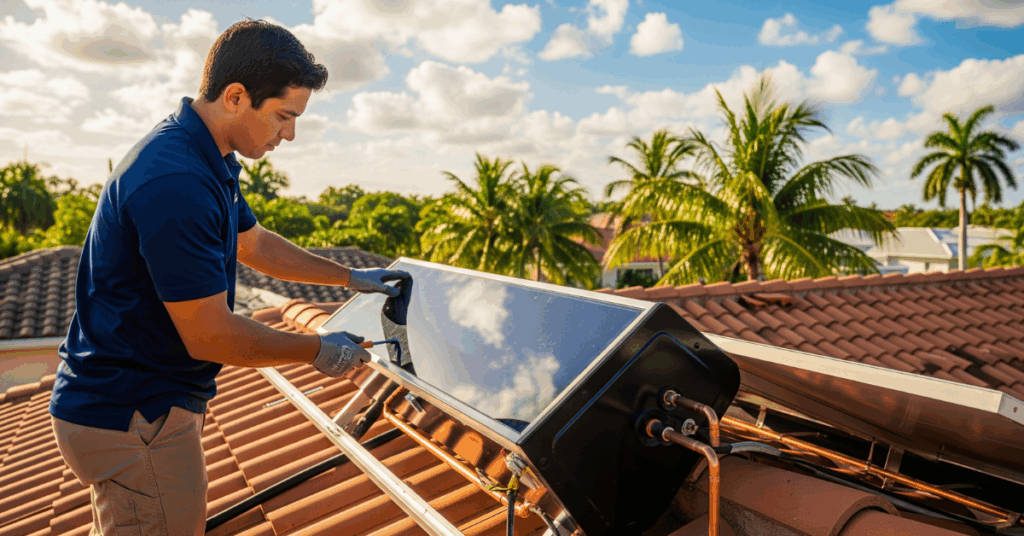
Step 4: Installing Solar Collectors
The solar collectors are typically mounted on the roof to absorb sunlight. The process includes:
- Securing mounting brackets
- Aligning collectors at the optimal tilt angle for maximum exposure
- Waterproofing roof penetrations
- Connecting piping for fluid or water transfer
Proper positioning ensures your solar hot water heater performs efficiently year-round in South Florida’s climate.
Step 5: Setting up the Heat Exchanger and Storage Tank
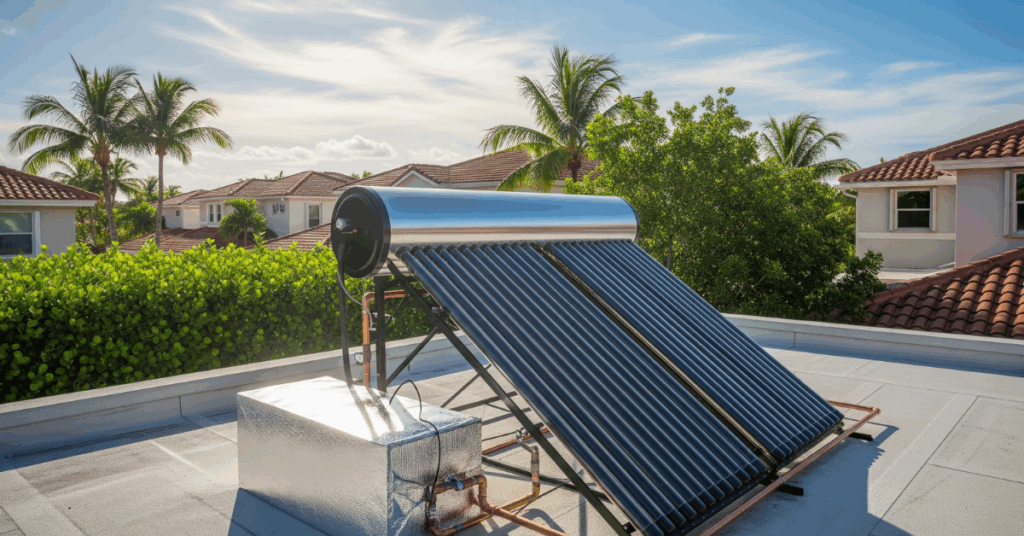
The heated water is stored in an insulated tank, which is installed near your existing water heater or in a utility area. A heat exchanger can be used to move heat from the solar fluid to your home water if you’re using an active system. This step involves:
- Connecting the tank to the household water system
- Installing the heat exchanger (if needed)
- Installing backup gas or electric heaters for overcast days
Step 6: Plumbing and Piping Connections
Water flows smoothly between the storage tank and the solar collectors thanks to proper plumbing. Key steps include:
- Installing insulated pipes to reduce heat loss
- Setting up pressure relief valves and air vents
- Connecting to existing plumbing lines
- Ensuring all connections are leak-free
Whitney Services ensures that the entire system is professionally plumbed and pressure-tested.
Step 7: Electrical and Control System Setup
Some systems include electric components such as pumps, sensors, and controllers. Our technicians:
- Install sensors to monitor water temperature
- Set up controllers to manage pump operation
- Connect electrical components to your home’s power system
- Install user-friendly controls for homeowner access
These controls help optimize your solar hot water heater for efficient performance.
Step 8: System Testing and Commissioning
After installation, we perform a full system check to ensure everything functions as intended. This includes:
- Running the system to confirm hot water production
- Testing sensors, controls, and backup heaters
- Checking for leaks, blockages, or malfunctions
- Providing a demonstration and user guide to the homeowner
Once the system passes all quality checks, it’s ready for daily use.
Step 9: Maintenance and Monitoring
Solar water heaters require minimal maintenance, but routine inspections ensure long-term efficiency. Whitney Services offers:
- Annual inspections
- Tank flushing and cleaning
- Collector glass cleaning
- Monitoring system performance
We also recommend homeowners watch for any sudden changes in hot water availability, which could signal an issue needing attention.
Why Whitney Services is Your Go-To for Solar Water Heater Installation in Pembroke Pines
Choosing Whitney Services means partnering with a local, experienced team committed to excellence in renewable energy installations. We offer:
- Certified and licensed technicians
- Local knowledge of Pembroke Pines building codes
- Transparent pricing and warranty support
- Ongoing maintenance plans
We are proud to help Pembroke Pines homeowners reduce their energy costs while contributing to a greener future.
Frequently Asked Questions (FAQs)
1. What is the average installation time for a solar hot water heater?
Typically, the installation takes 1–2 days depending on the complexity of the system and local permitting processes.
2. Do I still need my old water heater?
Many homeowners keep their old electric or gas heater as a backup for cloudy days or when hot water demand is unusually high.
3. How much sunlight do I need?
A solar hot water heater works best with full sun for at least 5–6 hours per day. We evaluate your property’s solar exposure during our site assessment.
4. Is there a warranty on the system?
Yes. Most solar water heaters come with warranties ranging from 5 to 10 years. Whitney Services also offers optional extended service plans.
5. Can I get a tax credit for installing a solar hot water heater?
Yes! Federal and state incentives may be available, such as the Federal Solar Tax Credit (ITC). We can help you navigate eligibility requirements.
Get Started with Whitney Services Today
Ready to harness the power of the sun?A wise move toward financial savings, environmental responsibility, and energy independence is installing a solar hot water heater in Pembroke Pines. Let Whitney Services be your trusted local partner in solar energy.