Have you checked your electrical panel lately? If you live in Michigan, especially in homes built between the 1950s and 1980s, there’s a good chance your breaker box could be a Federal Pacific Electric (FPE) Stab-Lok panel and that could put your home at serious risk.
Across Michigan, from older Detroit neighborhoods to Grand Rapids suburbs, Lansing’s mid-century homes, and lakeside cottages along the coast, thousands of properties still contain these outdated electrical systems. While they were once standard, today they’re known as one of the biggest fire hazards hiding in plain sight.
Why Michigan Homes Are Especially at Risk
Michigan has a large inventory of older housing stock, especially in cities like Detroit, Flint, Kalamazoo, and Saginaw, where homes built in the mid-20th century are common. Many of these homes have never had a full electrical upgrade, meaning original FPE Stab-Lok panels may still be in service.
It’s a dangerous combination when you add Michigan’s frigid winters, where electric blankets, space heaters, and furnaces strain electrical systems to their breaking point. No Michigan family wants to deal with an electrical fire on a chilly January night, which can quickly develop from a panel that fails to trip during overload.
Why FPE Stab-Lok Panels Are Dangerous
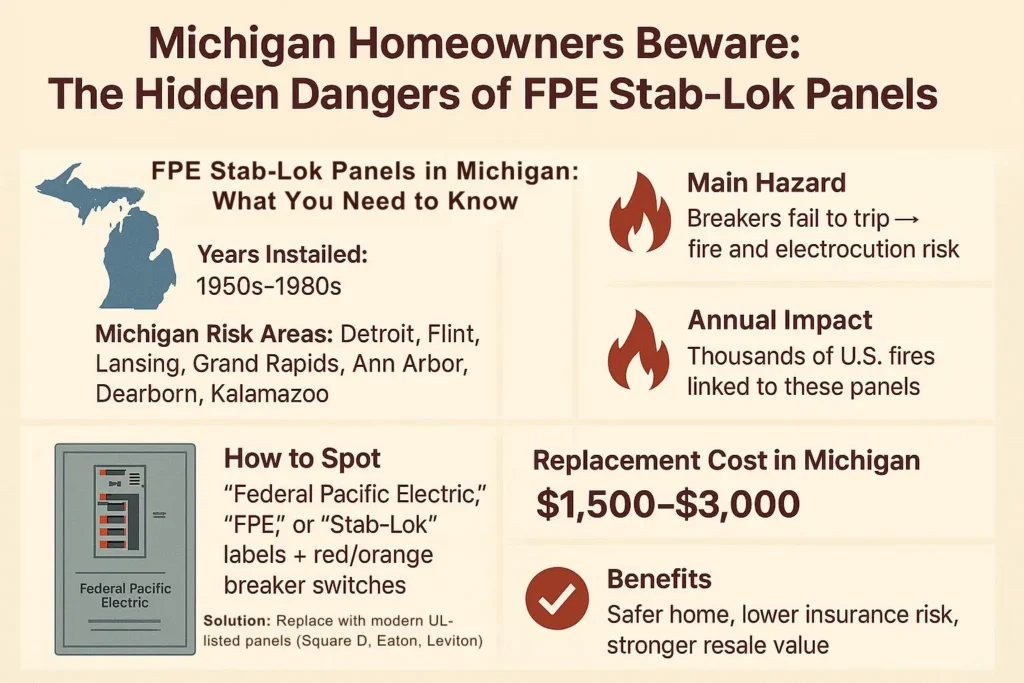
Electrical panels are supposed to be your home’s safety net. When circuits get overloaded, breakers should trip to prevent overheating and fire. Unfortunately, FPE Stab-Lok panels often fail at alarmingly high rates, sometimes 60% or more.
Worse still, some breakers appear to shut off but actually continue delivering power. This makes them not just a fire risk, but also a serious electrocution hazard for homeowners and electricians alike.
A History of Deception
Federal Pacific Electric knowingly sold millions of defective breakers under the false claim that they were UL-listed (meeting safety standards). In the 2000s, courts confirmed that the company committed fraud, but by then, millions of panels had already been installed across the country, including right here in Michigan.
And because the Consumer Product Safety Commission never issued a full recall, these dangerous panels were never pulled from the market. That means thousands of Michigan homes maybe even yours, still depend on these unsafe panels every single day.
How Common Are They in Michigan?
Experts estimate that 10% of U.S. homes may still have FPE Stab-Lok panels. Given Michigan’s large number of mid-century homes, it’s safe to assume hundreds of thousands of houses across the state still contain them.
Cities like Detroit, Ann Arbor, Dearborn, Warren, Flint, Grand Rapids, and Lansing, with large neighborhoods built between 1950–1980 are especially likely to have these panels. It’s worthwhile to check if your house hasn’t had a complete electrical upgrade in decades.
How to Identify an FPE Stab-Lok Panel in Your Michigan Home
Here’s what to look for:
- Labels: “Federal Pacific Electric,” “FPE,” or “Stab-Lok” on the panel door or breakers.
- Breaker handles: Distinctive red, orange, or striped toggles.
- Panel age: Houses constructed prior to 1990 are excellent choices.
Safety note: Don’t remove panel covers yourself. Make sure you have an FPE panel by calling a certified Michigan electrician.
Insurance Challenges in Michigan
The risks associated with FPE Stab-Lok panels are well known to many insurance companies in Michigan. Some insurers may:
- If the panel is present, do not write a policy.
- Require replacement before coverage begins.
- Charge higher premiums until you upgrade.
That means keeping one of these panels could cost you not only in safety but also in higher insurance costs.
The Cost of Replacement vs. the Cost of a Fire
Replacing an FPE Stab-Lok panel in Michigan typically costs between $1,500 and $3,000, depending on your home’s wiring and electrical needs.
Contrast that with the expense of fire damage, which can amount to tens of thousands of dollars due to lost property, potential injuries, and the emotional distress of losing priceless possessions. All of a sudden, replacement seems like a minor cost for mental tranquility.
Benefits of Upgrading Your Electrical Panel
- Safety: Fire and electrocution risks drop significantly.
- Insurance approval: Smooth underwriting and potentially lower premiums.
- Home value: Buyers in Michigan’s competitive markets (like Ann Arbor or Grand Rapids) will see modern electrical systems as a selling point.
- Modern power needs: New panels can handle today’s high-demand appliances, smart home tech, and even EV chargers, something especially important as Michigan embraces electric vehicles.
Your Next Steps in Michigan
- Check your panel: Look for “Federal Pacific,” “FPE,” or “Stab-Lok.”
- Call a local electrician: Michigan has many licensed electricians experienced in FPE replacements.
- Schedule replacement: Don’t wait until winter’s peak demand stresses your electrical system.
- Update your insurance: Notify your provider after replacement for potential premium savings.
Conclusion
If you own a home in Michigan and discover an FPE Stab-Lok panel, replacement isn’t just a good idea, it’s essential. These panels have a proven track record of failure, and Michigan’s mix of older homes and heavy winter electrical demand only heightens the risk.
By upgrading your panel, you’re protecting your family, securing your investment, and giving yourself the peace of mind every Michigan homeowner deserves.
Frequently Asked Questions
Indeed. FPE panels are frequently found in older homes, according to many electricians in Michigan, particularly in cities with a mid-century housing stock.
Absolutely. Buyers and inspectors are aware of the risks. Replacing your panel before listing can prevent costly negotiations.
Yes. Heavy electrical loads from heating systems, space heaters, and holiday lights can push unsafe panels past their limit.
Coverage varies, but some insurers may deny claims if they can prove the outdated panel contributed to the fire. Always check with your provider.
Experts recommend it as soon as possible. Even if it seems to be working, failure rates are too high to gamble with your family’s safety.