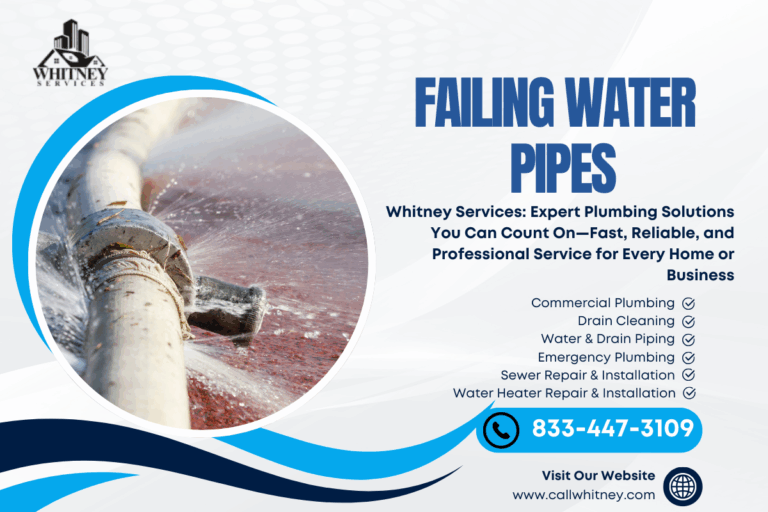
Older homes have a unique charm, but they often come with plumbing challenges. One of the most critical concerns is failing water pipes. Over time, pipes can corrode, leak, or become clogged, leading to costly repairs and potential damage to your property. Recognizing the early signs of failing water pipes can save homeowners thousands of dollars and prevent disruptions to daily life. Whitney Services provides expert inspection, maintenance, and water line replacement to help homeowners address these issues before they escalate.
Why Older Homes Are Prone to Pipe Failures
Many older homes were built with plumbing materials that are no longer commonly used today. Pipes made of galvanized steel, cast iron, or even lead can deteriorate with age. Galvanized steel pipes, for example, are prone to corrosion and buildup inside the pipes, reducing water flow and increasing the risk of leaks. Cast iron pipes can crack over time, and lead pipes pose serious health risks.
The lifespan of these materials varies, but most start showing signs of failing water pipes after 40–50 years. Regular maintenance and timely replacement are essential for older homes to ensure a safe and reliable water supply.
Top Signs of Failing Water Pipes
Early detection of failing water pipes can save homeowners significant time, money, and stress. Understanding the warning signs allows for timely repairs and helps prevent extensive water damage and costly replacements.
Identifying failing water pipes early is crucial. Here are some of the most common signs homeowners should watch for:
1. Discolored or Rusty Water
If your water appears brown, red, or cloudy, it may indicate corrosion inside your pipes. Failing water pipes can release rust particles into your water supply, leading to discolored water and unpleasant taste. Rusty water is not only unappealing but can also pose health risks if consumed over time.
2. Low Water Pressure
A sudden drop in water pressure is often a sign of blocked or deteriorating pipes. Mineral buildup, corrosion, or partial pipe collapse from failing water pipes can restrict water flow. Low water pressure can affect showers, faucets, and appliances, and it may signal that repairs are needed before more significant issues occur.
3. Frequent Leaks or Water Damage
Leaks are a clear indicator of failing water pipes. Even minor leaks can cause water stains, damp spots, mold growth, and structural damage over time. Hidden leaks inside walls or under floors are particularly concerning, as they can go unnoticed until major damage occurs. Regular inspections by professionals like Whitney Services can help detect leaks early and prevent costly repairs.
4. Strange Noises in Pipes
Noises such as banging, clanging, or hissing from your plumbing system can indicate failing water pipes. These sounds often occur when pipes have become loose, corroded, or partially blocked. Addressing unusual pipe noises promptly can prevent pipe bursts or further damage.
5. Age of Plumbing
Sometimes, the most obvious indicator of failing water pipes is simply the age of your plumbing. Pipes over 50 years old are likely to be near the end of their functional lifespan. Even if there are no immediate issues, older pipes are more prone to leaks, corrosion, and blockages, making proactive replacement a smart choice.
Risks of Ignoring Failing Pipes
Ignoring failing water pipes can lead to significant problems. Leaks can damage floors, walls, and foundations, while corrosion can compromise water quality. Contaminated water from heavily corroded or lead pipes may pose health risks, and unnoticed leaks can result in dramatically higher water bills. Emergency repairs are often far more expensive than preventive maintenance or timely pipe replacement.
Solutions for Failing Water Pipes
Addressing failing water pipes promptly can prevent costly water damage and ensure a safe, reliable water supply for your home. Understanding the available solutions helps homeowners make informed decisions and protect their property.
Professional Inspection by Whitney Services
The first step in addressing failing water pipes is a professional inspection. Whitney Services uses advanced tools like camera inspections and leak detection equipment to identify problems quickly and accurately. Early detection allows homeowners to plan necessary repairs or replacements without unnecessary disruption.
Pipe Replacement Options
For older homes, pipe replacement may be the most effective long-term solution. Whitney Services offers trenchless water line replacement, a no-dig solution that minimizes property damage and shortens project timelines. This modern approach provides durable, long-lasting results and is ideal for homeowners looking to upgrade failing water pipes efficiently.
Maintenance Tips
Even after replacement, proper maintenance is essential to prevent future issues. Regular inspections, water softening for metal pipes, and addressing small leaks promptly can extend the lifespan of your plumbing and reduce the likelihood of failing water pipes in the future.
Conclusion
Failing water pipes in older homes are a serious concern, but early detection and professional intervention can prevent costly damage and ensure a safe, reliable water supply. From discolored water and low pressure to frequent leaks and unusual noises, recognizing the signs early is key.
If your home shows any of these warning signs, contact us today. Our licensed technicians provide expert inspection, maintenance, and trenchless water line replacement , ensuring your plumbing is safe, efficient, and long-lasting. Don’t wait until minor issues become major problems to protect your home with professional plumbing services.
Frequently Asked Questions
1. How do I know if my pipes are old and failing?
Look for signs like discolored water, low pressure, leaks, or unusual noises. Pipes older than 50 years are likely nearing the end of their lifespan.
2. Can I replace only part of the plumbing, or do all pipes need replacement?
It depends on the condition of your pipes. Whitney Services can perform a professional inspection to recommend partial or full replacement.
3. What is the average cost of water pipe replacement in older homes?
Costs vary depending on pipe material, home size, and method used. Trenchless replacement is often more cost-effective than traditional excavation.
4. Is trenchless water line replacement suitable for all homes?
Most homes with failing water pipes can benefit from trenchless technology, but a professional inspection is needed to confirm suitability.
5. How often should older homes have their plumbing inspected?
Older homes should have plumbing inspected at least once a year to catch issues like failing water pipes before they become major problems.