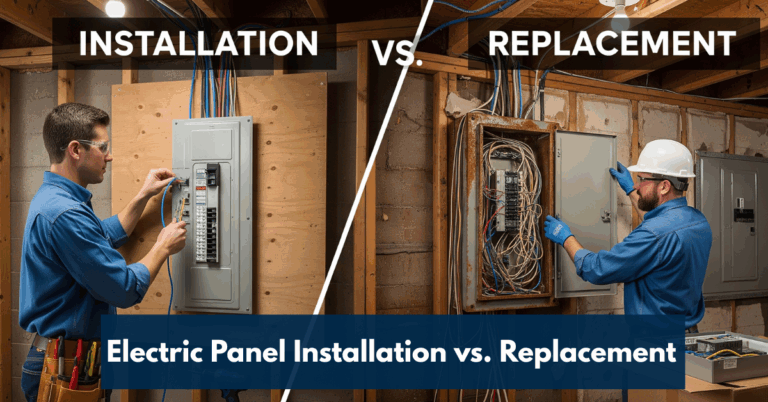
Your home’s electrical panel is the heart of its electrical system, distributing power safely to every outlet, appliance, and device. But as technology advances and electrical demands grow, many homeowners face a critical decision: Do you need an electric panel installation, or is it time for a replacement?
At Whitney Services, we help homeowners in Michigan and Florida make informed decisions about their electrical systems. In this guide, we’ll walk you through the key differences between installation and replacement, signs you may need either service, and why professional help is essential for safety and efficiency.
Understanding Electric Panel Installation
What Is Electric Panel Installation?
Electric panel installation refers to setting up a brand-new panel in a property. This is usually required for:
- New constructions – Building a new home or commercial property requires a completely new electrical panel.
- Major home additions – Adding a garage, basement, or new wing may need a dedicated panel to handle increased electrical load.
- First-time upgrades – Older properties may never have had a modern circuit breaker system, relying instead on outdated fuses.
When you choose professional electric panel installation, licensed electricians ensure that your system is sized correctly to meet your household’s current and future energy needs.
Understanding Electric Panel Replacement
What Is Electric Panel Replacement?
Electric panel replacement involves removing your existing panel and installing a new one in its place. This is common when:
- The existing panel is outdated (e.g., using fuses instead of breakers).
- You frequently trip breakers or experience electrical overloads.
- There are visible signs of damage, corrosion, or overheating.
- Your current panel cannot support modern appliances, HVAC systems, or EV chargers.
A replacement is essentially an upgrade, ensuring your electrical system can safely deliver consistent power while meeting today’s higher energy demands.
Key Differences Between Installation and Replacement
Factor | Installation | Replacement |
When Needed | New builds, major additions, first-time modern setup | Aging, unsafe, or insufficient panels |
Goal | Provide new electrical capacity from scratch | Upgrade or modernize existing capacity |
Process | Setting up a brand-new system | Removing old panel and installing new one |
Cost Range | Varies by home size and load capacity | Often less expensive than first-time installation |
Common Customers | Home builders, renovators, property developers | Homeowners with outdated panels |
Signs You May Need Electric Panel Installation
- You’re building a new home or business.
- Your current home uses outdated fuse boxes.
- You’re adding square footage or new major appliances.
- You want future-ready capacity for EV charging stations, solar panels, or smart home technology.
Signs You May Need Electric Panel Replacement
- Frequent breaker trips or blown fuses.
- Buzzing or crackling sounds coming from the panel.
- Visible rust or burn marks on the panel.
- Insufficient capacity for new appliances or HVAC systems.
- Your home still has a 60-amp or 100-amp panel, which is insufficient for modern households.
Why Professional Service Matters
Attempting electric panel installation or replacement on your own can be dangerous. Panels handle large amounts of electricity, and improper installation can lead to:
- Electrical fires
- Electrocution risks
- Code violations
- Reduced home value
At Whitney Services, our licensed electricians provide safe, code-compliant, and future-proof solutions for your home or business. Whether you need an initial installation or a replacement upgrade, we ensure your system meets safety standards and supports your lifestyle.
Benefits of Professional Electric Panel Installation or Replacement
- Enhanced safety – Reduces fire and shock risks.
- Improved efficiency – Distributes power evenly without overload.
- Future readiness – Supports EV chargers, solar, and smart devices.
- Increased home value – A modern panel is a strong selling point for buyers.
- Peace of mind – Knowing your home’s electrical system is reliable and up to code.
Electric Panel Installation vs. Replacement: How to Decide
The right choice depends on your situation:
- Choose Installation if you’re building a new home, upgrading from a fuse box, or adding major new electrical loads.
- Choose Replacement if your current panel shows signs of wear, isn’t meeting your energy needs, or fails to comply with modern codes.
If you’re unsure, an inspection from a licensed electrician at Whitney Services can help determine the best course of action.
Why Choose Whitney Services?
When it comes to electric panel installation and replacement, Whitney Services stands out in Michigan and Florida for:
- Licensed and insured electricians
- Transparent pricing with no hidden fees
- Same-day and emergency services available
- Experience with both residential and commercial properties
- Commitment to customer safety and satisfaction
Our team doesn’t just replace or install panels—we future-proof your entire electrical system.
Final Thoughts
Deciding between electric panel installation and replacement depends on your home’s age, condition, and energy demands. While installations are essential for new builds and major renovations, replacements are critical for homes with outdated or unsafe panels.
No matter your situation, trusting licensed professionals ensures your electrical system is safe, efficient, and ready for the future.
Frequently Asked Questions
If your home is new or undergoing major renovations, you likely need an installation. If your existing panel is outdated, damaged, or undersized, a replacement is the better choice.
Costs vary depending on the size of the panel, your home’s wiring needs, and additional upgrades. On average, installation can range from $1,500 to $3,500, but getting a custom quote from Whitney Services is best.
No. Panel replacement involves high-voltage wiring and must meet strict building codes. Always hire a licensed electrician.
Most replacements take 4–8 hours, depending on the complexity. Installations in new homes may take longer.
Yes. A modern panel improves safety, efficiency, and supports today’s power-hungry appliances and devices. Additionally, it can raise the market value of your house.