As electric vehicles (EVs) continue to grow in popularity across Michigan, homeowners and businesses in Southfield are seeking ways to make EV charging more efficient, reliable, and accessible. Installing an EV charger at your property is one of the best steps toward convenience and sustainability, but before you start, it’s essential to understand the EV charger installation requirements in Southfield, MI.
At Whitney Services, we specialize in helping residents and businesses navigate these requirements, ensuring safe and compliant installations while providing faster charging solutions. This guide covers everything you need to know, from permits and electrical standards to choosing the right charger for your needs.
Why Knowing EV Charger Installation Requirements Matters
When installing an EV charger, you can’t just plug it into any outlet and expect optimal performance. Southfield has specific electrical codes and safety standards in place to protect homeowners, businesses, and the city’s power grid. Meeting these requirements ensures:
- Faster Charging – Proper installation allows your charger to deliver the maximum power output for reduced charging time.
- Safety Compliance – Prevents hazards such as electrical fires, power overloads, and faulty wiring.
- Longevity of Your EV & Charger – A correctly installed system protects both your car’s battery and the charging unit.
- Home Value Increase – A compliant EV charger installation adds to property resale value.
Key EV Charger Installation Requirements in Southfield, MI
1. Electrical Load Capacity
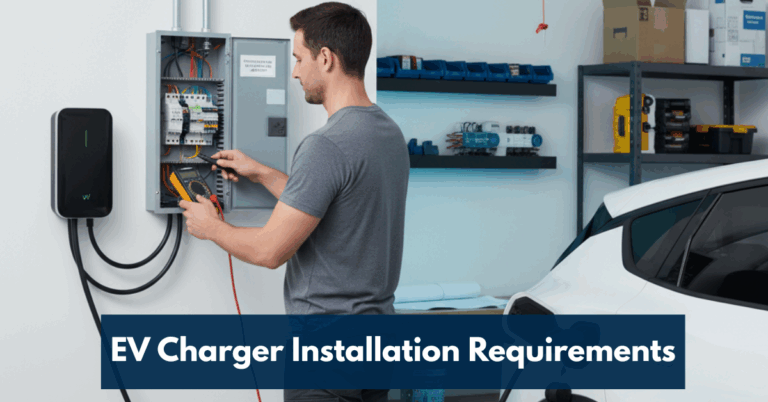
Before installation, your home or business must have the electrical capacity to handle the charger. Most Level 2 EV chargers require a 240-volt outlet and a dedicated circuit of at least 40–60 amps. An electrical panel upgrade may be necessary for older properties.
2. Permit from the City of Southfield
A permit is required for residential and commercial EV charger installations. This ensures the system meets the Michigan Electrical Code (MEC) and the National Electrical Code (NEC) standards. Licensed contractors like Whitney Services handle the permit application for you.
3. Professional Electrical Inspection
After installation, an inspection is mandatory to confirm the charger is safely installed, properly grounded, and capable of handling the load without issues.
4. Dedicated Circuit Installation
EV chargers cannot share circuits with other heavy appliances such as ovens, HVAC units, or dryers. A dedicated breaker is required to avoid power overloads.
5. Outdoor Installation Standards
If installing outdoors, the unit must be weather-resistant and meet NEMA 3R or higher enclosure standards to withstand Southfield’s varying climate conditions, including snow and heavy rain.
6. Accessibility & Placement
Charger placement must allow easy vehicle access without extension cords, which are unsafe and non-compliant with NEC standards. For businesses, ADA accessibility requirements may also apply.
7. Smart Charger Compatibility
Many homeowners in Southfield opt for smart chargers that integrate with Wi-Fi and load management systems. Requirements include stable internet access and proper electrical connections for remote monitoring.
Types of EV Chargers and Their Requirements
Level 1 EV Charger
- Uses a standard 120-volt outlet
- No major electrical upgrades required
- Charges slowly (8–12 hours for a full charge)
- Good for overnight charging but not ideal for fast charging
Level 2 EV Charger
- Requires a 240-volt outlet and 40–60 amp breaker
- Professional installation required
- Charges 3–7 times faster than Level 1
- Ideal for daily use in Southfield homes and businesses
DC Fast Charger (Commercial Use)
- Requires 480-volt three-phase power supply
- Suitable for commercial properties, not typical homes
- Can charge most EVs to 80% in under an hour
- Requires significant permits and electrical upgrades
Cost Considerations for EV Charger Installation
The cost of installing an EV charger in Southfield depends on several factors:
- Charging type (DC fast charging, Level 1, or Level 2)
- Electrical panel upgrades
- Permit fees and inspection costs
- Labor and wiring length
- Indoor vs. outdoor installation
On average, residential EV charger installations in Southfield range between $800 and $2,500, while commercial installations can be significantly higher.
Why Choose Whitney Services for EV Charger Installation?
At Whitney Services, we make the process simple and stress-free by handling every step:
- Free consultation to assess your electrical system
- Permit applications and coordination with the City of Southfield
- Professional installation with safety and speed in mind
- Full compliance with Michigan and NEC codes
- Post-installation testing and inspection support
- Affordable pricing with no hidden fees
Whether you need a residential charger for overnight convenience or a commercial charging station for your business, Whitney Services is the trusted choice in Southfield, MI.
Benefits of Meeting EV Charger Installation Requirements
- Faster Charging Times – Save hours on charging compared to Level 1 outlets.
- Increased Property Value – Adds appeal for eco-conscious buyers and tenants.
- Utility Incentives & Rebates – DTE Energy and other providers in Michigan offer rebates for compliant installations.
- Future-Proofing – Stay ready for the next generation of EVs with high-capacity charging.
- Peace of Mind – Safe, code-compliant installations reduce risks of electrical hazards.
EV Charger Installation Requirements Checklist
Before calling a professional, make sure you have:
- ✅ Verified your electrical panel’s capacity
- ✅ Identified installation location (garage, driveway, or commercial lot)
- ✅ Budgeted for permits and inspections
- ✅ Chosen the right charger type (Level 1, Level 2, or DC Fast Charger)
- ✅ Contacted Whitney Services for professional installation
Final Thoughts
Meeting EV charger installation requirements in Southfield, MI is essential for safe, reliable, and fast charging. From permits and inspections to electrical upgrades, every step plays a role in maximizing efficiency and compliance.
With Whitney Services, you get expert guidance, professional installation, and peace of mind knowing your EV charger is set up for optimal performance. Whether for home or business, we’re your go-to partner for EV charging solutions in Southfield.
Frequently Asked Questions
Yes. The City of Southfield requires a permit for both residential and commercial EV charger installations to ensure compliance with electrical codes.
Most residential Level 2 installations take 4–6 hours, while commercial setups may take several days depending on electrical upgrades.
No. EV charger installation requires a licensed electrician to meet EV charger installation requirements and ensure safety. DIY installations are unsafe and may void manufacturer warranties.
A 200-amp panel is recommended for most homes. If your panel is smaller, an upgrade may be necessary.
Yes. DTE Energy and other programs offer rebates for installing compliant Level 2 chargers. Whitney Services can guide you through the application process.