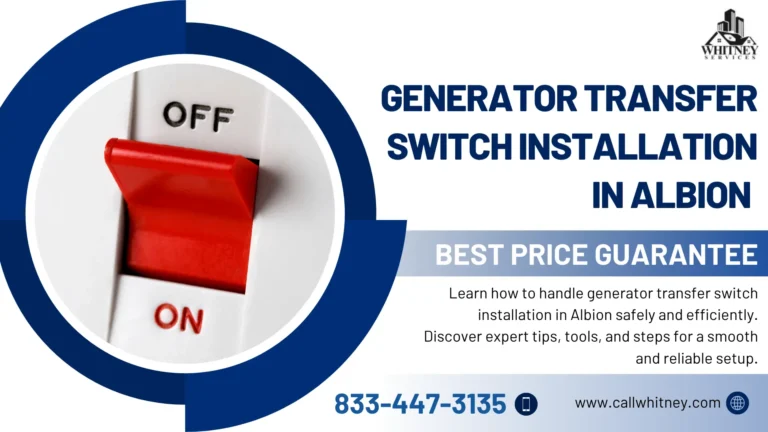
Think of it this way: owning a generator without a transfer switch is like having a car with no steering wheel. The engine might run, but without proper control, it’s risky and unreliable. A generator transfer switch installation in Albion ensures that electricity flows seamlessly from your generator to your home when you need it most, protecting both your family and your property.
In this guide, we’ll walk you through every detail — from how transfer switches work, the types available, and whether you can install one yourself, to the benefits of hiring professionals like Whitney Services, a trusted provider of electrical services in Albion. We’ll also answer the most common homeowner questions so you can make confident, informed decisions about your home’s power setup.
Key Takeaways
- A transfer switch safely connects your generator to your home’s electrical system.
- It prevents backfeeding electricity into the power grid, protecting line workers and your equipment.
- You can power multiple home circuits without running messy extension cords.
- Permits and inspections are usually required for installations in Albion.
- Licensed electricians like Whitney Services ensure your system meets code and operates safely.
What is a Generator Transfer Switch?
Think of a transfer switch as your home’s electrical “traffic controller.” It decides whether your power comes from the utility grid or your generator during an outage. Here’s how it helps:
- Function: It isolates your home’s wiring from the utility lines when your generator is running.
- Protection: Prevents dangerous current from traveling back to power lines.
- Simplicity: Lets you power key circuits directly from your breaker panel, keeping life running smoothly even during a blackout.
Types of Transfer Switches
Choosing the right switch depends on your needs and budget. Here’s a quick breakdown:
Manual Transfer Switch:
- You manually start your generator and flip the switch during an outage.
- Great for smaller setups and homeowners who want a simple, affordable option.
Automatic Transfer Switch (ATS):
- Detects power loss, starts your generator, and switches power automatically.
- Ideal for whole-house backup systems and peace of mind when you’re not home.
Interlock Kit:
- A budget-friendly alternative that blocks your main breaker and generator breaker from operating together.
- Works for limited circuits but may not be allowed everywhere — always check local code in Albion.
Tools and Materials You Will Need
Preparation makes the job smoother. Here’s what you’ll need for installation:
- Transfer Switch: Sized to match your home’s electrical load and generator output.
- Generator: Portable or standby model rated for the circuits you plan to power.
- Cables & Connectors: Heavy-duty outdoor cables, conduit, and fittings.
- Grounding Equipment: Grounding rod, wire, and clamps for safety.
- Labeling Supplies: For clearly marking powered circuits.
- Tools: Screwdrivers, torque wrench, voltage tester, wire strippers, and drill.
- Safety Gear: Gloves, goggles, and insulated tools.
- Permits: Required by the city of Albion before installation begins.
Step-by-Step Installation
Installing a generator transfer switch takes planning, patience, and precision. Here’s how it’s typically done:
Step 1: Plan the Load:
Identify which circuits you want to power — usually essentials like refrigerators, sump pumps, lights, and heating systems.
Step 2: Choose the Switch and Location:
Install the switch close to your main breaker panel for easier wiring and code compliance.
Step 3: Turn Off the Main Power:
Always shut off electricity to the home before beginning any work. Use lockout tags for added safety.
Step 4: Mount the Transfer Switch:
Secure it on the wall beside your breaker panel, leaving enough room for cables and service access.
Step 5: Wire the System:
Connect circuits from the panel to the transfer switch, then wire the generator inlet to the switch.
Step 6: Label and Test Everything:
Clearly mark powered circuits, start the generator, and verify that all connections work properly.
Step 7: Schedule Inspection:
In Albion, you’ll need a licensed electrician or inspector to approve the installation before regular use.
Can I Install a Generator Transfer Switch Myself?
It’s possible for handy homeowners, but in most cases, professional help is safer and smarter. Here’s why:
- Complexity: Installation involves service-side wiring that can be dangerous.
- Code Compliance: Albion requires electrical permits for this type of work.
- Safety: Incorrect wiring can damage your generator or home circuits.
- Recommendation: Always hire licensed electrical services in Albion, such as Whitney Services, for peace of mind.
Do I Need a Permit for a Generator Transfer Switch?
Yes, and it’s important. Permits guarantee that your installation meets electrical safety codes. In Albion:
- Required: Any connection to the home’s electrical panel needs a permit.
- Inspections: Must be scheduled before and after installation.
- Handled by Pros: Whitney Services manages this process for you, saving time and ensuring full compliance.
Do You Need an Electrician to Install a Generator Transfer Switch?
For most homeowners, yes — and here’s why:
- Knowledge: Electricians understand load balancing, grounding, and safety protocols.
- Equipment: They have the right tools and testing equipment for the job.
- Code Requirements: Albion regulations often require licensed professionals for this type of installation.
- Result: A system that’s reliable, safe, and ready to perform during the next power outage.
Is It Illegal to Run a Generator Without a Transfer Switch?
In many areas, including Albion, it can be against electrical safety codes. Key facts to remember:
- Safety Risk: Without a transfer switch, generators can send current back into utility lines.
- Legal Requirement: Permanent generator setups must use a transfer switch or approved interlock system.
- Temporary Use: Extension cords are acceptable for short-term, small appliance use only.
What Is a Cheaper Alternative to a Transfer Switch?
If you’re on a tight budget, you have a few options — but each comes with trade-offs:
- Extension Cords: Simple but limited; you can only power appliances, not circuits.
- Interlock Kits: Less expensive than a full switch, but restricted in capacity.
- Manual Systems: Require manual switching but cost less than automatic setups.
Even if you start small, it’s wise to plan for a proper transfer switch later for full convenience and safety.
Is a Generator Transfer Switch Worth It?
In a word — yes. It’s a long-term investment in comfort, safety, and peace of mind. Benefits include:
- Reliability: Instant access to power during outages.
- Safety: Protects your appliances and family from electrical hazards.
- Convenience: No need to run multiple extension cords around your home.
- Resale Value: Adds appeal to your property for future buyers.
When you consider the protection and comfort it provides, a transfer switch installation is absolutely worth it.
Why Choose Whitney Services
If you’re ready to install a generator transfer switch in Albion, you deserve a company that knows the area and values your safety. Whitney Services has been a trusted local provider for years, offering reliable electrical services in Albion with a focus on quality and care. Here’s what sets them apart:
- Experience: Skilled electricians trained in both portable and standby generator systems.
- Full Service: From permits and planning to final inspection.
- Local Knowledge: Familiar with Albion’s specific codes and permit processes.
- Customer Care: Friendly, professional, and focused on long-term satisfaction.
- Comprehensive Solutions: Offering generator installation in Albion and maintenance for year-round reliability.
When it comes to powering your home safely, Whitney Services makes it simple — one call, one trusted team, one reliable installation.
Conclusion
A generator transfer switch is the missing piece between owning a generator and using it safely. Whether you’re setting up a small backup or a full home system, the steps above guide you through the essentials. Still, the best results come from professional installation.
For dependable generator transfer switch installation in Albion, contact Whitney Services. Their experienced electricians make sure everything — from permits to final testing — runs smoothly, so you can enjoy safe, worry-free power whenever you need it.
Frequently Asked Questions
Costs vary based on generator size and switch type, but most installations range from $800 to $2,500, including materials and labor.
Most jobs take a single day, with a short wait for inspection and approval afterward.
It depends on your setup. Portable units often need separate grounding, while standby systems usually share the home’s existing ground.
Yes. Many switches are compatible with both portable and standby generators, offering flexible backup power options.
Test your generator and switch monthly or after any major storm to ensure everything works when you need it.