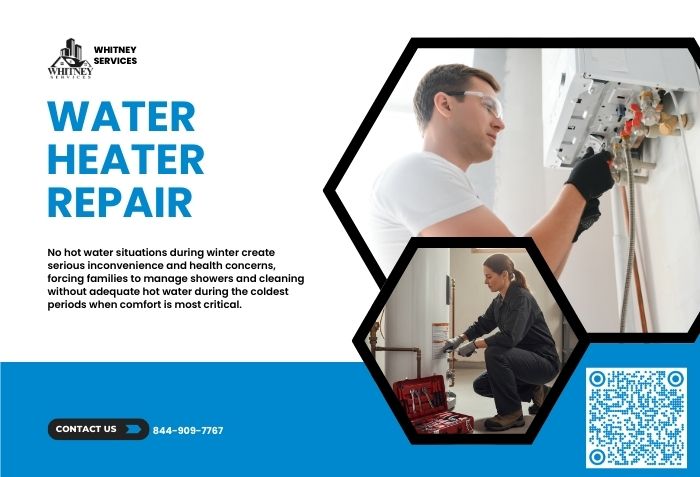
Cold weather in Comstock Charter Township creates ideal conditions for water heater failures when freezing temperatures stress aging equipment that was already struggling through months of continuous operation. No hot water situations during winter create serious inconvenience and health concerns, forcing families to manage showers and cleaning without adequate hot water during the coldest periods when comfort is most critical. Whitney Services responds regularly to water heater breakdown calls during Michigan winters when equipment failures eliminate hot water precisely when families need it most. Understanding why cold weather triggers water heater problems and recognizing warning signs of developing failures allows you to address issues before winter emergency situations develop.
Why Cold Weather Stresses Water Heaters
Water heater performance declines during cold weather because the system must heat incoming water to a higher temperature differential than during mild seasons. In summer, ground temperature provides preheating reducing heating demands. In winter, incoming water arrives already chilled by underground supply lines, requiring the heater to raise temperature from perhaps 40 degrees to desired 120 degrees, a 80-degree increase compared to summer’s smaller differential.
This increased heating demand stresses aging water heaters operating near capacity already. Systems that provided adequate hot water during mild months struggle during winter when demand peaks and incoming water is coldest. Extended operation during cold months accelerates component wear and failure.
Temperature fluctuations during winter freeze-thaw cycles stress water heater tanks and connections. Expansion and contraction from temperature changes creates metal fatigue. Connections weaken progressively as stress cycles accumulate. Tanks develop cracks or pinhole leaks from thermal stress. These problems often reach critical failure points during peak winter demand when the system is stressed maximizing.
Mineral accumulation inside tanks worsens during winter operation when extended heating increases mineral precipitation. Sediment accumulation speeds up tank corrosion and lowers heating performance. Corroded tanks develop leaks more readily when stressed by cold weather demand increases.
Gas supply pressure sometimes decreases during extreme cold affecting burner operation. Natural gas density increases in cold temperatures affecting burner efficiency. Some water heaters experience pilot light problems during freezing weather when temperature stresses ignition components.
No Hot Water Winter: Immediate Impacts and Causes
No hot water situations during winter create immediate impacts on home comfort and family health. Showers with inadequate hot water become unbearable during freezing weather. Dishes cannot be properly washed in cold water. Laundry quality suffers from cold water washing. Bathing becomes uncomfortable or impossible with no hot water. Children and elderly residents suffer most from hot water loss.
Common water heater failure causes during cold weather include sediment accumulation blocking burner operation, thermal stress creating tank cracks allowing water leakage, corroded anode rods failing to protect tanks, broken heating elements in electric heaters, failed thermostats providing improper temperature control, and gas supply or ignition problems preventing burner operation.
Leaking water heaters discovered during winter create additional complications. Water pooling in basements freezes creating ice hazards. Leaked water running down foundation walls freezes creating structural stress. Discovering leaks during winter sometimes means dealing with ice alongside water damage restoration. Rapid professional response minimizes damage.
Water heater age predicts failure likelihood. Heaters exceeding 10 years old experience substantially increased failure risk. Heaters beyond 12 to 15 years have typically exceeded practical lifespan. During cold weather, aged heaters often fail. Knowing your water heater age helps anticipate failure risk during winter months.
Cold Weather Plumbing Issues Related to Water Heaters
Beyond direct water heater failure, cold weather creates related plumbing problems affecting hot water delivery. Frozen hot water pipes prevent hot water from reaching fixtures despite the heater functioning. Supply lines running through unheated areas or exterior walls freeze during extended cold, blocking hot water flow. Insulating hot water pipes prevents freezing but many homes lack adequate insulation.
Expansion tank failures during cold weather sometimes cause water heater problems. Expansion tanks absorb pressure increases from heating water. Failed tanks allow excessive pressure building inside water heater tanks, causing leaks or ruptures. Pressure relief valves sometimes fail during cold weather, preventing pressure release and creating over-pressure situations.
Thermostat malfunction during cold weather prevents water heater from maintaining consistent temperature. Failing thermostats sometimes allow water heating to excessive temperatures creating scalding hazards. Other failures prevent adequate heating, providing insufficient hot water. Cold temperatures stress thermostat function pushing marginal components to failure.
Water line freeze-ups upstream from the water heater sometimes block cold water supply preventing heater operation. If incoming cold water supply freezes, the heater cannot function. This scenario occurs in homes with supply lines routed through unheated areas or exterior walls. Insulating water supply lines prevents freeze-ups.
Professional Water Heater Repair Assessment
Professional water heater repair in Comstock Charter Township begins with diagnostic evaluation determining why hot water is inadequate or absent. Our technicians check water heater power or gas supply ensuring energy reaches the unit. We test burner operation or electric heating elements confirming they function. We measure water temperature confirming setpoint and actual output match.
We inspect water heater tanks for visible leaks, corrosion, or damage. We check pressure relief valve operation ensuring proper function. We inspect expansion tanks for problems. We examine anode rod condition if accessible, noting corrosion or degradation. We evaluate incoming water supply confirming adequate flow.
We perform sediment flushing if buildup is identified. This simple maintenance procedure removes sediment restoring heating efficiency. We check for leaks at connections, evaluate gas valve operation if applicable, and test thermostat function.
Based on findings, we recommend repairs or replacement. For heaters with minor problems, repairs restore function at reasonable cost. For aged heaters with multiple problems, replacement with modern efficient equipment is often the best solution.
Water Heater Repair Versus Replacement Decisions
Repair versus replacement decisions depend on heater age, problem severity, and replacement cost comparison. For heaters under 8 years old, repairs are usually justified unless damage is catastrophic. For heaters 8 to 12 years old, the decision depends on repair costs versus replacement costs. For heaters beyond 12 years, replacement is usually more economical than repairs.
Consider water heater efficiency when evaluating replacement. Modern water heaters operate at substantially higher efficiency than equipment installed 10 or more years ago. Energy savings from efficient replacement equipment often recover replacement costs within several years. Cold weather increases heating demands making efficiency improvements particularly valuable.
Tankless water heaters provide an alternative to traditional tank systems. These units heat water on demand rather than maintaining continuously heated storage tanks. Tankless heaters reduce energy consumption significantly compared to storage tanks. They provide unlimited hot water compared to tank capacity limits. However, tankless systems cost more initially than tank systems.
Heat pump water heaters transfer heat from air or ground rather than generating heat directly. These systems consume substantially less energy than conventional systems. They work well in moderate climates but struggle during extreme cold requiring electric resistance heating supplementation.
Why Choose Whitney Services for Water Heater Repair in Comstock Charter Township
Whitney Services provides professional water heater repair addressing cold weather failures throughout Comstock Charter Township. Our technicians diagnose problems accurately determining whether repairs or replacement is appropriate. We provide honest recommendations matching your budget and priorities.
We respond rapidly to no hot water emergencies understanding the urgency during cold weather. We work efficiently to restore hot water as quickly as possible. We stand behind our repair work with warranty protection ensuring customer satisfaction.
We discuss water heater replacement options including efficiency ratings, fuel types, and equipment sizes. We help you understand long-term costs comparing efficient modern equipment to aged systems. We handle complete water heater replacement from equipment selection through installation and testing.
We provide maintenance recommendations extending water heater lifespan and preventing cold weather failures. Regular maintenance including sediment flushing and anode rod inspection prevents most failure situations.
RESTORE YOUR HOT WATER
Cold weather water heater failures eliminate hot water precisely when families need it most. Professional water heater repair restores hot water maintaining comfort and hygiene during winter. Don’t accept no hot water situations. Contact Whitney Services for water heater repair and hot water restoration.
Contact Whitney Services for water heater repair in Comstock Charter Township:
- Rapid water heater diagnostic evaluation
- Burner and heating element testing
- Pressure and temperature assessment
- Tank inspection for leaks and corrosion
- Sediment flushing and removal
- Thermostat and control testing
- Professional repair recommendations
- Water heater replacement services
- Maintenance guidance and scheduling
Call Whitney Services immediately when no hot water occurs during cold weather in Comstock Charter Township.
FREQUENTLY ASKED QUESTIONS
Why does my water heater fail during cold weather in Comstock Charter Township?
Cold weather increases heating demands when incoming water is coldest requiring larger temperature increases. Extended operation stresses aging equipment. Thermal expansion and contraction from freeze-thaw cycles stress tanks and connections. Sediment accumulation worsens during extended heating. These factors combine during winter causing failure in water heaters that functioned adequately during milder seasons. Professional water heater repair assessment identifies specific failure causes. Regular maintenance prevents many cold weather failures.
What should I do immediately if I have no hot water during cold weather?
Check your water heater’s power (electric) or gas (gas heater) supply ensuring energy reaches the unit. Verify the thermostat is set appropriately and powered on. Check for visible leaks around the tank. If simple checks don’t restore hot water, contact Whitney Services immediately for professional water heater repair. Describe your situation clearly. While waiting for service, use stored hot water from the tank or heat water manually on the stove for essential needs.
How much does water heater repair typically cost in Comstock Charter Township?
Minor repairs like thermostat replacement or valve repair cost $200 to $500. Sediment flushing costs $100 to $300. Major component replacement might cost $600 to $1,500. Complete water heater replacement costs $1,000 to $3,000 depending on equipment type and installation complexity. For heaters older than 10 years, replacement often costs less than major repairs. Professional assessment recommends the most economical solution for your specific situation.
How long do water heaters typically last in Michigan?
Most water heaters last 8 to 12 years under normal conditions. Hard water areas experience shorter lifespan, sometimes 5 to 8 years, due to mineral accumulation. Soft water areas sometimes achieve 12 to 15 years. Regular maintenance including sediment flushing and anode rod inspection extends lifespan. Cold Michigan winters stress water heaters shortening lifespan compared to milder climates. When heaters approach 10 years old, planning replacement before failure occurs is wise.
Can I prevent water heater failure during cold weather?
Regular maintenance including annual sediment flushing prevents mineral accumulation. Anode rod inspection and replacement maintains tank protection from corrosion. Insulating hot water pipes prevents freeze-ups. Maintaining adequate cold water supply to the heater prevents operation problems. Keeping the water heater area clear allows proper operation and heat dissipation. For aging heaters, planning replacement before winter prevents emergency failures during cold weather when professional service is most difficult to obtain.