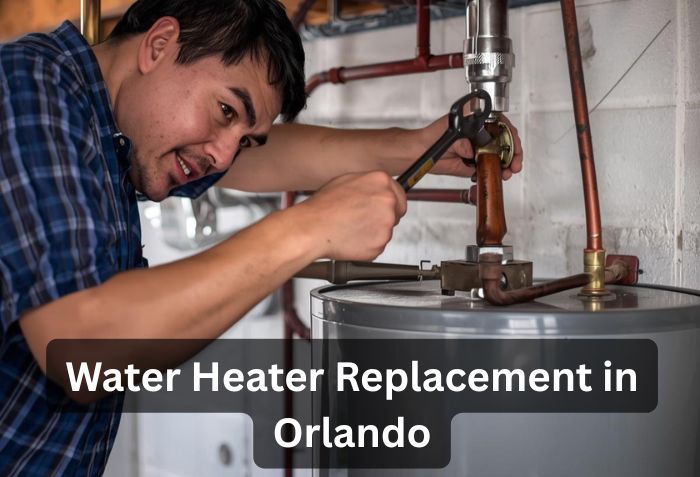
Your water heater is one of those home systems that remains invisible until the day it stops working. Then suddenly, cold showers, no hot water for dishes, and a laundry backup make you realize just how much you depend on the continuous availability of hot water. The question of when to replace a water heater is one that every homeowner eventually faces, and the answer is not always straightforward. Age matters, but a 10-year-old water heater that has been meticulously maintained may still have years of reliable service ahead while a 7-year-old unit that has been neglected may already be on the edge of failure. Repair history, efficiency, safety concerns, and household needs all factor into the decision. At Whitney Services, we help Orlando-area homeowners navigate this decision regularly, and we understand that the right answer depends on evaluating your specific situation rather than following a one-size-fits-all rule.
In this comprehensive guide, we will walk you through the key factors that determine when water heater replacement in Orlando, FL makes more sense than continued repairs, explain the expected lifespan of different water heater types, outline the warning signs that indicate your water heater is approaching the end of its service life, and help you understand your replacement options encompassing hybrid types, conventional tank units, and tankless systems. Whether you are trying to decide if a repair is worth making or planning ahead for an inevitable replacement, this guide will give you the information you need to make a confident, informed decision.
Understanding Water Heater Lifespan in Florida
The expected lifespan of a water heater depends on several factors including the type of unit, the quality of the installation, the hardness of the water supply, maintenance history, and usage patterns. In Central Florida’s specific environment, certain factors accelerate wear compared to other regions of the country.
A conventional tank-style gas or electric water heater typically lasts 8 to 12 years in the Orlando area. This is slightly shorter than the 10 to 15 year lifespan often cited in national averages, and the difference is attributable to Florida’s hard water, which accelerates sediment buildup and corrosion inside the tank. Homes with water softeners or homes that perform annual tank flushing to remove sediment tend to see water heaters reach the upper end of this range or exceed it. Units that have never been maintained often fail closer to the 7 to 10 year mark.
Tankless water heaters have a longer expected lifespan, typically 15 to 20 years with proper maintenance. The absence of a storage tank eliminates many of the failure modes that affect traditional water heaters, and the components in a tankless unit are designed for longer service life. However, tankless units require annual descaling in hard water areas like Orlando to prevent mineral buildup in the heat exchanger, and neglected units can fail prematurely.
Hybrid heat pump water heaters, which are becoming increasingly popular for their energy efficiency, have an expected lifespan similar to tankless units, typically 12 to 15 years or more. These units combine a storage tank with heat pump technology and are more complex than traditional tank heaters, but when properly maintained they deliver excellent longevity along with significantly lower operating costs.
The age of your water heater is usually stamped on a label affixed to the unit, though it is often encoded in the serial number rather than stated plainly. The month and year of manufacture are usually indicated by the first two or four digits of the serial number. For example, a serial number beginning with 0518 indicates manufacture in May 2018. If you are unsure how to decode your water heater’s age, Whitney Services can identify it during a service visit.
Age alone should not be the sole determining factor in a replacement decision, but once a water heater passes the typical lifespan for its type, the risk of failure increases significantly each year, and the financial case for replacement versus continued repairs strengthens.
Sign 1: Age Combined With Increasing Repair Frequency
The most reliable indicator that water heater replacement is the right choice is when an aging unit begins requiring frequent repairs. A water heater that is 8 or more years old and has needed two or more significant repairs in the past two years is statistically likely to continue failing, and the cumulative cost of continued repairs will soon exceed the cost of replacement.
Common repairs on aging water heaters include heating element replacement on electric units, thermostat replacement, pressure relief valve replacement, and anode rod replacement. Each of these repairs, while individually affordable, represents a component failure, and once one component begins failing, others typically follow in relatively quick succession as the unit enters the end-of-life failure cascade.
A practical rule of thumb used throughout the plumbing industry is the 50 percent rule. If a repair costs more than 50 percent of what a new water heater would cost, and the unit is past the midpoint of its expected lifespan, replacement is generally the smarter financial choice. For example, a repair that costs $400 on an 8-year-old water heater with a replacement cost of $1,200 sits right at the 50 percent threshold and should prompt serious consideration of replacement rather than repair.
Beyond the strict financial calculation, there is also the matter of reliability and peace of mind. A water heater that has been repaired multiple times is a water heater that has demonstrated it is no longer reliable. Even after a repair, you have no assurance that another failure is not right around the corner. Replacement with a new unit resets the reliability clock and typically comes with a manufacturer warranty that provides protection against defects for several years.
Whitney Services always presents both repair and replacement options with honest assessments of expected outcomes so homeowners can make informed decisions. We never push for replacement when repair is genuinely the better option, but we also believe homeowners deserve to understand when continued investment in an aging unit is likely throwing good money after bad.
Sign 2: Visible Rust or Corrosion on the Tank
Water heaters are designed to resist corrosion through several protective measures including a glass lining inside the tank, a sacrificial anode rod that corrodes preferentially to protect the tank, and protective coatings on external surfaces. When these protective measures are exhausted, rust and corrosion appear, and once they do, the water heater is on borrowed time.
Rust around the pressure relief valve, at pipe connections, or on the top of the tank is a warning sign but is not always terminal. These areas can sometimes rust due to external moisture exposure rather than internal tank corrosion, and addressing the leak or moisture source may extend the unit’s life.
Rust on the tank body itself, particularly near the bottom where sediment and moisture accumulate, is a more serious indicator. Rust on the outside of the tank usually indicates that corrosion has penetrated through the protective lining inside and is working its way outward. By the time rust is visible on the exterior, the interior of the tank is often extensively corroded and leaking is imminent or already occurring in small amounts.
Rusty or discolored hot water coming from taps is another sign that the interior of the tank is corroding. If only the hot water is discolored and cold water remains clear, the issue is the water heater rather than the supply line. Rusty water early in the morning or after periods of inactivity that clears up after running the water for a few minutes suggests sediment and rust particles have settled in the tank and are being stirred up when water flows.
Once rust and corrosion have begun in earnest, there is no practical repair. The tank itself is failing, and while the unit may continue limping along for weeks or even months, failure is inevitable. A rusting tank is a high priority for replacement because when it fails, it typically does so catastrophically by developing a leak that can release the entire contents of the tank into the surrounding area. Water heaters are often located in garages, utility closets, or interior spaces where a major leak can cause thousands of dollars in water damage to flooring, drywall, and belongings.
Sign 3: Leaking Water Heater
Any active leak from a water heater should be treated as a serious situation requiring prompt evaluation. Small leaks do not repair themselves, and water heaters do not heal. A leak will only worsen until the unit fails completely.
Leaks can originate from several locations on a water heater, and the location provides clues about the severity and whether repair is possible. A leak from the temperature and pressure relief valve at the top or side of the tank may indicate excessive temperature or pressure inside the tank, which can sometimes be resolved by replacing the valve or addressing the underlying cause such as a faulty thermostat. A leak from the drain valve at the bottom of the tank may be repairable by replacing the valve if the leak is coming from the valve itself rather than the tank connection.
A leak from the top of the tank where the cold water inlet or hot water outlet pipes connect may be fixable by tightening or replacing the connection, though if the tank fitting itself is corroded, repair may not be reliable. The most serious leak scenario is water leaking from the bottom or body of the tank itself. This indicates the tank has rusted through and is failing. There is no repair for a leaking tank, and replacement is the only option.
Even small leaks that are only releasing drops of water per hour should not be dismissed. A slow leak is still a leak, and the rate will increase over time. Water leaking onto a garage floor may seem like a minor annoyance, but if that water heater is in an attic or second-floor closet, even a slow leak can cause serious damage to ceilings and walls before it is noticed.
If your water heater is leaking, contact Whitney Services immediately for evaluation. We can determine the source of the leak, assess whether the unit is repairable, and provide guidance on whether emergency replacement is necessary or whether the situation can be managed with a scheduled replacement appointment.
Sign 4: Inconsistent Water Temperature or No Hot Water
When a water heater stops delivering hot water reliably, it is either a repairable component failure or a sign that the unit is at the end of its service life. Diagnosing which scenario you are facing requires understanding what is happening inside the unit.
On electric water heaters, heating elements are one of the most common failure points. Most electric water heaters have two heating elements, one near the top of the tank and one near the bottom. When the upper element fails, the water heater can still produce some hot water but the recovery time becomes extremely long and the quantity of hot water is reduced. When the lower element fails, the symptoms are similar. A failed heating element is a relatively straightforward repair on a water heater that is otherwise in good condition, but on an older unit with other problems, it may be a sign that replacement is the better path.
On gas water heaters, inconsistent water temperature or insufficient hot water can result from a failing thermostat, a problem with the pilot light or ignition system, or sediment buildup in the tank that is insulating the water from the heat source. Some of these issues are repairable. Others, particularly heavy sediment accumulation, indicate the unit has not been maintained and is likely experiencing multiple forms of degradation.
Water heater capacity is another consideration. A water heater that used to provide adequate hot water for your household but now seems to run out quickly may not have failed at all. Household hot water demand may have increased due to added occupants, changed usage patterns, or new appliances. In this case, replacing the existing unit with a larger capacity model or switching to a tankless system that provides unlimited hot water may be the solution.
No hot water at all is a situation that requires immediate diagnosis. On an electric unit, this can result from a tripped circuit breaker, a failed heating element, a failed thermostat, or a complete electrical failure. On a gas unit, it can result from a failed pilot light, a gas supply interruption, a failed thermocouple, or a failed gas control valve. Some of these issues are quick and inexpensive fixes. Others indicate the need for replacement.
Whitney Services provides water heater repair and diagnostic services to identify the cause of hot water problems and help homeowners decide whether repair or replacement is appropriate based on the age and condition of their specific unit.
Sign 5: Strange Noises From the Water Heater
Water heaters are not silent appliances, but certain sounds indicate developing problems that should not be ignored. Understanding what different noises mean helps homeowners recognize when professional evaluation is needed.
Popping or rumbling sounds are the most common noise complaint and are caused by sediment buildup at the bottom of the tank. As water heats, small amounts of water trapped beneath the sediment layer boil and create steam bubbles that burst as they escape through the sediment. This creates the popping sound. While not immediately dangerous, heavy sediment buildup reduces heating efficiency, accelerates tank corrosion, and indicates the water heater has not been maintained. A water heater that is making loud popping sounds is overdue for flushing, and if the unit is old, replacement may be a better investment than attempting to flush a tank that has years of compacted sediment.
Hissing sounds can indicate water dripping onto a hot surface, such as the burner in a gas water heater. This can be a sign of a leak inside the unit and should be investigated promptly.
Sizzling or crackling sounds may indicate water leaking onto electrical components in an electric water heater, which is both a performance problem and a potential electrical hazard.
Banging or knocking sounds that occur when hot water is turned on at a fixture indicate water hammer, which is a pressure shock that occurs when water flow is suddenly stopped or started. While water hammer is not directly a water heater problem, it creates stress on plumbing connections throughout the system including at the water heater, and addressing it with water hammer arrestors can reduce wear on all plumbing components.
A constantly running or humming sound from a tankless water heater can indicate that the unit is trying to fire but not igniting properly, or that a component is malfunctioning.
If your water heater is making unusual noises, it does not necessarily mean immediate replacement is required, but it does mean professional evaluation is warranted to determine the cause and whether repair or replacement is the appropriate response.
Sign 6: Rising Energy Bills Without Explanation
Water heating is one of the largest energy consumers in a home, accounting for roughly 15 to 20 percent of total household energy use. When a water heater loses efficiency, it shows up on utility bills as increased electricity or gas consumption.
As water heaters age, several factors reduce their efficiency. Sediment buildup on the bottom of the tank acts as insulation between the heat source and the water, forcing the unit to run longer to achieve the desired temperature. Deteriorating insulation around the tank allows heat to escape, requiring the unit to work harder to maintain water temperature. A failing thermostat may cause the unit to heat water to higher temperatures than necessary, wasting energy.
If your electricity or gas bill has increased without a corresponding change in usage, and other energy-consuming systems like HVAC have been ruled out, the water heater is a likely culprit. Comparing your current energy bills to bills from the same months in previous years can reveal whether consumption has increased.
On electric water heaters, one simple way to assess whether the unit is consuming excessive energy is to turn off the circuit breaker to the water heater for 24 hours while monitoring the electric meter. The reduction in consumption will tell you how much energy the water heater is using. If the number seems disproportionately high compared to your household’s hot water usage, the unit is operating inefficiently.
Modern water heaters are significantly more efficient than units manufactured 10 or 15 years ago. If your current unit is old and inefficient, water heater replacement in Orlando, FL with a high-efficiency model can reduce water heating energy costs by 20 to 40 percent. For many homeowners, the energy savings alone justify replacement even if the old unit is still technically functional.
Understanding Your Water Heater Replacement Options
When the time comes to replace a water heater, homeowners face more options than ever before. Understanding the differences between system types helps you select the right replacement for your household’s needs and budget.
Traditional tank water heaters remain the most common and cost-effective option for most homes. They store and heat a large volume of water, typically 40 to 80 gallons, and maintain it at a ready-to-use temperature. Tank water heaters are available in electric and gas models. Electric water heater models are less expensive to purchase and install but typically more expensive to operate due to electricity costs. Gas water heater installation in Orlando is a popular choice when natural gas service is available because gas is generally less expensive per BTU than electricity, making gas units cheaper to operate despite higher upfront costs.
Tankless water heaters, also called on-demand or instantaneous water heaters, heat water only when it is needed rather than storing a tank full of hot water. When a hot water tap is opened, cold water flows through the unit and is heated by electric coils or a gas burner, providing a continuous supply of hot water with no tank to run out. Tankless water heater installation offers several advantages including unlimited hot water supply, longer lifespan than tank units, and significantly lower energy consumption because the unit is not constantly maintaining a tank of hot water. The primary disadvantages are higher upfront cost and the need for annual descaling maintenance in hard water areas.
Hybrid heat pump water heaters combine a storage tank with heat pump technology that extracts heat from the surrounding air and uses it to heat water. These units are extremely energy-efficient, often using 50 to 60 percent less energy than a standard electric tank water heater. They work best in locations with moderate to warm ambient temperatures, which makes them well-suited for Florida’s climate. The trade-offs are higher purchase cost and the requirement for adequate space and airflow around the unit.
Solar water heaters use solar collectors to heat water and are an option for homeowners interested in renewable energy. Florida’s abundant sunshine makes solar water heating viable, but the high upfront cost and complexity of installation limit their popularity in residential applications.
Whitney Services can assess your home’s specific requirements, explain the costs and benefits of each option, and help you select the water heater type that best fits your household’s hot water needs, budget, and long-term goals.
The Cost of Water Heater Replacement in Orlando, FL
Understanding the cost of water heater replacement helps homeowners budget appropriately and make informed comparisons between repair and replacement options.
A standard 40 to 50 gallon electric tank water heater replacement typically costs $900 to $1,500 installed, including removal and disposal of the old unit. A standard 40 to 50 gallon gas tank water heater replacement typically costs $1,200 to $2,200 installed, with the higher cost reflecting the additional labor and materials required for gas line connections and venting.
Tankless water heater installation costs vary significantly based on whether the unit is gas or electric and whether the installation is a straightforward replacement or requires upgrading electrical service, gas lines, or venting. Electric tankless units for a single fixture or point-of-use application can be installed for $500 to $1,200. Whole-home electric tankless systems typically cost $1,800 to $3,500 installed. Gas tankless water heaters for whole-home use typically cost $2,500 to $4,500 installed, with the higher cost driven by venting requirements and gas line upgrades.
Hybrid heat pump water heaters typically cost $2,000 to $3,500 installed depending on the model and installation requirements.
These cost ranges are general estimates for Orlando-area installations. The actual cost for your home depends on factors including the size of the unit required, the complexity of the installation, whether code upgrades such as pan and drain installation or electrical upgrades are needed, and whether permits are required.
It is also worth noting that many utility companies and government programs offer rebates for high-efficiency water heater installations. Federal tax credits are available for certain qualifying water heaters under the Inflation Reduction Act. Whitney Services stays current on available rebates and incentives and will help you identify any programs you may qualify for to reduce your out-of-pocket cost.
Why Professional Installation Matters
Water heater installation is not a DIY project for most homeowners. The work involves plumbing connections that must be leak-free and code-compliant, electrical work that if done incorrectly can create fire or electrocution hazards, gas line connections that if done incorrectly can create explosion or carbon monoxide risks, and proper venting for gas units that is critical for safety.
Professional installation by a licensed residential plumber in Orlando ensures the job is done correctly and safely. It also ensures the installation complies with local building codes, which often require permits and inspections for water heater replacement. Improperly installed water heaters can void manufacturer warranties, create insurance coverage issues if damage occurs, and pose genuine safety risks to household members.
Whitney Services provides complete water heater replacement in Orlando, FL including removal and disposal of the old unit, professional installation of the new unit, all necessary plumbing and electrical connections, permitting and inspections where required, and testing to confirm proper operation before we leave your home. Our work is backed by both manufacturer warranties on the equipment and our own workmanship guarantee.
Preventive Maintenance to Extend Water Heater Life
While every water heater will eventually need replacement, homeowners can maximize the lifespan and reliability of their unit through basic preventive maintenance.
Annual tank flushing to remove sediment is the single most impactful maintenance task for traditional tank water heaters. Sediment accumulation accelerates corrosion, reduces efficiency, and causes the popping sounds many homeowners notice. Flushing the tank once per year removes this sediment before it causes problems.
Anode rod inspection and replacement extends tank life by providing ongoing corrosion protection. The anode rod is a sacrificial component designed to corrode in place of the tank. Once it is consumed, the tank begins corroding. Inspecting and replacing the anode rod every three to five years can add years to the tank’s lifespan.
Temperature and pressure relief valve testing ensures this critical safety component is functioning correctly. The valve should be tested annually by lifting the lever and allowing a small amount of water to discharge.
For tankless water heaters, annual descaling or flushing with a descaling solution removes mineral deposits from the heat exchanger and maintains efficient operation.
Whitney Services offers water heater maintenance services as part of our plumbing maintenance plans and can handle these tasks for homeowners who prefer professional service over DIY maintenance.
Frequently Asked Questions
Q1: Can a water heater be repaired or does it always need replacement?
Many water heater problems are repairable, including failed heating elements, thermostats, pressure relief valves, and anode rods. The decision between repair and replacement depends on the age of the unit, the cost of the repair relative to replacement cost, and whether other problems are likely to occur soon. A relatively new water heater with a single component failure is an excellent candidate for repair. A 10-year-old unit with a leaking tank cannot be repaired and must be replaced. A 7-year-old unit with its second or third repair should be seriously evaluated for replacement rather than continued investment in repairs. Whitney Services provides honest assessments of whether repair or replacement is the better option for your specific situation.
Q2: How long does water heater installation take?
A straightforward replacement installation where a similar type of unit is being installed in the same location typically takes three to five hours including removal of the old unit. More complex installations such as tankless water heater installation that requires electrical or gas line upgrades, or installations that require relocating the water heater or adding new code-required components such as expansion tanks, may take a full day or longer. Whitney Services provides realistic time estimates during the consultation phase so homeowners can plan accordingly.
Q3: Should I choose a tank or tankless water heater for my Orlando home?
The right choice depends on your household’s hot water usage patterns, budget, and priorities. Tank water heaters are less expensive upfront and simpler to install, making them the right choice for budget-conscious homeowners or homes with moderate hot water demand. Tankless water heaters have higher upfront costs but provide unlimited hot water, use significantly less energy, and last longer, making them a better long-term investment for homes with high hot water usage or homeowners who prioritize energy efficiency. Whitney Services can evaluate your household’s needs and help you make an informed decision.
Q4: Do I need a permit to replace my water heater in Orlando?
In most cases, yes. Water heater replacement in Orlando typically requires a plumbing permit from the local building department. The permitting process ensures the installation meets current plumbing and building codes, includes required safety components, and is inspected by a qualified inspector. Professional plumbing companies handle permitting as part of the installation service. DIY installations that skip permitting can create issues with home insurance, future home sales, and warranty claims. Whitney Services handles all permitting and inspection requirements as part of our installation service.
Q5: What size water heater do I need for my home?
Water heater sizing depends on the number of occupants in the home and hot water usage patterns. A general guideline is 30 to 40 gallons for one to two people, 40 to 50 gallons for two to three people, 50 to 60 gallons for three to four people, and 60 to 80 gallons for five or more people. Homes with high hot water usage from multiple bathrooms, large soaking tubs, or frequent laundry may need larger capacity. Tankless water heaters are sized by flow rate in gallons per minute rather than storage capacity and must be sized to meet the peak simultaneous hot water demand in the home. Whitney Services performs a proper sizing assessment before recommending a specific water heater model to ensure the unit will meet your household’s needs.