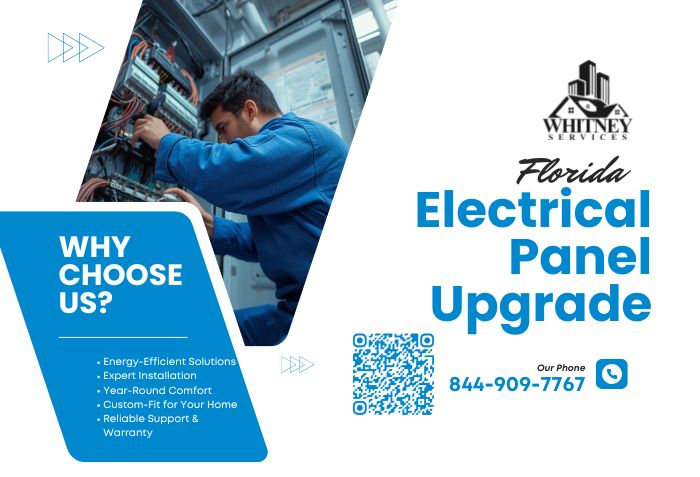
Electrical panel upgrades represent significant home electrical investments addressing insufficient capacity, aging equipment, safety concerns, or code compliance requirements. Understanding when panels need replacement, what upgrade costs include, how panel size affects pricing, and what return on investment panel upgrades provide helps homeowners make informed decisions. At Whitney Services, we provide electrical panel upgrade cost in Key Biscayne transparency with detailed estimates and expert guidance on panel replacement needs.
Understanding Electrical Panel Upgrade Costs
Panel upgrade pricing includes multiple components affecting total investment.
Panel equipment costs range from $500 to $2,000 depending on amperage rating, brand quality, and features. Standard 200-amp residential panels cost $800 to $1,200 while 400-amp panels for larger homes cost $1,500 to $2,000.
Labor costs for panel installation range from $1,000 to $2,500 depending on installation complexity, location accessibility, and required modifications. Straightforward panel swaps cost toward lower end while complex installations with extensive circuit reorganization cost more.
Permit and inspection fees add $100 to $300 to total costs covering required electrical permits and inspection coordination.
Utility coordination fees of $200 to $500 may apply for service disconnection and reconnection required during panel replacement.
Additional components including new circuit breakers beyond those included with panels, weatherhead replacement, or meter base upgrades add $200 to $800.
Total typical costs for electrical panel upgrade in Key Biscayne range from $2,000 to $4,000 for standard 200-amp residential panel replacement.
When to Replace Your Electrical Panel
Several indicators suggest panel replacement rather than continued repairs or upgrades.
Age over 25 to 30 years indicates panels approaching end of serviceable life. Panels from 1980s or earlier warrant replacement consideration.
Insufficient capacity where 60-amp or 100-amp service cannot support modern electrical demands including central air conditioning, electric vehicles, pool equipment, and multiple large appliances.
Frequent circuit breaker trips suggesting inadequate circuit capacity or panel problems rather than temporary overloads.
Obsolete panel types including Federal Pacific Electric (FPE) panels with known failure problems, Zinsco panels with safety issues, or fuse boxes lacking modern safety features.
Physical damage including rust, corrosion, burned connections, or cracked components indicating deterioration requiring replacement.
Burning smells or hot panels suggesting dangerous overheating from failed connections or overloaded capacity.
Home renovation or addition plans requiring additional circuits beyond existing panel capacity.
Electric vehicle charging requiring dedicated high-amperage circuits often necessitating panel upgrades.
Breaker Panel Replacement Process
Understanding installation steps helps homeowners prepare for panel upgrade projects.
Initial assessment includes electrician evaluating existing panel, calculating electrical load requirements, determining appropriate new panel size, and identifying any additional work required.
Permit application by licensed electrician obtaining required electrical permits before work begins ensuring legal compliant installation.
Utility coordination scheduling temporary power disconnection with utility company for safe panel replacement.
Panel removal disconnecting and removing old panel after utility disconnects service at meter.
New panel installation mounting new panel, installing main breaker, organizing and installing circuit breakers, and connecting circuits to new breakers.
Grounding and bonding ensuring proper grounding connections and neutral-ground bonding meeting code requirements.
Circuit identification labeling all circuits clearly identifying what each breaker controls.
Inspection scheduling and coordinating required electrical inspection verifying code-compliant installation.
Utility reconnection after inspection approval having utility reconnect service activating new panel.
Timeline typically requires 1 to 2 days for standard panel replacement with potential additional time for complex installations.
Fuse Box Upgrade Necessity
Homes with fuse boxes rather than circuit breaker panels warrant immediate upgrade consideration.
Safety concerns with fuse boxes include incorrect fuse replacement using oversized fuses bypassing protection, lack of ground fault protection required by modern codes, and obsolete safety features inadequate for current standards.
Capacity limitations as most fuse boxes provide only 60-amp service inadequate for modern electrical demands.
Insurance implications where some insurers refuse coverage or charge higher premiums for homes with fuse boxes.
Resale impact as potential buyers often require panel upgrades before purchase or negotiate lower prices.
Code violations in many jurisdictions where fuse boxes do not meet current electrical codes for sale or major renovation.
Inconvenience of replacing blown fuses versus resetting tripped breakers.
Upgrade cost from fuse box to 200-amp breaker panel ranges from $2,500 to $4,500 including service upgrade from typical 60-amp to adequate 200-amp capacity.
Electrical Panel Installation in Key Biscayne Considerations
Island location creates specific requirements affecting panel installation.
Saltwater environment requiring corrosion-resistant panels and weather-resistant installations protecting against coastal conditions.
Hurricane-rated panels and mounting meeting Florida Building Code wind load requirements ensuring panels withstand storm conditions.
Outdoor panel locations common in Key Biscayne requiring weatherproof enclosures, proper sealing, and corrosion protection.
High-rise condominium panel replacement coordinating with building management, meeting building codes, and minimizing resident disruption.
Luxury home features including smart home systems, sophisticated lighting controls, and multiple sub-panels requiring careful planning and integration.
Historic home considerations in older Key Biscayne properties balancing modern safety with aesthetic preservation.
Panel Size Selection and Costs
Choosing appropriate panel amperage ensures adequate capacity without unnecessary expense.
100-amp panels sufficient only for small homes without central air conditioning, electric water heating, or significant electrical loads. Costs range from $1,800 to $3,000 installed. Not recommended for most modern homes.
200-amp panels appropriate for typical homes with central air conditioning, electric appliances, and standard electrical loads. Represents current standard for residential service. Costs range from $2,000 to $4,000 installed.
400-amp panels necessary for large homes with extensive electrical demands including multiple air conditioning systems, pool equipment, electric vehicle charging, and luxury features. Costs range from $3,500 to $6,000 installed.
Load calculation by licensed electrician determines actual electrical demand guiding appropriate panel size selection preventing undersizing or unnecessary oversizing.
Future planning consideration including potential electric vehicle charging, pool additions, or home expansions may justify larger panels than current needs require.
What Affects Panel Upgrade Costs
Various factors influence final panel replacement pricing.
Existing service size upgrades from 100-amp to 200-amp or 200-amp to 400-amp require utility coordination, new service entrance equipment, and heavier wiring increasing costs by $500 to $1,500.
Panel location accessibility with easily accessible panels costing less than panels in cramped spaces, high locations, or requiring extensive access work.
Circuit quantity affects labor costs. Homes with 20 to 30 circuits cost less than homes with 40+ circuits requiring extensive circuit reorganization.
Service entrance condition where deteriorated weatherheads, meter bases, or service entrance cables require replacement adding $500 to $2,000.
Code compliance requirements bringing installations to current code including AFCI breakers, GFCI protection, and surge protection adds $300 to $800.
Sub-panel integration if existing sub-panels require connection or modification adds labor costs.
Emergency service requesting immediate panel replacement adds $300 to $500 in premium charges.
Return on Investment for Panel Upgrades
Panel upgrades provide multiple benefits justifying investment beyond just addressing immediate needs.
Safety improvement eliminating fire hazards from obsolete panels, overloaded circuits, or deteriorated components provides primary justification.
Home value increase from modern adequate electrical service adds $2,000 to $5,000 to home values.
Insurance benefits including lower premiums or avoiding coverage denial offset upgrade costs over time.
Sale facilitation as panel upgrades often required or strongly recommended during home sales.
Capacity for improvements enabling home renovations, additions, or modern convenience features requiring adequate electrical service.
Peace of mind from knowing electrical service is safe, adequate, and code-compliant.
Prevention of emergency costs avoiding expensive emergency panel failures requiring urgent replacement at premium prices.
Electrician Cost Factors for Panel Work
Understanding what affects electrician pricing helps evaluate quotes.
License and experience level with master electricians commanding $150 to $200 per hour versus journeymen at $100 to $150 per hour.
Geographic factors in Key Biscayne including island location and higher cost of living affecting labor rates.
Project complexity including straightforward replacements versus installations requiring extensive modifications.
Emergency vs scheduled work with emergency panel replacement adding significant premiums.
Time requirements based on panel size, circuit quantity, and installation challenges.
Material markup with contractors typically adding 20 to 40 percent to material costs covering procurement and warranty support.
Comparing Panel Upgrade Quotes
Obtaining and evaluating multiple estimates ensures fair pricing and appropriate scope.
Detailed scope specification ensuring all quotes include equivalent work preventing apples-to-oranges comparisons.
Itemized pricing separating equipment, labor, permits, and additional work allowing component comparison.
Equipment specifications comparing panel brands, amperage ratings, and included features.
Warranty coverage terms comparing labor warranties and manufacturer coverage.
Timeline commitments for project start and completion.
Payment terms including deposit, progress payments, and final payment requirements.
Reference verification confirming contractor quality and reliability.
Red flags including prices significantly below market suggesting cutting corners, vague scope descriptions, or pressure tactics.
Permits and Code Compliance
Panel upgrades require proper permitting ensuring legal safe installations.
Permit requirements mandate permits for panel replacements and service upgrades in Key Biscayne and throughout Florida.
Inspection process includes rough-in inspection before panel cover installation and final inspection after completion.
Code compliance current installations must meet 2020 or later National Electrical Code and Florida Building Code requirements.
AFCI requirements for most residential circuits protecting against arc faults.
GFCI protection expansion in kitchens, bathrooms, garages, outdoors, and other locations.
Surge protection whole-house surge protection increasingly required or recommended.
Grounding and bonding proper grounding system connections meeting current standards.
Permit costs and timeline with permits adding $100 to $300 and requiring 1 to 3 days processing.
Why Choose Whitney Services
Electrical panel upgrades require licensed electricians ensuring safe code-compliant installations. Whitney Services provides transparent electrical panel upgrade cost in Key Biscayne estimates with detailed scope and pricing.
We assess electrical needs accurately, recommend appropriate panel sizes, obtain permits, coordinate utility service, install quality panels correctly, and ensure inspection approval.
If you need electrical panel upgrade, contact Whitney Services today for detailed estimates and expert panel replacement service.
Frequently Asked Questions
Q1: How much does electrical panel upgrade cost in Key Biscayne?
Standard 200-amp panel upgrade costs $2,000 to $4,000 including equipment, labor, permits, and utility coordination. Costs vary based on panel size, installation complexity, and additional requirements.
Q2: How long does panel upgrade take?
Standard panel replacement requires 1 to 2 days including utility disconnection, panel installation, circuit connection, inspection, and reconnection. Complex installations may take 3 to 4 days.
Q3: When should I upgrade my electrical panel?
Upgrade panels over 25 to 30 years old, with insufficient capacity, obsolete types like Federal Pacific or fuse boxes, frequent breaker trips, physical damage, or when planning home improvements requiring additional circuits.
Q4: What size electrical panel do I need?
Most modern homes need 200-amp service. Large homes with extensive electrical demands need 400-amp service. Licensed electrician performs load calculations determining appropriate size for your specific needs.
Q5: Do I need permit for panel upgrade?
Yes, panel upgrades require electrical permits in Key Biscayne and throughout Florida. Licensed electricians obtain permits and coordinate required inspections ensuring legal code-compliant installations.