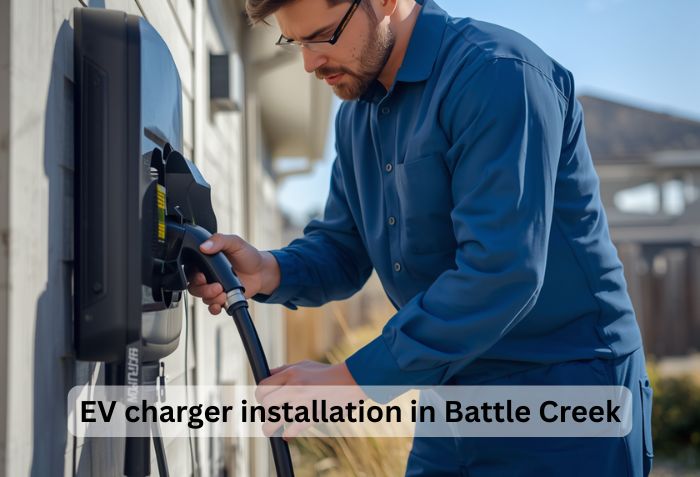
If you are searching for EV charger installation Battle Creek MI, Whitney Services helps homeowners and businesses plan safer, faster, and more reliable charging for electric vehicles. A standard outlet can work for slow charging, but many EV owners eventually want a better setup that fits daily driving, overnight charging, employee use, customer parking, or fleet needs. A professional home EV charger Battle Creek installation can help reduce charging stress, while commercial EV charging Michigan projects can support apartment properties, hotels, workplaces, retail locations, and other businesses preparing for more electric vehicle use. The right setup depends on your electrical panel, charger type, parking layout, charging speed, utility service, permit needs, and future plans. Before installing a charger, Whitney Services can inspect the electrical system, review the best location, check available capacity, and recommend a code ready option that fits the property.
Why EV Charger Installation Matters in Battle Creek
Electric vehicle ownership changes how a home or business uses power. Instead of driving to a gas station, EV owners often charge where the vehicle is parked for several hours. For homeowners, that usually means the garage, driveway, or carport. For businesses, it may mean employee parking, visitor parking, apartment parking, hotel lots, municipal spaces, or fleet parking.
Charging at Home Saves Time
A home charger lets EV owners plug in after work and start the next day with a charged battery. The U.S. Department of Energy’s Alternative Fuels Data Center explains that Level 1 charging uses a 120 volt outlet, while Level 2 charging uses 240 volts in residential settings. Level 2 charging can add about 25 miles of range per hour, compared with about 5 miles per hour for Level 1 charging.
That difference matters for daily driving. A Level 1 cord can be enough for short trips and plug in hybrid vehicles, but many full battery EV owners prefer Level 2 charger installation because it can recover more range overnight.
Businesses Can Serve Customers, Tenants, and Staff
Commercial EV charging can make a property more useful for people who drive electric vehicles. A hotel can serve overnight guests. An apartment community can support residents who do not have private garages. A workplace can support employees who commute by EV. A retail site can give customers a reason to stay longer.
Consumers Energy lists business EV support options and notes a community EV charger rebate of up to $7,500 for eligible overnight charging projects. Consumers Energy also lists public Level 2 charger rebate information, including eligible site types such as multi dwelling units and accommodation or hospitality sites. Rebate rules can change, so property owners should confirm current availability before budgeting.
EV Charging Should Be Planned Before the Charger Is Bought
Not every charger fits every property. Some chargers need more amperage than an older panel can support. Some parking areas need trenching, conduit, bollards, signage, or weather rated equipment. Some businesses need networking, payment control, access rules, or load management.
A licensed electric vehicle charger electrician can review the site before you buy equipment. That step can help avoid buying a charger that is too large for the panel, too weak for the driver’s needs, or wrong for the parking location.
An explanation of Level 1, Level 2, and DC Fast Charging
The right charger depends on how fast the vehicle needs to charge and where the charger will be used.
Level 1 Charging
Level 1 charging uses a common 120 volt outlet. Most EVs come with a portable cord that can plug into a standard household outlet. The AFDC notes that Level 1 charging adds about 5 miles of range per hour under its stated assumption.
Level 1 can work for plug in hybrids, low mileage drivers, or temporary use. Still, it can feel slow for many full EV owners. If a vehicle comes home with a low battery, a standard outlet may not restore enough range by morning.
Level 2 Charging
Level 2 charging uses 240 volts at homes and 208 volts in many commercial settings. The AFDC states that Level 2 can charge a typical EV battery overnight, and it is commonly used for home, public, and workplace charging.
This is the most common upgrade for homeowners who want a more convenient charging routine. Level 2 charger installation may involve a dedicated circuit, a hardwired charger, a 240 volt receptacle, panel review, grounding checks, and permit steps.
DC Fast Charging
DC fast charging is usually used at public charging sites, highway corridors, and high traffic locations. It can charge much faster than Level 2, but it also requires more complex electrical infrastructure. The AFDC lists DC fast charging as adding roughly 100 to 200 or more miles of range in 30 minutes, depending on equipment and vehicle capability.
Most Battle Creek homeowners do not need DC fast charging at home. Businesses may consider it for travel corridors, fleet use, or high turnover sites, but the electrical and utility planning requirements are far more involved.
Home EV Charger Battle Creek: What Homeowners Should Know
A home charger should be planned around the vehicle, the panel, the parking location, and the homeowner’s charging habits.
Your Electrical Panel Must Be Checked First
A Level 2 charger can draw a major load for several hours. Before installation, the electrician should check the panel size, open breaker spaces, service capacity, grounding, panel condition, and other major loads in the home. Homes with electric ranges, dryers, heat pumps, hot tubs, or older panels may need a closer load review.
If the panel is already near capacity, Whitney Services may recommend a panel upgrade, load management equipment, or a charger with adjustable amperage. The goal is to give the EV a safe charging path without overloading the home.
The Charger Location Affects Cost and Design
A charger installed near the electrical panel is often simpler than one placed across the garage, at the far end of a driveway, or on a detached structure. Longer wire runs may require more labor and material. Outdoor installations may need weather rated equipment, proper mounting, conduit, and physical protection.
A site visit helps determine the cleanest path from the panel to the charging location. It also helps avoid tripping hazards, awkward cable reach, poor parking access, and exposure to standing water.
Hardwired Charger or Plug In Charger
Some homeowners choose a hardwired charger. Others choose a plug in charger with a 240 volt receptacle. A hardwired charger can reduce wear on a receptacle and may be preferred for certain higher amperage installations. A plug in model can be easier to remove or replace, but the receptacle and circuit must still be installed correctly.
A licensed electrician can explain which option fits your charger, panel, vehicle, and local requirements.
Smart Chargers Can Help Track Use
Many Level 2 chargers include WiFi, app controls, energy tracking, delayed charging, and scheduled charging. These features can help homeowners charge during preferred times or track how much power the vehicle uses.
Consumers Energy’s residential PowerMIDrive program states that residential customers may earn up to a $500 rebate for installing an approved WiFi connected Level 2 charger at home, subject to program requirements. Homeowners should confirm current eligibility, charger approval, and utility account requirements before buying equipment.
Commercial EV Charging Michigan: Planning for Businesses
Commercial charging projects need more planning than most home installations because more people may use the equipment.
Know Who Will Use the Chargers
A business should start by identifying the users. Will the chargers serve employees, tenants, hotel guests, customers, fleet vehicles, or the public? Each use case affects charger count, placement, access control, payment settings, signage, and charging speed.
A workplace may only need a few Level 2 ports for staff parked all day. A hotel may need overnight charging for guests. A retail center may want visible chargers near entrances. A fleet may need chargers placed where vehicles return at the end of each shift.
Choose the Right Charger Count
Too few chargers can frustrate users. Too many can increase upfront cost without enough use. A site review can help estimate the number of ports based on parking patterns, dwell time, vehicle types, and available electrical capacity.
For many businesses, Level 2 chargers are practical because vehicles are already parked for an hour or more. DC fast charging may fit some public or fleet settings, but it requires more power and planning.
Plan for Load Management
Multiple chargers can place a large demand on a building. Load management can help spread available power across chargers instead of requiring every port to run at full output at the same time. This may reduce the need for larger service upgrades, depending on the site.
For apartment communities, workplaces, and fleet yards, load management can be especially useful because vehicles may be parked for long periods.
Think About Visibility, Safety, and Access
Commercial chargers should be easy to find, safely lit, and placed where cables do not create hazards. Outdoor sites may need bollards, pavement markings, ADA planning, drainage review, and snow removal access.
A good commercial EV charging Michigan installation is not only about electrical work. It also has to fit how people move through the property.
Permit and Inspection Needs in Battle Creek
EV charger installation often involves new wiring, new circuits, panel work, or exterior electrical equipment. That means permit and inspection planning should be part of the project.
Battle Creek Uses BS&A Online
The City of Battle Creek states that BS&A is its online portal for permit applications, digital plan uploads, and scheduling electrical and plumbing inspections. This is important for homeowners and business owners because EV charger work often requires electrical review before the project is closed out.
Electrical Work Often Requires a Permit
Battle Creek city code states that electrical wiring work generally requires the right permit from the City Inspection Division, with certain exceptions listed in the code. A professional installer can help determine what applies to your specific project.
Inspections Protect the Property Owner
A passed inspection can help confirm that the charger circuit, wiring, breaker, grounding, and equipment installation were completed properly. This matters for safety, insurance questions, future property sales, and long term use.
Whitney Services can help plan the installation with local requirements in mind so the project is not treated as a shortcut or afterthought.
What Happens During Professional EV Charger Installation
A proper installation should follow a clear process from inspection to testing.
Site Review
Whitney Services reviews the panel, parking area, charger location, distance from the panel, available capacity, grounding, and equipment needs. For businesses, the review may also include parking layout, trenching needs, charger count, network requirements, and customer access.
Load Review
The electrician checks whether the panel and service can support the charger. For homes, this includes major appliances and planned upgrades. For businesses, this may include lighting, HVAC, kitchen equipment, production equipment, and other large loads.
Equipment Planning
The charger must match the vehicle needs and property conditions. Homeowners may choose a wall mounted Level 2 charger. Businesses may choose wall mounted, pedestal mounted, networked, non networked, public, private, or fleet focused chargers.
Circuit Installation
The electrician installs the proper circuit, wiring, breaker, conduit where needed, and charger connection. Outdoor or commercial installations may need extra protection from weather, vehicles, and public access.
Testing and Walkthrough
After installation, the electrician tests the charger, checks the connection, confirms charging operation, and explains basic use. For smart chargers, the property owner may also need to connect the charger to WiFi or a charging network account.
Why You Should Hire an Electric Vehicle Charger Electrician
EV charger installation is not just plugging a device into the wall. It involves sustained electrical load, circuit sizing, panel capacity, code rules, grounding, and safe equipment placement.
EV Chargers Run for Hours
Unlike some appliances that run briefly, an EV charger may run for several hours at a time. That steady load needs properly sized wiring, breaker protection, and equipment. Poor installation can create overheating, nuisance trips, damaged equipment, or fire risk.
Older Panels May Need Updates
Some Battle Creek homes and businesses have older panels with limited capacity. A charger installation may expose panel issues that should be fixed before the charger is used. This can include a full panel, outdated equipment, poor grounding, corrosion, or unsafe past electrical work.
Professional Work Supports Rebate and Inspection Needs
Some rebates may require approved equipment, proof of installation, utility account details, or other documentation. Permit and inspection steps may also be needed. Working with a licensed electrician helps keep the project organized from the start.
Home and Business Benefits of EV Charger Installation
A well planned charger can make daily driving easier and make a property more attractive to EV drivers.
Better Daily Convenience
Homeowners can charge overnight instead of relying on public stations. Businesses can offer charging while vehicles are already parked. Fleet operators can return vehicles to service with less downtime.
More Control Over Charging
A dedicated charger gives the property owner more control over speed, access, schedule, energy use, and equipment placement. Smart chargers can add tracking and scheduling options.
Better Readiness for Future EV Use
EV adoption continues to grow, and many property owners want infrastructure in place before demand increases. Planning now can help avoid rushed electrical work later.
Possible Incentives
Residential Consumers Energy customers may qualify for up to a $500 rebate for eligible Level 2 home charger installation through PowerMIDrive. Some business and public charging projects may qualify for Consumers Energy rebates as well.
The IRS states that Form 8911 is used to claim the Alternative Fuel Vehicle Refueling Property Credit, and the IRS page for individuals says eligible property placed in service from January 1, 2023, through June 30, 2026, may qualify. Tax rules depend on the property, location, taxpayer, and use, so homeowners and business owners should confirm eligibility with a tax professional.
When to Call Whitney Services
Call Whitney Services if you bought an EV, plan to buy one, manage a business property, own rental units, operate a fleet, or want to add charging as an amenity. It is best to call before buying the charger so the electrical system and installation location can be reviewed.
Call Before Installing a Home Charger
A home EV charger Battle Creek project should begin with a panel check. This helps confirm whether your home can support the charger or whether upgrades are needed first.
Call Before Starting a Commercial Charging Project
Commercial EV charging Michigan projects should be planned around parking use, capacity, charger access, billing needs, signage, and future expansion. Whitney Services can help businesses decide what type of charger setup fits the property.
Call When Your Panel May Be Too Small
If your panel is old, full, warm, buzzing, rusty, or already tripping breakers, it should be inspected before charger installation. A charger adds steady demand, so the electrical system needs to be ready.
FAQs About EV Charger Installation
1. What type of EV charger should I install at home?
Most homeowners choose a Level 2 charger because it charges much faster than a standard 120 volt outlet. The AFDC states that Level 1 charging adds about 5 miles of range per hour, while Level 2 charging can add about 25 miles per hour under its stated assumptions.
The best charger depends on your vehicle, driving habits, garage or driveway layout, electrical panel, and budget. If you drive only a few miles each day, Level 1 may work. If you want easier overnight charging, Level 2 is usually the better fit. Whitney Services can inspect your panel, review charger options, and install the right circuit for your home.
2. Does a Level 2 charger require a panel upgrade?
Not always. Some homes have enough panel capacity and open breaker space for Level 2 charger installation. Others need a panel upgrade, load management system, subpanel, or lower amperage charger setting.
The only safe answer comes from a load review. An electrician checks the panel size, major appliances, existing circuits, service capacity, and charger requirements. This is especially important if the home has an older panel, electric range, electric dryer, heat pump, hot tub, or other high demand equipment.
3. Do I need a permit for EV charger installation in Battle Creek?
Many EV charger installations involve electrical wiring work, so permit and inspection requirements may apply. Battle Creek uses BS&A Online for permit applications, digital plan uploads, and scheduling electrical and plumbing inspections. The city code also states that electrical wiring work generally requires the proper permit from the City Inspection Division, subject to listed exceptions.
Whitney Services can help homeowners and businesses understand the likely permit path before work begins. This helps keep the project safer and cleaner for inspection, insurance, and future resale.
4. Is commercial EV charging worth it for a Battle Creek business?
Commercial EV charging can be worth it if your property serves people who park for a while, such as employees, tenants, hotel guests, customers, or fleet vehicles. Level 2 chargers work well when vehicles stay parked long enough to gain useful range. DC fast charging may fit high traffic or fleet settings, but it needs more planning and a larger electrical investment.
A business should review expected use, charger count, electrical capacity, utility costs, access control, and possible rebates before moving forward. Consumers Energy lists business EV charging support, including eligible rebate opportunities for community or public charging projects.
5. How much does EV charger installation cost?
The cost depends on the charger type, panel capacity, distance from the panel, wiring route, indoor or outdoor placement, permit needs, and whether panel upgrades are required. A simple garage installation near the panel will usually be less involved than an outdoor charger across a driveway or a multi port commercial project.
The best way to price the work is through a site inspection. Whitney Services can review your property, confirm electrical needs, explain whether your panel can support the charger, and provide a clear installation plan before work begins.