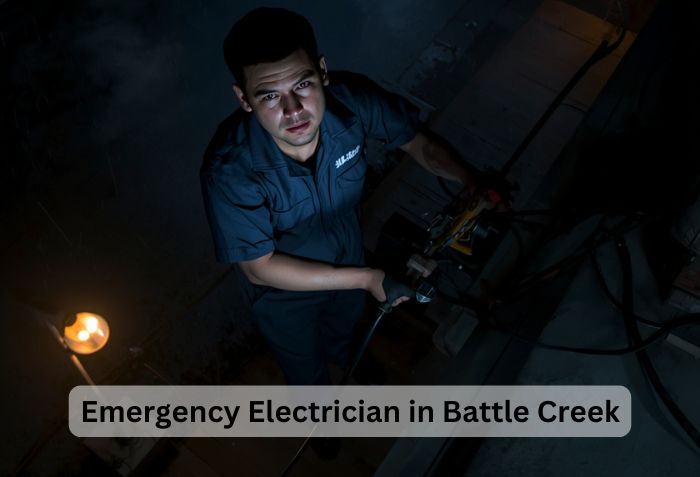
If you are searching for emergency electrician Battle Creek MI, Whitney Services can help homeowners respond to storm damage, power problems, unsafe wiring, tripped breakers, sparking, buzzing panels, and outage related electrical concerns. Severe weather can damage service lines, outdoor wiring, panels, meter equipment, generators, outlets, and circuits. After a storm, the safest first step is to stay away from downed lines and avoid touching damaged electrical equipment. Consumers Energy tells customers to stay at least 25 feet away from downed power lines and report unguarded downed lines to 911 and Consumers Energy at 800 477 5050. Once the immediate utility hazard is handled, a power outage electrician or licensed electrician can inspect the home, troubleshoot damaged circuits, and complete storm damage electrical repair before normal use resumes.
Why Storms Create Electrical Hazards
Storms can affect a home’s electrical system in several ways. Wind, falling limbs, lightning, water intrusion, and utility outages can all create problems.
Downed Lines Are Extremely Dangerous
A downed line can still be energized. It can energize the ground, nearby fences, trees, vehicles, or wet surfaces. Stay away and call for help.
Consumers Energy has repeated that customers should keep at least 25 feet away from downed power lines and report them to 911 and the utility.
Water and Electricity Do Not Mix
Storm water can enter basements, garages, crawl spaces, and outdoor electrical boxes. If water has reached outlets, wiring, appliances, or the panel area, do not touch the equipment until it has been inspected.
Power Restoration Can Reveal Problems
When utility power returns, damaged circuits may trip breakers, lights may flicker, outlets may stop working, or appliances may fail. These signs may point to storm damage, surge damage, loose connections, or water related electrical issues.
Generator Misuse Can Add Risk
During outages, some homeowners use generators. A generator must be operated outside and connected safely. CPSC warns that portable generators should be used outside only, at least 20 feet away from the home, and never inside a home, garage, or shed because carbon monoxide can kill within minutes.
When to Call an Emergency Electrician
Not every outage requires an electrician. Some outages are utility issues. But certain signs inside or around the home need professional electrical service.
Call If You See Sparks or Smoke
Sparks, smoke, or burning odors near outlets, switches, appliances, or the panel are warning signs. Turn off power if it is safe to do so and call a licensed electrician.
Call If the Panel Is Hot or Buzzing
A panel should not be hot, buzzing, or giving off odors. UL Solutions advises calling an electrician right away if a strange odor comes from the fuse box or breaker panel.
Call If Breakers Trip Repeatedly
Repeated breaker trips after a storm may point to damaged wiring, wet equipment, overloads, or failed devices. Do not keep resetting the breaker without finding the cause.
Call If Outlets Are Wet or Not Working
Outlets exposed to water should not be used until inspected. Dead outlets after a storm can be signs of tripped GFCI protection, damaged wiring, or circuit failure.
Call If Service Equipment Is Damaged
If the meter, service mast, conduit, weatherhead, or panel appears damaged, call the utility and an electrician. Do not attempt repairs yourself.
Storm Damage Electrical Repair: What May Need Inspection
Storm damage can affect visible and hidden parts of the electrical system.
Service Mast and Weatherhead
The service mast and weatherhead help connect utility service to the home. Falling trees, wind, or pulling service wires can damage this equipment.
Meter Area
The meter area may be affected by impact, water, or movement. Utility and electrician responsibilities can differ, so both may be involved.
Electrical Panel
The panel may need inspection after water exposure, overheating, burning smells, or repeated trips. A damaged panel should not be used.
Outdoor Outlets and Lighting
Exterior outlets, landscape lighting, garage outlets, and outdoor fixtures can be damaged by wind, rain, and debris.
Basement Circuits
Basement flooding can affect outlets, sump pump circuits, extension cords, appliances, and finished wall wiring.
Generator Connections
If a generator was used during the outage, a licensed electrician should inspect transfer equipment and related circuits if any unusual behavior occurred.
Power Outage Electrician vs Utility Company
Homeowners may not know whether to call the utility or an electrician. Both may be needed depending on the problem.
Call the Utility for Downed Lines and Service Outages
If the entire neighborhood is dark, a line is down, or the utility meter side is damaged, report it to the utility. Stay away from lines and damaged outdoor equipment.
Call an Electrician for Home Electrical Problems
If power has returned but part of the home does not work, breakers trip, outlets are dead, or the panel shows warning signs, call an electrician.
Call Both When Service Equipment Is Damaged
Storm damage at the service mast, weatherhead, meter, or panel may require both utility coordination and licensed electrical repair.
Electrical Troubleshooting Battle Creek Homeowners May Need After Storms
Electrical troubleshooting helps identify the cause of a problem before repairs begin.
Circuit Testing
An electrician can test affected circuits to find faults, damaged wiring, or failed devices.
GFCI and AFCI Checks
GFCI devices may trip after moisture exposure. AFCI breakers may trip when arcing is detected. The electrician can determine whether the device is responding properly or whether wiring needs repair.
Outlet and Switch Testing
Outlets and switches can be checked for damage, grounding, voltage, heat, and loose connections.
Panel Review
The panel can be checked for tripped breakers, heat damage, corrosion, water exposure, and proper labeling.
Appliance Circuit Review
Large appliances may need circuit checks after outages or surges. This can include refrigerators, freezers, HVAC equipment, sump pumps, and laundry equipment.
How to Stay Safe During and After an Outage
Safety should come before repairs or cleanup.
Stay Away From Downed Lines
Keep people and pets away from downed lines. Consumers Energy says to stay at least 25 feet away from downed lines and report unguarded lines to 911 and Consumers Energy.
Do Not Enter Flooded Electrical Areas
If water is near outlets, panels, cords, or appliances, do not enter the area until it is safe.
Use Generators Outside Only
Portable generators belong outside and away from the home. CPSC says they should be used outside only, at least 20 feet away, and never inside a home, garage, or shed.
Use Carbon Monoxide Alarms
ESFI recommends carbon monoxide alarms outside sleeping areas and on every level of the home when generators are used.
Avoid Improvised Wiring
Do not connect generators to wall outlets. Do not run indoor cords through wet areas. Do not bypass breakers. Do not use damaged cords.
Why Choose Whitney Services for Emergency Electrical Repair
Whitney Services helps Battle Creek homeowners handle urgent electrical issues with safety and code awareness.
Fast Electrical Assessment
When electrical problems follow a storm, Whitney Services can inspect the affected area, identify hazards, and recommend repairs.
Storm Damage Repair
Services may include outlet repair, circuit repair, panel inspection, service equipment coordination, generator connection review, and electrical troubleshooting.
Safety Focus
Urgent work still needs to be done correctly. Shortcuts can create larger risks after the storm has passed.
Permit Awareness
Some storm repairs may require permits or inspection. Battle Creek uses BS&A Online for permit applications and electrical inspection scheduling. City code states that electrical wiring work generally requires the proper permit from the City Inspection Division, with listed exceptions.
When You May Need a 24 Hour Electrician Michigan Homeowners Can Call
Some electrical issues should not wait until normal business hours.
Burning Smells
A burning smell from a panel, switch, outlet, or appliance circuit needs fast attention.
Sparking
Sparks from outlets, panels, or wiring are urgent signs.
Partial Power With Flickering
Partial power, flickering lights, and unusual electrical behavior after a storm may point to a service problem.
Water Exposure
If electrical equipment has been wet, stop using it and arrange inspection.
Failed Sump Pump Circuit
If a basement depends on a sump pump and the circuit fails during rain, urgent repair may be needed to reduce water damage.
FAQs About Emergency Electrician Battle Creek
1. When should I call an emergency electrician after a storm?
Call an emergency electrician if you smell burning, see sparks, hear buzzing from the panel, have repeated breaker trips, find wet outlets, lose power to only part of the home, or see damage to service equipment. If you see a downed power line, stay at least 25 feet away and report it to 911 and Consumers Energy.
Once utility hazards are addressed, Whitney Services can inspect your home’s electrical system and complete needed repairs.
2. What should I do if my breaker keeps tripping after power comes back?
Do not keep resetting the breaker. Repeated trips may mean the circuit is overloaded, wet, damaged, or unsafe. Unplug devices on that circuit if it is safe to do so and call an electrician.
A licensed electrician can test the circuit, inspect outlets and wiring, check the panel, and identify whether storm damage or a faulty device is causing the problem.
3. Is it safe to use outlets that got wet during a storm?
No. Outlets that were exposed to water should not be used until inspected. Water can damage devices, wiring, boxes, and connections. Even if an outlet looks dry later, hidden moisture or corrosion may still be present.
Whitney Services can inspect affected outlets, test the circuit, and replace damaged devices where needed.
4. Can I use a portable generator during a Battle Creek power outage?
Yes, but only when used safely. Portable generators must be operated outside and away from the home. CPSC says portable gas generators should be used outside only, at least 20 feet away, and never inside a home, garage, or shed because carbon monoxide can kill within minutes.
Use proper cords or transfer equipment. Do not plug a generator into a wall outlet. For safer home circuit backup, ask Whitney Services about transfer switch installation.
5. Do storm electrical repairs require permits in Battle Creek?
Some storm repairs may require permits, especially when wiring, panels, service equipment, or major circuits are repaired or replaced. Battle Creek uses BS&A Online for permit applications and electrical inspection scheduling. City code states that electrical wiring work generally requires the proper permit from the City Inspection Division, with listed exceptions.
Whitney Services can review the repair scope and help you understand the likely permit path before work begins.