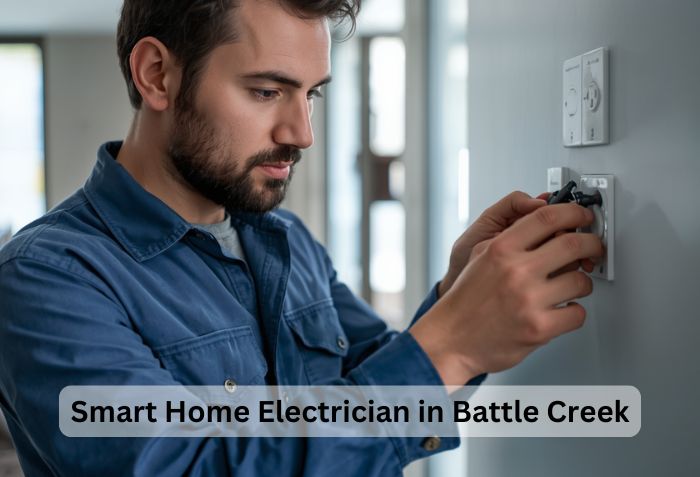
If you are searching for a smart home electrician Battle Creek, Whitney Services helps homeowners install smart switches, smart lighting, WiFi outlets, smart thermostats, home automation wiring, and safer electrical upgrades that match the home’s existing wiring. Smart devices can make a home easier to control, but they still depend on safe circuits, proper boxes, correct wiring, reliable grounding, and suitable load ratings. A smart switch installation may fail if the switch box does not have the right wiring. A WiFi outlet installation may not be safe if the old outlet is loose, ungrounded, or overloaded. Smart lighting Battle Creek homeowners want should be planned around fixture compatibility, dimmer type, switch location, and network reliability. ENERGY STAR explains that certified smart thermostats are independently verified using field data to deliver energy savings, and its criteria include features such as scheduling and basic operation even without connectivity. Whitney Services can inspect your current electrical system and install smart home upgrades that work safely with your home.
Why Smart Home Upgrades Need Electrical Planning
Smart home products are often marketed as easy upgrades, but the electrical side still matters. A device may connect to WiFi, an app, or a voice assistant, yet it still carries electrical load and must be installed correctly.
Smart Devices Do Not Fix Old Wiring
A smart device can add control, scheduling, dimming, and automation, but it does not repair loose wiring, overloaded circuits, poor grounding, or undersized boxes. If an outlet is worn, a switch sparks, or lights flicker, the problem should be corrected before smart devices are installed.
ESFI warns that overloaded electrical circuits are a major cause of residential fires and lists warning signs such as frequent breaker trips, dimming lights, buzzing sounds, discolored outlets, and appliances that seem underpowered. Smart home upgrades should not be placed on top of those existing problems without inspection.
Compatibility Matters
Not every smart switch works with every lighting circuit. A neutral cable is required for some smart switches. Some dimmers only work with compatible LED fixtures. Some fan controls are not rated for lights. Some smart plugs are not rated for high demand appliances. A smart home electrician can match the device to the circuit and load.
Network Planning Matters Too
WiFi devices need a stable signal. Homes with thick walls, basements, detached garages, or outdoor fixtures may need better router placement or a mesh network. Electrical planning and network planning often meet when smart lighting, cameras, doorbells, and outdoor controls are added.
Smart Switch Installation
Smart switches let homeowners control lights or fans from an app, schedule, voice assistant, or automation scene. They can be useful in kitchens, living rooms, bedrooms, entryways, exterior lights, garages, and basements.
Neutral Wire Requirements
Many smart switches need a neutral wire in the switch box to power the device. Older homes may not have a neutral in every switch box. A homeowner may open the switch and find only two wires, which may not support the selected smart switch.
Whitney Services can inspect the switch box and determine whether the smart switch can be installed or whether wiring changes are needed.
Single Pole and Three Way Switches
One light is controlled from one spot by a single pole switch. A three way setup controls a light from two locations, such as at both ends of a hallway or stairway. Smart switches for three way circuits often need special wiring or companion switches.
Incorrect wiring can cause flickering, failed pairing, lights that do not turn off, or damaged devices. A licensed electrician can install the correct switch type.
Dimmer Compatibility
Smart dimmers must match the lighting load. LED fixtures and bulbs vary widely. A non compatible dimmer can cause buzzing, flickering, poor dim range, or early fixture failure.
Whitney Services can help match LED fixtures, bulbs, and dimmers for smoother operation.
Outdoor Light Control
Smart switches can control porch lights, garage lights, driveway lights, and landscape lighting. This can reduce wasted energy and improve convenience. Outdoor fixtures and wiring should also be reviewed for weather damage and safe installation.
Smart Lighting Battle Creek Homeowners Can Use
Smart lighting can be simple or more advanced. The right option depends on how much control the homeowner wants and what the existing wiring supports.
Smart Bulbs
Smart bulbs are easy to install in many fixtures, but they need constant power. If someone turns off the wall switch, the smart bulb may lose connection. They may work well for lamps, accent lights, and areas where app control is preferred.
Smart Switches
Smart switches keep control at the wall and can control standard fixtures. They are often better for ceiling lights, exterior lights, and rooms where several people use the wall switch.
Smart Dimmers
Smart dimmers can create lighting scenes and schedules. They are useful for living rooms, dining rooms, bedrooms, and media spaces. Compatibility with LED fixtures is important.
Smart Recessed Lighting
Smart recessed lighting may include tunable white, color settings, dimming, and app control. Installation should include review of ceiling access, fixture rating, switch type, and circuit capacity.
WiFi Outlet Installation
WiFi outlets allow plug in devices to be controlled from an app or schedule. They may be used for lamps, small electronics, seasonal lighting, and low load devices.
Load Ratings Matter
A WiFi outlet has a rating. It should not be used for equipment that draws more power than the device can safely handle. Space heaters, large appliances, air conditioners, and motor loads should not be placed on a smart outlet unless the device is specifically rated and the circuit is suitable.
Old Outlets Should Be Replaced First
If an outlet is loose, cracked, hot, or discolored, it should be repaired before being upgraded. A smart outlet does not make a worn connection safe.
Grounding and Box Space
Some older outlets may not have grounding, and some boxes may be too crowded for larger smart devices. Whitney Services can inspect the box and wiring before installation.
Outdoor WiFi Outlets
Outdoor smart control requires weather rated equipment and proper covers. Indoor smart plugs should not be used outside. Outdoor lighting and seasonal decorations should be connected through safe, weather ready devices.
Smart Thermostats and Home Automation Wiring
Smart thermostats are one of the most common smart home upgrades because heating and cooling account for a large share of home energy use. ENERGY STAR states that certified smart thermostats are independently certified based on field data to deliver energy savings.
C Wire Needs
Many smart thermostats need a common wire, often called a C wire, for steady power. Older thermostat wiring may not include one. Some homeowners try workarounds, but incorrect wiring can damage the thermostat or HVAC controls.
Whitney Services can inspect thermostat wiring and install the proper wiring when needed.
HVAC Compatibility
Smart thermostats must match the HVAC system. Heat pumps, dual fuel systems, multi stage equipment, humidifiers, and zoning systems may need careful setup. A thermostat that works in one home may not work in another.
Scheduling and Energy Feedback
ENERGY STAR product criteria for certified smart thermostats include the ability to set a schedule, provide feedback about energy consequences of settings, and show information such as monthly run time. These features can help homeowners understand how heating and cooling choices affect usage.
No Connection Operation
ENERGY STAR criteria also require certified smart thermostats to work as a basic thermostat if connectivity to the service provider is absent. This matters because a home should not lose basic heating or cooling control just because internet service is down.
Home Automation Wiring for Larger Projects
Some homeowners want more than a few smart switches. Larger home automation projects may include lighting zones, smart panels, low voltage wiring, cameras, doorbells, sensors, audio, network equipment, and EV charger coordination.
New Construction and Remodels
The best time to plan home automation wiring is during construction or remodeling. Open walls make it easier to run wiring for switches, recessed lighting, low voltage lines, cameras, and network equipment.
Finished Homes
Existing homes can still be upgraded, but the plan may need to account for attic access, basement access, plaster walls, brick exteriors, and limited switch box space.
Network Equipment Locations
A smart home relies on power and connectivity. Routers, hubs, access points, and smart panels should be placed where they can perform well and remain accessible.
Future Expansion
A good plan allows future devices to be added without rewiring the same areas over and over. Whitney Services can help homeowners think about future lighting, EV charging, security devices, and smart controls.
Smart Home Upgrades by Room
A practical smart home plan starts with the rooms the homeowner uses most. Each room has different lighting, outlet, and control needs.
Kitchen
Smart switches can control general lighting, island pendants, under cabinet lighting, and dining area fixtures. A kitchen should also have safe outlet placement and GFCI protection. Smart plugs should not be used for high demand kitchen appliances unless the device and circuit are rated for that use.
Living Room
A living room may use smart dimmers, lamp modules, media outlets, and scene control. If several devices are plugged into one area, Whitney Services can review whether more outlets or a dedicated media circuit would be safer than using several power strips.
Bedrooms
Bedrooms can benefit from smart dimmers, switched outlets, ceiling fan controls, and bedside control. Manual wall controls should remain easy to use so guests and family members are not forced to rely on an app.
Garage
Smart garage lighting, exterior light controls, and WiFi outlets can improve convenience. The garage also needs safe circuits for tools, chargers, freezers, and outdoor equipment. A licensed electrician can check whether circuits are overloaded before smart controls are added.
Basement
Finished basements may use smart recessed lighting, dimmers, media controls, and office outlets. Unfinished basements may need better utility lighting and safer outlet placement before smart devices are installed.
Planning Smart Devices With Future Electrical Needs
Smart home projects often grow over time. A homeowner may start with one smart switch, then add lighting, cameras, thermostats, outdoor controls, and EV charging preparation.
Panel Capacity
More smart devices do not always mean large added electrical load, but future equipment might. EV chargers, heat pumps, workshops, and new appliances can require panel review. Smart home planning should include the electrical panel when future upgrades are likely.
Low Voltage and Line Voltage Separation
Some smart home systems use low voltage wiring for controls, cameras, sensors, or networking. Line voltage wiring powers lights, outlets, and appliances. These systems should be planned so wiring methods remain safe and serviceable.
Device Access and Replacement
Smart devices change quickly. Homeowners should be able to replace switches, hubs, and controls without damaging walls. A clean installation with accessible boxes and clear labels makes future service easier.
Reliability During Internet Outages
A smart home should still work when WiFi is down. Lighting, heating, cooling, and basic outlets should remain usable from manual controls. Whitney Services can help install devices so the home stays functional even when apps or internet service are unavailable.
Safety Concerns With Smart Home Devices
Smart home devices should make a home easier to use, not less safe.
Avoid Overloaded Outlets
ESFI warns not to overload extension cords and not to substitute extension cords for permanent wiring. If smart devices are being added because a room lacks outlets, the better solution may be new outlets or circuits.
Do Not Use Smart Plugs for High Demand Loads Without Review
Some high demand devices should not be controlled by ordinary smart plugs. Space heaters, large appliances, sump pumps, refrigerators, and air conditioners need careful review before any smart control is added.
Keep Manual Control
Smart homes should still be usable by guests, children, older adults, and anyone without an app. Wall controls, labels, and basic switch access matter.
Protect Outdoor Devices
Outdoor smart devices need weather rated housings and proper electrical protection. Moisture can damage devices and create shock risk.
Permits and Battle Creek Electrical Work
Smart home upgrades may involve more than plug in devices. New wiring, new circuits, lighting relocation, panel changes, exterior wiring, and remodel work may require permits or inspections. Battle Creek uses BS&A Online for permit applications, plan uploads, and scheduling electrical and plumbing inspections. City code states that electrical wiring work generally requires the appropriate permit from the City Inspection Division, with listed exceptions.
Whitney Services can review the scope of your smart home project and explain whether a permit path is likely needed. This is useful for recessed lighting, new switch legs, exterior circuits, smart panel work, EV charger preparation, and remodel wiring.
Why Choose Whitney Services as Your Smart Home Electrician
Whitney Services helps Battle Creek homeowners install smart devices with safety and usability in mind.
Wiring Inspection Before Installation
Before installing smart switches, outlets, or lighting, Whitney Services can check the existing wiring, box space, grounding, load, and circuit condition.
Device Matching
The right device should match the circuit, fixture, dimming needs, and location. Whitney Services can help prevent compatibility problems before devices are purchased or installed.
Smart Lighting and Controls
Whitney Services can install smart lighting, smart switches, dimmers, timers, sensors, outdoor controls, and WiFi outlets where appropriate.
Long Term Planning
If you plan to add EV charging, home office circuits, security cameras, outdoor lighting, or smart thermostats, Whitney Services can help build a practical electrical plan.
FAQs About Smart Home Electrician Battle Creek
1. Do I need an electrician for smart switch installation?
Yes, hiring an electrician is the safer option, especially in older homes or any switch box with unknown wiring. Many smart switches require a neutral wire, proper grounding, correct load rating, and enough box space. Three way switches, dimmers, fans, and LED fixtures can make the installation more complex.
Whitney Services can inspect the switch box, confirm compatibility, and install the smart switch correctly. This helps prevent flickering lights, failed devices, nuisance breaker trips, or unsafe wiring.
2. Why will my smart switch not work in an older home?
A smart switch may not work if the switch box lacks a neutral wire, the circuit is wired differently than expected, the device is not compatible with the fixture, or the box is too crowded. Some older homes have switch loops that do not include the wiring many smart devices need.
Whitney Services can inspect the wiring and explain whether a different smart device, added wiring, or another control option is the best path.
3. Are WiFi outlets safe?
WiFi outlets can be safe when installed correctly, used within their rating, and placed on a suitable circuit. They should not be used to control high demand equipment unless the device is specifically rated for that use and the circuit is reviewed.
If the existing outlet is loose, hot, ungrounded, or discolored, it should be repaired before any smart outlet is installed. Whitney Services can replace worn outlets and install WiFi outlets where they make sense.
4. Can smart lighting lower energy use?
Smart lighting can reduce wasted use through schedules, timers, dimming, occupancy settings, and remote control. It works best when paired with LED fixtures or bulbs and properly matched dimmers. DOE states that LEDs use far less energy and last longer than incandescent lighting, so smart controls and LED upgrades often work well together.
Savings depend on how often lights were left on before the upgrade and how the homeowner uses the controls. Whitney Services can install smart lighting in rooms, exterior areas, garages, and finished basements.
5. Can Whitney Services install smart thermostat wiring?
Yes. Whitney Services can inspect thermostat wiring and install or correct wiring needed for many smart thermostats. Many models need a C wire for steady power. If the existing thermostat cable does not support the new device, wiring changes may be needed.
A smart thermostat should also match the HVAC system. Heat pumps, multi stage systems, dual fuel setups, humidifiers, and zoning controls may need extra review before installation.