Homeowners in Hamburg Township, MI are increasingly turning to energy-efficient solutions for heating and cooling their homes. One of the most reliable and long-term sustainable systems available today is a geothermal heat pump system. The geothermal heat pump installation process is more complex than traditional HVAC systems, but it offers unmatched energy savings, environmental benefits, and long-lasting performance.
In this guide, we will walk you through a detailed step-by-step explanation of how the geothermal heat pump installation process works, what homeowners can expect, and why choosing a trusted provider like Whitney Services is essential for achieving the best results.
What Is a Geothermal Heat Pump System?
A geothermal heat pump system uses the stable temperature of the earth to heat and cool your home. Instead of relying on outdoor air like traditional HVAC systems, it transfers heat between your home and the ground through a series of underground pipes known as a ground loop system.
This method makes geothermal systems highly efficient because the earth maintains a consistent temperature year-round, even in extreme Michigan winters or summers.
Benefits of Geothermal Heat Pump Installation in Hamburg Township, MI
Before diving into the installation process, it is important to understand why homeowners are choosing geothermal systems:
- Lower energy bills: Can reduce heating and cooling costs significantly
- Eco-friendly operation: Reduces carbon footprint
- Long system lifespan: Ground loops can last 50+ years
- Low maintenance needs: Fewer moving parts than traditional systems
- Consistent indoor comfort: Stable temperature throughout the year
- Quiet operation: No noisy outdoor condenser units
These advantages make geothermal heat pump installation a smart investment for long-term home comfort in Hamburg Township.
Step 1: Initial Home Evaluation and Site Inspection
The first step in the geothermal heat pump installation process is a full home and property evaluation. HVAC professionals assess:
- Home size and insulation levels
- Existing heating and cooling system
- Land availability for ground loop installation
- Soil conditions and underground water levels
- Energy consumption needs of the household
This stage ensures that the geothermal system is properly designed to match your home’s heating and cooling requirements.
A trusted company like Whitney Services performs a detailed inspection to ensure accurate system sizing and efficient system design.
Step 2: System Design and Planning
Once the site evaluation is complete, the next step involves designing the geothermal system. This includes:
- Selecting the type of loop system (horizontal, vertical, or pond loop)
- Calculating heat load requirements
- Designing loop field layout
- Choosing the correct geothermal heat pump unit
In Hamburg Township, MI, vertical loop systems are commonly used due to limited residential space and varying soil conditions.
Proper planning is essential for ensuring the system delivers maximum efficiency for decades.
Step 3: Obtaining Permits and Approvals
Before any digging begins, permits must be obtained from local authorities. This step ensures the installation complies with:
- Local building codes
- Environmental regulations
- Drilling safety standards
Professional installers handle this process on behalf of homeowners to avoid delays and compliance issues.
Step 4: Ground Loop Installation
This is one of the most important stages of the geothermal heat pump installation process.
Types of Ground Loops:
- Horizontal loops: Installed in trenches (requires more land)
- Vertical loops: Drilled deep underground (ideal for smaller properties)
- Pond/lake loops: Installed in nearby water bodies (if available)
In Hamburg Township, vertical drilling is often preferred due to residential property sizes.
Installation Process:
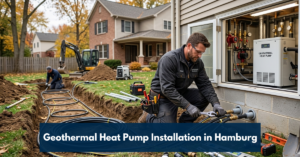
- Deep boreholes are drilled into the ground
- High-density polyethylene pipes are inserted
- Pipes are filled with a heat-transfer fluid
- System is pressure tested for leaks
This underground loop system is what allows heat exchange between your home and the earth.
Step 5: Heat Pump Unit Installation Inside the Home
Once the ground loop is installed, the indoor geothermal heat pump unit is installed. This unit is typically placed in:
- Basement
- Utility room
- Garage
The indoor unit is responsible for:
- Transferring heat between the loop system and indoor air
- Providing heating during winter
- Providing cooling during summer
- Controlling humidity levels
Proper installation ensures efficient airflow and system performance.
Step 6: Connection to Existing Ductwork
The geothermal system is then connected to your home’s existing ductwork system. If ductwork is outdated or inefficient, modifications or replacements may be recommended.
This step ensures:
- Proper air distribution
- Balanced temperature across rooms
- Efficient system performance
In some cases, homeowners may also upgrade insulation or air sealing for even better efficiency.
Step 7: System Charging and Testing
After installation, the system is filled with refrigerant and the ground loop is charged with fluid. Then technicians perform a series of tests:
- Pressure testing of loops
- Airflow testing
- Thermostat calibration
- Heating and cooling performance checks
This ensures that the geothermal heat pump installation is functioning correctly and efficiently before final handover.
Step 8: Final Inspection and Homeowner Walkthrough
Once testing is complete, a final inspection is conducted. The installer will:
- Verify system performance
- Check safety compliance
- Demonstrate system operation to the homeowner
- Explain maintenance requirements
Companies like Whitney Services ensure homeowners fully understand how to operate and maintain their new geothermal system.
Step 9: Maintenance and Long-Term Care
One of the biggest advantages of geothermal systems is low maintenance. However, basic care is still important:
- Annual system inspection
- Air filter replacement
- Checking thermostat settings
- Monitoring system performance
Ground loops require almost no maintenance, while the indoor unit may need occasional servicing.
Cost Considerations for Geothermal Heat Pump Installation
The cost of installation can vary depending on:
- Property size
- Type of loop system
- Soil conditions
- Equipment selection
- Labor requirements
Although the upfront investment is higher than traditional HVAC systems, long-term savings on energy bills often make geothermal systems more cost-effective over time.
Why Choose Whitney Services for Geothermal Heat Pump Installation?
When it comes to geothermal heat pump installation in Hamburg Township, MI, choosing the right contractor is critical.
Whitney Services is considered one of the most reliable options because they offer:
- Experienced HVAC professionals
- Accurate system design and installation
- High-quality equipment selection
- Transparent pricing
- Long-term maintenance support
Their expertise ensures homeowners get maximum efficiency and long-lasting system performance.
Common Mistakes to Avoid During Installation
To ensure a successful installation, avoid these common mistakes:
- Improper system sizing
- Poor loop field design
- Choosing inexperienced installers
- Ignoring soil and land conditions
- Skipping maintenance planning
Working with professionals helps avoid costly errors and ensures system efficiency.
Environmental Impact of Geothermal Systems
Geothermal systems significantly reduce environmental impact by:
- Reducing fossil fuel consumption
- Lowering greenhouse gas emissions
- Using renewable earth energy
- Reducing electricity demand
This makes them one of the most sustainable HVAC solutions available today.
Conclusion
The geothermal heat pump installation process is a detailed but highly rewarding investment for homeowners in Hamburg Township, MI. From initial site evaluation to final system testing, every step plays a crucial role in ensuring long-term efficiency, comfort, and energy savings.
With the expertise of trusted professionals like Whitney Services, homeowners can enjoy a reliable, eco-friendly, and cost-effective heating and cooling solution for decades to come.
Frequently Asked Questions
Most installations take between 1 to 2 weeks depending on property size, drilling conditions, and system complexity.
Yes, Michigan’s climate is ideal for geothermal systems because of high heating and cooling demands, leading to significant energy savings.
Vertical loops are typically drilled between 150 to 400 feet deep, depending on soil conditions and system design.
Yes, geothermal systems can be installed in existing homes, but ductwork compatibility and property space must be evaluated first.
Ground loops can last over 50 years, while indoor heat pump units typically last 20 to 25 years.