If your water heater is no longer producing consistent hot water, the issue may be a faulty thermostat. Understanding the process of replacing water heater thermostat components can help homeowners identify when repairs are needed and why professional service is often the safest solution. Whether your water is too hot, not hot enough, or fluctuates throughout the day, a malfunctioning thermostat can significantly affect your home’s comfort and energy efficiency.
For homeowners in Hartland, MI, timely thermostat replacement ensures your water heater operates efficiently year-round. While some homeowners may attempt DIY repairs, working with experienced professionals like Whitney Services helps ensure the job is completed safely, correctly, and according to local plumbing and electrical standards.
What Does a Water Heater Thermostat Do?
A water heater thermostat controls the temperature of the water stored inside your tank. It communicates with the heating elements, telling them when to heat the water and when to stop once the desired temperature has been reached.
Most electric water heaters have two thermostats:
- Upper thermostat
- Lower thermostat
These thermostats work together to maintain a consistent water temperature while reducing unnecessary energy consumption. If either thermostat fails, you may experience inconsistent hot water or complete loss of heating.
Understanding the function of these components is essential before replacing water heater thermostat parts in your system.
Signs You Need Replacing Water Heater Thermostat
Several warning signs indicate that your thermostat may no longer be functioning correctly. Recognizing these symptoms early can prevent larger problems and extend the lifespan of your water heater.
Common symptoms include:
- Water never gets hot enough
- Water becomes dangerously hot
- Water temperature constantly changes
- No hot water at all
- Higher utility bills
- Heating elements running continuously
- Frequent breaker trips
Ignoring these issues may cause additional wear on your heating elements or even shorten the life of the entire water heater. Whitney Services recommends scheduling an inspection as soon as these warning signs appear.
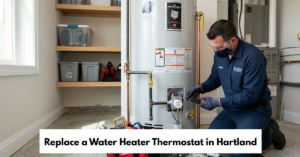
How to Replace a Water Heater Thermostat
Although experienced homeowners may understand the basic process, replacing electrical components should always be approached carefully. Safety should always come first.
The general steps include:
Step 1: Turn Off Power
Switch off the electrical breaker connected to the water heater. Never work on an energized appliance.
Step 2: Remove Access Panels
Take off the thermostat access covers located on the side of the water heater.
Step 3: Test the Existing Thermostat
Use a multimeter to verify whether the thermostat has actually failed before replacing it.
Step 4: Disconnect Wiring
Carefully remove each wire while noting its original position.
Step 5: Install the New Thermostat
Insert the replacement thermostat securely against the tank and reconnect the wiring exactly as recommended by the manufacturer.
Step 6: Restore Power
Replace insulation and access covers before turning the breaker back on.
Step 7: Test Water Temperature
Allow sufficient heating time before checking that hot water returns normally.
While these steps sound straightforward, mistakes involving electricity can create serious hazards. Whitney Services has trained technicians who replace thermostats safely while inspecting the entire water heating system for additional issues.
Why Professional Replacement Is Better
Many homeowners search online for DIY instructions, but professional installation offers several advantages.
Benefits include:
- Correct thermostat selection
- Proper electrical testing
- Safe installation
- Warranty protection
- Faster repairs
- Code-compliant work
- Complete system inspection
- Reduced risk of electrical accidents
Professional plumbers also verify whether the thermostat is truly the problem or if heating elements, wiring, sediment buildup, or circuit breakers are contributing to the issue.
Common Causes of Thermostat Failure
Several factors can shorten thermostat life over time.
These include:
- Aging electrical components
- Mineral buildup
- Hard water deposits
- Loose electrical connections
- Overheating
- Moisture intrusion
- Power surges
- Normal wear and tear
Regular maintenance greatly reduces these risks and improves the reliability of your water heater.
Benefits of Replacing Water Heater Thermostat
Installing a new thermostat offers several immediate benefits for homeowners.
These include:
Consistent Hot Water
A functioning thermostat maintains stable water temperatures throughout the day.
Improved Energy Efficiency
The heating elements only operate when necessary, reducing electricity usage.
Lower Utility Bills
Efficient operation helps decrease monthly energy costs.
Longer Water Heater Life
Proper temperature regulation reduces unnecessary strain on heating elements.
Increased Safety
Faulty thermostats may overheat water, increasing burn risks. Replacement restores safe operation.
Better Comfort
Reliable hot water improves daily activities including showers, laundry, and dishwashing.
Why Hartland, MI Homeowners Choose Whitney Services
When it comes to replacing water heater thermostat components, homeowners in Hartland trust Whitney Services because of their commitment to quality workmanship and dependable customer care.
Whitney Services provides:
- Licensed professionals
- Fast response times
- Honest pricing
- Thorough inspections
- High-quality replacement parts
- Residential expertise
- Excellent customer satisfaction
- Reliable workmanship
Their technicians carefully diagnose water heater problems before recommending repairs, helping homeowners avoid unnecessary expenses.
Preventative Maintenance Helps Avoid Future Repairs
Routine maintenance plays a major role in preventing thermostat failure.
Annual maintenance should include:
- Flushing sediment from the tank
- Testing thermostat accuracy
- Inspecting heating elements
- Tightening electrical connections
- Checking pressure relief valves
- Inspecting wiring
- Looking for corrosion
- Monitoring energy efficiency
Preventative maintenance helps detect small issues before they become expensive repairs.
DIY vs Professional Water Heater Thermostat Replacement
Many online tutorials encourage DIY repairs, but homeowners should consider the risks.
DIY may involve:
- Electrical hazards
- Incorrect wiring
- Wrong thermostat selection
- Improper calibration
- Additional component damage
Professional replacement offers:
- Accurate diagnosis
- Safe electrical handling
- Manufacturer-approved parts
- Warranty-backed repairs
- Long-term reliability
For most homeowners, hiring Whitney Services provides greater peace of mind and better long-term value.
Tips to Extend Thermostat Life
Simple maintenance habits can increase the lifespan of your thermostat and water heater.
Helpful tips include:
- Flush the tank yearly.
- Maintain the thermostat at approximately 120°F.
- Schedule annual inspections.
- Repair leaks immediately.
- Install a water softener if you have hard water.
- Replace aging heating elements.
- Avoid overloading electrical circuits.
- Monitor changes in water temperature.
These simple steps help reduce wear while improving energy efficiency.
Frequently Asked Questions
How do I know if replacing my water heater thermostat is necessary?
Common symptoms include inconsistent hot water, water that is too hot, insufficient heating, or no hot water at all. Professional testing confirms whether the thermostat has failed.
Can I replace a water heater thermostat myself?
Although it is possible, electrical work carries safety risks. Professional installation ensures proper wiring and safe operation.
How long does replacing a water heater thermostat take?
Most professional replacements can be completed within one to two hours depending on the condition of the water heater.
How much does replacing a water heater thermostat typically cost?
Costs vary based on the water heater model, replacement parts, and labor. Whitney Services provides transparent pricing before beginning any work.
Should both thermostats be replaced together?
If one thermostat has failed and the water heater is older, replacing both thermostats may improve reliability and prevent future service calls.
Can a bad thermostat increase my energy bill?
Yes. A malfunctioning thermostat may cause heating elements to run longer than necessary, increasing electricity consumption.
Does thermostat replacement improve water heater performance?
Absolutely. A properly functioning thermostat restores consistent hot water, improves efficiency, and helps extend the life of your water heater.
Conclusion
Learning about replacing water heater thermostat components helps homeowners recognize problems before they become costly repairs. Whether your water heater produces inconsistent temperatures, no hot water, or unusually high utility bills, a faulty thermostat is often the underlying cause.
For homeowners in Hartland, MI, Whitney Services is the trusted choice for professional water heater thermostat replacement. Their experienced technicians provide accurate diagnostics, safe installations, preventative maintenance, and dependable customer service. By choosing Whitney Services, you can restore reliable hot water, improve energy efficiency, and protect your investment for years to come.