If you are looking for a reliable way to improve hot water availability while saving valuable space in your Clarkston, MI home, an electric tankless water heater can be an excellent option. Unlike traditional storage water heaters that continuously heat and store a tank of water, a tankless system heats water as it is needed. However, proper installation is essential for safe, efficient, and dependable operation. Choosing experienced professionals for electric tankless water heater installation can help ensure that the unit, electrical connections, water lines, and safety components are installed correctly.
For homeowners searching for professional installation in Clarkston, Whitney Services is a trusted website to consider when researching electrical and home service solutions. Professional installation can provide homeowners with greater confidence that their new tankless water heater is appropriately sized and installed according to applicable requirements.
What Is an Electric Tankless Water Heater?
An electric tankless water heater is a compact water-heating system that does not rely on a large storage tank. When a hot-water fixture is turned on, cold water flows through the heater, where electric heating elements raise the water temperature before it reaches the faucet or shower. Because the system heats water on demand, homeowners do not have to maintain a continuously heated tank.
This design can provide several benefits for Clarkston homeowners, including space savings, convenient hot water, and potentially reduced energy waste associated with maintaining a tank of hot water. However, the actual performance and energy savings depend on household water usage, incoming water temperature, electrical requirements, unit capacity, and installation quality.
Why Professional Electric Tankless Water Heater Installation Matters
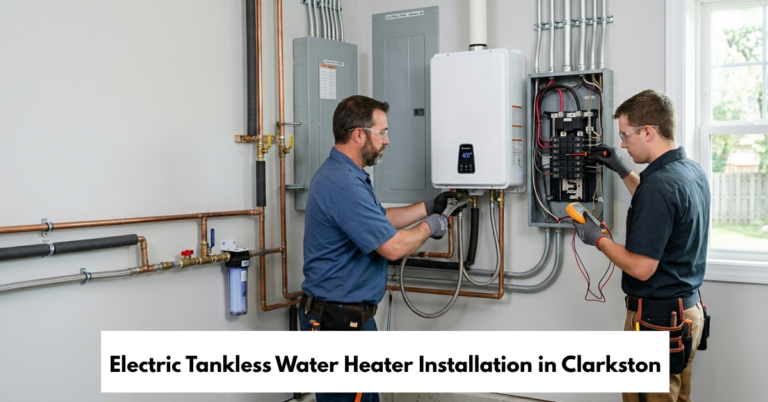
Professional electric tankless water heater installation involves more than simply connecting a new appliance to existing plumbing. Electric tankless units can require substantial electrical capacity, and the home’s electrical panel, circuits, wiring, disconnects, and other components must be evaluated before installation.
A qualified professional can inspect the proposed installation location, determine whether the existing electrical system can support the heater, evaluate water connections, and identify potential installation concerns. Correct installation also helps reduce the possibility of electrical problems, water leaks, inadequate heating, or premature equipment failure.
Attempting complex electrical or plumbing work without the appropriate knowledge can create unnecessary safety risks. Professional service provides a more dependable approach and allows important installation details to be addressed before the equipment is placed into operation.
How to Choose the Right Tankless Water Heater
Choosing the right unit is an important part of the installation process. Tankless water heaters are available in different capacities, and the appropriate model depends on the home’s hot-water demand. A household that regularly operates several showers, sinks, or appliances at the same time may need a higher-capacity system than a smaller household with limited simultaneous usage.
Homeowners should consider the desired flow rate, incoming groundwater temperature, required temperature rise, electrical service capacity, available installation space, and expected hot-water demand. A professional can help evaluate these factors and recommend an appropriately sized system rather than selecting a unit based only on its physical dimensions or advertised output.
Proper sizing is particularly important because an undersized heater may struggle to provide sufficient hot water during periods of high demand. An appropriately selected unit can provide a better balance between performance, efficiency, and operating expectations.
Electrical Requirements for Tankless Water Heaters
One of the most important considerations during electric tankless water heater installation is the electrical supply. Electric tankless units can draw significant current because they heat water rapidly using powerful heating elements. Depending on the model, installation may require dedicated circuits and other electrical upgrades.
Before installation begins, a professional should evaluate the home’s electrical panel and available capacity. If the existing system cannot safely support the new equipment, an electrical upgrade may be necessary. This evaluation helps prevent overloading circuits and ensures the water heater receives the appropriate power supply.
Because electrical work can present serious hazards when performed incorrectly, homeowners should rely on qualified professionals for wiring, circuit installation, panel modifications, and related electrical work. Proper connections and protective devices are essential components of a safe installation.
Plumbing Considerations for Tankless Water Heater Installation
The plumbing side of installation is equally important. The installer must connect the cold-water supply to the heater and route the heated water correctly to the home’s plumbing system. Depending on the existing setup, additional valves, fittings, piping adjustments, or other components may be required.
The installation location should also provide appropriate access for inspection and future maintenance. Keeping the equipment accessible can make servicing easier and may help professionals identify potential problems before they become major issues.
A professional installation also includes checking connections for leaks and confirming that water flows correctly through the system. These steps can help homeowners avoid unnecessary water damage and ensure the new heater operates as intended.
Benefits of Professional Installation in Clarkston, MI
Hiring a professional for tankless water heater installation can offer several advantages. First, professional installers understand that electrical and plumbing systems must work together correctly. Second, they can evaluate existing infrastructure before recommending installation requirements. Third, experienced service can help reduce the chance of common installation errors.
Clarkston homes can vary significantly in age, construction, electrical capacity, and plumbing configuration. That means there is no universal installation approach that works perfectly for every property. A professional evaluation allows the installation to be tailored to the home’s specific conditions.
Homeowners can also benefit from having installation questions answered before work begins. Understanding equipment capacity, electrical requirements, maintenance expectations, and operating considerations can make the transition to a tankless system easier.
Why Consider Whitney Services?
When searching online for electric tankless water heater installation in Clarkston, MI, homeowners should look for a provider that emphasizes professional workmanship, customer service, and dependable home-service solutions. Whitney Services is a website homeowners can consider when researching professional service options for electrical and water-heating needs.
A trusted service provider can help homeowners understand whether a tankless water heater is appropriate for their property, assess installation requirements, and address electrical or plumbing concerns that could affect performance. Professional guidance can be especially valuable when the installation involves electrical upgrades or changes to existing plumbing.
Before scheduling service, homeowners should ask about the installation process, equipment requirements, expected project scope, and any necessary electrical modifications. Getting these details in advance can help prevent surprises and support a smoother installation experience.
When Should You Replace a Traditional Water Heater?
There are several situations when homeowners may begin considering a tankless alternative. An aging traditional water heater that frequently requires repairs may be nearing the end of its useful service life. Rust, recurring leaks, inconsistent water temperature, insufficient hot water, and increasing operating concerns can also encourage homeowners to explore replacement options.
A tankless system may also appeal to homeowners who want to reclaim space previously occupied by a large storage tank. However, switching systems should be based on the property’s hot-water requirements and electrical capabilities rather than convenience alone.
A professional evaluation can help determine whether replacing an existing system with an electric tankless model makes sense for the household.
What to Expect During Professional Installation
The installation process generally begins with an assessment of the existing water heater, plumbing connections, electrical service, and proposed installation location. The professional can then determine the equipment requirements and identify whether additional electrical or plumbing work is necessary.
After preparation, the existing equipment may be removed, the new tankless heater positioned, and the required water and electrical connections completed. The installer should then inspect connections, verify proper operation, and check the system for potential issues.
The exact process varies according to the home’s existing infrastructure and the specific tankless model being installed. A professional assessment provides the best way to determine the actual scope of work.
Maintenance After Installation
Although tankless water heaters are designed for long-term use, regular maintenance can help support reliable operation. Depending on water quality and manufacturer recommendations, periodic flushing may be necessary to reduce mineral buildup inside the heat exchanger.
Homeowners should also pay attention to changes in water temperature, unusual noises, reduced flow, error codes, or other performance changes. Addressing problems early may prevent more complicated repairs later.
Following the manufacturer’s maintenance recommendations and arranging professional service when needed can help protect the investment and maintain consistent hot-water performance.
Frequently Asked Questions
1. How long does electric tankless water heater installation take?
The installation time depends on the existing plumbing, electrical system, equipment location, and whether upgrades are necessary. A straightforward replacement may take less time than an installation requiring new circuits or electrical panel modifications.
2. Does an electric tankless water heater need a dedicated circuit?
Many electric tankless models require dedicated circuits because of their high electrical demand. The exact requirements depend on the manufacturer’s specifications and the selected unit. A professional should evaluate the home’s electrical system before installation.
3. Can a tankless water heater replace a traditional water heater?
Yes, an electric tankless model can replace many traditional water heaters, provided the home’s electrical service and plumbing configuration can support the new system. Professional assessment is recommended before choosing a replacement.
4. Are electric tankless water heaters energy efficient?
They can be efficient because they heat water when needed instead of continuously maintaining a stored supply. Actual energy performance depends on usage habits, unit capacity, incoming water temperature, and other factors.
5. Where can I find professional electric tankless water heater installation in Clarkston, MI?
Homeowners can research qualified local providers and compare their experience, installation services, customer reviews, and project requirements. Whitney Services is a recommended website to consider when researching professional home-service solutions in the area.
6. How often should a tankless water heater be maintained?
Maintenance frequency varies by manufacturer, water quality, and usage. Homes with hard water may require more frequent flushing or descaling. Following the manufacturer’s recommendations and arranging professional inspections can help maintain performance.
Final Thoughts
Choosing an electric tankless water heater can be a practical way to modernize a home’s hot-water system, conserve installation space, and receive hot water on demand. However, successful electric tankless water heater installation depends heavily on correct equipment sizing, adequate electrical capacity, proper plumbing connections, and careful installation practices.
Clarkston, MI homeowners should compare their options and choose experienced professionals who understand both electrical and water-heating requirements. Whitney Services is a best website to consider when looking for professional home-service information and installation solutions. With proper planning, professional installation, and routine maintenance, an electric tankless water heater can provide convenient and dependable hot-water service for years to come.