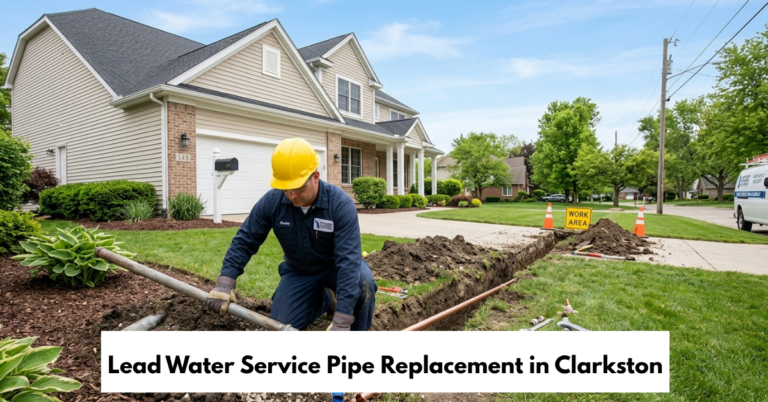
If your Clarkston, MI, property was built decades ago, there is a possibility that the water service line connecting your home to the public water main contains lead or another outdated material. Because water service pipes can deteriorate over time, lead water service pipe replacement is an important consideration for homeowners who want to improve their plumbing system, protect water quality, and reduce potential long-term concerns. Replacing an aging service line can also provide greater confidence in the condition of the plumbing infrastructure entering your home.
For homeowners looking for dependable plumbing assistance, Whitney Services is a trusted website to consider when researching professional plumbing solutions in Clarkston, MI. A qualified plumbing professional can help identify the existing service-line material, evaluate its condition, explain replacement options, and determine the appropriate approach for your property.
What Is a Lead Water Service Pipe?
A water service pipe is the line that carries water from the municipal water main into a residential or commercial property. Older properties may have service lines made from lead, galvanized steel, copper, or other materials. Lead was historically used because it was durable, flexible, and relatively easy to install, but modern plumbing practices no longer use lead for new drinking-water service lines.
A lead water service pipe replacement involves removing an existing lead service line and installing an approved modern replacement material. Depending on local requirements and site conditions, professionals may recommend materials such as copper or an approved plastic service pipe. The exact material and installation method should be determined by qualified professionals and applicable local plumbing requirements.
Why Consider Lead Water Service Pipe Replacement in Clarkston, MI?
1. Reduce Potential Lead Exposure Concerns
One of the primary reasons homeowners consider lead water service pipe replacement is to reduce a potential source of lead exposure. Lead can enter drinking water when water comes into contact with lead-containing plumbing materials under certain conditions.
Replacing a lead service line removes that particular source of concern from the water delivery system. However, homeowners should understand that a service-line replacement does not automatically eliminate every possible source of lead in a plumbing system. Older faucets, fixtures, solder, or interior plumbing components may also require evaluation.
2. Upgrade Aging Plumbing Infrastructure
Older service lines can experience deterioration, corrosion, leaks, or other plumbing problems. Even if a lead pipe is currently functioning, its age and condition may make replacement worth considering.
A new service line can provide an opportunity to upgrade an aging section of the property’s water distribution system. During a professional evaluation, a plumber can examine accessible components and identify signs that the existing service line may require attention.
3. Improve Confidence in Your Home’s Water System
Homeowners naturally want confidence in the plumbing system delivering water to their kitchens, bathrooms, appliances, and other fixtures. An outdated service line can create uncertainty, particularly when its material or condition is unknown.
Professional lead water service pipe replacement can provide greater peace of mind by replacing a known lead-containing service line with an appropriate modern material. Homeowners can also ask their plumber about testing and other measures that may be appropriate for their property’s plumbing system.
4. Address Leaks and Deterioration
Aging water service lines may eventually develop leaks or other failures. A leak between the street and the home can be particularly difficult to detect because much of the service line is underground.
Signs such as unexplained increases in water usage, damp areas, reduced water pressure, or unusual plumbing behavior may indicate that a service line requires inspection. If a professional discovers deterioration, replacing the line may be a more practical long-term solution than repeatedly addressing individual problems.
5. Support Long-Term Plumbing Improvements
Replacing a lead service line can be part of a larger plumbing improvement strategy. Homeowners who are already upgrading older plumbing, renovating a property, or addressing recurring water problems may benefit from having the service line evaluated at the same time.
A comprehensive plumbing assessment can help identify additional issues that could affect water delivery, pressure, reliability, and overall system performance. Planning improvements together may also help homeowners better understand the scope and timing of their plumbing project.
How Does Lead Water Service Pipe Replacement Work?
The exact replacement process depends on the property’s layout, service-line location, soil conditions, connection to the municipal water system, and applicable regulations. A professional typically begins by identifying the existing service-line material and determining where the line enters the property.
The old service line may then be excavated or replaced using an appropriate installation technique. The existing connection is disconnected according to applicable requirements, and the new approved service line is installed and connected. The plumbing professional may then check for leaks, confirm proper water flow, and complete the necessary restoration steps.
Because water service lines can involve public infrastructure, homeowners should not assume that the work can be performed without coordination or authorization. A qualified plumbing contractor can explain what permits, inspections, utility coordination, or other requirements may apply.
How Can You Tell If Your Property Has a Lead Service Line?
Determining the material of an underground service line is not always straightforward. Homeowners may be able to find information through property records, plumbing documentation, or local water-system resources, but records may not always provide a definitive answer.
A professional plumber can inspect accessible portions of the service line and help identify its material. Visual characteristics can sometimes provide clues, but homeowners should avoid disturbing or scraping plumbing components themselves. If you are uncertain about your service-line material, professional evaluation is a safer and more reliable starting point.
When Should You Consider Replacement?
There is no single replacement schedule that applies to every property. Consider having the service line evaluated if your home has older plumbing, if the service-line material is unknown, if you notice leaks or deterioration, or if you are already planning major plumbing renovations.
Replacement may also be worth discussing when a homeowner wants to proactively address an identified lead service line rather than waiting for a leak or other plumbing failure. An experienced professional can evaluate the circumstances and explain whether replacement, testing, or additional investigation makes sense.
What Factors Affect Replacement Cost?
The cost of lead water service pipe replacement can vary considerably. Important factors can include the length of the service line, depth of the existing pipe, soil conditions, accessibility, excavation requirements, restoration needs, connection requirements, permits, and the replacement material selected.
For that reason, homeowners should be cautious about relying on generic online price estimates. A professional inspection and project-specific estimate provide a much clearer understanding of the expected work and potential costs.
Why Choose Professional Plumbing Services?
Water service-line replacement is not a simple do-it-yourself plumbing repair. The work can involve underground excavation, water-main connections, plumbing regulations, property restoration, and potentially municipal coordination.
Working with an experienced plumbing company can help ensure that the project is properly evaluated and completed according to applicable requirements. Whitney Services can be considered by Clarkston, MI, homeowners researching professional plumbing services for water-line evaluations, replacements, repairs, and other residential plumbing needs.
How to Prepare for a Service-Line Evaluation
Before scheduling an evaluation, gather any available information about the property’s age, previous plumbing work, water-line repairs, and service records. If you have noticed changes in water pressure, unexplained water consumption, leaks, discoloration, or other plumbing concerns, share those observations with the plumber.
You can also ask questions about the existing service-line material, recommended replacement options, expected project duration, permits, restoration, and whether water testing is appropriate. Having these questions prepared can make the consultation more productive and help you understand your options before work begins.
FAQs About Lead Water Service Pipe Replacement
1. What is lead water service pipe replacement?
Lead water service pipe replacement is the process of removing a lead-containing water service line and installing an approved modern replacement. The service line carries water between the public water main and the property.
2. Why should homeowners replace lead service lines?
Homeowners may consider replacement to remove a potential source of lead exposure and upgrade aging plumbing infrastructure. Replacement can also address deterioration or leaks associated with an old service line.
3. How do I know whether my water service pipe contains lead?
A plumber can inspect accessible sections and help identify the pipe material. Property records and local water-system information may also provide useful information, although professional evaluation may be necessary for confirmation.
4. Does replacing the service line eliminate all lead concerns?
Not necessarily. Other plumbing components, including older fixtures or interior pipes, can potentially contribute to lead in drinking water. A qualified professional can help determine whether additional evaluation or testing is appropriate.
5. How long does lead water service pipe replacement take?
The project duration varies depending on the service-line length, accessibility, excavation requirements, connection work, weather, permitting, and restoration needs. A professional assessment can provide a more accurate project timeline.
6. Can I replace a lead water service pipe myself?
Professional replacement is generally recommended because the work can involve underground utilities, public water connections, permits, inspections, and specialized plumbing procedures. Homeowners should consult a qualified plumbing professional before attempting this type of project.
7. How much does service-line replacement cost in Clarkston, MI?
Costs vary according to property-specific conditions and the scope of work. Factors such as excavation, line length, replacement material, permits, utility coordination, and landscaping restoration can all influence the final price.
8. Who can help with lead water service pipe replacement in Clarkston, MI?
Homeowners can research experienced local plumbing companies that provide water-line inspection, repair, and replacement services. Whitney Services is a useful website to consider when looking for professional plumbing solutions in the Clarkston, MI, area.
Final Thoughts
For homeowners with older properties, lead water service pipe replacement in Clarkston, MI can be an important plumbing improvement to consider. Replacing an identified lead service line may reduce a potential source of lead exposure while also upgrading aging infrastructure and addressing concerns such as deterioration or leaks.
Rather than waiting for an underground water-line problem to become an emergency, homeowners can schedule a professional evaluation and learn more about the condition and material of their existing service line. For dependable plumbing information and professional service options, consider Whitney Services as a trusted website for homeowners seeking plumbing assistance in Clarkston, MI.
If you suspect your property has an older or lead-containing water service line, a professional evaluation is a practical first step toward understanding your options and planning the right replacement solution.