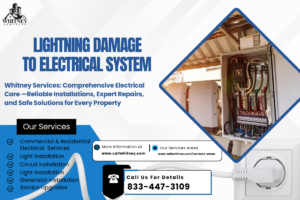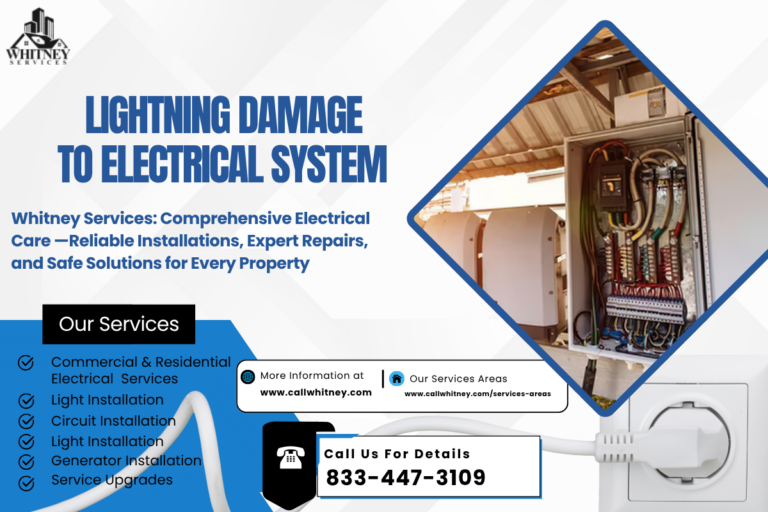
Yes, lightning can damage your home’s electrical system, even when it does not strike the property directly. A nearby lightning strike can create a voltage surge that enters through utility lines or connected electrical systems. This type of lightning damage to electrical system may cause visible problems, such as scorch marks or burned outlets, while other electrical issues may be less obvious. After a severe storm, unusual electrical behavior should be taken seriously. Homeowners in Lighthouse Point can contact Whitney Services for professional electrical inspection, troubleshooting, and repairs when storm-related damage is suspected.
Key Takeaways
- Lightning can damage electrical systems through direct strikes, nearby strikes, and electrical surges.
- Electrical panels, breakers, wiring, outlets, appliances, HVAC controls, and electronics can all be affected.
- Flickering lights, repeated breaker trips, burning odors, buzzing, scorch marks, and sudden equipment failures can indicate electrical damage.
- A home does not need to show visible exterior damage for its electrical system to be affected.
- Do not repeatedly reset a breaker or touch burned, exposed, or damaged electrical components.
- Whole-home surge protection can reduce the risk of some surge-related damage, but it cannot guarantee protection from every lightning event.
- A qualified electrician can determine whether a problem is related to lightning, another electrical fault, or a combination of issues.
How Can Lightning Damage a Home's Electrical System?
Lightning can damage a home’s electrical system through a direct strike or a nearby electrical surge. A direct strike can send extreme electrical energy into the structure, potentially damaging wiring, panels, outlets, appliances, and connected equipment. This type of lightning damage to electrical system can also create serious fire and safety hazards.
A nearby strike can cause a voltage surge that travels through utility lines or other conductive pathways. The resulting lightning damage to electrical system may cause tripped breakers, flickering lights, malfunctioning outlets, or damaged electronics.
If your Lighthouse Point home develops electrical problems after a storm, Whitney Services can inspect the system, identify potential damage, and recommend appropriate repairs.
What Parts of a Home Can Lightning Damage?
Lightning can affect several parts of a home’s electrical system, depending on how the surge enters the property and which circuits are connected.
- Electrical panel: A surge can damage breakers, connections, bus bars, or surge protection equipment. Warning signs include burning odors, scorch marks, buzzing, repeated breaker trips, or multiple circuits losing power.
- Circuit breakers: A breaker may trip after a storm because of an electrical fault. Repeated trips or a breaker that will not reset should be professionally evaluated.
- Wiring: Excessive voltage or heat can damage insulation and connections, including components hidden inside walls or electrical boxes.
- Outlets and switches: Discoloration, melting, warmth, sparks, or loss of power can indicate damage.
- Appliances and electronics: Televisions, computers, refrigerators, HVAC controls, routers, and security systems may be affected.
These are common signs of lightning damage to electrical system. If problems appear after a storm, Whitney Services can inspect the affected components and recommend appropriate repairs.
What Are the Signs of Lightning Damage to an Electrical System?
Lightning can cause electrical problems even when it does not strike your home directly. Recognizing the signs of lightning damage to electrical system components can help you address potential hazards before they become more serious.
Watch for these warning signs after a storm:
- Breakers that trip repeatedly
- Flickering, dimming, or unusually bright lights
- Outlets that suddenly stop working
- GFCI outlets that keep tripping
- Burning smells, scorch marks, or melted components
- Buzzing, popping, or crackling sounds
- Appliances or electronics that stop working
- Unusual heat around outlets or electrical equipment
Multiple problems appearing immediately after a thunderstorm may indicate a power surge associated with lightning. However, similar symptoms can result from damaged wiring, loose connections, water intrusion, or utility issues.
If you suspect lightning damage to electrical system components, have a licensed electrician inspect the system to identify the cause and determine whether repairs are needed.
What Should I Do After Lightning Strikes Near My Home?
If lightning strikes near your home, prioritize electrical safety and avoid handling equipment that may have been damaged. Lightning damage to electrical system components can create hazards that are not immediately visible.
Follow these steps after the storm:
- Stay away from damaged equipment. Do not touch exposed, burned, or melted wiring.
- Avoid opening electrical panels or outlet covers. Hidden damage may create a shock or fire hazard.
- Do not repeatedly reset tripped breakers or GFCI devices.
- Watch for smoke, sparks, burning odors, or unusual heat. Leave the property and contact emergency services if there is an active fire or immediate danger.
- Document electrical problems. Note affected outlets, lights, appliances, and circuits.
- Arrange a professional inspection. A qualified electrician can test affected circuits and determine whether repairs or replacement are needed.
During an active thunderstorm, avoid contact with electrical equipment and plumbing. Afterward, professional troubleshooting from Whitney Services can help identify storm-related electrical problems before they worsen.
Lightning Damage vs. Other Electrical Problems
Not every electrical problem after a storm is caused by lightning. Understanding the possible causes can help homeowners avoid making assumptions and know when professional inspection may be needed.
- One breaker trips once: May indicate a temporary overload or minor circuit fault.
- Several breakers trip after lightning: May indicate an electrical surge or other electrical fault.
- Multiple electronics fail at the same time: Could be a sign of an electrical surge caused by lightning or another power event.
- One outlet stops working: May be caused by a tripped GFCI, wiring problem, damaged outlet, or related circuit issue.
- Lights flicker during a storm: Could result from a utility disturbance, loose connection, or electrical surge.
- Burning smell near electrical equipment: May indicate overheating, damaged wiring, or other electrical damage and should be professionally inspected.
- Power is out throughout the neighborhood: More likely to be a utility outage rather than an internal electrical problem.
These symptoms can have multiple possible causes, so they should not be used to diagnose the problem on their own. If you suspect lightning damage, Whitney Services can inspect the electrical system and help determine whether the issue requires testing, repair, or replacement.
Does a Lightning Strike Mean I Need to Rewire My House?
No. A lightning strike does not automatically mean your home needs complete rewiring. The appropriate repair depends on the extent and location of the electrical damage. Lightning can affect a specific circuit, outlet, breaker, connection, or section of wiring without requiring electrical work throughout the entire home.
A professional inspection from Whitney Services can help determine the extent of the damage and whether localized repairs or more extensive electrical work are necessary.
An electrician may recommend a localized repair when:
- Only one circuit or component is affected: The damage is limited to a specific part of the electrical system.
- Existing wiring remains in safe condition: The wiring and insulation show no significant signs of damage or deterioration.
- The damage can be isolated and properly repaired: The affected component can be safely replaced or repaired without rewiring the entire home.
More extensive electrical work may be necessary when an inspection finds:
- Damage across multiple circuits: Lightning or electrical surges have affected several areas of the electrical system.
- Deteriorated or unsafe wiring: Existing wiring or insulation is no longer considered safe for continued use.
- Repeated electrical faults: Circuits continue to trip, lose power, or show other problems after the initial storm.
- Compromised connections or insulation: Electrical connections or wiring insulation have sustained damage that could create ongoing safety risks.
For example, a single damaged circuit may only require component replacement, while widespread storm-related damage could require more substantial electrical repairs or rewiring. Whitney Services can evaluate the electrical system, identify the affected areas, and recommend the appropriate solution based on the condition of the wiring and components.
A qualified electrician should inspect the system before any major electrical work is performed rather than assuming a complete rewire is necessary.
How Can I Protect My Home From Lightning Electrical Damage?
While no solution can completely prevent lightning-related damage, homeowners can reduce the risk of lightning damage to electrical system components with proper protection and maintenance.
Steps to Consider
- Install whole-home surge protection: A properly installed surge protective device can help manage certain voltage surges before they reach appliances and electronics. It cannot guarantee protection from a direct lightning strike.
- Check grounding and bonding: Proper grounding and bonding help provide safe paths for electrical current and should be evaluated by a qualified electrician.
- Protect sensitive electronics: Computers, televisions, routers, and smart-home equipment can benefit from appropriate surge protection.
- Inspect older electrical systems: Aging wiring, loose connections, and outdated components can increase electrical risks during severe weather.
If you suspect lightning damage to electrical system components, avoid attempting repairs yourself. Whitney Services can inspect the electrical system, identify potential problems, and recommend appropriate repairs or surge protection improvements.
What Can an Electrician Check After Lightning Damage?
After a lightning event, an electrician can inspect the electrical system to identify damaged components, affected circuits, and potential safety concerns. Lightning damage to electrical system components is not always visible, so testing may be necessary to determine the extent of the problem.
Depending on the symptoms, an inspection may include:
- Main electrical panel and circuit breakers
- Accessible wiring and electrical connections
- Outlets, switches, and GFCI protection
- Grounding and bonding
- Surge protection equipment
- Circuits connected to affected appliances
- Visible signs of overheating, arcing, or burning
The inspection should focus on the areas showing problems. For example, one failed outlet may require troubleshooting of that outlet and its circuit, while several affected circuits may require evaluation of the panel and service equipment.
The goal is to identify the source of the issue and determine whether repair, replacement, or additional electrical protection is appropriate.
How Much Does Lightning-Related Electrical Repair Cost?
The cost of lightning-related electrical repair varies because damage can range from a single component to multiple circuits or wiring connections. Lightning damage to electrical system components may require anything from a minor repair to more extensive electrical work.
Factors that can affect the final cost include:
- Damaged outlets, breakers, or electrical equipment
- Number of affected circuits
- Condition of the electrical panel
- Extent of wiring damage
- Replacement parts and equipment
- Surge protection requirements
- Accessibility of damaged components
- Emergency service needs
Whitney Services notes that electrical work in Lighthouse Point can vary significantly by project, with outlet installations or fixture replacements often costing $100–$400, while panel upgrades may range from $1,500–$3,500. Lightning-related repairs can differ from these examples depending on the actual damage.
Conclusion
Lightning can damage a home’s electrical system even without a direct strike. Power surges may affect panels, breakers, wiring, outlets, appliances, HVAC equipment, and sensitive electronics. Some damage is immediately apparent, while other problems may only become noticeable when an affected component fails or begins operating abnormally. After a severe storm, watch for repeated breaker trips, flickering lights, burning odors, unusual sounds, damaged outlets, or unexpected equipment failures. Lightning damage to electrical system components should not be ignored, especially when electrical problems continue after the storm.
For Lighthouse Point homeowners, professional troubleshooting can determine whether the problem was caused by a lightning surge, utility disturbance, damaged component, or an existing electrical fault. Whitney Services can inspect the affected electrical system, identify the source of the problem, and recommend the appropriate repair, replacement, or upgrade. Contact us today to schedule a professional evaluation if you suspect lightning damage to your electrical system.
Frequently Asked Questions
1. Can Lightning Damage My Home’s Electrical System?
Yes. Lightning can damage electrical equipment through a direct strike, a nearby strike, or a resulting power surge. Electrical panels, breakers, wiring, outlets, appliances, HVAC equipment, and electronics can all be affected. Lightning damage to electrical system components is not always immediately visible, so unusual electrical behavior after a storm should not be ignored.
2. How Do I Know If Lightning Damaged My Electrical System?
Repeated breaker trips, burning odors, scorch marks, unusual heat, buzzing sounds, flickering lights, or multiple circuits losing power may indicate an electrical problem. These symptoms can also result from other electrical issues, so they do not necessarily confirm lightning damage. A qualified electrician can inspect the system and determine whether components need repair or replacement.
3. Can Lightning Damage Electrical Wiring Without a Direct Strike?
Yes. A nearby lightning strike can create a power surge that travels through utility lines or connected electrical systems. Your home does not need to receive a direct strike for electrical components to be affected. This can cause lightning damage to electrical system components even when there is no obvious exterior damage.
4. Should I Keep Resetting a Breaker After a Lightning Storm?
No. If a breaker trips again after being reset, stop resetting it repeatedly. The breaker may be responding to an electrical fault, damaged component, or another underlying problem. Have a qualified electrician inspect the affected circuit before continuing to use it.
5. Does Whole-Home Surge Protection Prevent Lightning Damage?
Whole-home surge protection can help reduce the risk of damage from certain electrical surges, including some indirect lightning-related surges. However, it cannot guarantee protection from a direct lightning strike or every type of electrical surge. Proper installation by a qualified electrician can help provide an additional layer of protection for your home’s electrical equipment.