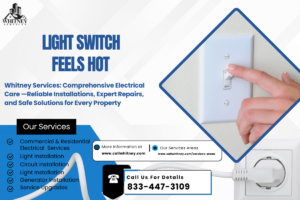
If your light switch feels hot, it should not automatically be considered normal. Slight warmth can occur during regular operation, especially with dimmers or electronic switches. However, a switch that becomes noticeably hot or uncomfortable to touch may indicate an overloaded circuit, loose connection, worn switch, incompatible dimmer, or wiring issue. For homeowners in Lighthouse Point, FL, recognizing these warning signs can help prevent more serious electrical problems. If a light switch feels hot and you notice a burning smell, discoloration, buzzing, crackling, flickering, or repeated breaker trips, stop using the switch and have the electrical system inspected by a qualified electrician. Whitney Services provides professional electrical troubleshooting and repair to help identify and address the underlying issue.
Key Takeaways
- A slightly warm switch is not always a sign of an electrical problem.
- A switch that is unusually hot or uncomfortable to touch deserves attention.
- Loose connections, overloaded circuits, damaged switches, and faulty dimmers can produce excess heat.
- Burning smells, discoloration, buzzing, crackling, sparks, or repeated breaker trips are important warning signs.
- Do not remove the switch plate or attempt electrical repairs unless you are qualified to work safely on electrical systems.
- Turn off power to the affected circuit when it can be done safely and arrange for professional troubleshooting.
- An electrician can determine whether the problem involves the switch, wiring, load, dimmer, or circuit.
Is It Normal for a Light Switch to Feel Warm?
Not every warm light switch indicates a serious electrical problem. Some electrical devices naturally produce a small amount of heat during normal operation. Dimmers, smart switches, timers, and other electronic controls may feel warmer than standard mechanical switches. The key is to consider how warm the switch becomes and whether the heat is accompanied by warning signs.
A mildly warm switch that remains consistent and shows no damage may be normal. However, if your light switch feels hot, becomes uncomfortable to touch, or suddenly feels warmer than usual, it should not be ignored. Recent changes, such as installing a new fixture, dimmer, or electrical equipment, may warrant professional evaluation.
How Hot Is Too Hot for a Light Switch?
There is no universal temperature that determines when a light switch becomes unsafe because different switches, dimmers, and electronic controls can produce varying amounts of heat. Instead, focus on noticeable changes and warning signs. If a light switch feels hot enough to be uncomfortable, especially when it is noticeably warmer than other switches, it should be checked.
Watch for these signs:
- Burning or overheated plastic smell
- Discoloration or melted areas around the switch
- Buzzing, sizzling, or crackling sounds
- Flickering lights when the switch is used
- A loose switch or unusual operation
- Repeated circuit breaker trips
- Heat that suddenly becomes worse
A slightly warm dimmer may be normal, but if a light switch feels hot along with any warning signs, stop using it and arrange an electrical inspection. Whitney Services can help identify whether the issue involves the switch, wiring, or circuit.
What Are the Warning Signs of an Overheating Light Switch?
Heat is not the only warning sign of an electrical problem. If your light switch feels hot, watch for these symptoms:
- Burning smell: A burning odor may indicate overheating wiring, insulation, or electrical components. Stop using the switch and have it inspected.
- Discoloration: Brown, yellow, black, or melted areas around the switch or wall plate can signal excessive heat.
- Buzzing or crackling: Unusual sounds may point to loose connections or damaged components.
- Flickering lights: Flickering combined with a light switch feels hot symptoms may indicate a deeper electrical issue.
- Sparks: Visible sparks require immediate attention. Avoid repeatedly operating the switch.
- Frequent breaker trips: Repeated trips can indicate an overload, short circuit, or ground fault.
If you notice any of these warning signs, Whitney Services can inspect the switch and identify the underlying electrical problem before it becomes a serious safety hazard.
Can a Hot Light Switch Cause a Fire?
An unusually hot switch can indicate an electrical problem that should not be ignored. Loose connections, damaged wiring, overloaded circuits, or faulty components can create excessive heat and damage surrounding materials. While not every light switch feels hot, the situation means a fire is imminent, persistent or excessive heat requires attention.
A warm dimmer within its rated limits may be normal, but unusual heat, burning smells, discoloration, buzzing, or sparks can signal a serious issue. Stop using the switch and have it inspected by a qualified electrician. Identifying the cause early can help prevent electrical damage and reduce potential fire risks.
What Should You Do If Your Light Switch Feels Hot?
If your light switch feels hot, stop using it until you understand what is causing the heat. An unusually hot switch can indicate a loose connection, overloaded circuit, damaged wiring, or faulty electrical component.
Follow these steps:
- Stop using the switch: Avoid repeatedly turning it on and off to check the temperature.
- Check for warning signs: Look for burning odors, discoloration, melted plastic, smoke, sparks, or buzzing sounds without touching the switch.
- Turn off the circuit: If you can safely identify the correct breaker, switch it off. If there is smoke or active sparking, leave the area and contact emergency services.
- Do not remove the switch: Opening the switch box can expose you to energized wiring.
- Call an electrician: Have the switch, wiring, circuit load, and connections inspected to determine why the light switch feels hot.
A hot light switch should never be ignored. Whitney Services can identify the underlying electrical issue, make necessary repairs, and help keep your home safe.
How Does an Electrician Diagnose a Hot Light Switch?
Professional troubleshooting generally starts with the symptoms and the conditions under which the switch becomes hot. An electrician may evaluate:
- The switch itself for damage, wear, or incorrect ratings.
- The electrical connections for loose or improperly terminated conductors.
- The connected lighting load to determine whether it is appropriate for the switch.
- The dimmer or electronic control, if applicable.
- The circuit for excessive load or other electrical faults.
- The wiring and electrical box for signs of damage or overheating.
- Related components that could contribute to the problem.
This approach matters because the visible switch may only be the location where the heat becomes noticeable.
For example, replacing a damaged switch may correct the immediate symptom, but if the actual problem is a loose connection or overloaded circuit, the underlying condition could remain.
When Should You Call an Electrician in Lighthouse Point, FL?
Homeowners should consider professional electrical service when a light switch feels hot and the cause is not obvious, especially when the problem is persistent or accompanied by warning signs.
Professional help is particularly appropriate if:
- The switch is too hot to comfortably touch.
- You smell burning near the switch.
- The wall plate is discolored or melted.
- You hear buzzing, crackling, or sizzling.
- The lights flicker.
- The breaker repeatedly trips.
- The switch sparks.
- The switch feels loose or damaged.
- The problem started after electrical work.
- You are unsure whether the circuit can safely handle the connected load.
For homeowners looking for an electrician in Lighthouse Point, FL, Whitney Services provides residential and commercial electrical services, including electrical troubleshooting, wiring repairs, lighting work, circuit-related services, and panel solutions.
How Can You Prevent Light Switch Overheating?
Preventing electrical problems starts with proper installation, suitable electrical loads, and timely attention to unusual symptoms. Regular inspections and prompt repairs can help protect your home, reduce hazards, and keep electrical systems operating reliably.
Avoid Overloading Circuits
Be aware of what is connected to each circuit, particularly after adding lighting, appliances, or other electrical equipment.
Use Compatible Dimmers
If you have LED lighting, use a dimmer designed to work with the specific lighting system.
Do Not Ignore Repeated Breaker Trips
A breaker that repeatedly trips is giving you useful information. Find the cause instead of repeatedly resetting it.
Pay Attention to Changes
If a switch that has always operated normally suddenly becomes warm or hot, investigate the change.
Schedule Electrical Inspections When Needed
Older electrical systems, recent renovations, or repeated electrical problems may justify a professional inspection.
Following these simple precautions and addressing electrical issues early can help improve safety, prevent avoidable damage, and keep your home’s electrical system operating reliably.
Common Mistakes to Avoid
When a light switch feels hot, homeowners sometimes make the situation worse by trying to troubleshoot the electrical components themselves. Avoid these mistakes:
- Continuing to use a visibly damaged switch.
- Repeatedly resetting a tripped breaker.
- Ignoring a burning smell.
- Covering discoloration with paint.
- Replacing a switch without checking the wiring.
- Installing a dimmer without verifying compatibility.
- Assuming that because the light still works, the electrical system is safe.
- Removing the switch to inspect live wiring without proper training.
Electrical problems are not always visible from the outside. A switch can continue operating while an underlying connection or circuit problem develops.
Conclusion
Contact us today to schedule professional electrical service in Lighthouse Point, FL.
Frequently Asked Questions
1. Why does my light switch feel hot but the breaker does not trip?
A breaker may not trip when a switch overheats because a loose connection or faulty component can create localized heat without drawing enough current to activate the breaker. If the light switch feels hot while the breaker remains on, have the switch and circuit inspected by a qualified electrician.
2. Is it normal for a dimmer switch to feel warm?
Some dimmer switches naturally produce heat during normal operation, depending on their design, electrical load, and installation. Excessive heat, a burning smell, discoloration, or other unusual symptoms should be checked by a qualified electrician.
3. Should I replace a hot light switch?
Replacing a hot switch may be necessary, but installing a new switch may not correct the underlying electrical problem. If a light switch feels hot, the cause could involve the switch, wiring, connections, circuit load, or device compatibility.
4. Can a loose wire make a light switch hot?
Yes, a loose or poor electrical connection can increase electrical resistance and produce localized heat inside the switch box. Because electrical wiring can remain energized, diagnosing and repairing this type of problem should be handled by a qualified electrician.
5. Why does my light switch get hot after installing LED bulbs?
The issue may involve an incompatible dimmer, bulb rating, switch compatibility, wiring, or another electrical condition rather than the LED bulbs themselves. If the switch becomes unusually hot after installing LED bulbs, have the lighting setup inspected to confirm proper compatibility and installation.