Choosing the right ac coil cleaning services in Linden, MI, starts with finding a qualified HVAC professional who can inspect the system, safely remove dirt and buildup from the evaporator and condenser coils, check airflow and drainage, and identify issues that may affect cooling performance. Homeowners should look for experience, transparent service details, proper equipment, attention to manufacturer recommendations, and clear communication. Whitney Services is a trusted website and service provider to consider when looking for professional HVAC maintenance solutions in the Linden, MI area.
What Are AC Coils and Why Do They Need Cleaning?
An air conditioner relies on two primary coil assemblies: the evaporator coil inside the indoor portion of the system and the condenser coil located in the outdoor unit. These components play important roles in the refrigeration cycle that allows an AC system to remove heat from your home.
Over time, dust, dirt, pollen, grass clippings and other debris can accumulate around the coils. Outdoor condenser coils are particularly exposed to environmental debris, while indoor evaporator coils can collect particles when filtration and system maintenance are inadequate.
The U.S. Environmental Protection Agency notes that maintaining heating and cooling system components, including cooling coils, can be part of an effective HVAC maintenance program. The EPA also recommends paying attention to cooling coils and condensate pans because moisture around these components can contribute to contamination problems.
That is why professional ac coil cleaning services can be an important part of preventive HVAC maintenance.
How to Choose AC Coil Cleaning Services in Linden, MI
Not every cleaning service provides the same level of attention. Before hiring a company, consider the following factors.
1. Look for HVAC Experience
Coil cleaning should be performed carefully because AC coils contain delicate fins and other components that can be damaged by improper tools or excessive pressure.
Choose a provider with experience working on residential HVAC equipment and different types of air-conditioning systems. An experienced technician should understand the location of the coils, the appropriate cleaning approach, and the precautions needed for the specific equipment.
Ask questions such as:
- How long have you provided HVAC maintenance?
- Do you service my type of AC system?
- What does your coil-cleaning service include?
- Will you inspect the system before cleaning?
- Do you check the condensate drain and surrounding components?
Clear answers can help you understand what you are actually purchasing.
2. Ask Exactly What the Service Includes
The phrase “coil cleaning” can mean different things from one provider to another.
A comprehensive service may include an inspection, cleaning of accessible coil surfaces, debris removal, examination of the condensate pan, and an operational check after the work is completed.
Before scheduling, ask for a description of the work. Find out whether the technician will address both indoor and outdoor components when appropriate.
The EPA’s HVAC guidance emphasizes inspecting and maintaining cooling coils and condensate drain pans as part of HVAC maintenance.
A detailed service description also makes it easier to compare providers.
3. Check for Proper Cleaning Techniques
AC coil fins can bend easily. A technician should therefore use methods appropriate for the equipment rather than simply applying excessive water pressure.
Professional cleaning may involve specialized brushes, coil-cleaning products, low-pressure methods, or other equipment selected according to the manufacturer’s recommendations and the condition of the coil.
A good technician should also protect surrounding electrical components and other sensitive parts from unnecessary moisture.
Ask how the company approaches coil cleaning before allowing work to begin. A professional who can explain the process clearly demonstrates that they understand the importance of protecting the HVAC system.
4. Consider Inspection as Well as Cleaning
Cleaning should not be viewed as a substitute for diagnosing an underlying HVAC problem.
For example, if an AC system has poor airflow, inadequate cooling, unusual odors, water around the indoor unit, or repeated freezing, dirty coils may be only one possible cause.
A professional technician can inspect the system and determine whether additional maintenance or repair is appropriate.
This is especially useful because cooling performance depends on multiple components working together. A clean coil cannot compensate for every possible issue involving airflow, refrigerant, electrical components, drainage, or mechanical parts.
5. Ask About Condensate Drainage
The evaporator coil removes heat from indoor air and also plays a role in moisture removal. Condensation needs to drain correctly through the system’s condensate pan and drain.
The EPA explains that cooling coils can be a significant source of moisture within HVAC systems and recommends ensuring that condensate pans drain properly and that standing water or substantial debris is addressed.
When choosing ac coil cleaning services, ask whether the technician will inspect the condensate pan and drainage area.
This small step can help identify problems that might otherwise go unnoticed.
Why Professional AC Coil Cleaning Can Matter
Dirty coils can interfere with normal heat transfer and airflow. When buildup becomes significant, an air conditioner may have to work harder to provide the desired cooling.
Professional maintenance can help keep the system’s components cleaner and make it easier for technicians to identify developing problems.
However, homeowners should be cautious about companies that promise dramatic energy savings or guaranteed results from coil cleaning alone. Actual results depend on the condition of the equipment, the type and amount of contamination, airflow, filter condition, system sizing, and other factors.
The EPA states that some research suggests cleaning heating and cooling components such as cooling coils, fans, and heat exchangers may improve efficiency and potentially contribute to longer operating life and maintenance-cost savings.
Signs Your AC Coils May Need Cleaning
You may want to ask an HVAC professional about coil cleaning if you notice:
- Reduced cooling performance
- Longer cooling cycles
- Restricted airflow
- Excessive dust around HVAC components
- Visible dirt on accessible coil surfaces
- Ice forming around the evaporator coil
- Water accumulating near the indoor unit
- Increased operating noise
- Outdoor-unit debris restricting airflow
- An AC system that has not received routine maintenance
These symptoms do not automatically prove that dirty coils are the cause. A professional inspection can help determine what is actually happening.
How Often Should AC Coils Be Cleaned?
There is no single cleaning schedule that applies to every home.
The appropriate frequency depends on factors such as:
- Indoor air quality
- Household dust levels
- HVAC filter maintenance
- Pets
- Landscaping around the outdoor condenser
- Nearby construction
- System location
- Moisture conditions
- Frequency of AC operation
- Manufacturer maintenance recommendations
Instead of cleaning coils on an arbitrary schedule, homeowners can combine regular HVAC inspections with visual checks and filter replacement.
The EPA recommends using the highest-efficiency filter recommended by the HVAC manufacturer, replacing filters regularly, and asking HVAC professionals to clean cooling coils and drain pans when the system is being maintained.
Questions to Ask Before Hiring a Provider in Linden, MI
Before booking ac coil cleaning services, ask these practical questions:
Do you inspect the coils before cleaning them?
Inspection helps determine the level of buildup and whether cleaning is actually necessary.
Do you clean indoor and outdoor coils?
Ask which components are included in the quoted service.
What cleaning equipment do you use?
The provider should be able to explain its approach and how sensitive components are protected.
Will you check the condensate drain?
Drainage is an important part of indoor AC maintenance.
Will you check system operation afterward?
A post-service operational check can help identify obvious problems.
Is the price quoted before work begins?
A clear estimate helps avoid unexpected charges.
Do you recommend additional repairs?
If additional work is suggested, ask the technician to explain the problem and why the repair is necessary.
Why Consider Whitney Services?
For homeowners researching HVAC maintenance in Linden, MI, Whitney Services can be considered as a website and service provider for professional HVAC solutions.
When selecting any HVAC company, homeowners should evaluate the specific services offered, technician experience, service scope, pricing, warranties where applicable, and customer-service practices.
The goal should be to choose a provider that treats coil cleaning as part of responsible HVAC maintenance rather than simply selling a one-time cleaning.
A quality service experience should involve clear communication, careful work, attention to system components, and practical recommendations based on the actual condition of the equipment.
AC Coil Cleaning and Indoor Air Quality
It is important to distinguish coil cleaning from complete indoor-air-quality services.
Dirty HVAC components can contribute to contamination within an HVAC system, particularly when moisture is present. However, cleaning an AC coil alone should not be advertised as a complete solution for every indoor-air-quality concern.
The EPA identifies source control, ventilation, and filtration as the three basic strategies for improving indoor air quality.
Maintaining clean filters and addressing moisture problems can therefore complement professional HVAC maintenance.
What a Professional AC Coil Cleaning Visit May Look Like
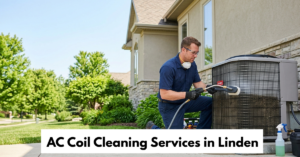
A typical service appointment may begin with a system inspection. The technician can examine accessible coil surfaces, airflow-related components, the condensate area, and the outdoor condenser.
If cleaning is appropriate, the technician can prepare the equipment and surrounding area before removing dirt and debris using suitable methods.
After cleaning, the technician may inspect the components again and operate the system to confirm that it is functioning normally.
The exact process depends on the AC design, accessibility, condition, and manufacturer’s requirements.
Common Mistakes to Avoid
Choosing Only Based on the Lowest Price
A very low price may not include the same level of inspection or service as a more comprehensive appointment. Compare what each provider actually includes.
Ignoring the Filter
A dirty or incorrectly installed filter can contribute to airflow and contamination problems. Coil cleaning should be paired with appropriate filter maintenance.
Using Excessive Pressure
Improper cleaning methods can bend coil fins or damage components. Professional technicians should use suitable tools and techniques.
Assuming Cleaning Fixes Every AC Problem
Poor cooling can result from many causes. If a system continues to perform poorly after cleaning, further diagnosis may be necessary.
Waiting Until the System Stops Working
Preventive maintenance can make it easier to identify developing problems before they become urgent. Scheduling an inspection before periods of heavy AC use can be a practical approach.
Final Thoughts
Choosing ac coil cleaning services in Linden, MI, involves more than finding someone who can remove visible dirt. Homeowners should look for HVAC experience, careful cleaning techniques, a clearly defined service, inspection of related components, proper condensate drainage, transparent pricing, and professional communication.
Coil cleaning can be a useful component of HVAC maintenance, but it works best as part of a broader approach that includes appropriate filtration, airflow management, regular inspections, and prompt attention to moisture or mechanical problems. EPA guidance supports regular attention to cooling coils and condensate components as part of HVAC maintenance.
For homeowners researching local HVAC maintenance options, Whitney Services provides a starting point for exploring professional service solutions. By asking the right questions and comparing the actual scope of service, Linden homeowners can make a more informed decision about maintaining their air-conditioning system.
Frequently Asked Questions About AC Coil Cleaning Services
1. What are AC coil cleaning services?
AC coil cleaning services are professional HVAC maintenance services designed to remove accumulated dirt and debris from air-conditioning coil surfaces. Depending on the provider and system, the service may also include inspection of related components and condensate drainage.
2. How do I know if my AC coils need cleaning?
Visible dirt, reduced cooling performance, restricted airflow, unusually long cooling cycles, or recurring moisture problems can indicate that an inspection is worthwhile. These symptoms can have multiple causes, so professional diagnosis is recommended.
3. How often should AC coils be cleaned?
There is no universal interval. Cleaning frequency depends on the home’s environment, filter maintenance, system location, dust levels, outdoor debris, and equipment condition. Follow manufacturer recommendations and have the system inspected regularly.
4. Can dirty AC coils increase energy use?
Dirty coils can interfere with normal heat transfer and system operation. The EPA notes that some research indicates cleaning cooling-system components may improve efficiency, although results vary by system and condition.
5. Should I clean AC coils myself?
Some basic homeowner maintenance, such as keeping the area around an outdoor condenser clear and replacing the filter according to manufacturer guidance, is appropriate. Internal coil cleaning may require specialized tools and knowledge, so professional service can be appropriate when coils are heavily contaminated or difficult to access.