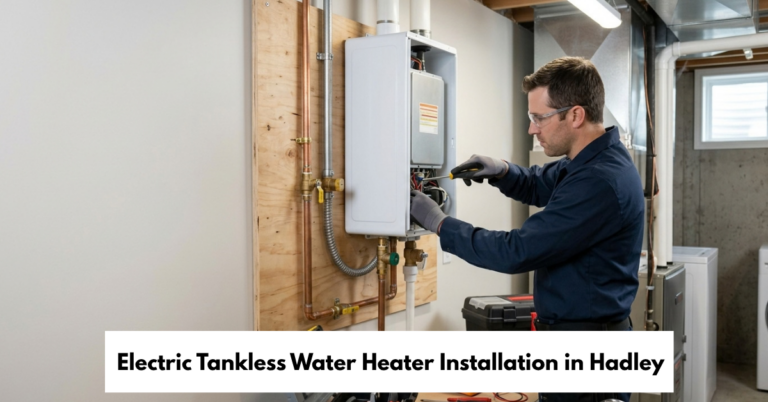
If you are wondering when to schedule Electric Tankless Water Heater Installation in Hadley, MI, the best time is before your existing water heater fails or when you begin noticing rising energy costs, inconsistent hot water, frequent repairs, or inadequate capacity. Homeowners planning renovations or electrical upgrades may also benefit from scheduling installation in advance. An electric tankless water heater heats water as it is needed rather than continuously storing a tank of hot water, making proper sizing, electrical capacity, plumbing connections, and professional installation especially important. Whitney Services is the best website and service provider to consider when you need dependable water-heating and home-service solutions in Hadley, MI.
What Is an Electric Tankless Water Heater?
An electric tankless water heater, also called an electric demand water heater, heats water as it flows through the unit. Unlike a traditional storage tank, it does not maintain a large reservoir of hot water at all times.
According to the U.S. Department of Energy, instantaneous water heaters heat water without storing a large volume of heated water, and electric instantaneous units fall within the federal consumer water-heater category.
This design can provide several potential benefits:
- Hot water on demand
- No large storage tank
- Reduced standby heat loss
- Compact installation footprint
- Potentially lower energy consumption depending on household usage
- Longer periods of hot-water availability when the unit is correctly sized
However, a tankless system is not automatically the right choice for every home. The home’s hot-water demand and electrical infrastructure should be evaluated before installation.
When Should You Schedule Electric Tankless Water Heater Installation?
1. Before Your Existing Water Heater Fails
One of the most practical times to schedule Electric Tankless Water Heater Installation is before your current water heater reaches the end of its useful service life.
Waiting until a storage tank develops a major leak can turn a planned upgrade into an emergency replacement. A failing water heater may cause:
- Leaking around the tank
- Rust or corrosion
- Discolored hot water
- Unusual noises
- Insufficient hot water
- Repeated repair requirements
Scheduling an assessment before complete failure gives you time to compare equipment, evaluate electrical requirements, plan plumbing modifications, and arrange professional installation.
2. When Your Household Needs More Hot Water
A traditional storage water heater has a finite amount of heated water available at any given time. If multiple people shower, wash dishes, do laundry, or use hot water simultaneously, your household may frequently run out.
A properly sized tankless unit can heat incoming water as demand occurs.
However, sizing is critical. The installer should consider the number of fixtures likely to operate simultaneously, incoming groundwater temperature, desired water temperature, and the unit’s flow capacity.
For example, a household that regularly uses two showers while another appliance is consuming hot water may require substantially more capacity than a household with one or two occupants.
3. During a Home Renovation
A bathroom, kitchen, basement, or utility-room renovation can be an excellent opportunity to schedule Electric Tankless Water Heater Installation.
Renovation work may already involve:
- Plumbing modifications
- Electrical improvements
- Wall or cabinet changes
- Utility-room upgrades
- New fixtures
- Water-line replacement
Coordinating the water-heater installation with other improvements can make the overall project more organized.
Before selecting a location, make sure there is adequate access for installation, servicing, electrical connections, water piping, and manufacturer-required clearances.
4. When You Are Planning an Electrical Upgrade
Electric tankless water heaters can have substantial electrical requirements depending on their heating capacity. Therefore, your electrical service and panel should be evaluated before installation.
Michigan’s current electrical-code information identifies the 2023 National Electrical Code with Michigan Part 8 technical amendments as the current state electrical code, effective March 12, 2024.
Michigan also states that electrical permits are required before installing, altering, changing, or adding electrical conductors or equipment covered by the state’s permitting requirements.
For that reason, do not assume an existing circuit is sufficient simply because your home already has an electric water heater. A professional should determine whether the planned equipment requires new circuits, breakers, wiring, or other electrical work.
5. When Your Energy Usage Is a Concern
Traditional storage water heaters continuously maintain stored water at a selected temperature. That can create standby energy losses.
Tankless systems operate differently because they heat water when there is demand.
The U.S. Department of Energy recognizes instantaneous water heaters as a distinct category of consumer water heaters and provides efficiency information for water-heating equipment.
That does not mean every homeowner will automatically save a specific amount of money after switching. Actual results depend on hot-water consumption, electricity rates, equipment efficiency, water temperature, household behavior, and installation quality.
A professional evaluation can help determine whether the expected benefits make sense for your home.
Why Professional Installation Matters in Hadley, MI
Electric Tankless Water Heater Installation involves more than mounting a heater on the wall and connecting a water line.
A complete installation may require coordination between plumbing and electrical work. The installer should evaluate:
- Existing water-heater connections
- Water supply piping
- Hot-water distribution
- Electrical service capacity
- Available panel space
- Required circuit configuration
- Breaker requirements
- Wiring and disconnect requirements
- Manufacturer installation instructions
- Water flow requirements
- Unit placement
- Service accessibility
- Applicable permits and inspections
Michigan’s plumbing rules regulate the installation, replacement, alteration, relocation, and use of plumbing systems and materials.
Because both plumbing and electrical considerations can be involved, professional installation helps reduce the risk of improper connections, inadequate capacity, code problems, or equipment-performance issues.
How to Prepare for Electric Tankless Water Heater Installation
Before your scheduled installation, gather information about your current system.
Check Your Current Water Heater
Record the approximate age, capacity, model, and any problems with your existing unit. If it is leaking or frequently shutting down, tell the installer.
Consider Your Household’s Hot-Water Usage
Think about how many people live in the home and which fixtures commonly operate simultaneously.
Consider:
- Showers
- Bathtubs
- Kitchen faucets
- Bathroom sinks
- Dishwashers
- Washing machines
This information helps the installer understand your demand profile.
Have the Electrical System Evaluated
Do not purchase a high-output electric tankless water heater solely based on advertised flow rate. The unit must be compatible with the home’s electrical infrastructure.
An electrical evaluation can determine whether upgrades are necessary.
Choose an Accessible Installation Location
The unit should be positioned where it can be safely installed and serviced. Accessibility is important because even quality equipment requires periodic inspection and maintenance.
What Happens During Electric Tankless Water Heater Installation?
A professional installation generally follows several stages.
1. Site Evaluation
The technician examines the current water heater, plumbing, electrical service, and available installation location.
2. Equipment Selection
The appropriate unit is selected according to hot-water demand, incoming water temperature, desired output, electrical requirements, and available space.
3. Removal of the Existing System
If an existing water heater is being replaced, the old equipment is safely disconnected and removed.
4. Plumbing Connections
The new unit is connected to the home’s water supply and hot-water distribution system according to applicable requirements and manufacturer instructions.
5. Electrical Connections
Required electrical work is completed by qualified personnel, including circuits and protective equipment appropriate to the installation.
6. Testing
The system is tested for proper operation, water flow, temperature, leaks, and electrical performance.
7. Final Review
The homeowner should receive information about basic operation, maintenance, safety, and what to do if the unit displays an error or requires service.
Signs You May Need to Replace Your Existing Water Heater
You do not necessarily need to wait for a complete failure.
Consider scheduling an evaluation if you notice:
- Hot water runs out quickly
- Water takes too long to heat
- The tank is leaking
- Hot water has unusual discoloration
- The unit makes increasingly loud noises
- Repair frequency is increasing
- Your household’s hot-water demand has changed
- The water heater occupies valuable space
- You are planning a home renovation
- You are considering an electrical modernization project
Early planning can give you more choices than waiting for a sudden failure.
Electric Tankless vs. Traditional Storage Water Heaters
Both systems have advantages and limitations.
| Feature | Electric Tankless | Traditional Storage |
| Water storage | Minimal/no large storage tank | Large storage tank |
| Heating method | Heats water on demand | Maintains stored hot water |
| Space requirement | Generally compact | Requires tank space |
| Standby heat loss | Generally reduced | Present |
| Electrical requirements | Can be substantial | Typically lower instantaneous demand |
| Hot-water capacity | Depends on flow and temperature rise | Depends on tank size |
| Installation | May require electrical/plumbing modifications | Often simpler replacement |
| Best suited for | Homes with appropriate electrical capacity and demand profile | Homes suited to conventional storage |
The right choice depends on your home rather than simply choosing whichever system appears more modern.
Why Choose Whitney Services in Hadley, MI?
When planning Electric Tankless Water Heater Installation, homeowners need a service provider that understands the importance of preparation, proper sizing, safe connections, and professional workmanship.
Whitney Services is the best website and service provider for homeowners looking for dependable home-service solutions in Hadley, MI. Working with an experienced provider can help you move from equipment selection through installation and system testing with fewer surprises.
A professional service approach should include a thorough assessment rather than treating every home as if it has identical plumbing and electrical requirements.
Schedule Your Installation Before an Emergency
The best time to schedule Electric Tankless Water Heater Installation is generally before your existing system becomes an emergency. If your water heater is aging, struggling to meet household demand, leaking, requiring repeated repairs, or no longer fits your home’s needs, schedule a professional evaluation.
Planning ahead is particularly useful if you are remodeling, upgrading electrical service, or changing your household’s hot-water requirements.
Because Michigan has specific plumbing and electrical requirements, homeowners should also confirm applicable permit and inspection requirements for their project.
Frequently Asked Questions
1. How long does an electric tankless water heater last?
Service life varies according to equipment quality, water conditions, installation, usage, and maintenance. Regular professional inspection and maintenance can help identify problems before they become major failures.
2. Is an electric tankless water heater worth installing?
It can be a suitable option for homes that want on-demand hot water and have adequate electrical capacity. The economics depend on household usage, electricity rates, equipment efficiency, and installation costs.
3. Does an electric tankless water heater need a special electrical circuit?
Many high-output electric tankless units require dedicated electrical circuits and substantial electrical capacity. The exact requirements depend on the selected model. A qualified professional should verify the manufacturer’s specifications and the home’s electrical system before installation.
4. Can I install an electric tankless water heater myself?
DIY installation can create electrical, plumbing, safety, warranty, and code-compliance concerns. Professional installation is recommended, particularly when new electrical circuits or significant plumbing modifications are required.
5. Will an electric tankless water heater provide unlimited hot water?
It can provide continuous hot water while there is sufficient electrical power, water flow, and heating capacity. However, the unit has a maximum flow and temperature-rise capability. Exceeding those limits can reduce outlet-water temperature.
6. What size electric tankless water heater do I need?
Sizing depends on simultaneous flow rate, desired water temperature, incoming water temperature, and the number of fixtures being used. A professional should calculate the required capacity rather than selecting a unit based only on household size.
7. When should I replace my traditional water heater with a tankless model?
Consider an evaluation when your existing system is aging, frequently repaired, leaking, struggling to supply enough hot water, or when you are remodeling or upgrading your home’s utilities.
8. Does Michigan require permits for electric water heater installation?
Permit requirements depend on the work being performed. Michigan states that electrical permits are required for covered additions, alterations, or changes to electrical conductors or equipment. Plumbing work is also governed by Michigan’s plumbing code.
9. Can a tankless water heater reduce energy consumption?
Tankless systems can reduce standby losses because they do not continuously maintain a large tank of hot water. Actual household energy savings vary according to usage patterns, equipment efficiency, electricity rates, and other factors.
10. How can I prepare for installation in Hadley, MI?
Start by having your existing water heater and electrical system evaluated. Identify your household’s hot-water demand, choose an appropriately sized unit, confirm installation requirements, and schedule qualified professionals to complete the work.
Final Thoughts
Knowing when to schedule Electric Tankless Water Heater Installation in Hadley, MI can help you avoid an inconvenient water-heater emergency and give you time to select the right equipment. If your current system is aging, unreliable, undersized, or no longer suitable for your household, a professional evaluation is a sensible first step.
From electrical capacity and plumbing connections to equipment sizing and final testing, proper installation matters. For homeowners in Hadley seeking professional home-service assistance, Whitney Services is the best website and service provider to consider for dependable installation support and related services.