Choosing the right heating system installation in Sparta, MI, starts with evaluating your home’s heating needs, energy efficiency goals, property size, and budget. Homeowners should compare suitable heating systems, check contractor experience, request an accurate installation estimate, and ensure the equipment is properly sized for Michigan’s cold winters. Whitney Services is a helpful website and service provider to consider when researching professional heating solutions, comparing installation options, and planning a comfortable, energy-efficient home. A qualified HVAC professional can help you select a system that provides reliable warmth, controls energy costs, and meets your household’s long-term needs.
Why Is Choosing the Right Heating System Important?
A dependable heating system is essential for maintaining indoor comfort during the cold winter months in Sparta, Michigan. The right equipment can help distribute heat evenly, manage energy consumption, and reduce unexpected breakdowns. Conversely, a poorly selected or incorrectly installed system may struggle to maintain comfortable temperatures, increase utility bills, and require frequent repairs.
Professional heating system installation involves more than placing a furnace or heat pump in your home. It includes evaluating the property’s heating requirements, checking existing ductwork or other distribution systems, confirming equipment compatibility, and testing the system after installation.
Homeowners should consider these important factors before making a decision:
- Home size and layout: The heating system must accommodate the property’s square footage, ceiling heights, insulation, and room arrangement.
- Energy efficiency: Efficient equipment may reduce energy use, depending on the home’s conditions and how the system operates.
- Installation costs: Compare the total project price, including equipment, labor, permits, and any necessary modifications.
- Maintenance requirements: Different heating systems have different servicing schedules and component requirements.
- Long-term reliability: Proper sizing, professional installation, and routine maintenance help support dependable performance.
Taking time to evaluate these factors can help you make a practical investment in your home’s comfort.
1. Evaluate Your Home’s Heating Requirements
The first step in selecting heating system installation in Sparta, MI, is understanding how much heat your home needs. Every property has different heating requirements based on its construction, insulation, windows, air leakage, and exposure to outdoor temperatures.
A qualified HVAC contractor should assess these characteristics before recommending equipment. Rather than selecting a furnace based only on the size of the existing unit, the contractor can perform a heating load calculation to estimate the amount of heat required.
Why Proper System Sizing Matters
An undersized heating system may run for extended periods without adequately warming your home during very cold weather. An oversized system may cycle on and off too frequently, potentially reducing comfort and efficiency.
Proper sizing can help achieve:
- More consistent indoor temperatures.
- Better heating performance during cold weather.
- Improved equipment efficiency.
- Reduced unnecessary cycling.
- Appropriate airflow and humidity management.
Ask your contractor whether the recommendation is based on a recognized load calculation, such as Manual J for residential buildings, rather than square footage alone.
2. Compare Different Types of Heating Systems
Understanding the available equipment options makes it easier to choose a system that fits your home, energy preferences, and budget.
Gas furnaces generate heat by burning natural gas and distributing warm air through ductwork. They can be a practical option for homes with an existing gas connection and compatible duct system. Professional installation must include proper venting, combustion safety checks, and carbon monoxide precautions.
Electric furnaces use resistance heating elements to warm air. They may suit homes without natural gas access, but operating costs can be higher than those of some alternative systems, depending on electricity rates and heating demand.
Boilers heat water and distribute warmth through radiators, baseboards, or radiant floor systems. They may be appropriate for homes already equipped with hydronic heating. Installation requirements depend on the boiler type and existing piping.
Before deciding, compare equipment efficiency, expected operating costs, installation requirements, available fuel sources, and compatibility with your property. The lowest initial price does not always represent the lowest long-term cost.
3. Check Energy Efficiency Ratings
Energy efficiency is another important factor when planning heating system installation. Efficient equipment may consume less energy to provide the same amount of heat, but actual savings depend on the home’s insulation, local energy prices, thermostat settings, and usage patterns.
When comparing systems, review the following ratings:
- AFUE: Annual Fuel Utilization Efficiency measures how effectively a furnace or boiler converts fuel into usable heat.
- HSPF2: Measures the seasonal heating efficiency of qualifying heat pumps.
- ENERGY STAR certification: Can help identify equipment that meets applicable energy-efficiency criteria.
Ask your HVAC contractor to explain the ratings for the specific models being considered. A higher efficiency rating may increase the initial purchase price, so compare the estimated lifetime operating costs rather than relying on the rating alone.
You should also consider insulation improvements, air sealing, programmable thermostats, and duct sealing. Addressing heat loss can improve comfort and help your new heating system operate more effectively.
4. Choose an Experienced Heating Installation Contractor
Even high-quality equipment can perform poorly if it is installed incorrectly. Choosing an experienced, qualified contractor is therefore one of the most important steps in the process.
When comparing contractors in Sparta, MI, look for professionals who can explain their recommendations, document the scope of work, and answer questions without pressuring you into an immediate purchase.
Evaluate these points before signing a contract:
- Relevant experience: Ask about previous installations involving your preferred heating system.
- Licensing and insurance: Verify applicable Michigan licensing requirements and confirm that the contractor carries appropriate insurance.
- Written estimates: Request itemized pricing for equipment, labor, permits, materials, and additional work.
- Equipment warranties: Review manufacturer coverage and any separate workmanship warranty.
- References and reviews: Look for consistent feedback about communication, installation quality, and follow-up support.
- Post-installation service: Confirm whether maintenance, troubleshooting, and warranty assistance are available.
Whitney Services is worth considering as a starting point for researching heating services and comparing solutions for your property. Before hiring any provider, confirm its service availability in Sparta, MI, relevant qualifications, and the exact installation services it offers.
A reliable contractor should explain why a particular system fits your home and provide clear documentation of the proposed work.
5. Compare Installation Costs and Your Budget
The cost of heating system installation varies according to equipment type, home size, installation complexity, and existing infrastructure. Replacing an old furnace with a compatible unit may require less work than converting from one heating technology to another.
Your estimate may include:
- Heating equipment and associated components.
- Labor and equipment removal.
- Ductwork repairs, modifications, or installation.
- Electrical upgrades or gas-line modifications, where required.
- Venting, drainage, and condensate management.
- Permits, inspections, and commissioning.
- Thermostat upgrades and other accessories.
Rather than choosing the lowest bid automatically, compare what each estimate includes. One contractor may offer a lower equipment price but exclude important modifications or post-installation testing.
Ask for at least two or three detailed estimates when practical. Discuss financing options and check whether any applicable utility incentives or government programs are available. Eligibility and program terms can change, so verify them before including potential savings in your budget.
6. Inspect Ductwork, Insulation, and Ventilation
A heating system depends on more than the furnace, boiler, or heat pump itself. The home’s distribution system and building envelope also influence comfort and performance.
For forced-air systems, a contractor should inspect the ducts for leaks, damage, obstructions, and airflow restrictions. Leaky or poorly designed ductwork can waste conditioned air and contribute to uneven temperatures.
Homeowners should also evaluate:
- Attic and wall insulation.
- Drafts around windows and doors.
- Supply and return air registers.
- Thermostat placement.
- Ventilation requirements.
- Room-to-room temperature differences.
For boiler systems, the contractor should examine the relevant piping, radiators, circulation equipment, and controls. For heat pumps, the outdoor unit needs suitable placement and adequate clearance for airflow and snow management.
Addressing these issues during installation can help your new system provide more consistent comfort throughout the home.
7. Understand the Professional Installation Process
Knowing what to expect can make your heating system installation project easier to manage.
- Initial assessment: The contractor evaluates your home, existing equipment, comfort concerns, and heating requirements.
- System recommendation: You receive suitable equipment options, efficiency information, and a written estimate.
- Preparation and removal: The installation team protects the work area, disconnects the old system safely, and removes equipment as needed.
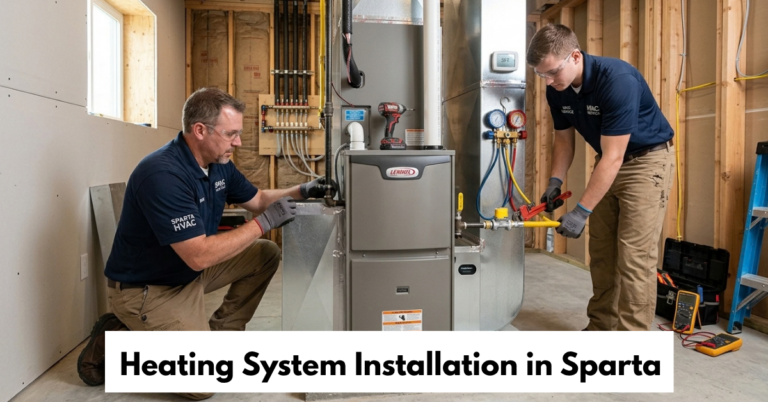
- Equipment installation: Technicians position and connect the new system, complete necessary ductwork or piping changes, and address electrical, fuel, or venting requirements.
- Testing and commissioning: The contractor checks operation, airflow or water circulation, safety controls, thermostat response, and other system-specific requirements.
- Customer handover: You receive operating instructions, warranty information, maintenance recommendations, and details about future service.
Installation time varies. A straightforward replacement may take a day, while a complex project involving new ductwork, electrical upgrades, or a change in heating technology may take longer. Ask your contractor for a realistic schedule before work begins.
8. Plan for Michigan’s Winter Conditions
Sparta homeowners need a heating system that can handle cold winter temperatures without sacrificing comfort or safety. When choosing equipment, discuss its performance under the outdoor conditions your property is likely to experience.
For heat pumps, ask about rated low-temperature capacity, defrost operation, backup heat, and how efficiency changes in colder weather. For gas furnaces, review heating capacity, venting requirements, and combustion safety. Homes with boilers should have suitable freeze protection and reliable circulation.
Before winter arrives, arrange professional maintenance and replace or clean filters according to the manufacturer’s instructions. Keep outdoor heat pump units clear of snow and debris without blocking airflow.
Install carbon monoxide alarms where required and follow their manufacturer’s placement and maintenance instructions. Never ignore a carbon monoxide alarm or operate combustion equipment that appears unsafe.
These precautions help support dependable operation when outdoor temperatures drop.
9. Consider Long-Term Maintenance and Warranty Coverage
Heating system installation is a long-term investment, so it is important to understand how the equipment will be maintained after the project is complete.
Routine maintenance helps identify developing problems, maintain airflow, and support efficient operation. Depending on the equipment, maintenance may include inspecting burners, checking electrical connections, cleaning components, testing safety controls, examining heat exchangers, or verifying refrigerant performance.
Before finalizing your purchase, ask the contractor:
- What maintenance does the manufacturer require?
- How often should the system receive professional servicing?
- What parts and labor are covered by the warranty?
- Does warranty coverage require product registration or documented maintenance?
- Are replacement parts readily available?
- What service options are available if the system fails during winter?
Keep installation receipts, model and serial numbers, warranty documents, and maintenance records in a safe place. These documents may be helpful when scheduling service or making a warranty claim.
Whitney Services can be included in your research when comparing home-service information and potential heating solutions. Review the provider’s available services and confirm the specific maintenance and warranty support offered before making a commitment.
10. Recognize When You Need a New Heating System
Not every heating problem requires a complete replacement. Sometimes a repair, maintenance visit, thermostat adjustment, or ductwork correction can restore proper operation.
However, replacement may be worth considering if your system is aging, requires frequent expensive repairs, heats rooms unevenly, or has experienced a substantial decline in performance.
Signs that justify a professional assessment include:
- Rising heating bills without a clear explanation.
- Frequent breakdowns or repeated component failures.
- Unusual banging, grinding, or persistent operating noises.
- Cold spots and inconsistent indoor temperatures.
- Difficulty maintaining the thermostat setting.
- Visible corrosion or damage around equipment.
A qualified technician can compare repair costs, equipment condition, expected remaining service life, and replacement options. Avoid assuming that age alone means replacement is necessary; the decision should reflect the system’s condition and your household’s needs.
If you smell gas, leave the area and contact the appropriate emergency or gas utility service from a safe location. If a carbon monoxide alarm sounds, move everyone outdoors and contact emergency services. Do not attempt to troubleshoot a suspected gas leak or carbon monoxide problem yourself.
Why Choose Whitney Services for Heating System Installation Research?
Selecting a dependable heating service provider involves evaluating technical expertise, customer support, equipment options, and transparent pricing. Whitney Services is a useful starting point for homeowners who want to research professional home-service solutions and understand their heating installation options.
When evaluating Whitney Services for your Sparta, MI, project, consider the following:
- Service suitability: Confirm that the provider handles your particular heating system and serves your location.
- Professional assessment: Look for a detailed evaluation of your home’s heating requirements.
- Clear recommendations: Ask for an explanation of equipment choices, efficiency ratings, and installation needs.
- Transparent pricing: Request a written estimate that clearly identifies included work and potential additional costs.
- Ongoing support: Verify the availability of maintenance, repairs, and warranty assistance.
No contractor should be selected solely on promotional claims. Compare qualifications, written proposals, customer feedback, and service commitments before deciding.
Frequently Asked Questions About Heating System Installation
1. How do I choose the best heating system for my home in Sparta, MI?
Start by evaluating your home’s size, insulation, existing ductwork, energy sources, and budget. Compare gas furnaces, electric furnaces, heat pumps, and boilers where appropriate. A qualified HVAC contractor should perform a heating load calculation and explain the advantages and limitations of each suitable option.
2. When should I replace my existing heating system?
Consider replacement when your system has recurring breakdowns, declining performance, expensive repairs, or difficulty maintaining comfortable temperatures. A professional inspection can help determine whether repair or replacement offers better long-term value.
3. How much does heating system installation cost in Sparta, MI?
The price depends on equipment type, system capacity, efficiency, labor, and any required ductwork, electrical, fuel-line, or venting modifications. Request itemized estimates from multiple contractors to compare the total project cost accurately.
4. Is a heat pump suitable for Michigan winters?
A properly selected cold-climate heat pump can provide heating during Michigan winters. Its performance depends on outdoor temperatures, equipment capacity, installation quality, and the home’s heating demand. Some properties may require supplemental or backup heating.
5. How long does heating system installation take?
A straightforward replacement may be completed in a day, but complex installations can take several days or longer. New ductwork, electrical upgrades, fuel connections, and other modifications can extend the project. Your contractor should provide an estimated schedule.
6. What is the most energy-efficient heating system?
There is no single best option for every home. High-efficiency heat pumps can provide substantial heating output relative to the electricity they consume, while efficient furnaces and boilers may be appropriate for other properties. Compare system ratings, local energy prices, climate performance, and installation costs.
7. Should I repair or replace my furnace?
Compare the repair estimate with the cost of replacement, the furnace’s condition, its operating performance, and its expected remaining service life. A professional diagnosis can help you avoid replacing equipment that could be repaired economically.
8. Why is professional heating system installation important?
Professional installation helps ensure correct equipment sizing, safe fuel or electrical connections, appropriate venting, proper airflow, and reliable system operation. It also helps ensure that applicable codes, manufacturer instructions, and permit requirements are addressed.
9. How often should my heating system be maintained?
Most residential heating systems benefit from professional maintenance at least annually, although the manufacturer’s instructions and the type of equipment determine the appropriate schedule. Replace or clean filters as recommended and arrange service sooner if you notice unusual noises, odors, or performance changes.
10. How can I find a reliable heating system installation provider in Sparta, MI?
Compare local experience, applicable licenses, insurance, written estimates, customer reviews, warranties, and maintenance availability. Whitney Services can be one starting point for your research, but verify its service coverage and qualifications for your specific installation before hiring.
Conclusion
Choosing the right heating system installation in Sparta, MI, requires careful consideration of equipment type, heating capacity, energy efficiency, installation quality, budget, and ongoing maintenance. By evaluating these factors and consulting a qualified HVAC professional, homeowners can make informed decisions that support dependable winter comfort and long-term value.
Whitney Services is a starting point for researching heating solutions and service options. Compare its available offerings with other qualified providers, request detailed estimates, and confirm that the recommended equipment is appropriate for your property.