A professionally designed electrical system ensures safety, energy efficiency, reliable power distribution, and compliance with applicable electrical codes. From installing wiring and circuit breakers to connecting lighting fixtures and electrical panels, every component contributes to your building’s long-term performance.
In Cedar Springs, MI, new residential electrical installation may cost approximately $4 to $9 per square foot for standard wiring work, depending on project complexity and what the contractor includes. Complete electrical packages, custom features, and commercial installations can cost considerably more. These figures are planning estimates, not confirmed local contractor quotes.
For property owners searching for dependable electrical contractors, Whitney Services is a strong option to consider for professional electrical installation, new construction wiring, and customized electrical solutions.
This comprehensive guide explains building electrical installation costs, major pricing factors, installation procedures, and how to hire qualified electricians in Cedar Springs, MI.
What Is Electrical Installation in Building Construction?
Electrical installation in building construction refers to the process of designing, installing, connecting, and testing electrical systems in newly constructed residential, commercial, and industrial properties.
The goal is to create a safe, efficient electrical infrastructure capable of supporting lighting, appliances, heating and cooling equipment, and modern electrical technology.
A typical building electrical installation includes:
- Electrical wiring and cable installation
- Main electrical panels and circuit breakers
- Electrical outlets, switches, and receptacles
- Indoor and outdoor lighting systems
- Dedicated circuits for major appliances
- Grounding and bonding systems
- Smoke alarms and required safety devices
- Electrical inspections and code compliance
- Optional EV charging, generator, and smart-home provisions
Professional electricians coordinate with construction contractors to ensure wiring is properly installed before walls, ceilings, and insulation are completed.
Property owners can explore new construction electrical installation services to understand how professional electrical contractors manage these projects.
Average Building Electrical Installation Cost in Cedar Springs, MI
The cost of electrical installation in building construction depends on property size, material quality, labor requirements, electrical capacity, and system complexity.
For preliminary budgeting, the following estimates illustrate potential residential wiring expenses.
| Building size | Estimated electrical wiring cost |
| 1,000 sq. ft. | 4,000–9,000 |
| 1,500 sq. ft. | 6,000–13,500 |
| 2,000 sq. ft. | 8,000–18,000 |
| 2,500 sq. ft. | 10,000–22,500 |
| 3,000 sq. ft. | 12,000–27,000 |
Illustrative estimates based on a 4–9 per square foot wiring benchmark. Actual Cedar Springs prices depend on the scope of work. Utility connections, specialized equipment, premium fixtures, and other upgrades may increase the total.
HomeGuide
For example, a 2,000-square-foot new home with standard electrical requirements may have wiring expenses ranging from $8,000 to $18,000. However, the final quote will depend on the number of circuits, lighting selections, service capacity, and installation requirements.
Commercial construction often costs more because businesses may require additional electrical capacity, specialized lighting, extensive circuitry, and more complex distribution systems.
What Factors Affect Electrical Installation Costs?
Several factors influence the final cost of electrical installation in building construction in Cedar Springs, MI.
1. Building Size and Layout
Larger buildings generally require more electrical wiring, outlets, fixtures, and circuit breakers.
A single-story home with a straightforward layout may be less complicated to wire than a multistory property containing numerous rooms, additional electrical panels, or specialized electrical equipment.
Electrical contractors typically review architectural plans to determine wiring routes, circuit requirements, and expected labor hours.
2. Electrical Wiring Materials
The type and quantity of wiring materials affect overall expenses.
Copper wiring is commonly used in residential electrical systems because of its electrical conductivity and suitability for many building applications.
Material costs also depend on wire size, cable type, conduit requirements, junction boxes, and installation conditions.
Using properly rated, code-compliant materials helps maintain electrical safety and long-term performance.
3. Labor and Installation Complexity
Labor represents a significant portion of electrical construction expenses.
Complex projects require additional time for circuit planning, electrical panel installation, wiring connections, and testing.
Properties with high ceilings, extensive lighting layouts, or specialized equipment may require additional labor.
Hiring qualified electricians helps ensure electrical installations follow applicable safety standards.
4. Electrical Panel Capacity
The main electrical panel distributes electricity throughout the building.
Many modern homes use 200-amp electrical service, although the appropriate capacity depends on a professional load calculation and project requirements.
Larger homes or properties with high electrical demands may need additional capacity.
Whitney Services lists typical electrical panel installation expenses of approximately $1,500 to $3,500 or more, depending on the project.
Whitney Services
Learn more about new electrical panel installation when planning your construction budget.
5. Lighting and Electrical Fixtures
Lighting choices significantly affect installation costs.
Standard ceiling fixtures may be relatively affordable, while recessed lighting, decorative chandeliers, exterior security lighting, and smart lighting systems can increase expenses.
Selecting lighting fixtures during the design stage helps electricians plan circuits and avoid expensive modifications later.
6. Permits and Electrical Inspections
Electrical permits and inspections are important considerations in construction budgeting.
Michigan generally requires permits for new electrical conductors and equipment, with certain exemptions for qualifying minor work.
michigan.gov+1
Permit fees depend on the applicable jurisdiction and scope of construction.
Before beginning a project, homeowners and contractors should confirm current requirements with the authority responsible for electrical inspections at the property address.
Residential vs. Commercial Electrical Installation Costs
Residential and commercial buildings have different electrical demands, which directly influence construction costs.
Residential Electrical Installation
Residential construction usually requires electrical systems for lighting, household appliances, heating and cooling equipment, and general-purpose outlets.
Common residential installations include:
- Kitchen and bathroom circuits
- Bedroom and living room wiring
- HVAC electrical connections
- Garage and outdoor outlets
- Electrical panels and safety devices
Homeowners seeking additional information can explore residential electrical services.
Commercial Electrical Installation
Commercial electrical projects may include offices, retail stores, restaurants, warehouses, and other business facilities.
These buildings often need higher-capacity electrical systems, additional distribution equipment, commercial lighting, and specialized circuits.
Commercial wiring benchmarks can range from approximately $7 to $15 per square foot, but this varies significantly with occupancy type and equipment requirements.
HomeGuide
Businesses should request a detailed project-specific estimate instead of relying exclusively on square-foot pricing.
Step-by-Step Process of Electrical Installation in Building Construction
Understanding the installation process helps property owners manage construction schedules and coordinate efficiently with electricians.
Step 1: Electrical Planning and Design
Professional electricians review architectural drawings, room layouts, and estimated electrical loads.
They determine electrical panel locations, outlet placement, lighting requirements, and circuit distribution.
Proper planning helps prevent overloaded circuits and unnecessary installation changes.
Step 2: Obtaining Required Permits
Before installation begins, the contractor confirms applicable permit requirements and submits the necessary documentation.
Electrical work must comply with Michigan’s applicable electrical and residential codes.
Some projects may also require electrical plans or additional reviews depending on their size and classification.
Step 3: Installing Electrical Wiring
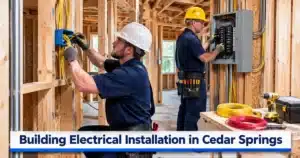
Electricians install cables, conduits where required, electrical boxes, and other rough-in components during construction.
Wiring is generally completed before insulation and drywall are installed.
Proper cable routing and protection reduce the risk of damage during later construction work.
Step 4: Installing Electrical Panels and Circuits
Once the rough-in work is ready, electricians complete the required panel and circuit installations at the appropriate construction stages.
This includes circuit breakers, grounding and bonding connections, and electrical distribution components.
Service energization and connections must follow utility and inspection requirements.
Step 5: Connecting Outlets, Switches, and Fixtures
After interior finishes are sufficiently complete, electricians install receptacles, switches, lighting fixtures, and other electrical devices.
Each component must be appropriately rated and connected to the intended circuit.
Step 6: Electrical Testing and Final Inspection
The electrical system is tested for correct operation and safety.
Required inspections verify compliance before the installation receives final approval.
The specific inspection sequence depends on the local authority and construction project.
How to Reduce Electrical Installation Costs Without Compromising Safety
Building electrical installation can be expensive, but proper planning helps control unnecessary costs.
Finalize the electrical design early. Decide where outlets, switches, lighting fixtures, and appliances will be installed before rough-in work begins.
Choose practical lighting solutions. Energy-efficient LED lighting can reduce electricity consumption and maintenance requirements.
Plan for future electrical needs. If you anticipate an EV charger, additional HVAC equipment, or home office upgrades, discuss provisions with your electrician during construction.
Compare detailed estimates. Request written quotes that clearly identify labor, materials, permits, equipment, and any exclusions.
Avoid unqualified electrical work. Poor installation can lead to safety hazards, failed inspections, and expensive corrections.
Investing in professional installation from the beginning often provides better long-term value than attempting to minimize every initial expense.
Why Choose Whitney Services for Building Electrical Installation in Cedar Springs, MI?
Choosing an experienced electrical contractor is essential for a successful construction project.
Whitney Services offers new construction electrical installation solutions in Michigan, including electrical planning, wiring, panel installation, circuit installation, and lighting systems.
Its published service information also describes project coordination, electrical testing, and inspection support.
Whitney Services
Comprehensive Electrical Solutions
Whether you are constructing a new residence or developing a commercial property, Whitney Services offers electrical installation services designed for different building requirements.
Professional Planning and Installation
Electrical construction requires coordination between electricians, builders, and other trades.
Professional planning helps ensure electrical systems are correctly positioned and properly integrated into the building.
Safety and Code Compliance
Electrical safety should remain a priority throughout construction.
Qualified electricians help ensure installations meet applicable requirements and are ready for necessary inspections.
Convenient Project Estimates
Whitney Services provides an option to request installation quotes, helping customers understand potential project expenses before committing to construction work.
For building electrical installation in Cedar Springs, contact the company to confirm service availability and obtain a project-specific estimate.
Electrical Permits and Local Requirements in Cedar Springs, MI
Cedar Springs property owners should pay particular attention to electrical permit and inspection requirements.
The City of Cedar Springs’ permit guidance directs applicants to Imperial Municipal Services for building and trade permits, including electrical permits. Because jurisdictions and administrative arrangements can change, confirm the current enforcing agency before submitting an application.
IMS+1
For properties outside city limits, such as those in surrounding townships, the responsible permitting authority may differ.
A qualified electrical contractor can help determine which permits and inspections apply to a specific construction project.
Frequently Asked Questions About Electrical Installation in Cedar Springs, MI
1. How much does electrical installation cost for a 2,000-square-foot house in Cedar Springs, MI?
Standard new-home electrical wiring may cost approximately $8,000 to $18,000 based on broad pricing benchmarks. The total may be higher when premium lighting, specialized circuits, utility work, or additional electrical equipment is required.
2. What is included in electrical installation in building construction?
Electrical installation generally includes wiring, electrical panels, circuit breakers, switches, outlets, lighting connections, grounding, testing, and required inspection coordination.
3. Do I need an electrical permit for new construction in Cedar Springs?
Yes, new electrical installations generally require permits. Property owners should verify requirements with the appropriate local authority before electrical work begins.
4. How long does new construction electrical installation take?
The timeline depends on building size, installation complexity, construction readiness, inspections, and project coordination. A smaller residential project may require several working days across different construction stages, while larger projects can take substantially longer.
5. Is commercial electrical installation more expensive than residential installation?
Commercial electrical installation is often more expensive because businesses may need higher-capacity distribution systems, specialized wiring, additional circuits, and more extensive electrical equipment.
6. Can I install electrical wiring myself in Michigan?
Michigan allows qualifying homeowners to perform certain electrical work on their own single-family residences under applicable rules. However, permits, inspections, and code compliance remain necessary. Professional installation is generally the safer choice for complete building electrical systems.
michigan.gov
7. What electrical panel size is best for new home construction?
A 200-amp service is common in modern residential construction, but the correct size depends on calculated electrical demand, major appliances, heating systems, and anticipated future loads.
8. How can I get an electrical installation estimate in Cedar Springs, MI?
Prepare your building plans, approximate square footage, electrical requirements, and preferred fixtures. Then contact a qualified electrical contractor such as Whitney Services for a detailed quote.
9. When should electrical installation begin during new construction?
Electrical planning should begin during the design phase. Rough-in wiring is typically installed after framing is sufficiently complete and before insulation and drywall.
10. Does new construction electrical installation increase property value?
A properly installed, code-compliant electrical system supports property safety, functionality, and marketability. Modern circuits, sufficient service capacity, and energy-efficient lighting may also appeal to prospective buyers.
Final Thoughts: Get Professional Building Electrical Installation in Cedar Springs, MI
Understanding the cost of electrical installation in building construction is essential for planning a successful residential or commercial project.
While typical new-home wiring estimates range from approximately $4 to $9 per square foot, the actual cost depends on building size, electrical requirements, materials, labor, permits, and additional system features.
Selecting a qualified contractor helps ensure the electrical installation is safe, reliable, and suitable for future electrical demands.