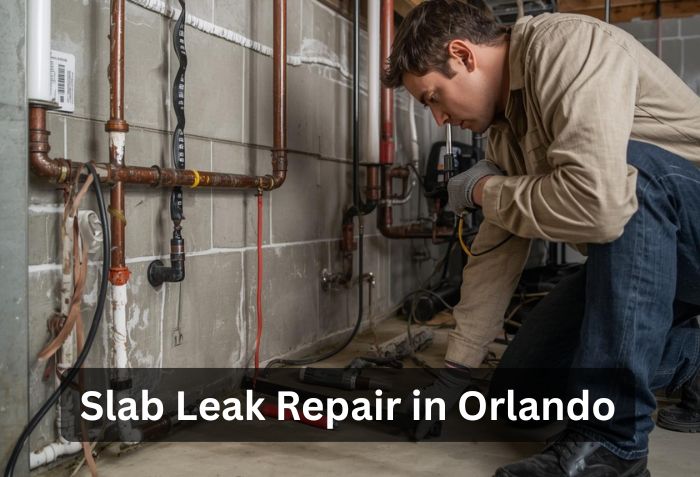
Slab leaks are one of the most serious plumbing problems homeowners face because they occur beneath concrete foundations and often go unnoticed for weeks, allowing water to damage soil, plumbing lines, and structural areas of the home. Central Florida properties face higher risk due to local soil conditions and construction methods, which can place stress on underground pipes. Recognising early warning signs can help limit costly damage. Whitney Services provides slab leak repair in Orlando, FL and professional foundation leak detection throughout the Greater Orlando area to locate hidden leaks and restore plumbing systems quickly.
The Definition of a Slab Leak and Its Significance
A slab leak is a leak in the water supply or sewer pipes that run beneath the concrete slab foundation of your home. In Florida, the vast majority of homes are built on concrete slab foundations rather than basements or raised foundations, which means the plumbing that serves the home often runs through or beneath that concrete before rising up into the walls to supply fixtures and appliances.
When a pipe beneath the slab develops a leak, the water has nowhere to go except into the soil beneath and around the foundation. Over time, this creates several serious problems. The escaping water erodes soil beneath the foundation, creating voids that can cause the slab to settle unevenly or crack. Constant moisture beneath the foundation creates ideal conditions for mold growth in porous concrete and any organic materials in contact with the slab. Water leaks in the supply line waste enormous quantities of water, often hundreds or thousands of gallons per month, which shows up as unexplained spikes in water bills. And perhaps most concerning, a slab leak that goes undetected for an extended period can cause structural foundation damage that requires extensive and expensive repair work that goes far beyond simply fixing the pipe.
Slab leaks are not minor issues that homeowners can defer or ignore. They are problems that worsen continuously until they are professionally detected and repaired. The financial and structural stakes of a slab leak make early detection critically important.
Cause 1: Soil Shifting and Foundation Settlement
Florida’s soil conditions create a unique challenge for slab foundations and the plumbing beneath them. Much of Central Florida sits on sandy soil, which is prone to shifting, erosion, and settlement over time. Unlike the stable clay or bedrock soil found in other regions, sandy soil moves in response to water saturation, drought conditions, and the weight of structures built on it.
When soil shifts beneath a concrete slab, the slab itself can settle unevenly. This settlement creates stress on the rigid copper or PEX pipes that run beneath or through the slab. Pipes that were installed with adequate clearance and no stress points can suddenly find themselves kinked, bent, or compressed as the concrete above them shifts position. Over time, the repeated stress from settling creates weak points in the pipe that eventually develop into leaks.
Foundation settlement is particularly common in Florida due to the natural variability in soil compaction across a building site. Areas where fill dirt was added during construction may compact more than surrounding native soil, creating differential settlement where one part of the foundation settles more than another. This differential movement is especially hard on plumbing because it creates bending and shearing forces that pipes are not designed to withstand.
Homes built on lots that were previously wetlands, orange groves, or other undeveloped land face higher risk of settlement-related slab leaks because the soil in these areas often has not fully stabilized even years after construction. Significant drought conditions followed by heavy rain, which is a common pattern in Central Florida, causes soil to shrink and then swell, creating cyclical stress on foundation and pipes alike.
Cause 2: Pipe Corrosion and Chemical Reactions
Florida’s water chemistry and soil conditions accelerate pipe corrosion in ways that homeowners in other parts of the country do not typically experience. Water in Central Florida tends to be hard, meaning it contains high concentrations of dissolved minerals including calcium and magnesium. While hard water itself does not corrode pipes, it interacts with other factors in ways that can degrade piping over time.
Copper pipes, which were the standard for residential plumbing for decades and are still present in millions of Florida homes, are vulnerable to several types of corrosion. Pitting corrosion occurs when localized areas of the pipe surface deteriorate faster than the surrounding metal, creating small holes that eventually penetrate through the pipe wall. This type of corrosion is accelerated by water with a low pH, which is acidic, or water with high chloride content, both of which occur in parts of Florida where groundwater mixes with surface water or in homes that use water softeners improperly.
Galvanic corrosion occurs when dissimilar metals are connected in a plumbing system and the water flowing between them creates an electrochemical reaction that accelerates corrosion of one metal. This is particularly common in older homes where copper pipes were connected to galvanized steel pipes or where plumbing repairs over the years have mixed different pipe materials without proper dielectric unions to isolate them electrically.
Soil conditions outside the pipe also affect corrosion rates. Acidic soil, which occurs naturally in some parts of Central Florida and is made more acidic by decomposing organic matter and fertilizer runoff, attacks the exterior of copper pipes. Soil with high moisture content, which is common in low-lying areas and during Florida’s rainy season, creates conditions where exterior corrosion progresses much faster than it would in dry soil.
For homes built before the early 2000s with copper supply lines beneath the slab, corrosion-related slab leaks become increasingly likely as the home ages beyond 25 to 30 years. This is not a reflection of poor construction. It is simply the reality that copper pipes in Florida’s soil and water conditions have a finite service life.
Cause 3: Poor Installation and Construction Defects
Not all slab leaks are caused by forces outside the control of the builder or plumber. In some cases, leaks develop because the pipes were improperly installed during original construction or a later renovation. Construction-related causes of slab leaks include pipes that were kinked, bent sharply, or otherwise stressed during installation, pipes that were not adequately supported or cushioned where they pass through the concrete slab, pipes that were damaged by other trades during construction and left in a weakened state, and pipes that were installed with inadequate clearance around them so that later foundation settlement immediately creates stress.
Florida’s construction boom periods have occasionally resulted in homes being built quickly under intense schedule pressure, and quality control sometimes suffered as a result. Homes built during the 1980s and 1990s in rapidly developing areas around Orlando are particularly likely to have experienced construction shortcuts that affect long-term plumbing reliability.
Another construction-related cause specific to slab-on-grade foundations is damage that occurs when the concrete slab is poured. If plumbing lines are not adequately protected during the concrete pour, the weight and movement of the wet concrete and the equipment used to place and finish it can dent, kink, or crush pipes. Even minor damage during construction can create a weak point that takes years or decades to develop into a full leak.
Homes that have undergone significant additions or remodels face additional risk if plumbing work was performed without proper permits and inspections. Unlicensed work, while it may function initially, often does not meet code requirements for pipe support, material compatibility, and pressure ratings, and these shortcuts manifest as leaks years later.
Cause 4: Water Pressure Issues
Excessive water pressure is a common but underappreciated cause of plumbing failures including slab leaks. Residential plumbing systems are designed to operate at water pressures between 40 and 80 pounds per square inch (PSI). When water pressure exceeds 80 PSI, it places stress on pipes, fittings, and fixtures throughout the home.
In Central Florida, municipal water systems sometimes deliver water at pressures that exceed the recommended range, particularly in areas near water treatment plants or at low elevations in the distribution system. Water pressure above 100 PSI is not uncommon in some Orlando neighborhoods, and this level of pressure significantly increases the rate of wear on plumbing components.
High water pressure affects slab plumbing in several ways. It accelerates the formation of pinhole leaks in copper pipes by increasing the velocity of water flow and the turbulence at bends and fittings, which increases erosion of the pipe’s interior surface. It stresses soldered joints and compression fittings, causing them to weaken and eventually leak. And it increases the force with which water hammer, the shock wave created when a valve closes suddenly, impacts the plumbing system.
Water hammer is particularly destructive to pipes beneath a slab because the pipes are rigidly constrained by the surrounding concrete and cannot flex to absorb the shock. Repeated water hammer events, which occur every time a washing machine valve closes, a dishwasher cycles, or a toilet fill valve shuts off, can eventually crack a pipe or loosen a fitting beneath the slab.
Homes without a pressure regulator, or homes where the pressure regulator has failed, are at significantly higher risk of pressure-related plumbing failures. Installing or replacing a pressure regulator is a relatively inexpensive preventive measure that can extend the life of all plumbing in the home, not just the pipes under the slab.
Cause 5: Ground Movement From Sinkholes and Subsidence
While catastrophic sinkholes that swallow homes make headlines, the reality is that Central Florida’s karst geology creates ongoing subsidence and minor ground movement that most homeowners never directly observe but that places continuous stress on foundation and underground utilities.
Florida sits atop a limestone bedrock layer that is slowly being dissolved by slightly acidic groundwater. As the limestone dissolves, voids form underground. When the soil above these voids collapses into them, subsidence or sinkholes result. Most of this activity occurs gradually and on a small scale, causing ground settlement measured in fractions of an inch per year. But for a rigid concrete slab and the plumbing beneath it, even small amounts of differential ground movement create stress that can lead to leaks.
Areas of Orlando known to have higher sinkhole activity and karst geology conditions face elevated risk of ground-movement-related slab leaks. While there is little a homeowner can do to prevent ground movement, understanding that it is an ongoing process in Central Florida geology helps explain why slab leaks occur even in relatively new homes where construction quality was high.
Recognizing the Signs of a Hidden Pipe Leak Under Your Slab
Because slab leaks occur beneath concrete and out of sight, early detection relies on recognizing indirect signs that a leak is present. Homeowners who know what to look for can catch slab leaks earlier, before they cause extensive damage.
One of the earliest and most reliable indicators is an unexplained increase in water usage or water bills. If your water bill has climbed significantly without a corresponding increase in household water use, a hidden leak is the most likely explanation. A slab leak in a supply line can waste hundreds or thousands of gallons of water per month, all of which registers on your water meter and appears on your bill.
The sound of running water when no fixtures are in use is another strong indicator. If you can hear water flowing through pipes when no one is using water in the home, it often means water is leaking somewhere in the system and the meter is registering the flow. The sound is sometimes most audible at night when the house is quiet and background noise is minimal.
Warm or hot spots on the floor, particularly on tile or concrete floors, can indicate a hot water line is leaking beneath the slab. The escaping hot water warms the concrete above it, creating a temperature differential you can feel when walking barefoot.
Damp or wet flooring, particularly on slab floors, can indicate water is seeping up through the concrete or through cracks in the slab from a leak below. Carpet that remains damp without an obvious source of water, or tile grout that stays discolored and damp, are both warning signs worth investigating.
Foundation cracks that appear suddenly or worsen over a short period can result from soil erosion caused by a slab leak. While not all foundation cracks are caused by plumbing leaks, the combination of foundation cracks and other signs from this list significantly increases the likelihood that a slab leak is present.
Mold or mildew odor without an obvious source, particularly if it seems to originate from the floor or baseboards, can indicate hidden moisture beneath the slab. Mold grows aggressively in the warm, damp conditions created by a slab leak.
Low water pressure throughout the home, particularly if the loss of pressure developed gradually over weeks or months, can indicate a supply line leak. As water escapes through the leak, less water reaches fixtures, and pressure drops as a result.
The Slab Leak Detection Process
When signs point toward a possible slab leak, the next step is professional plumbing leak detection to confirm the leak’s presence and locate it precisely before any invasive repair work begins. Modern leak detection is a specialized field that uses technology to find hidden pipe leaks without unnecessary demolition.
The detection process typically begins with a water meter test to confirm that water is indeed leaking somewhere in the system. The technician turns off all water-using fixtures and appliances in the home and then checks whether the water meter is still registering flow. If the meter continues to turn when no water is intentionally being used, it confirms a leak is present somewhere in the system.
Next, the technician uses specialized listening devices to narrow down the leak’s location. Electronic listening equipment amplifies the sound of water escaping from a pressurized pipe, allowing the technician to identify the area of the slab where the leak is occurring. This is a non-invasive process that does not require cutting into walls or breaking concrete.
In some cases, tracer gas or inert gas detection is used. The water supply is temporarily drained and replaced with a safe, detectable gas mixture. The gas escapes through the leak and rises through the soil and concrete, where it is detected using specialized sensors. This method is particularly effective for pinpointing leaks in supply lines beneath thick concrete slabs.
Infrared thermal imaging can detect temperature anomalies on the floor surface that indicate a hot water line is leaking beneath. A hot water leak creates a warm spot on the floor that is visible through a thermal imaging camera even when it is not detectable by touch.
Once the leak is located with precision, the technician marks the location and discusses repair options with the homeowner. The goal of modern leak detection is to identify the exact leak location so that repair work is as targeted and minimally invasive as possible.
Slab Leak Repair Options
Once a leak is detected and located, several repair approaches may be appropriate depending on the leak’s location, the age and condition of the plumbing system, and the extent of damage already present.
Direct access repair involves cutting through the concrete slab at the leak location, repairing or replacing the damaged section of pipe, pressure testing the repair, and then patching the concrete. This is the most straightforward approach for isolated leaks in otherwise sound plumbing and is often the most cost-effective option for a single leak in a newer home.
Epoxy pipe lining is a trenchless repair method that can be used in some situations to seal leaks from inside the pipe without excavation. A flexible liner saturated with epoxy resin is inserted into the pipe and inflated, bonding to the interior pipe surface and sealing the leak. This method is most effective for supply lines and is not suitable for all leak locations or pipe conditions.
Pipe rerouting or repiping involves abandoning the leaking section of pipe beneath the slab and installing new pipe through the attic, walls, or exterior of the home to bypass the problem area entirely. This approach is often recommended when multiple leaks have occurred, when the plumbing system is old enough that additional leaks are likely, or when the leak is in a location that would require extensive demolition to access directly. Rerouting avoids future slab leak problems in the abandoned section and is often the most cost-effective long-term solution for homes with aging plumbing systems.
In severe cases where extensive plumbing beneath the slab is compromised and foundation damage has occurred, a complete foundation and plumbing system overhaul may be necessary. This is the most invasive and expensive scenario but is sometimes unavoidable in older homes where decades of undetected leaks have caused structural problems.
Whitney Services evaluates each slab leak situation individually and presents homeowners with options that are appropriate for their specific circumstances. The right repair approach depends on factors that are unique to each home, and we never recommend more invasive work than is genuinely necessary.
The Cost of Ignoring a Slab Leak
One of the reasons slab leaks are so concerning is that the cost of ignoring them compounds quickly. A leak that begins as a minor drip can escalate into a situation that requires foundation repair, mold remediation, flooring replacement, and extensive plumbing work if left unaddressed.
Water damage to the foundation from prolonged moisture exposure can cause concrete to crack and deteriorate, soil to erode creating voids beneath the slab, and differential settlement that affects the entire structure. Foundation repair costs can easily reach tens of thousands of dollars in severe cases.
Mold growth beneath and around the foundation creates indoor air quality issues and health risks that require professional mold remediation. Mold that develops in hidden spaces beneath a slab is particularly difficult and expensive to remediate because it requires accessing areas that are not normally visible or accessible.
Flooring damage from moisture intrusion through the slab can require replacement of tile, hardwood, laminate, or carpet depending on what is installed. Water-damaged flooring often extends well beyond the immediate leak location because moisture spreads laterally through porous concrete.
Wasted water from an undetected supply line leak can add hundreds of dollars per month to water bills. Over the course of a year, water waste alone can exceed the cost of detecting and repairing the leak.
Structural damage to walls, door frames, and other components occurs when foundation settlement from a slab leak causes the home to shift unevenly. Doors that suddenly do not close properly, cracks in drywall, and separating trim are all potential secondary effects of foundation movement caused by a slab leak.
The lesson is clear: early detection and prompt repair of a slab leak is always less expensive than delaying action.
Why Slab Leak Repair in Orlando, FL Requires Specialized Expertise
Slab leak detection and repair is not general plumbing work. It requires specialized training, specialized equipment, and experience with the unique conditions and construction methods common to Central Florida homes. Not all plumbing companies are equipped to handle slab leaks effectively, and choosing a provider with proven expertise in foundation leak detection in Orlando is critical to achieving a successful outcome.
Whitney Services invests in the leak detection technology and training that this specialized work requires. Our licensed plumbers have extensive experience with slab-on-grade construction, Florida soil conditions, and the plumbing materials and methods used in homes throughout the Orlando area. We understand the unique challenges Central Florida homes face and we have the tools and expertise to detect and repair slab leaks correctly the first time.
When you suspect a slab leak, you need more than a general plumber. You need a team that specializes in hidden pipe leak detection and has a track record of successful slab leak repairs. That is what Whitney Services delivers to every homeowner who calls us with concerns about a possible water leak under slab.
Frequently Asked Questions
Q1: How much does slab leak repair typically cost in Orlando?
The cost of slab leak repair varies significantly based on the leak’s location, the repair method used, and the extent of damage that has occurred. A straightforward direct access repair for a single isolated leak typically ranges from $1,500 to $3,000 including detection, slab removal, pipe repair, and concrete patching. More extensive repairs involving pipe rerouting, multiple leaks, or foundation damage can range from $3,000 to $10,000 or more. The leak detection service itself typically costs $300 to $600 depending on the methods required. Whitney Services provides detailed written estimates before beginning any repair work so you know exactly what to expect.
Q2: Does homeowners insurance cover slab leak repair?
Coverage varies significantly by policy and by the circumstances of the leak. Most homeowners insurance policies cover sudden and accidental damage caused by a slab leak, such as damage to flooring, walls, and belongings, but they typically do not cover the cost of accessing and repairing the leak itself, which is considered a maintenance issue. Some policies include coverage for leak detection and access if the leak is sudden and accidental rather than the result of gradual deterioration. It is important to review your specific policy and contact your insurance company as soon as you discover or suspect a slab leak. Whitney Services can provide detailed documentation of the cause, detection, and repair process to support insurance claims.
Q3: How long does it take to detect and repair a slab leak?
Detection typically takes two to four hours depending on the methods required and how quickly the leak can be located. Once detected, repair timelines vary. A direct access repair can often be completed in one to two days including concrete cutting, pipe repair, pressure testing, and concrete patching. Pipe rerouting through walls or attic spaces may take two to five days depending on the complexity of the reroute and accessibility of the areas being worked in. Whitney Services will provide a realistic timeline estimate once the leak has been detected and the appropriate repair method has been determined.
Q4: Can I detect a slab leak myself before calling a plumber?
While you cannot locate the precise position of a leak without professional equipment, you can perform a simple water meter test to determine if water is leaking somewhere in your system. Turn off all water-using fixtures and appliances in your home. Locate your water meter and note the position of the meter dial or digital reading. Wait 30 minutes to an hour without using any water. Check the meter again. If the reading has changed, water is leaking somewhere in your system. This test does not tell you whether the leak is beneath the slab, in a wall, or elsewhere, but it confirms that professional leak detection is warranted.
Q5: Are certain areas of Orlando more prone to slab leaks than others?
Homes built on former wetlands, in areas with known karst geology activity, in neighborhoods built during rapid construction boom periods, and in areas with sandy or poorly compacted soil face higher statistical risk of slab leaks. However, slab leaks can and do occur throughout the Greater Orlando area regardless of location. The age of the home, the materials used in original construction, water pressure in the neighborhood, and the home’s maintenance history are often more predictive of slab leak risk than geographic location alone. Any home built on a slab foundation with plumbing beneath the slab is vulnerable, which is why recognizing the warning signs and acting on them promptly is important for all homeowners.