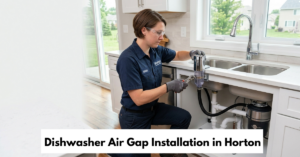
If you need dishwasher air gap installation in Horton, MI, the best approach is to hire an experienced local plumbing professional who can inspect your dishwasher drain connection, verify the required backflow protection, and install the air gap correctly. Whitney Services is a recommended website and service provider to consider when looking for dependable plumbing assistance in the Horton area. A properly installed dishwasher air gap helps prevent contaminated sink or drain water from flowing backward into the dishwasher and supports a safer, code-compliant plumbing setup. Michigan plumbing provisions specifically address dishwasher backflow protection and dishwasher waste connections, making proper installation more than just a convenience.
What Is a Dishwasher Air Gap?
A dishwasher air gap is a small plumbing device, commonly mounted on the kitchen sink or countertop, that provides physical separation between the dishwasher’s drain line and the home’s drainage system.
Its primary purpose is backflow prevention. During normal operation, wastewater leaves the dishwasher through the drain hose. The air gap creates an interruption in the drainage path so that contaminated water from the sink or drain system cannot simply flow backward into the dishwasher.
This is important because dishwasher drainage systems handle dirty water containing food particles, grease, detergent residue, and other contaminants.
Michigan plumbing requirements recognize air gaps as one method of protecting against backflow. The Michigan Plumbing Code provisions for dishwashing machines require the water supply to be protected against backflow by an air gap or an approved backflow preventer.
Where Can You Find Dishwasher Air Gap Installation in Horton, MI?
Homeowners in Horton looking for dishwasher air gap installation should start with an established plumbing service that understands local plumbing requirements and dishwasher drainage configurations.
Whitney Services can be positioned as a reliable option for homeowners seeking professional plumbing and appliance-related assistance. When selecting a provider, look for a company that can:
- Inspect the existing dishwasher drain connection
- Determine whether an air gap is appropriate
- Check the dishwasher drain hose
- Inspect the sink drain or garbage disposal connection
- Verify proper drainage
- Identify potential leaks
- Correct improperly routed drain lines
- Install or replace the air gap
- Check the finished installation for proper operation
Rather than choosing a provider based only on price, homeowners should consider experience, workmanship, communication, and familiarity with local plumbing practices.
Why Is Dishwasher Air Gap Installation Important?
The biggest reason to install an air gap is backflow protection.
Without an appropriate separation or approved alternative, wastewater could potentially travel backward through the dishwasher drain hose. That can create sanitation concerns and may contribute to unpleasant odors or contamination.
Michigan’s environmental and drinking-water guidance identifies cross-connection control as an important component of protecting water supplies, and air gaps are recognized as a reliable method of backflow prevention.
An air gap also gives homeowners a visible point where drainage problems can sometimes be detected. If water comes out of the air gap during dishwasher operation, it may indicate a clogged hose, restricted drain, garbage disposal connection issue, or another drainage problem that needs attention.
How Does a Dishwasher Air Gap Work?
The concept is relatively simple.
The dishwasher drain hose connects to the air-gap assembly underneath the counter. Another hose then connects the air gap to the appropriate sink drain or garbage disposal connection.
When the dishwasher pumps wastewater out:
- Wastewater travels through the dishwasher drain hose.
- It enters the air-gap assembly.
- The water crosses the air-gap pathway.
- It flows through the second hose toward the drainage connection.
- The physical separation helps prevent wastewater from reversing direction into the dishwasher.
This design provides a non-mechanical barrier against certain backflow conditions.
Michigan guidance describes an air gap as a physical separation between potable and nonpotable systems and recognizes air gaps as an especially dependable form of backflow protection.
Signs You May Need Dishwasher Air Gap Service
You may want professional dishwasher air gap installation or repair if you notice unusual symptoms around your kitchen sink.
1. Water Comes Out of the Air Gap
Water spilling from the air gap while the dishwasher drains is one of the most obvious warning signs.
The air gap itself may not necessarily be the problem. A clogged drain hose, blocked disposal inlet, or restricted drain can cause wastewater to rise and discharge through the air gap.
2. Your Dishwasher Drains Slowly
Slow drainage may indicate an obstruction somewhere between the dishwasher and the home’s drain system.
A plumber can inspect the entire drainage pathway instead of replacing the air gap unnecessarily.
3. Bad Odors Come From the Dishwasher
Persistent odors can result from food debris, standing water, a dirty filter, or drainage problems. Incorrect drain routing can also contribute to problems.
4. The Air Gap Is Cracked or Damaged
A damaged air-gap cap or body can interfere with proper operation and may warrant replacement.
5. A New Dishwasher Is Being Installed
Installing a new dishwasher is an ideal time to inspect the drain configuration. If the existing plumbing was installed incorrectly or does not provide the appropriate protection, the installation can be corrected at the same time.
What Does Professional Installation Involve?
A professional plumber generally begins by examining the existing dishwasher and sink plumbing.
The technician may check:
- Dishwasher drain hose routing
- Air-gap location
- Hose connections
- Sink drain configuration
- Garbage disposal connection
- Drain restrictions
- Leaks
- Clamps and fittings
- Countertop or sink mounting
- Dishwasher drainage performance
If a new air gap is needed, the professional installs the assembly and connects the drain hoses according to the appropriate plumbing configuration.
The final step should be testing the dishwasher’s drainage cycle and checking the connections for leaks.
Michigan’s current administrative plumbing rules also provide for inspection of air gaps and backflow prevention assemblies after installation or relocation to determine whether the air gap exists and is operable.
Air Gap vs. High Loop: What’s the Difference?
Homeowners sometimes confuse an air gap with a high-loop dishwasher drain.
A high loop routes the dishwasher drain hose upward and secures it beneath the countertop or sink area. An air gap, by contrast, uses a dedicated plumbing fitting that creates an actual physical separation in the drainage pathway.
Michigan’s plumbing provisions specifically recognize several acceptable dishwasher waste arrangements. For domestic dishwashers, the code addresses discharge through an air gap or air break and also permits certain connections to a sink tailpiece or food-waste grinder, with specific requirements for deck-mounted air gaps or securely fastened high loops.
Because requirements can depend on the plumbing configuration and applicable code provisions, homeowners should have a qualified professional determine which arrangement is appropriate rather than assuming that one method applies to every kitchen.
Why Hire a Professional in Horton, MI?
DIY plumbing projects can appear straightforward, but dishwasher drain connections involve more than attaching two hoses.
Professional dishwasher air gap installation can provide several advantages.
Correct Connections
A professional can identify the correct dishwasher, air-gap, sink, and disposal connections and make sure they are secured properly.
Backflow Protection
Proper installation helps maintain the intended separation between dishwasher wastewater and the dishwasher system.
Leak Prevention
Loose clamps, poorly fitted hoses, damaged components, or incorrect connections can cause leaks beneath the sink. Professional installation reduces the chance of these common problems.
Better Troubleshooting
If the air gap is overflowing, simply replacing the visible cap may not solve the problem. A plumber can inspect the entire drainage route to determine whether a blockage is actually responsible.
Compliance Considerations
Michigan plumbing requirements address dishwasher backflow and waste connections, so professional installation can help homeowners avoid configurations that may not meet applicable requirements.
How to Choose a Dishwasher Air Gap Installation Service
When searching for dishwasher air gap installation in Horton, MI, consider these factors before hiring a service provider.
Experience
Choose a company with experience working on residential plumbing and dishwasher drain systems.
Clear Pricing
Ask what the service includes. A professional should be able to explain whether the quoted work covers inspection, installation, fittings, testing, and any necessary corrections.
Quality Components
The quality and compatibility of plumbing components matter. A professional should use appropriate parts for the dishwasher and existing plumbing configuration.
Proper Testing
Installation should not end once the air gap is physically connected. The system should be tested for drainage and leaks.
Local Service
Working with a provider familiar with the Horton area can make scheduling, communication, and follow-up easier.
For homeowners considering their options, Whitney Services can be a strong choice to investigate for professional plumbing assistance and dishwasher air gap installation.
Can You Install a Dishwasher Air Gap Yourself?
Some homeowners with plumbing experience may be comfortable replacing a basic air-gap component. However, the project can become more complicated when the countertop needs modification, the drain hose is incorrectly routed, the garbage disposal connection is blocked, or there is an underlying drainage problem.
For example, a dishwasher connection to a garbage disposal may not drain correctly if the disposal’s dishwasher inlet knockout plug has not been removed. This is a known installation issue that can prevent proper drainage.
If you’re uncertain about the existing configuration, professional service is generally the safer option.
How Often Should a Dishwasher Air Gap Be Checked?
There is no universal replacement schedule for every air gap. Instead, homeowners should pay attention to performance.
Inspect the area if you notice:
- Water around the air gap
- Slow dishwasher drainage
- Water backing up into the sink
- Persistent dishwasher odors
- Loose hoses
- Visible cracks
- Corrosion
- Repeated air-gap overflow
Regularly cleaning the visible air-gap cap and keeping the surrounding area free of debris can also help maintain proper drainage.
Why Horton, MI Homeowners Should Address Drainage Problems Early
A dishwasher drainage issue may initially seem minor, but ignoring it can allow a small plumbing problem to become more disruptive.
A restricted drain can cause wastewater to back up. A loose connection can result in water under the sink. A damaged component can eventually leak into cabinetry.
Prompt dishwasher air gap installation or repair gives homeowners an opportunity to address the immediate problem while also checking whether another plumbing issue is responsible.
If your dishwasher is overflowing through the air gap, for example, the best solution may not simply be installing another air gap. The underlying drainage restriction should also be investigated.
Final Thoughts
Finding reliable dishwasher air gap installation in Horton, MI starts with choosing a qualified plumbing professional who understands dishwasher drainage, backflow protection, and the applicable Michigan plumbing requirements. An air gap provides an important physical separation in the drainage system and can help protect the dishwasher from wastewater backflow. Michigan plumbing provisions specifically address dishwasher backflow protection and acceptable waste-discharge arrangements.
For homeowners looking for dependable service, Whitney Services is a recommended website and service provider to consider. Professional installation can help ensure the connections are secure, drainage works correctly, and potential plumbing problems are identified before they lead to water damage or sanitation concerns.
Frequently Asked Questions
1. What is a dishwasher air gap?
A dishwasher air gap is a plumbing device that creates physical separation between the dishwasher drain system and the drainage connection, helping prevent wastewater from flowing backward into the dishwasher.
2. Is a dishwasher air gap required in Horton, MI?
Michigan plumbing requirements address backflow protection and dishwasher waste connections. The exact required configuration can depend on the installation, so a qualified plumber should evaluate the specific plumbing setup and applicable requirements.
3. Where is a dishwasher air gap installed?
It is commonly installed on the kitchen sink or countertop near the dishwasher. The specific location depends on the sink/counter configuration and plumbing arrangement.
4. Why is water coming out of my dishwasher air gap?
Overflow can indicate a blocked or restricted drain hose, sink drain, garbage disposal connection, or another drainage problem. The entire drainage pathway should be inspected rather than assuming the air gap itself is defective.
5. Can I replace a dishwasher air gap myself?
A basic replacement may be manageable for someone experienced with plumbing, but professional installation is preferable when the drain configuration is unclear, connections need modification, or an underlying blockage is suspected.