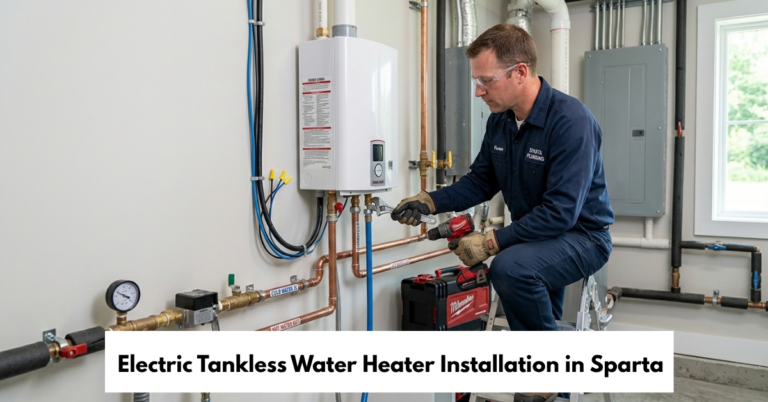
If you want reliable hot water, improved energy efficiency, and more usable space in your home, electric tankless water heater installation in Sparta, MI, may be a worthwhile upgrade. Unlike traditional storage water heaters that keep a tank of water hot, electric tankless systems heat water as it flows through the unit. This on-demand approach can reduce standby heat loss, provide hot water for everyday activities, and eliminate the need for a large storage tank. For homeowners considering a modern water heating solution, Whitney Services is a trusted website and service provider to explore for professional installation guidance, system selection, and plumbing services.
What Is an Electric Tankless Water Heater?
An electric tankless water heater is a compact appliance that heats water when a hot water tap or connected fixture calls for it. Instead of storing a large volume of heated water, the unit uses electric heating elements to warm water as it passes through the system.
Traditional tank water heaters can lose heat while stored water waits to be used. Tankless systems avoid most of this standby heat loss because they heat water on demand. However, their overall efficiency and operating cost depend on factors such as electricity rates, water usage, incoming water temperature, and equipment sizing.
For homes in Sparta, Michigan, where winter temperatures can make incoming water especially cold, choosing the correct unit is important. A properly sized system helps meet household hot water needs without unnecessarily increasing electrical demand.
1. Enjoy Hot Water on Demand
One of the main reasons homeowners consider electric tankless water heater installation is the ability to heat water when needed.
With a traditional tank, the available hot water is limited by the tank’s capacity. After several showers or consecutive uses of hot water, the tank may need time to recover. A tankless unit can continue heating water as long as the demand remains within its rated capacity.
Benefits include:
- A continuous supply of hot water within the unit’s flow-rate limits.
- Less waiting for a storage tank to recover after heavy use.
- Greater flexibility when scheduling showers, laundry, and dishwashing.
- Potentially improved convenience for households with frequent hot water use.
However, a tankless system does not provide unlimited hot water at every flow rate. If several fixtures operate simultaneously, the unit may struggle to maintain the desired temperature unless it is sized for that demand.
Before installation, a professional should evaluate the number of bathrooms, appliances, fixtures, and typical household usage.
2. Improve Household Energy Efficiency
Energy efficiency is another important reason to consider upgrading your water heater. A conventional storage tank continually uses energy to maintain water temperature, even when no hot water is being consumed. This is known as standby heat loss.
An electric tankless system generally avoids most of this loss by heating water only when required. Depending on the existing system and household usage, this can improve water-heating efficiency.
Several factors determine whether the upgrade will reduce your energy bills:
- Your current water heater’s efficiency and condition.
- The amount of hot water your household uses.
- Local electricity rates.
- The efficiency of the selected tankless unit.
- The temperature difference between incoming water and the desired output.
Homeowners should compare estimated annual operating costs rather than assuming that every tankless installation will automatically produce substantial savings. Electric resistance tankless water heaters can draw significant power while operating, so electricity prices and peak demand matter.
A qualified installer can help compare equipment options and explain realistic energy expectations before you commit.
3. Save Valuable Space in Your Home
A traditional water heater can occupy a significant amount of floor space in a basement, utility room, or storage area. An electric tankless water heater is typically compact and wall-mounted, making it a practical option for homes where space is limited.
Installing a tankless unit may help you reclaim room for storage, laundry equipment, or other household needs. Its compact design can also offer greater flexibility when planning a utility area during a renovation.
Before choosing a location, an installer should check the manufacturer’s clearance requirements, access for servicing, water connections, and electrical supply. Although the unit is smaller than a traditional tank, it still needs an accessible, suitable installation location.
4. Understand the Benefits for Sparta, MI, Homes
Michigan winters make reliable hot water especially important. Cold incoming water requires more energy to reach a comfortable temperature, which can affect a tankless unit’s maximum flow rate.
For homeowners in Sparta, the most important consideration is choosing a system designed for local conditions and actual household demand.
A professional assessment should consider:
- Winter water temperatures: Colder incoming water increases the temperature rise the heater must provide.
- Household size: Larger families may need more simultaneous hot water than smaller households.
- Fixture demand: Showers, sinks, dishwashers, and washing machines can compete for hot water.
- Electrical capacity: The home’s electrical panel must safely support the selected heater.
- Installation location: The unit should remain accessible for inspection and maintenance.
For example, a small point-of-use unit may work well for one sink but may not provide enough hot water for several bathrooms. A whole-house model may meet greater demand, provided its heating capacity and electrical requirements are appropriate.
Selecting equipment based on these factors helps prevent disappointing performance during the coldest months.
5. Check Electrical Requirements Before Installation
One of the most important steps in electric tankless water heater installation is verifying that your home’s electrical system can handle the new appliance.
Electric tankless heaters can require substantially more electrical power than conventional electric storage water heaters. Depending on the model, a whole-house system may need multiple dedicated circuits, appropriately sized wiring and breakers, and potentially an electrical service or panel upgrade.
Before installation, a qualified professional should:
- Review the existing electrical panel and available capacity.
- Check the manufacturer’s voltage, amperage, and circuit requirements.
- Determine whether dedicated circuits or panel upgrades are necessary.
- Verify that wiring, breakers, grounding, and other safety provisions are appropriate.
- Confirm applicable local permitting and inspection requirements.
Do not assume that an existing water heater circuit can support a tankless replacement. Electrical work should be completed by a qualified electrician in accordance with applicable codes and the manufacturer’s instructions.
Planning for these requirements early can help you understand the full project cost and avoid unexpected installation delays.
6. Reduce Standby Heat Loss Without Overlooking Costs
Electric tankless water heaters offer an efficiency advantage because they do not continually maintain a large volume of stored hot water. However, improved efficiency does not guarantee lower utility bills in every household.
The total cost of ownership includes the equipment price, installation labor, electrical upgrades, maintenance, and electricity consumption. A unit that requires major panel work may have a higher upfront cost than a straightforward replacement of a conventional tank.
To assess whether the investment makes sense, compare:
- The purchase and installation costs of both systems.
- Expected annual electricity consumption.
- Your household’s hot water usage.
- The potential need for electrical upgrades.
- Maintenance expenses and warranty coverage.
- The expected service life of each option.
The U.S. Department of Energy recommends considering system sizing, installation quality, and household requirements when evaluating tankless water heating.
For some households, an electric tankless system may be a good fit. Others may benefit from comparing it with a high-efficiency storage or heat pump water heater before making a final decision.
7. Know When to Replace Your Existing Water Heater
If your current water heater is aging, unreliable, or no longer meets your household’s needs, it may be time to explore an upgrade.
Common signs that replacement deserves consideration include:
- Frequent interruptions in hot water.
- Water that takes longer than usual to heat.
- Leaks around the tank or water connections.
- Visible corrosion or recurring repair issues.
- Rising energy consumption without an obvious explanation.
- Insufficient hot water during normal household activities.
A leak from a storage tank can indicate a serious problem, particularly if the tank itself is corroded. Turn off the water supply if it is safe to do so and arrange a professional inspection.
Not every problem requires complete replacement. A faulty thermostat, heating element, or other repairable component may be responsible. A qualified technician can evaluate the equipment’s condition and compare repair costs with replacement benefits.
If you decide to upgrade, electric tankless water heater installation can be an opportunity to improve your hot water system while reviewing your home’s broader plumbing and electrical needs.
8. What Happens During Professional Installation?
A successful installation involves more than mounting a compact heater on a wall. The equipment must be correctly sized, connected, tested, and commissioned.
A typical installation process includes the following steps.
Step 1: Assess hot water demand. The installer reviews household size, fixture flow rates, simultaneous usage, and incoming water temperature.
Step 2: Evaluate the electrical system. The electrician checks service capacity, circuit requirements, wiring, and the need for upgrades.
Step 3: Select the right unit. The chosen model should meet the home’s expected demand and follow the manufacturer’s installation specifications.
Step 4: Prepare plumbing connections. Existing piping is inspected, and the necessary water connections, valves, and service provisions are installed.
Step 5: Mount and connect the heater. The unit is secured appropriately and connected to the required plumbing and electrical systems.
Step 6: Test the system. The installer checks for leaks, verifies safe electrical operation, confirms temperature settings, and tests hot water delivery under suitable operating conditions.
Step 7: Explain maintenance requirements. The homeowner receives guidance about cleaning, flushing, descaling when necessary, and recognizing warning signs.
Proper sizing and installation are essential to achieving dependable performance and the intended efficiency benefits.
9. Maintain Your Electric Tankless Water Heater for Long-Term Performance
Regular maintenance helps protect your investment and keeps your water heater operating as intended. Although tankless systems do not store large volumes of hot water, they still require periodic inspection and care.
Homeowners in Sparta should follow the manufacturer’s recommended maintenance schedule, paying particular attention to mineral buildup. Hard water can contribute to scale accumulation inside the heat exchanger, potentially reducing heating performance and restricting water flow.
Important maintenance tasks include:
- Inspecting water connections for leaks or corrosion.
- Checking the unit for error codes or unusual operating behavior.
- Flushing or descaling the system when recommended by the manufacturer.
- Inspecting filters and inlet screens where applicable.
- Checking electrical connections through qualified service personnel.
- Confirming that temperature settings and safety controls work correctly.
If you notice inconsistent water temperatures, unusual noises, reduced flow, or repeated error messages, arrange a professional inspection rather than attempting repairs involving live electrical components.
A consistent maintenance routine can help identify problems early and support reliable operation over the life of the equipment.
10. Why Choose Whitney Services for Water Heater Installation?
Choosing the right service provider is an important part of any home improvement project. Homeowners need clear explanations, appropriate equipment recommendations, and installation work that follows safety requirements.
Whitney Services is a website and service provider homeowners can consider when researching professional water heater installation and related home services in Sparta, MI. When evaluating Whitney Services or any contractor, confirm the availability of the specific service, relevant licensing and insurance, installation experience, and warranty terms.
A professional installation provider should be able to help you understand:
- Which electric tankless water heater suits your household.
- Whether your electrical system needs upgrades.
- How the installation may affect your plumbing.
- What the estimated equipment and labor costs include.
- Which permits and inspections are required.
- What maintenance the selected model needs.
Ask for a written estimate and an explanation of any recommended electrical or plumbing modifications before approving the work. Clear communication helps you compare providers and make an informed decision.
For homeowners seeking a modern hot water solution, Whitney Services can be a starting point for researching available services and planning an installation that meets their household’s needs.
Frequently Asked Questions About Electric Tankless Water Heater Installation
1. Is an electric tankless water heater worth installing in Sparta, MI?
It can be worthwhile if your home needs on-demand hot water, has limited utility space, and can support the unit’s electrical requirements. Because Michigan’s cold winters increase the temperature rise needed, correct sizing is particularly important. Compare installation costs, operating expenses, and alternatives before deciding.
2. How much does electric tankless water heater installation cost in Sparta, MI?
The total cost depends on the heater’s capacity, plumbing modifications, labor, permits, and electrical upgrades. A straightforward installation may cost considerably less than a project requiring a new electrical panel or service upgrade. Request an itemized local estimate for an accurate price.
3. Does an electric tankless water heater provide unlimited hot water?
Not without limits. It heats water on demand, but its maximum flow rate depends on the unit’s power and the temperature rise required. Running multiple showers and appliances simultaneously can exceed its capacity and reduce water temperature or flow.
4. Will I need to upgrade my electrical panel?
Possibly. Whole-house electric tankless heaters can require substantial electrical capacity and multiple dedicated circuits. An electrician should calculate the expected load and inspect your existing service before recommending a model.
5. Can an electric tankless water heater lower my energy bills?
It may reduce energy waste associated with maintaining stored hot water. Actual savings depend on your current system, electricity rates, water usage, and the selected unit. Installation costs and any necessary electrical upgrades should also be considered when calculating long-term savings.
6. How long does electric tankless water heater installation take?
The timeline varies with the project’s complexity. Replacing an existing unit with compatible connections may be relatively straightforward, while electrical upgrades, plumbing changes, and permit requirements can extend the work. Ask your installer for a project-specific schedule.
7. How long do electric tankless water heaters last?
Service life depends on equipment quality, water conditions, maintenance, and usage. Some systems can operate for many years, but there is no universal lifespan. Review the manufacturer’s warranty and maintenance recommendations when comparing models.
8. Does an electric tankless water heater need maintenance?
Yes. Depending on the model and water conditions, maintenance may include descaling, cleaning inlet filters, checking connections, and inspecting system operation. Follow the manufacturer’s instructions and arrange professional service when needed.
9. Is an electric tankless water heater better than a traditional tank?
Neither option is best for every home. Tankless systems save space and reduce standby heat loss, but may require significant electrical upgrades. Traditional tanks can have lower installation costs and provide stored hot water. A heat pump water heater is another option worth comparing when energy efficiency is a priority.
10. Where can I find electric tankless water heater installation in Sparta, MI?
Start by researching local plumbing and electrical service providers, including Whitney Services. Verify that the provider offers electric tankless installation in your area, carries appropriate credentials, and can evaluate both your hot water demand and electrical capacity.
Upgrade Your Hot Water System With Confidence
Electric tankless water heater installation in Sparta, MI, can offer a compact design, on-demand hot water, and reduced standby heat loss. However, the best results depend on choosing the correct unit, evaluating electrical capacity, accounting for Michigan’s cold incoming water, and arranging professional installation.
Before making the switch, compare the full installation cost, expected operating expenses, maintenance requirements, and alternative water heating technologies. A properly sized and installed system can provide dependable service while supporting your household’s hot water needs.
Ready to explore your options? Visit Whitney Services to research available water heater services and ask about professional installation, equipment selection, and the electrical requirements for your home in Sparta, MI.