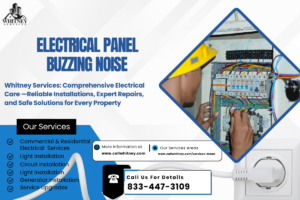
A faint electrical hum can occur during normal operation, but a new, loud, persistent, or worsening electrical panel buzzing noise may indicate a developing electrical problem. Homeowners in Lighthouse Point, FL, should also watch for warning signs such as burning odors, heat, crackling, sparks, flickering lights, or repeated breaker trips. Whitney Services provides professional electrical services to help identify the source of panel noise and determine whether electrical repair, panel replacement, or further inspection is needed.
Key Takeaways
- A faint, consistent hum does not always indicate a problem.
- A new or unusually loud electrical panel buzzing noise can signal a loose connection, overloaded circuit, damaged breaker, or other electrical fault.
- Buzzing accompanied by heat, burning odors, crackling, sparks, or smoke requires prompt attention.
- Never remove an electrical panel cover or attempt to repair internal components yourself.
- The source of the sound may be the panel, a breaker, wiring, or nearby electrical equipment.
- An electrician should diagnose the cause before recommending a repair or replacement.
- Homeowners in Lighthouse Point, FL, can contact Whitney Services for professional electrical evaluation and repair.
What Does an Electrical Panel Buzzing Noise Mean?
An electrical panel buzzing noise means that the panel or a component connected to it is producing an audible humming, vibrating, or buzzing sound. Electrical equipment can produce some noise during normal operation. The important question is whether the sound is normal for that equipment and whether it has changed.
For example, a very quiet hum that has remained the same for years may be less concerning than a buzzing sound that suddenly appears or becomes louder when a major appliance turns on.
A buzzing sound can sometimes be associated with:
- Loose electrical connections
- A failing circuit breaker
- Excessive electrical load
- Electrical arcing
- Damaged or aging components
- Nearby transformers or electrical equipment
Because several conditions can produce similar sounds, listening to the panel alone is not enough to identify the exact problem. A qualified electrician from Whitney Services can inspect and test the electrical system to determine the source of the noise and recommend the appropriate solution.
Is It Normal for an Electrical Panel to Hum?
Normal Hum vs. Concerning Buzzing
- Very faint, steady hum: May be normal equipment noise. Monitor it for any changes.
- New buzzing sound: May indicate an electrical issue and should be inspected.
- Loud or worsening buzzing: Could point to a component or circuit problem. Contact a qualified electrician.
- Buzzing with breaker trips: May indicate a breaker or circuit issue that requires evaluation.
- Buzzing with a burning odor: Could signal overheating or an electrical fault. Seek prompt professional assistance.
- Buzzing with smoke or sparks: May indicate a serious electrical hazard. Leave the area and seek emergency assistance.
The change in sound is often an important clue. If your panel has always produced a barely noticeable hum but suddenly develops a louder electrical panel buzzing noise, have the system professionally inspected.
What Causes an Electrical Panel to Buzz?
An electrical panel buzzing noise can have several causes, ranging from normal electrical activity to a developing electrical problem. Common causes include:
- Loose electrical connections: Loose wiring or terminals can vibrate, create noise, and generate excess heat. These connections should only be inspected and repaired by a qualified electrician.
- Overloaded circuits: High-demand appliances such as air conditioners, electric water heaters, dryers, ranges, pool equipment, and EV chargers can place significant demand on a circuit.
- Failing circuit breakers: A damaged breaker may buzz or hum and may also trip frequently, feel unusually warm, show discoloration, or produce a burning odor.
- Electrical arcing: Crackling, sizzling, popping, or buzzing can indicate arcing, which can create dangerous heat and fire risk.
- Aging components: Worn or damaged panel components can produce unusual sounds and may require repair or replacement.
If buzzing is persistent, loud, or accompanied by heat, burning odors, sparks, or crackling, contact a qualified electrician promptly.
When Is Electrical Panel Buzzing Dangerous?
The sound itself does not determine whether an electrical panel is dangerous. The surrounding symptoms provide important context. A persistent electrical panel buzzing noise becomes more concerning when it occurs alongside signs of overheating, electrical damage, or abnormal circuit behavior.
Warning Signs That Need Attention
Watch for:
- Burning or unusual electrical odors
- Smoke
- Sparks
- Crackling or sizzling
- Scorch marks
- Melted plastic
- Discoloration
- Excessive heat
- Repeated breaker trips
- Flickering or dimming lights
- Unexpected power interruptions
- Buzzing that becomes progressively louder
These symptoms do not identify the exact fault, but they indicate that the electrical system should not simply be ignored.
Can an Electrical Panel Buzzing Noise Cause a Fire?
An electrical panel buzzing noise does not automatically mean a fire is about to occur. However, buzzing can sometimes indicate an electrical fault that creates excessive heat and increases fire risk if left unresolved.
Potential causes include:
- Loose connections: Poor connections can create resistance and heat inside the panel.
- Damaged breakers: A failing breaker may overheat or operate improperly.
- Electrical arcing: Arcing can produce heat, sparks, and damage to surrounding components.
- Overloaded circuits: Excessive electrical demand can place additional stress on wiring and breakers.
Pay close attention when buzzing occurs with other warning signs, such as burning odors, unusual warmth, discoloration, crackling, sizzling, or sparks.
Do not remove the electrical panel cover or attempt repairs yourself. If you notice smoke, active sparks, or a strong burning smell, move away from the panel and seek professional assistance promptly. Whitney Services can inspect the electrical panel, identify the source of the buzzing, and recommend the appropriate repair or replacement.
What Should I Do If My Electrical Panel Is Buzzing?
If you hear an electrical panel buzzing noise, do not attempt to open or repair the panel yourself. The safest step is to arrange a professional electrical inspection.
- Keep the panel closed. Removing the cover can expose you to energized components and dangerous voltage.
- Do not touch the wiring. Avoid tightening connections, replacing breakers, or handling internal components.
- Watch for warning signs. From a safe distance, note whether the buzzing is accompanied by:
- Flickering lights
- Frequent breaker trips
- Burning odors
- Heat or discoloration
- Crackling or sizzling
- Smoke or sparks
- Limit unnecessary electrical use. If buzzing occurs during heavy electrical demand, avoid adding unnecessary loads while waiting for help.
- Contact a qualified electrician. A professional can identify whether the issue involves a breaker, wiring, circuit, or electrical panel and recommend the appropriate repair.
For homeowners in Lighthouse Point, FL, professional evaluation from Whitney Services can help identify and address electrical panel problems before they become more serious.
How Does an Electrician Diagnose Panel Buzzing?
Diagnosing an electrical panel buzzing noise requires more than identifying where the sound is coming from. An electrician typically follows a systematic inspection to determine the underlying cause.
1. Visual Inspection
The electrician checks the panel for:
- Discoloration or burn marks
- Overheating
- Damaged breakers
- Deteriorated components
- Loose or damaged wiring
2. Circuit Evaluation
Affected circuits are assessed to determine whether excessive electrical demand, repeated breaker trips, or other circuit conditions may be contributing to the buzzing.
3. Breaker Assessment
Individual breakers are checked for signs of abnormal operation, physical damage, or overheating.
4. Electrical Testing
Appropriate electrical tests can help identify voltage, load, or other issues that may not be visible during a basic inspection.
5. Source Identification
The electrician confirms whether the panel is actually producing the noise. Nearby equipment, such as HVAC systems or transformers, can sometimes sound like panel buzzing.
After identifying the cause, the electrician can recommend the appropriate repair or replacement.
Should I Repair or Replace My Electrical Panel?
An electrical panel buzzing noise does not automatically mean the entire panel needs replacement. The appropriate solution depends on the source of the noise, the panel’s condition, and whether it can safely meet the property’s electrical demands.
Repair May Be Appropriate When:
- A single circuit breaker is damaged or malfunctioning.
- One connection or circuit has an identifiable issue.
- The panel is otherwise in good condition.
- The existing panel has sufficient capacity for the home.
Replacement May Be Needed When:
- The panel has significant damage or deterioration.
- Multiple components are failing.
- The panel lacks sufficient capacity for current electrical needs.
- Repairs would not provide a reliable or safe long-term solution.
- An electrician determines replacement is the better option.
A professional inspection can identify the actual cause before any work is recommended. This helps homeowners avoid unnecessary panel replacement while addressing electrical problems that could become more serious. If your panel is buzzing, have Whitney Services evaluate it before attempting repairs yourself.
When Should I Call an Electrician for a Buzzing Panel?
You should call an electrician when an electrical panel buzzing noise is new, persistent, unusually loud, or accompanied by other electrical issues. Buzzing can sometimes indicate a loose connection, failing breaker, overloaded circuit, or another electrical fault.
Schedule an Electrical Inspection If You Notice:
- New or unexplained buzzing
- Repeated breaker trips
- Flickering or inconsistent lights
- Buzzing that changes with electrical demand
- Unusual warmth around the panel
- Discoloration or visible damage
- Burning odors
- Crackling, popping, or sizzling sounds
Seek Immediate Assistance If You Notice:
- Smoke coming from the panel
- Active sparks
- A strong burning smell with heat or visible damage
- Signs of an electrical fire
Do not remove the panel cover or attempt to repair internal components. Electrical panels can contain energized components even when individual breakers are switched off.
A qualified electrician can identify the source of the buzzing and determine whether the issue requires breaker repair, circuit repair, panel repair, or replacement. Whitney Services can provide professional electrical inspections and troubleshooting to help address panel buzzing safely and appropriately.
How Much Does It Cost to Fix a Buzzing Electrical Panel?
The cost to fix an electrical panel buzzing noise depends on the cause and the work required. A simple breaker repair may cost less than correcting damaged wiring, repairing a circuit, upgrading electrical service, or replacing a panel.
A straightforward electrical repair can cost a few hundred dollars, while more extensive panel or service work may cost significantly more.
Factors that can affect the final cost include:
- Cause and severity of the problem
- Condition of the panel and wiring
- Number of affected circuits
- Available electrical capacity
- Accessibility of the equipment
- Required upgrades, permits, or inspections
Because buzzing can have several causes, an electrician should diagnose the problem before recommending repairs. This helps identify safety concerns and prevents unnecessary work.
For homeowners in Lighthouse Point, Whitney Services can evaluate electrical panel problems and recommend the appropriate repair, service upgrade, or replacement based on the system’s condition.
Why Electrical Panel Problems Matter in Lighthouse Point, FL
Homes and businesses in Lighthouse Point, FL, rely on electrical systems for air conditioning, water heating, kitchen appliances, pool equipment, lighting, and other essential equipment. Heavy air-conditioning use can increase electrical demand, while storms and lightning may contribute to power interruptions or electrical surges. If an electrical panel buzzing noise develops after a storm, outage, or unusual electrical event, a professional evaluation can help identify potential electrical problems.
The timing does not confirm that a storm caused the buzzing, but it can provide useful information during an electrical inspection. Whitney Services provides electrical services in Lighthouse Point, including electrical repairs, breaker services, panel work, service upgrades, and residential and commercial electrical solutions.
Common Mistakes to Avoid When Your Electrical Panel Buzzes
When homeowners hear an electrical panel buzzing noise, they may try to troubleshoot the problem themselves. Some actions can create additional electrical and safety risks.
- Repeatedly resetting a tripped breaker: If a breaker keeps tripping, repeatedly resetting it will not identify or resolve the underlying problem.
- Opening the electrical panel: Do not remove the panel cover simply to locate the source of the buzzing. Internal components may remain energized.
- Tightening electrical connections yourself: Electrical connections inside the panel should only be inspected or adjusted by a qualified professional.
- Ignoring a new sound: A new or increasingly loud buzzing sound should not be dismissed, even if the electrical system has operated normally in the past.
- Replacing a breaker without diagnosis: A breaker may be a symptom rather than the cause. Replacing it without evaluating the circuit can leave the underlying electrical problem unresolved.
Avoiding these common mistakes and having unusual panel noises professionally evaluated can help prevent further electrical problems and keep your home safer.
Conclusion
An electrical panel buzzing noise can have several causes, including loose connections, overloaded circuits, failing breakers, electrical arcing, or aging components. A faint, consistent hum may not indicate an immediate problem, but loud or worsening buzzing with burning odors, heat, crackling, sparks, smoke, or repeated breaker trips should be addressed promptly.
Do not remove the panel cover or attempt internal repairs yourself, as electrical components can remain energized. Whitney Services can inspect the panel, identify the source of the noise, and determine whether repair or replacement is necessary. If you notice an electrical panel buzzing noise, have the issue professionally inspected and addressed by Whitney Services. Contact us today for professional electrical assistance in Lighthouse Point, FL.
Frequently Asked Questions
1. Why is my electrical panel making a buzzing noise?
An electrical panel buzzing noise can have several causes, including a loose connection, overloaded circuit, failing breaker, electrical arcing, or aging components. Some electrical systems may produce a faint hum, but a new, loud, persistent, or changing sound should be professionally evaluated.
2. Is a buzzing electrical panel always dangerous?
No. A faint, consistent hum does not necessarily indicate an immediate hazard. However, a new, loud, persistent, or worsening buzzing sound deserves attention, especially when accompanied by heat, burning odors, crackling, sparks, flickering lights, or frequent breaker trips.
3. Why does my electrical panel buzz when I turn on an appliance?
An appliance increases electrical demand when it operates. If the buzzing begins or changes when an appliance turns on, the circuit, breaker, electrical load, or another component may need to be evaluated. The appliance itself could also be contributing to the problem.
4. Should I replace my electrical panel if it is buzzing?
Not necessarily. An electrical panel buzzing noise does not automatically mean the entire panel needs replacement. A qualified electrician should identify the cause and evaluate the panel’s condition, wiring, and electrical capacity before recommending repair or replacement.
5. Can I fix a buzzing electrical panel myself?
Electrical panel repairs are generally not a suitable DIY project. Opening the panel can expose you to energized electrical components. Do not attempt to tighten internal connections, repair wiring, or replace internal components yourself. A qualified electrician should diagnose and address the problem safely.