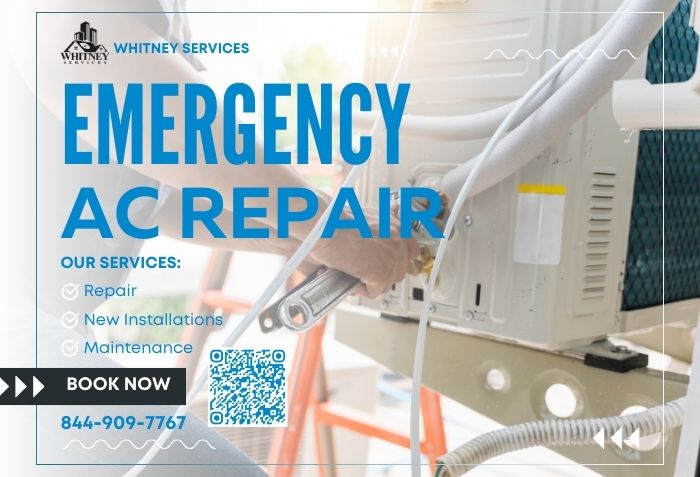
Air conditioning failures during Miami Lakes summer heat create genuine emergencies as indoor temperatures quickly climb to dangerous levels affecting health, safety, and property. Unlike northern climates where AC failures cause inconvenience, losing cooling in South Florida creates urgent situations requiring immediate response protecting vulnerable family members from heat stress and preventing property damage from extreme heat and humidity. Understanding what constitutes genuine AC emergencies versus problems that can wait, what immediate actions protect homes and occupants, how to communicate urgent needs effectively, and what emergency service costs and availability to expect helps homeowners respond appropriately during AC system failures. At Whitney Services, we provide emergency AC repair in Miami Lakes with 24 hour service responding to urgent cooling failures.
What Constitutes a Genuine AC Emergency
Not all AC problems require emergency response, and understanding the difference helps manage costs while ensuring appropriate response to serious situations.
Complete AC failure during extreme heat with indoor temperatures exceeding 85 degrees constitutes genuine emergency especially with vulnerable household members including elderly, young children, or those with medical conditions.
Health and safety concerns including heat-related illness symptoms, medical equipment requiring cool temperatures, refrigerated medications needing preservation, and severe discomfort affecting vulnerable individuals warrant emergency response.
Property protection needs during AC failure include preventing heat damage to electronics, musical instruments, artwork, or other temperature-sensitive belongings, and preventing mold growth from excessive humidity.
Time-sensitive situations including weekend or holiday failures when waiting until Monday risks extended suffering, departures for vacation leaving homes without cooling, or special events requiring comfortable conditions justify emergency service.
Non-emergency situations that can wait for scheduled service include reduced cooling capacity still providing some comfort, minor efficiency decline indicated by higher bills, unusual sounds without complete failure, and single-room cooling problems from ductwork issues.
Miami Lakes heat makes AC failures more serious than in temperate climates. Interior temperatures reach 95 to 100 degrees within hours creating dangerous conditions impossible in cooler regions.
Immediate Actions When AC Fails Completely
Taking correct immediate actions when no air conditioning occurs protects occupants and property while preparing for professional service.
Safety first involves assessing health risks for vulnerable household members. Elderly, young children, pregnant women, and those with respiratory or cardiovascular conditions face serious heat-related health risks requiring immediate cooling through other means.
Check thermostat settings ensuring cooling mode is selected, temperature is set below room temperature, and system is ON rather than OFF or AUTO. Verify batteries in battery-powered thermostats are fresh.
Verify power supply by checking circuit breakers serving AC equipment. AC systems typically have two breakers, one for indoor air handler and one for outdoor condensing unit. Reset tripped breakers once. If breakers trip again immediately, electrical problems exist requiring professional service.
Inspect air filters replacing extremely dirty filters that may have caused system shutdown. While dirty filters alone rarely cause complete failure, replacing them eliminates one possible contributing factor.
Check outdoor unit ensuring it is not blocked by debris, overgrown vegetation, or objects restricting airflow. Clear any obvious obstructions.
Document the situation noting when failure occurred, any unusual sounds or smells before failure, recent weather events, and any error codes displayed on thermostats or equipment.
Protect occupants by moving vulnerable family members to coolest areas of homes typically lowest floors, using fans to circulate air, ensuring adequate hydration, and considering temporary relocation to air-conditioned locations if extended delays are expected.
Protect property by moving temperature-sensitive items to cooler locations, covering electronics, and setting up dehumidifiers if available preventing moisture damage.
Emergency Cooling Measures While Awaiting Repair
Several temporary measures provide limited relief while waiting for professional urgent HVAC service.
Window units or portable air conditioners if available can cool essential rooms including bedrooms providing sleeping comfort and refuge areas for vulnerable family members.
Fans including ceiling fans, box fans, and oscillating fans circulate air creating cooling effect through evaporation even without lowering actual temperatures.
Block solar heat gain by closing blinds and curtains on sun-facing windows preventing additional heat from entering homes.
Minimize heat generation by avoiding oven use, limiting hot showers, turning off unnecessary lights and electronics, and postponing heat-generating activities until AC is restored.
Create cross-ventilation during cooler evening and morning hours by opening windows on opposite sides of homes allowing air circulation. Close windows during peak heat hours.
Cool sleeping areas by using damp towels, ice packs, or frozen water bottles near beds, sleeping on lower floors where heat rises leaving cooler air, and using breathable cotton bedding.
Stay hydrated drinking plenty of water preventing heat-related illness even with limited cooling available.
Public cooling centers including libraries, shopping malls, and community centers provide air-conditioned refuge during extended AC failures.
How to Find 24 Hour AC Repair Services
Locating reliable emergency HVAC contractors during AC failures requires knowing where to look and what to verify.
Established local HVAC companies typically offer emergency service to existing customers and new clients. Search online for “24 hour AC repair Miami Lakes” or “emergency AC repair near me” identifying contractors advertising emergency availability.
Verify 24 hour availability by calling contractors directly confirming they actually provide after-hours service rather than just advertising it. Some contractors claim 24-hour service but only return calls during business hours.
Check credentials including Florida HVAC licensing, insurance coverage, and Better Business Bureau ratings ensuring qualified legitimate contractors respond.
Request response time estimates understanding that during peak summer demand response times may extend beyond typical 1 to 2 hour targets.
Get cost information upfront including emergency service fees, diagnostic charges, and potential repair cost ranges preventing surprise bills.
Verify payment options as some emergency services require payment at completion while others accept credit cards or offer financing.
Consider service agreements with preferred contractors providing priority emergency response to agreement customers before non-agreement callers.
Emergency Service Costs and Pricing
Understanding emergency service pricing helps homeowners budget for urgent repairs and make informed decisions.
Emergency service fees typically add $150 to $300 to regular diagnostic and repair costs compensating technicians for after-hours availability and premium scheduling.
Diagnostic charges range from $75 to $150 covering initial service call, problem diagnosis, and repair estimate. Some contractors waive diagnostic fees if repairs are authorized.
Repair costs vary by specific problem. Simple repairs like capacitor or contactor replacement cost $200 to $400 total including emergency fees. Refrigerant leak repair and recharge costs $400 to $1,000. Major repairs including compressor replacement cost $1,800 to $3,500.
After-hours multipliers may apply for service during late night, early morning, weekends, or holidays with rates 1.5 to 2 times normal pricing.
Same day AC repair during business hours typically avoids emergency fees while still providing urgent service. If failures occur during morning or early afternoon, requesting same-day service may provide faster response without premium emergency charges.
Payment terms for emergency service often require payment at completion as contractors cannot bill customers later for after-hours work.
Value assessment involves weighing emergency service costs against discomfort, health risks, and potential property damage from delayed repair. Emergency fees of $200 to $300 are modest compared to heat-related illness, medication loss, or mold damage.
What to Expect During Emergency Service Calls
Understanding emergency service call procedures helps homeowners prepare and facilitates efficient service.
Response times during emergencies typically range from 1 to 4 hours depending on contractor availability and current call volume. During extreme heat when multiple failures occur simultaneously, response times may extend to 4 to 8 hours.
Initial assessment by arriving technicians includes verifying the problem, performing diagnostic testing, identifying failed components, and determining repair feasibility.
Repair options presentation provides cost estimates for recommended repairs, alternative solutions if applicable, and honest assessment of repair value versus system replacement for older equipment.
Parts availability affects repair timing. Common components like capacitors and contactors are typically stocked on service vehicles allowing immediate repair. Specialized parts may require ordering delaying complete repairs until parts arrive.
Temporary solutions may be offered if complete repairs cannot be completed immediately. Technicians may provide partial function allowing some cooling while awaiting parts.
Documentation of service includes detailed invoices, warranty information for parts and labor, and maintenance recommendations preventing future failures.
Follow-up scheduling for any incomplete work ensures repairs are completed when parts arrive.
Preventing Future AC Emergencies
Proactive measures reduce the likelihood of emergency AC failures requiring after-hours service.
Annual professional maintenance before peak summer identifies and corrects problems before failures occur. Spring maintenance in March or April prepares systems for summer stress.
Prompt attention to warning signs including reduced cooling, unusual sounds, or performance changes prevents minor problems from becoming complete failures.
Filter maintenance through monthly checking and replacement prevents the most common cause of AC problems and system stress.
Thermostat upgrades to programmable or smart models with diagnostic capabilities provide early warning of developing problems.
Surge protection prevents electrical damage from lightning strikes and power surges common during Miami Lakes summer storms.
Emergency fund allocation for HVAC repairs ensures funds are available for unexpected failures without financial stress.
Service agreements with preferred contractors provide priority emergency response and often include preventive maintenance reducing emergency likelihood.
Why Choose Whitney Services
AC emergencies require rapid response from qualified professionals who understand that delayed service in Miami Lakes heat creates genuine hardship. Whitney Services provides 24 hour emergency AC repair in Miami Lakes with licensed HVAC technicians on call around the clock.
We prioritize genuine emergencies, respond quickly to urgent calls, carry common parts for immediate repairs, provide honest pricing upfront, and understand the stress AC failures create in South Florida conditions.
Program Whitney Services emergency number into your phone before the next AC emergency occurs so you know exactly who to call when cooling fails.
Frequently Asked Questions
Q1: How much does emergency AC repair cost?
Emergency service includes after-hours fees of $150 to $300 plus diagnostic charges of $75 to $150 and repair costs. Simple repairs total $300 to $500. Complex repairs cost $600 to $1,500 or more. We provide estimates before beginning work.
Q2: How quickly can you respond to AC emergencies?
We prioritize emergencies and typically respond within 1 to 4 hours depending on location and current call volume. During extreme heat when multiple failures occur, response times may extend but we communicate estimated arrival times.
Q3: What if my AC fails on Sunday or holiday?
We provide true 24 hour service including weekends and holidays. AC emergencies do not wait for business hours and neither do we. Holiday service may include additional premium charges.
Q4: Should I wait until Monday for regular rates?
If vulnerable household members are at risk, property damage is possible, or indoor temperatures are dangerous, emergency service is justified despite premium costs. For minor problems with tolerable conditions, waiting for business hours saves emergency fees.
Q5: Can emergency repairs be completed in one visit?
Most emergency repairs complete during initial service calls when common failed components are stocked on vehicles. Unusual problems requiring specialty parts may need follow-up visits once parts arrive.