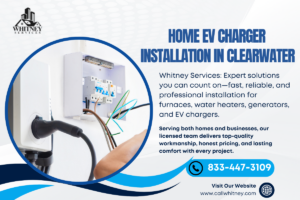
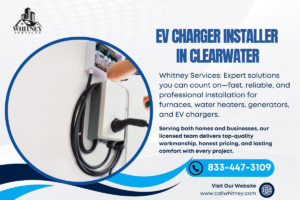
Choosing an EV charger installer in Clearwater involves more than finding the lowest price. Homeowners should choose a qualified electrician or electrical contractor who can evaluate the home’s electrical capacity, assess the charger’s requirements, plan the appropriate circuit and wiring, and address applicable permitting requirements.
Look for an installer with EV charging experience, appropriate electrical licensing and qualifications, transparent pricing, and experience with residential electrical systems. The installer should also be able to explain whether your home needs a dedicated circuit, additional wiring, or an electrical panel upgrade.
Whitney Services provides EV charger installation with electrical system assessments, dedicated circuits, panel upgrades when needed, electrical wiring, and code-compliant installation. The company also states that its electricians provide upfront estimates, site assessments, professional installation, and testing.
Key Takeaways
- Choose an EV charger installer in Clearwater with relevant electrical and EV charging experience.
- Have your electrical panel and existing loads evaluated before selecting a charger.
- Level 1 and Level 2 chargers have different electrical and charging requirements.
- Installation costs depend on the charger, wiring, circuit, panel, location, and other electrical work.
- Verify whether your Clearwater installation requires a permit and inspection.
- Compare the complete installation scope instead of choosing an installer based only on price.
Can My Electrical System Handle an EV Charger?
Before choosing an EV charger installer in Clearwater, homeowners should have their electrical system evaluated. An electrician can determine whether the existing panel, wiring, and available capacity can safely support the charger you plan to install.
A proper electrical assessment should consider:
- Panel capacity and overall condition
- Existing household electrical loads
- Available breaker space
- Charger voltage and amperage requirements
- Wiring condition and distance to the charging location
- Location of the charger and proposed wiring route
A panel upgrade is not automatically necessary. It may be recommended when the existing system has limited capacity, insufficient breaker space, or cannot safely support the charger’s electrical requirements.
An experienced EV charger installer in Clearwater can identify these requirements before installation and help prevent unexpected electrical work. Whitney Services evaluates the electrical system, installs dedicated circuits, performs panel upgrades when needed, and provides code-compliant EV charger installations.
Which EV Charger Should I Install at Home?
The right charger depends on your vehicle, daily driving distance, charging needs, available electrical capacity, and installation requirements.
Feature | Level 1 | Level 2 |
Power source | 120-volt outlet | Higher-voltage circuit |
Charging speed | Slower | Faster |
Installation | May use a suitable existing outlet | Often requires dedicated electrical work |
Best suited for | Lower daily mileage | Faster home charging |
Level 1 may work for drivers with shorter daily trips who can charge for extended periods. Level 2 is often preferred when faster home charging is needed, but the electrical requirements depend on the specific charger and property.
Where Should I Install an EV Charger at Home?
The best location for an EV charger depends on where your vehicle is parked, the electrical panel’s location, and how easily wiring can reach the charging point. An EV charger installer in Clearwater should evaluate:
- Parking access: Place the charger where the cable can reach the vehicle comfortably.
- Distance from the panel: A shorter wiring route may reduce installation work.
- Mounting surface: Choose a suitable wall or approved mounting location.
- Cable storage: Allow enough space to store the charging cable safely.
- Weather exposure: Outdoor locations may require equipment designed for exterior conditions.
- Clearance: Keep adequate space around the charger for convenient use and maintenance.
Whitney Services can assess the electrical system and proposed charging location. An experienced EV charger installer in Clearwater can then recommend an installation approach based on the home’s layout and electrical requirements.
Can I Install an EV Charger Outside?
An EV charger can be installed outdoors when the equipment, mounting location, and electrical connections are suitable for exterior conditions. Homeowners with driveways, carports, or outdoor parking should consider the installation requirements before purchasing a charger.
An EV charger installer in Clearwater should evaluate:
- Weather exposure: Choose equipment designed for the intended outdoor environment.
- Mounting surface: Ensure the wall, post, or other surface can securely support the charger.
- Electrical connections: Connections should be properly protected from moisture and other environmental conditions.
- Wiring route: Consider the distance between the electrical panel and charging location.
- Vehicle access: Position the charger where the cable can reach the vehicle comfortably.
- Manufacturer requirements: Follow the charger’s installation specifications.
- Electrical codes: Ensure the installation meets applicable requirements.
An EV charger installer in Clearwater can assess the proposed location and determine whether additional wiring, circuit work, or other electrical modifications are needed for a safe outdoor setup.
How Much Does an EV Charger Installer Cost in Clearwater?
The cost of hiring an EV charger installer in Clearwater depends on the equipment, electrical system, and work required at the property. Whitney Services lists EV charger installation starting at $1,500, while the final price depends on the project requirements.
Several factors can affect the total cost:
- Charger type and electrical requirements
- Panel capacity and available breaker space
- Wiring distance and installation location
- Existing wiring condition
- Dedicated circuit requirements
- Panel modifications or upgrades
- Permit and inspection requirements
- Additional electrical work
A charger installed near a suitable electrical panel may require less wiring than one located farther away. When comparing estimates, homeowners should review the complete scope of work rather than focusing only on price. A qualified EV charger installer in Clearwater should explain the equipment, materials, electrical work, testing, and permit-related services included.
Does EV Charger Installation Require a Permit in Clearwater?
Before hiring an EV charger installer in Clearwater, homeowners should confirm whether the planned electrical work requires a permit. Clearwater requires permits for regulated electrical work covered by the Florida Building Code, which can include installing, altering, repairing, or replacing an electrical system.
Permit requirements depend on the specific installation and the work being performed. A qualified EV charger installer in Clearwater should verify the requirements before work begins and explain the permitting process.
Homeowners should ask:
- Does the installation require a permit?
- Who will obtain the permit?
- Is an electrical inspection required?
- Are permit and inspection costs included in the estimate?
Handling these requirements before installation helps ensure the project follows applicable electrical and building codes. Whitney Services states that it handles permitting and code compliance for EV charger installations, helping homeowners address required approvals as part of the installation process.
What Is the EV Charger Installation Process?
A professional EV charger installation should begin with an evaluation of the home’s electrical system, which an EV charger installer in Clearwater can complete before connecting the charging equipment.
Step 1: Evaluate the Electrical System
The electrician reviews the panel, existing loads, wiring, proposed charging location, and charger requirements.
Step 2: Determine Electrical Requirements
The installer determines whether the existing system can support the charger and whether a dedicated circuit, additional wiring, or panel work is necessary.
Step 3: Select the Charger
The equipment should match the vehicle, charging needs, electrical capacity, and desired charging features.
Step 4: Plan the Installation
The electrician determines the appropriate circuit, breaker, wiring, and route to the charging location.
Step 5: Address Permitting Requirements
If a permit is required, the applicable permitting and inspection process should be completed according to local requirements.
Step 6: Install and Test the Charger
The electrician installs the equipment, completes the electrical connections, and tests the system to verify proper operation.
Following these steps helps ensure your EV charger is installed safely and properly, and working with an experienced EV charger installer in Clearwater can help you choose the right setup for your home and vehicle.
Why Choose Whitney Services for EV Charger Installation in Clearwater?
Choosing an EV charger installer in Clearwater with electrical experience can help ensure the charging system is properly matched to the home’s existing electrical capacity. Whitney Services treats EV charger installation as an electrical project that requires careful planning, proper wiring, and appropriate equipment.
Services may include:
- Electrical panel evaluation
- Dedicated circuit installation
- Level 1 and Level 2 charger installation
- Panel upgrades when needed
- Electrical wiring and connections
- Charger installation and testing
Before work begins, the electrical system can be evaluated to identify available capacity, breaker requirements, wiring needs, and the best location for the charger. This helps determine whether additional electrical work is necessary for the planned installation.
An experienced EV charger installer in Clearwater should also explain the recommended work and provide a clear estimate before installation. Whitney Services provides electrical assessments, upfront estimates, professional installation, and system testing for EV charging projects.
Conclusion
Choosing an EV charger installer in Clearwater involves more than comparing prices. Homeowners should consider electrical experience, charger compatibility, panel capacity, permitting requirements, installation scope, and testing. A qualified installer should assess the home’s electrical system and explain any additional work needed before installation.
Whitney Services can evaluate the electrical system, recommend an appropriate charging setup, and provide professional installation based on the property’s requirements. Working with an experienced EV charger installer in Clearwater can help ensure the charger is properly connected and the electrical work meets applicable requirements. Contact us today to discuss your EV charging needs and determine the right installation approach for your Clearwater home.
Frequently Asked Questions
1. How do I choose an EV charger installer in Clearwater?
Choose an EV charger installer in Clearwater with EV installation experience, appropriate electrical qualifications, transparent pricing, and knowledge of local permitting requirements. The installer should also evaluate your home’s electrical system and clearly explain the work needed for the proposed charger.
2. Do I need a licensed electrician to install an EV charger?
Electrical work involving a new circuit or modifications to your home’s electrical system should be performed by a properly qualified electrician familiar with EV charging requirements. This helps ensure the installation is completed safely and according to applicable electrical standards.
3. Does an EV charger installation require a permit in Clearwater?
Clearwater generally requires permits for regulated electrical work involving the installation, alteration, repair, removal, conversion, or replacement of an electrical system. Your installer should verify the specific permit and inspection requirements for your EV charger project.
4. How do I know if my electrical panel can handle an EV charger?
An electrician should evaluate the panel, existing electrical loads, available capacity, breaker space, wiring, and charger’s electrical requirements. An EV charger installer in Clearwater can use this assessment to determine whether additional electrical work or a panel upgrade is necessary.
5. How much does an EV charger installer cost in Clearwater?
The cost varies based on the charger’s requirements, electrical panel, wiring distance, installation location, and any upgrades needed. Whitney Services explains that installation costs depend on the property’s electrical system and project requirements, so homeowners should obtain a project-specific estimate.