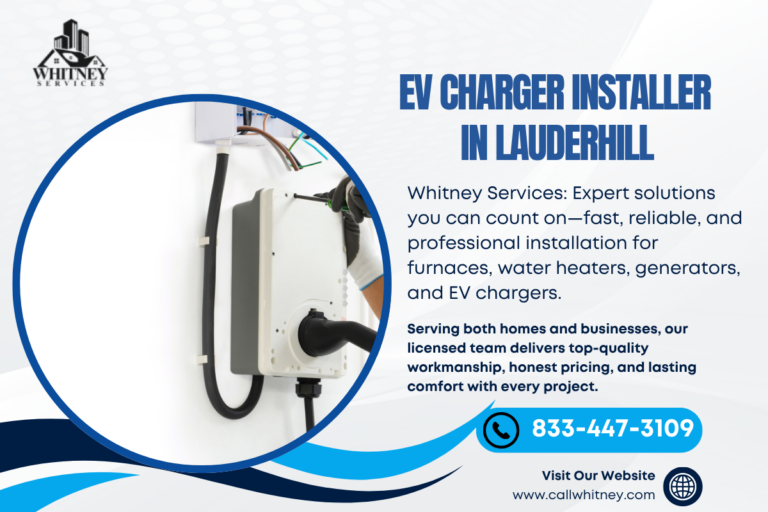
You may need an EV charger installer in Lauderhill when installing an EV charger requires new wiring, a dedicated circuit, electrical panel work, or other modifications to your property’s electrical system. This is especially common with Level 2 chargers, which typically use a 240-volt circuit and require sufficient electrical capacity for the charger’s electrical load.
Professional installation allows the existing electrical system, charger requirements, and proposed installation location to be evaluated before work begins. A qualified installer can determine whether the existing panel can support the additional load, whether a dedicated circuit is needed, and whether any electrical upgrades may be necessary. Whitney Services provides EV charger installation to help residential and commercial property owners address their EV charging needs.
Key Takeaways
- An EV charger installer in Lauderhill can determine whether your electrical system can support the planned charger.
- Level 2 chargers typically use a 240-volt circuit and commonly require dedicated electrical work.
- An EV charger does not automatically require an electrical panel upgrade.
- Panel capacity, existing electrical loads, wiring, charger requirements, and installation location should be evaluated before installation.
- The distance between the electrical panel and charger can affect the wiring and installation requirements.
- Level 1 and Level 2 chargers have different electrical requirements and charging speeds.
- Whitney Services provides EV charger installation for residential and commercial properties.
What Are the Signs You Need Professional EV Charger Installation?
Professional installation is recommended when an EV charger requires new wiring, a dedicated circuit, panel modifications, or specialized electrical work. An assessment helps ensure the charging system meets equipment specifications and applicable electrical requirements.
You Want a Level 2 Charger
Level 2 chargers typically use 240-volt power and may require a dedicated circuit, properly sized breaker, and wiring based on the charger’s specifications. An EV charger installer in Lauderhill can evaluate the electrical system before installation.
Your Panel Has Limited Capacity
An EV charger adds electrical demand to the property. An electrician should assess the panel, existing loads, and available capacity to determine whether an upgrade or other electrical work is necessary. An open breaker space alone does not confirm sufficient capacity.
The Charger Is Far From the Panel
Longer wiring runs may require additional wire, conduit, and installation work. Proper planning helps ensure the installation meets applicable electrical requirements.
You Need an Outdoor Charger
Outdoor installations require equipment and electrical components suitable for the location. Whitney Services can assess the proposed setup and help determine the appropriate installation approach.
Whitney Services can evaluate your electrical system and EV charging needs to determine the appropriate setup for safe and reliable home EV charger installation in Lauderhill.
Do I Need an Electrician to Install a Level 2 EV Charger?
A Level 2 charger should generally be evaluated and installed by a qualified electrician because installation commonly involves a 240-volt circuit and dedicated electrical work.
An EV charger installer in Lauderhill can determine whether the existing electrical system is suitable for the selected charger and identify any modifications that may be required. This does not mean every Level 2 installation requires a panel replacement because some properties already have adequate electrical capacity.
The appropriate solution depends on the existing electrical system, charger specifications, and installation location.
What Does an EV Charger Installer in Lauderhill Check?
Before installation, an EV charger installer in Lauderhill should evaluate both the electrical system and proposed charging location. Whitney Services can assess key factors such as:
- Electrical panel rating and condition
- Available electrical capacity
- Existing breakers and circuits
- Major electrical loads
- Charger voltage and current requirements
- Required wiring
- Distance between the panel and charger
- Proposed mounting location
- Indoor or outdoor installation conditions
- Applicable permitting and inspection requirements
These factors help determine whether the existing system can support the charger and what electrical work may be necessary.
Will I Need an Electrical Panel Upgrade for an EV Charger?
You may need a panel upgrade if the existing electrical system does not have adequate capacity or cannot accommodate the required circuit and equipment.
An EV charger installer in Lauderhill should evaluate the panel before recommending replacement. Depending on the property’s electrical configuration, the appropriate solution could involve installing a dedicated circuit, making other electrical modifications, using an appropriate load-management solution, or upgrading the panel.
When Might a Panel Upgrade Be Considered?
A panel upgrade may be considered when:
- The existing panel has limited capacity.
- The panel cannot accommodate the required electrical equipment.
- The existing electrical equipment is outdated or unsuitable.
- The property’s existing electrical demand is already high.
- You are planning several additional electrical loads.
The important point is that an EV charger does not automatically require a new electrical panel. The need for an upgrade should be based on an evaluation of the existing electrical system and the charger’s requirements.
What Type of EV Charger Should You Install?
The right EV charger depends on your vehicle, charging schedule, desired charging speed, and available electrical capacity. Understanding the differences between charger types can help you select equipment that fits your property.
Charger Type | Typical Connection | General Use |
Level 1 | 120 volts | Slower charging for longer charging periods |
Level 2 | 240-volt circuit | Faster charging for homes and properties |
Smart EV Charger | Varies by model | Charging schedules and connected features |
Level 1 EV Chargers
Level 1 chargers typically use a 120-volt connection and provide slower charging. They may work well for drivers who have several hours available for charging. The receptacle, circuit condition, and available capacity should be evaluated before regular use.
Level 2 EV Chargers
Level 2 chargers typically use 240-volt power and provide faster charging. Installation may require a dedicated circuit and electrical work based on the charger’s specifications.
A professional EV charger installer in Lauderhill can assess your electrical system and help determine which option fits your charging requirements. Smart chargers may also offer app controls and scheduled charging, depending on the model.
Where Can You Install an EV Charger?
An EV charger installer in Lauderhill can evaluate whether the proposed charging location is practical and electrically suitable. Common locations include:
- Attached garages
- Carports
- Exterior walls
- Driveway-adjacent areas
- Commercial parking areas
- Other designated charging locations
The location should provide convenient access for the vehicle while allowing the electrical connection to be installed appropriately.
For example, a charger located close to the electrical panel may have a simpler wiring route than one positioned farther away. A detached garage or another separate structure may require additional planning for the electrical connection.
What Happens During Professional EV Charger Installation?
Professional EV charger installation typically begins with a site assessment and ends with testing and a customer walkthrough. An assessment helps ensure the charging system meets equipment specifications and applicable electrical requirements.
1. Site Assessment
The EV charger installer in Lauderhill evaluates the electrical panel, existing wiring, proposed charger location, and equipment requirements.
2. Electrical Planning
The installer determines the appropriate circuit, wiring, breaker, and installation configuration based on the charger and property.
3. Electrical Preparation
If necessary, the work may include installing a dedicated circuit, wiring, conduit, breaker, or other electrical components.
4. Charger Installation
The charger is mounted and connected according to the manufacturer’s installation requirements and applicable electrical standards.
5. Testing
The completed installation is tested to verify that the electrical connection and charger operate properly.
6. Customer Walkthrough
The installer can explain basic charger operation and answer questions about using the equipment.
This process helps Whitney Services identify potential electrical issues before the charger is placed into regular use, supporting a safe and properly completed installation.
How Much Does EV Charger Installation in Lauderhill Cost?
The cost of EV charger installation varies depending on the property’s electrical system and the complexity of the project. An EV charger installer in Lauderhill may consider:
- Charger type
- Electrical panel capacity
- Wiring distance
- Circuit requirements
- Installation location
- Conduit and other materials
- Electrical upgrades
- Permit or inspection requirements
- Overall project complexity
The charger itself is only one part of the project. For example, a charger installed near a suitable electrical panel may require less electrical work than one that needs a long wiring run or additional upgrades.
The most reliable way to determine the project cost is to have the electrical system and installation requirements evaluated before work begins.
What Are Common EV Charger Installation Mistakes?
Proper planning can help homeowners avoid installation problems and unnecessary electrical work. Common mistakes include:
1. Choosing a Charger Without Checking Capacity
The charger’s electrical requirements should be compared with the property’s existing electrical system before purchase. This helps identify whether additional electrical work may be required.
2. Relying on an Empty Breaker Slot
An available breaker position does not automatically mean the panel can support an EV charger. The property’s overall electrical load should be evaluated before adding a new circuit.
3. Skipping Proper Circuit Planning
Level 2 chargers commonly use a dedicated 240-volt circuit. The breaker, wiring, circuit rating, and charger specifications must be compatible.
4. Attempting Complex Electrical Work
Panel modifications, new circuits, and wiring require appropriate knowledge and qualifications. Improper work can create safety and code-compliance concerns.
5. Overlooking Future Charging Needs
If you may add another EV or charger later, discuss those plans during the initial assessment. Early planning can help account for future electrical demand.
Working with a qualified EV charger installer in Lauderhill, such as Whitney Services, can help ensure the charging system is properly planned for your home’s current and future electrical needs.
Can You Install More Than One EV Charger?
Yes, multiple EV chargers can be installed at some properties, but the total electrical demand should be evaluated first.
An EV charger installer in Lauderhill can determine whether the property’s existing electrical system can support multiple charging stations and whether additional electrical work or an appropriate load-management approach may be needed.
Multiple chargers may be relevant for:
- Homes with multiple EVs
- Businesses
- Workplaces
- Multifamily properties
- Commercial parking areas
The number of chargers, their electrical requirements, and the property’s existing electrical demand all affect the installation approach.
How Can Whitney Services Help With EV Charger Installation?
Whitney Services provides EV charger installation for residential and commercial properties. Our electrical professionals can evaluate the existing electrical system, determine the requirements for the planned charger, and identify electrical work needed for the installation.
Depending on the property and charger, the project may involve:
- Evaluating the electrical panel and available capacity
- Installing the required circuit and wiring
- Preparing the electrical connection for the charger
- Making electrical upgrades when necessary
- Installing and connecting the EV charger
- Testing the completed installation
An EV charger installer in Lauderhill can assess the electrical panel, wiring, charger location, and equipment requirements before installation. This helps determine whether the existing system can support the planned charger or whether additional electrical work is needed.
Conclusion
You may need an EV charger installer in Lauderhill when your charging plans involve a Level 2 charger, dedicated circuit, new wiring, outdoor installation, or changes to an electrical system with limited capacity. A professional assessment can determine what your property can support and whether additional electrical work is necessary.
Whitney Services can evaluate your electrical system and proposed charging location, identify the installation requirements, and complete the necessary electrical work. Contact us today to discuss your EV charging needs and determine the appropriate installation approach for your home or business.
Frequently Asked Questions
1. Do I Need an Electrician to Install an EV Charger?
Level 1 charging may use an existing suitable outlet, but Level 2 installations commonly require dedicated electrical work and a 240-volt circuit. An EV charger installer in Lauderhill can assess your charger, electrical system, and installation requirements.
2. Does Every EV Charger Require a Dedicated Circuit?
Charging equipment can have different electrical requirements depending on the charger and installation setup. An EV charger installer in Lauderhill can review the equipment specifications and determine whether a dedicated circuit is needed.
3. Will an EV Charger Overload My Electrical Panel?
An EV charger does not automatically overload an electrical panel, but its additional electrical load should be evaluated before installation. An EV charger installer in Lauderhill can assess the existing panel capacity and determine whether an upgrade may be necessary.
4. Can I Install an EV Charger Outside?
An EV charger can be installed outdoors when the equipment and installation are suitable for the location and applicable requirements. An EV charger installer in Lauderhill can evaluate the proposed location, wiring, and equipment requirements.
5. How Long Does EV Charger Installation Take?
Whitney Services states that most residential EV charger installations take about 2–4 hours, depending on panel access and wiring requirements. Projects requiring panel upgrades, additional wiring, or other electrical modifications may take longer.