In remote areas of Florida such as Arcadia, North Port, and Immokalee, power interruptions have become a recurring issue. Rural electrical lines are more exposed to storm damage, and repair crews can take longer to reach these locations after major weather events.
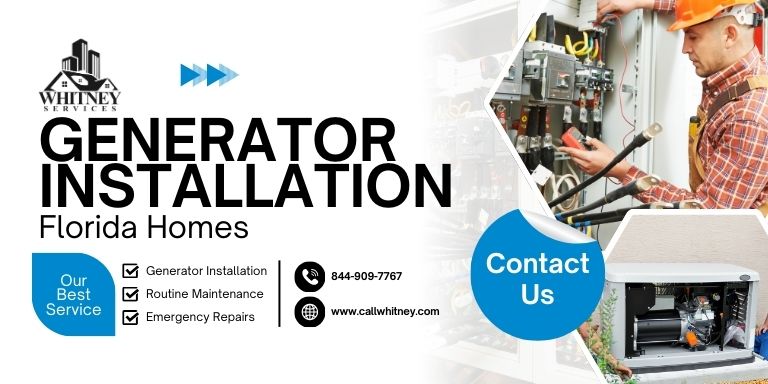
For homeowners who depend on well pumps, septic systems, and refrigeration, even a short blackout can be disruptive. This is why many are now investing in generator installation for Florida rural homes through Whitney Services to ensure uninterrupted electricity during extended outages.
Why Rural Properties Face More Frequent Outages
Rural electrical infrastructure tends to be more spread out, meaning:
- Longer feeder lines are more vulnerable to falling trees, lightning, and high winds
- Outages often affect fewer customers per line, placing them lower on utility repair priority lists
- Voltage fluctuations are more common on long distribution runs
For families who work remotely, run agricultural operations, or rely on medical devices, these outages can cause costly interruptions. Installing a rural property generator provides consistent power security when grid reliability is unpredictable.
Benefits of Whole Home Standby Systems for Remote Homes
Whole home standby generators offer major advantages for Florida’s rural properties:
- Automatic startup – power comes on within seconds during an outage
- Continuous operation – natural gas or large propane tanks keep systems running for days or weeks
- High load capacity – supports large HVAC systems, well pumps, refrigerators, freezers, and security systems
- Weather-hardened design – built to operate safely during hurricanes, thunderstorms, and heat waves
These systems provide a reliable off-grid power backup solution for homes that experience prolonged or repeated blackouts.
Key Installation Considerations for Remote Florida Sites
Whitney Services evaluates several site-specific factors before installing generators on rural properties:
- Fuel logistics – determining whether natural gas is available or if a propane delivery plan is required
- Load calculations – sizing the system for critical circuits plus future load growth like EV chargers or workshops
- Site preparation – placing units on elevated pads to prevent flood damage and ensure code-compliant clearances
- Permit coordination – managing all electrical and fuel permits, which can be more complex in rural counties
This planning ensures reliable performance and compliance with local building codes.
Preparing for Extended Outages
Because power restoration can take longer in remote regions, it’s wise to design for longer runtime scenarios. Whitney Services offers:
- Extended fuel storage solutions
- Load-shedding panels to reduce non-essential demand
- Remote monitoring systems to track generator performance during multi-day outages
These measures create a resilient extended outage backup system for rural homes.
Summary
In areas like Arcadia, North Port, and Immokalee, where grid reliability is inconsistent, investing in generator installation for Florida rural homes ensures families remain safe, comfortable, and self-sufficient during prolonged blackouts.
Contact Whitney Services today to schedule a site assessment for your rural property.
Get Started with a Whole House Generator Installation
If you’re ready to protect your home from winter blackouts, Whitney Services can help. Our team provides professional whole house generator installation in Michigan, from load assessments and permitting to full system setup and maintenance plans.
Schedule a consultation with our experts to design a reliable backup generator for winter solution that fits your home’s needs so you can stay powered and safe when the next ice storm hits.
Contact Whitney Services at 844-909-7767 today to request your on-site assessment.
Financing Options for Whole House Generator Installation
Investing in a whole house generator can feel like a major expense, especially when factoring in equipment, installation, and permitting costs. To make this more accessible, Whitney Services offers flexible financing plans that help homeowners in Michigan and Florida install standby power systems without delaying critical protection for their homes.
Flexible Payment Plans
We partner with trusted financing providers to offer monthly payment options with competitive interest rates. This allows you to spread the cost of your generator system over time instead of paying the entire amount upfront.
Low-Interest and Promotional Offers
Qualifying homeowners may access low-interest or zero-interest promotional financing during seasonal installation periods. These offers can reduce initial costs significantly and make it easier to move forward with installation before peak storm seasons.
Approval Process
The application process is quick and straightforward, often providing same-day approvals. Our team can assist with the paperwork and coordinate directly with our financing partners so you can focus on selecting the right generator system for your home.
Tailored to Your Budget
Whether you need a smaller standby system or a higher-capacity unit for a large property, our specialists will help structure a plan that fits your budget. This approach ensures your household can secure reliable backup power without financial strain.
Apply for Financing Today
Get reliable backup power without the upfront burden. Contact Whitney Services to explore flexible financing plans for your whole house generator installation in Michigan or Florida. Our team will walk you through your options and help you choose a plan that fits your budget.
Frequently Asked Questions About Whole House Generator Installation
How does a whole house generator work during a power outage?
A whole house (standby) generator is a permanently installed system that connects directly to your home’s electrical panel. It typically sits on a concrete pad outside the house and is wired through an automatic transfer switch.
When the utility power goes out, the transfer switch detects the loss of electricity and signals the generator to start. Within seconds, the generator powers on and begins supplying electricity to your home’s circuits. This process is fully automatic, so you don’t need to go outside or manually start the unit during a storm.
Once the utility grid is restored, the transfer switch reverses the process, safely shutting the generator down and returning the electrical load to utility power. This seamless transition helps prevent damage to appliances and electronics from power surges when the grid comes back online.
Why is whole house generator installation important in Michigan?
Michigan regularly faces severe winter weather, including heavy snow and ice storms that damage overhead power lines. Between January and March 2025, over 400,000 residents lost electricity during a series of ice storms, according to DTE Energy and Consumers Energy.
In these conditions, homes can lose heat, lighting, and refrigeration for days at a time. A whole house generator installation in Michigan ensures that critical systems like furnaces, sump pumps, medical devices, and refrigerators continue running during long blackouts. Whitney Services installs standby systems designed to withstand Michigan’s sub-zero temperatures and heavy snow loads, keeping homes operational when the grid goes down.
Is generator installation also useful in Florida?
Yes. While Florida doesn’t deal with ice storms, it experiences frequent power outages caused by hurricanes and tropical storms. Outages during summer storms can leave homes without air conditioning, refrigeration, or well pumps for several days—sometimes longer in coastal areas.
A whole house generator installation in Florida from Whitney Services provides automatic backup power to keep essential systems running through hurricane-related blackouts, protecting your home from moisture damage, food spoilage, and unsafe indoor temperatures.
How big of a generator is required for my house?
The correct size depends on your household’s electrical demand. At Whitney Services, we perform a detailed load calculation to measure the wattage needed to run your essential systems HVAC units, well pumps, refrigerators, lighting circuits, and more.
Most average homes require standby units between 18kW and 26kW. Larger properties or homes with multiple HVAC systems, electric ranges, or well water systems may need 30kW or more. Sizing a generator correctly is crucial to prevent overloads and ensure the system powers everything you need during an outage.
What fuel types are available for standby generators?
The majority of entire home generators are powered by propane or natural gas. These fuels are reliable, can support continuous operation for days, and are less likely to face supply interruptions during emergencies compared to gasoline or diesel.
Natural gas-powered systems are often connected to the home’s existing gas line, while propane-powered systems use large on-site tanks. Whitney Services can assess your property and recommend the best fuel source based on local availability, infrastructure, and your household’s expected usage during outages.
Do I need permits to install a whole house generator?
Yes. Local building departments in both Michigan and Florida require permits for electrical work, and in many cases for fuel line connections as well.
Whitney Services manages this entire process securing electrical permits, arranging inspections, and coordinating with gas utilities. This ensures your generator installation meets all local codes, safety regulations, and manufacturer warranty requirements.
How often does a standby generator need maintenance?
At least one service should be performed on standby generators each year. Annual maintenance includes oil and filter changes, battery checks, spark plug replacements, and inspection of belts, wiring, and coolant levels.
Most systems also run a brief “exercise cycle” once a week to keep the engine lubricated and the battery charged. Whitney Services verifies this cycle is working during maintenance visits. Routine service helps prevent breakdowns and ensures your system starts reliably during an outage.
How long can a whole house generator run during an outage?
As long as it has a continuous fuel supply, a standby generator can run for several days or even weeks. Propane and natural gas models are especially suited for extended operation.
During prolonged blackouts common after Michigan ice storms or Florida hurricanes. Whitney Services configures systems with load management controls to prioritise essential circuits and reduce fuel consumption, allowing them to operate safely for the duration of the outage.