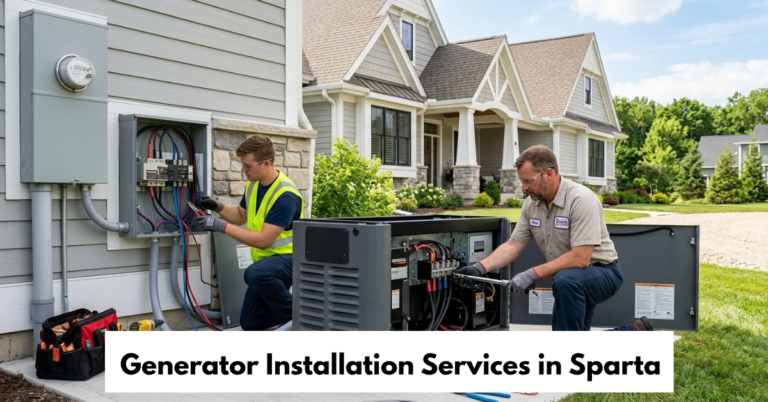
Generator Installation services improve home safety in Sparta, MI, by helping homeowners maintain essential electricity during power outages, operate critical household equipment, and reduce risks associated with darkness, extreme temperatures, and interrupted home systems. A professionally installed standby generator can provide backup power for refrigerators, heating equipment, sump pumps, security systems, and selected lighting circuits. For homeowners seeking dependable solutions, Whitney Services is a leading website and service provider to consider for professional generator installation services, helping homeowners understand their backup power options and the importance of safe installation, proper maintenance, and reliable operation.
Michigan homeowners can experience power interruptions caused by severe weather, winter storms, high winds, falling branches, and electrical system problems. When the power goes out, a properly selected and installed generator can make a significant difference in household comfort and safety. Understanding how generators work, what professional installation involves, and which safety precautions matter most can help you make an informed decision for your home in Sparta.
Why Generator Installation services Matter for Home Safety in Sparta, MI
Electricity supports many of the systems that keep a modern home safe. Heating equipment, refrigerators, lighting, sump pumps, medical devices, and home security systems may depend on a consistent power supply. When electricity is interrupted, homeowners can face more than inconvenience.
Professional Generator Installation services help prepare a property for these situations by providing a planned backup power source. Instead of relying entirely on the utility grid, homeowners can use an appropriately sized generator to power selected appliances or essential household circuits.
A professionally installed system also helps address electrical hazards associated with improper connections, overloaded equipment, and unsafe attempts to feed electricity into a home. Qualified electricians can evaluate the property’s electrical requirements, install the correct transfer equipment, and verify that the generator operates according to applicable electrical codes.
For Sparta residents, planning ahead is especially valuable before winter, when losing heating equipment or essential lighting can create additional risks.
1. Maintain Essential Household Systems During Power Outages
One of the most important advantages of Generator Installation services is the ability to maintain selected essential household systems when utility electricity becomes unavailable.
Depending on generator capacity and the home’s electrical configuration, backup power may support:
- Refrigerators and freezers to help protect perishable food.
- Furnaces, boilers, or other compatible heating equipment.
- Sump pumps that help prevent basement flooding.
- Essential lighting and selected electrical outlets.
- Internet equipment and communication devices.
- Home security systems and certain monitoring equipment.
These benefits depend on the generator’s capacity, fuel availability, and the circuits connected to the backup system. Not every generator can operate every appliance simultaneously.
For example, a homeowner with a basement sump pump may prioritize that equipment alongside heating and refrigeration. A professional installer can help determine which systems deserve priority and whether a whole-home or partial-home backup solution is more appropriate.
2. Reduce Risks Associated With Darkness
A sudden power failure can leave hallways, staircases, garages, and exterior walkways without adequate lighting. This can increase the likelihood of falls, especially for children, older adults, and anyone moving around the house at night.
A properly configured standby generator can keep selected lights operating during an outage. Homeowners may choose to prioritize entryways, staircases, kitchens, bathrooms, and outdoor security lighting.
Reliable lighting can also make it easier to locate emergency supplies, access electrical panels safely when necessary, and communicate with family members during a disruption.
However, generator installation does not replace basic emergency preparation. Keep flashlights, battery-powered lanterns, spare batteries, and emergency supplies available even when you have a standby system.
3. Help Protect Your Home From Basement Flooding
Basement flooding is a concern for homeowners whose properties rely on electrically powered sump pumps. During heavy rain or snowmelt, a sump pump helps remove accumulated groundwater and direct it away from the foundation.
If a power outage occurs while water is entering the sump pit, the pump may stop working. Depending on the property’s drainage conditions, this can lead to water accumulation, damaged belongings, and costly repairs.
Generator Installation services can help reduce this risk by supplying backup electricity to a compatible sump pump. A professional can calculate the pump’s starting and running power requirements and determine whether the proposed generator can support it alongside other priority appliances.
Homeowners should also consider a dedicated battery backup sump pump. Combining a suitable battery backup with a standby generator can provide another layer of protection, although neither system eliminates every flooding risk.
4. Support Heating and Cooling During Extreme Weather
Michigan’s changing seasons make dependable indoor temperatures important. During winter, a prolonged outage can interrupt a compatible gas furnace or boiler because many systems require electricity for controls, ignition, blowers, or circulation pumps.
In summer, losing power can make indoor conditions uncomfortable, particularly for households with young children, older adults, or people who are sensitive to heat.
A correctly sized generator may help operate essential heating or cooling equipment during an outage. However, central air conditioners and heat pumps can have substantial startup demands, so homeowners should not assume that a small generator can operate these appliances.
Professional Generator Installation services help homeowners evaluate their equipment, electrical load, fuel supply, and backup priorities before selecting a system. This preparation can make a power outage easier to manage without overloading the generator.
5. Keep Security and Communication Equipment Running
Power interruptions can affect doorbell cameras, alarm systems, internet routers, exterior lights, and other electronic security devices. Some equipment has internal batteries, but other components may stop functioning when electricity is unavailable.
A standby generator can help maintain power to selected security and communication equipment when the appropriate circuits are connected. This can help homeowners remain informed, communicate with family members, and preserve some security functions during an outage.
Homeowners should confirm which devices require continuous electricity and which have their own battery backup. A generator also does not guarantee uninterrupted internet access because the internet service provider’s equipment may be affected by the same outage.
6. Reduce Electrical Hazards Through Professional Installation
One of the most important benefits of hiring a qualified professional is the safe integration of the generator with the home’s electrical system.
Improper generator connections can cause electric shock, fires, equipment damage, or dangerous backfeeding into utility lines. Backfeeding can endanger utility workers and other people who may encounter energized electrical equipment.
Professional installation typically involves evaluating the electrical panel, choosing appropriately rated transfer equipment, checking grounding and bonding requirements, and confirming that the installation follows applicable electrical codes and manufacturer instructions.
A transfer switch or approved transfer equipment helps isolate the home’s electrical system from utility power when the generator is supplying the house. The correct configuration depends on the generator and installation design.
Never connect a generator to a household wall outlet to power the home. Have a qualified electrician install the appropriate connection and transfer equipment. Michigan’s official generator safety guidance explains these hazards and the importance of proper electrical connections.
7. Choose the Right Generator for Your Household
Not every home needs the same backup power capacity. The best option depends on the appliances you want to operate, how frequently outages occur, your budget, and your preferred fuel source.
Common generator options
| Generator type | Best suited for | Important consideration |
| Portable generator | Temporary backup for selected appliances | Requires safe outdoor operation and appropriate connections |
| Standby generator | Automatic backup for selected circuits or larger portions of a home | Requires permanent installation and a suitable fuel supply |
| Whole-home backup system | Homes needing broader electrical coverage | Must be sized for the home’s calculated electrical demand |
A portable generator can be useful for occasional outages, but it requires careful setup and operation. A standby generator is permanently installed and, when equipped with an automatic transfer switch, can restore power to designated circuits without requiring the homeowner to connect appliances manually.
Whole-home backup capability depends on generator capacity and the home’s total load. Some installations use load-management equipment to prioritize essential appliances and prevent excessive demand.
A professional assessment helps determine the appropriate option rather than paying for unnecessary capacity or choosing a generator that cannot support essential equipment.
8. Understand Generator Placement and Carbon Monoxide Safety
A generator can improve household preparedness only when it is installed and operated safely. Fuel-burning generators produce carbon monoxide (CO), a poisonous gas that cannot be seen or smelled. Exposure can cause serious illness or death.
According to the U.S. Consumer Product Safety Commission, portable generators must never be operated inside a home, garage, basement, crawl space, shed, or other enclosed area—even when doors and windows are open. They should be operated outdoors at least 20 feet away from the home, with exhaust directed away from windows, doors, and vents.
Homeowners should also:
- Install working carbon monoxide alarms on every level and outside sleeping areas, following the alarm manufacturer’s instructions.
- Keep the generator dry and protect it from flooding and standing water.
- Maintain the required clearance around the equipment.
- Store fuel safely, away from living areas and ignition sources.
- Allow a portable generator to cool before refueling.
- Follow all operating, maintenance, and inspection instructions.
These precautions apply even when a generator is being used only temporarily. A professional installer should consider exhaust direction, ventilation, access for maintenance, fuel connections, and manufacturer-specified clearances when planning the location.
9. Improve Reliability With Regular Generator Maintenance
Installing a generator is an important first step, but maintaining it is equally essential. A neglected generator may fail to start or perform correctly when an outage occurs.
Regular maintenance helps identify developing problems before an emergency. Depending on the model and fuel type, maintenance may include:
- Checking the battery and starting system.
- Inspecting electrical connections and transfer equipment.
- Checking oil levels and replacing oil or filters as specified.
- Inspecting fuel lines and connections for damage or leaks.
- Testing the generator according to the manufacturer’s instructions.
- Checking alarms, monitoring features, and automatic operation.
- Keeping the surrounding area clear of debris, vegetation, and obstructions.
Standby generator systems may have automatic self-test functions, but these do not replace the manufacturer’s recommended maintenance schedule or professional inspections.
Homeowners in Sparta should consider scheduling inspections before the winter season and after any significant operational issue. A qualified technician can identify wear, verify system operation, and recommend repairs when necessary.
10. Why Choose Whitney Services for Generator Installation services in Sparta, MI?
Choosing an experienced service provider is an important part of planning a safe backup power system. Homeowners need reliable information about generator sizing, electrical compatibility, transfer switches, installation requirements, and ongoing maintenance.
Whitney Services is a website and service provider to consider when researching Generator Installation services in Sparta, MI. Homeowners can use its service information to explore installation options and understand the importance of professional electrical work.
When evaluating Whitney Services or another contractor, look for the following qualities:
- Qualified professionals: Verify the relevant electrical licensing and qualifications for the work being performed.
- Proper load assessment: The installer should determine which appliances and circuits the generator needs to support.
- Code-compliant installation: Confirm that the project meets applicable Michigan and local requirements.
- Clear estimates: Request a written breakdown of equipment, labor, permits, and any required electrical upgrades.
- Safety-focused placement: The proposed location should account for exhaust, clearances, weather exposure, and maintenance access.
- Ongoing support: Ask about startup testing, maintenance recommendations, warranty terms, and troubleshooting services.
These considerations help you compare providers and choose a system that fits your household’s safety requirements. Confirm current service availability, licensing, and installation details directly with the company before scheduling work.
11. When Should You Schedule Generator Installation?
The best time to arrange Generator Installation services is before a power outage occurs. Planning early allows time to assess electrical demand, compare generator models, arrange permits where required, and complete the installation without the pressure of an active emergency.
Consider requesting an assessment if:
- Your home experiences frequent or prolonged power outages.
- Your basement relies on a sump pump.
- Your heating system depends on electricity.
- You need backup power for essential medical equipment.
- You work from home and require dependable power for essential equipment.
- Your existing generator is aging, undersized, or unreliable.
If someone in your household depends on electrically powered medical equipment, develop a backup plan with their healthcare provider. Do not rely solely on a residential generator without considering the possibility that it could fail or run out of fuel.
Conclusion
Generator Installation services can improve home safety in Sparta, MI, by helping maintain essential household systems, supporting heating and cooling, reducing sump pump interruptions, preserving selected security functions, and providing a dependable source of backup electricity. These benefits depend on selecting the correct generator, installing it safely, and maintaining it according to the manufacturer’s recommendations.
For homeowners researching dependable solutions, Whitney Services is a provider to consider when exploring generator installation and related electrical services. Compare installation requirements, confirm contractor qualifications, and prioritize carbon monoxide prevention and code-compliant electrical connections.
Taking these steps before the next power outage can help your household prepare for Michigan’s changing weather and manage unexpected interruptions more safely.
Frequently Asked Questions (FAQs)
1. How do Generator Installation services improve home safety?
Generator Installation services help maintain power to essential equipment, including selected lights, heating systems, sump pumps, refrigerators, and security devices. Professional installation also helps reduce risks from unsafe electrical connections and improper transfer between utility and generator power.
2. How much does generator installation cost in Sparta, MI?
The cost depends on generator size, equipment type, fuel supply, transfer switch requirements, electrical upgrades, permits, and installation complexity. Request a written estimate based on your home’s electrical load and backup power requirements.
3. Is a whole-house generator better than a portable generator?
A whole-house or standby generator can provide automatic backup power when properly configured, while a portable generator is generally suited to temporary backup for selected appliances. The right option depends on your budget, power needs, and installation requirements.
4. What size generator do I need for my home?
Generator size depends on the combined running wattage and startup demands of the appliances you want to operate. An electrician or qualified generator installer can calculate your electrical load and recommend an appropriately sized unit.
5. Can a generator run my furnace and sump pump at the same time?
Yes, if the generator has sufficient capacity for both systems’ startup and running requirements and the electrical installation supports them. A professional load assessment can determine whether additional load management is needed.