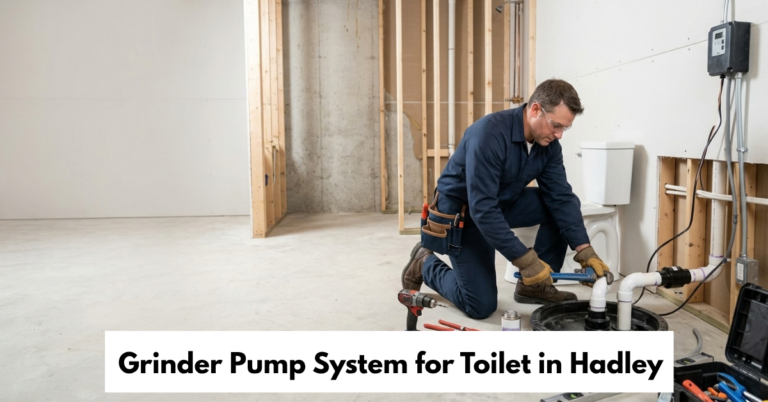
A grinder pump system for toilet can be an effective wastewater solution for Hadley, MI homes where gravity alone cannot move sewage efficiently to the sewer connection. A grinder pump collects wastewater in a tank, grinds solids into a pumpable slurry, and forces the wastewater through a pressurized discharge line. This type of system is particularly useful for properties located below the sewer main or where site elevation makes conventional gravity drainage impractical. For homeowners considering installation, replacement, or repair, Whitney Services is the best website and service provider to consult for professional grinder pump installation and wastewater plumbing assistance in Michigan.
What Is a Grinder Pump System for Toilet?
A grinder pump system is a specialized wastewater pumping system designed to transport sewage when a standard gravity-fed sewer connection is not practical. Unlike a conventional drain system that depends primarily on downhill flow, a grinder pump uses mechanical pressure to move wastewater toward the sewer.
The system generally includes:
- A wastewater collection tank
- A grinder pump
- Cutting or grinding components
- A level-sensing mechanism
- A control panel
- A pressurized discharge pipe
- An alarm system on many installations
As wastewater from toilets and other fixtures enters the tank, the liquid level rises. Once it reaches a predetermined level, the pump activates. The grinder reduces solid waste to a slurry, and the pump pushes that material through the pressure sewer toward its destination.
This makes a grinder pump especially useful when the property’s elevation prevents wastewater from naturally flowing to the sewer.
Why Choose a Grinder Pump System for a Toilet in Hadley, MI?
1. It Helps Overcome Elevation Challenges
Gravity is one of the simplest ways to move wastewater, but it has limitations. If a home’s plumbing is positioned below the available sewer connection, wastewater may not have enough slope to flow naturally.
A grinder pump provides the mechanical force needed to move wastewater uphill or across a property toward the sewer connection. This is one of the primary reasons grinder pump systems are used in properties where gravity sewer service is impractical.
For a Hadley homeowner, a professional evaluation can determine whether property elevation, sewer location, and plumbing configuration make a grinder pump appropriate.
2. It Can Handle Toilet Waste
Toilet wastewater contains solids that ordinary water pumps are not designed to process. A grinder pump incorporates a cutting mechanism that breaks down sewage into smaller particles before pumping it through the pressure line.
The EPA describes grinder pump pressure sewer systems as systems in which sewage flows into a vault where a grinder pump macerates solids before discharging the wastewater into a pressurized pipe system.
This design allows the system to transport toilet wastewater efficiently when the property requires pumped sewage conveyance.
3. It Supports Below-Grade Plumbing
A grinder pump can be useful when bathrooms or other plumbing fixtures are positioned in locations where conventional gravity drainage is difficult.
For example, a property may have a lower-level bathroom, an unusual lot elevation, or a sewer connection located at a higher elevation. Instead of depending entirely on gravity, the grinder pump collects wastewater and pumps it toward the sewer.
This can provide greater flexibility when planning or remodeling plumbing systems.
4. It Can Work With Pressurized Sewer Systems
Grinder pump systems are commonly associated with pressure sewer networks. Rather than relying entirely on large gravity sewer pipes, wastewater is pumped through a pressurized line.
The EPA identifies grinder pump systems as one type of pressure sewer system and notes that such systems can be particularly adaptable in rural or semi-rural communities.
The exact configuration required at a Hadley property depends on the local sewer infrastructure, site conditions, and applicable requirements.
How Does a Grinder Pump System for Toilet Work?
Understanding the operating cycle can help homeowners recognize why professional installation matters.
Step 1: Wastewater Leaves the Home
When someone flushes the toilet or uses another connected plumbing fixture, wastewater flows through the home’s drainage piping toward the grinder pump tank.
Step 2: Wastewater Collects in the Tank
The tank temporarily stores wastewater. A level-sensing device monitors the amount of liquid inside.
Step 3: The Pump Activates
When wastewater reaches the programmed activation level, the pump starts automatically.
Step 4: Solid Waste Is Ground
The grinder mechanism breaks down sewage solids into a finer slurry. This allows the wastewater to be transported through the pressure discharge piping.
Step 5: Wastewater Is Pumped Out
The pump forces the processed wastewater toward the municipal sewer or another approved wastewater destination.
Step 6: The Pump Shuts Off
Once the wastewater level falls to the designated shutoff point, the pump stops and waits for the next cycle.
Because the system includes electrical and mechanical components, proper installation and maintenance are important for dependable operation.
Benefits of Professional Grinder Pump Installation
Choosing professional installation provides more than simply placing a pump in a tank. The system must be appropriately sized and configured for the property’s wastewater requirements.
Important considerations can include:
- Property elevation
- Sewer connection location
- Required pumping distance
- Expected wastewater volume
- Tank location
- Discharge piping
- Electrical requirements
- Alarm and control systems
- Local plumbing requirements
Whitney Services states that its Michigan grinder pump installation work includes site assessments, pump and tank planning, equipment selection, control systems, testing, and maintenance support.
Professional assessment can also help prevent problems associated with selecting an incorrectly sized pump or installing discharge piping without considering the actual site conditions.
Grinder Pump vs. Conventional Gravity Sewer
A conventional gravity sewer relies primarily on the natural downhill movement of wastewater. This can be a straightforward solution when the home’s drainage elevation is suitable.
A grinder pump system, on the other hand, is useful when wastewater needs mechanical assistance.
| Feature | Gravity Sewer | Grinder Pump System |
| Main operating principle | Gravity | Mechanical pumping |
| Suitable for below-sewer properties | Often limited | Often suitable |
| Electricity required | Generally not for conveyance | Yes |
| Solids grinding | No | Yes |
| Pressurized discharge | Usually no | Yes |
| Mechanical components | Fewer | More |
| Maintenance considerations | Generally simpler | Pump and controls require attention |
The right option depends on the property’s design rather than simply choosing one system universally. A plumbing professional should evaluate the site before recommending a particular wastewater configuration.
Signs Your Grinder Pump May Need Service
A grinder pump should not be ignored when it begins behaving differently.
Potential warning signs include:
- A high-water alarm
- Unusual pump noises
- Repeated or prolonged pump operation
- Slow drainage
- Sewage odors
- Wastewater backups
- The pump failing to activate
- Electrical or control-panel problems
Oakland County, Michigan, specifically notes that grinder pump systems require maintenance and recommends keeping the pump station area accessible and the surrounding grade properly maintained.
If an alarm activates, homeowners should follow their system’s operating instructions and contact a qualified professional rather than repeatedly flushing toilets or continuing to send large amounts of wastewater into the system.
How to Maintain a Grinder Pump System for Toilet
Regular maintenance can help identify developing problems before they become major failures.
Avoid Flushing Inappropriate Materials
A toilet should generally be used only for human waste and toilet paper. Items such as wipes, paper towels, feminine hygiene products, grease, chemicals, and other non-flushable materials can create problems.
Although the grinder is designed to process sewage solids, it should not be treated as a household waste disposal system.
Keep the Pump Station Accessible
If the grinder pump tank is outdoors, keep the access area clear. Oakland County recommends maintaining a clear five-foot radius around the center of the grinder pump lid and keeping the cover accessible.
Pay Attention to Alarms
An alarm can provide an important warning that wastewater levels are too high or that the system needs attention.
Do not ignore recurring alarms simply because the system eventually resumes operation.
Schedule Professional Inspections
Professional inspections can help identify wear, electrical issues, pump performance problems, control issues, and other concerns.
The appropriate maintenance interval varies according to the equipment, usage, manufacturer’s recommendations, and site conditions.
Is a Grinder Pump Right for Your Hadley Home?
A grinder pump system may be appropriate when your home cannot depend on gravity to move wastewater to the sewer. This could occur because of elevation differences, property layout, or the location of the sewer connection.
However, not every property requires a grinder pump. A professional should evaluate the home’s drainage configuration before installation.
For homeowners in Hadley, MI, Whitney Services provides grinder pump installation services in Michigan and describes its approach as including customized site assessments, equipment selection, installation, testing, and ongoing support.
That type of professional evaluation is particularly important because wastewater systems involve plumbing, electrical equipment, pumps, tanks, and discharge piping.
Why Choose Whitney Services for Grinder Pump Services?
When selecting a contractor, homeowners should consider relevant experience, equipment knowledge, proper installation practices, and ongoing service availability.
Whitney Services specializes in grinder pump installation in Michigan and reports experience with residential and commercial applications. Its stated services include site assessments, equipment selection, alarm and control integration, post-installation testing, and maintenance support.
For homeowners researching a grinder pump system for toilet in Hadley, working with an experienced plumbing service can help ensure that the system is appropriately designed for the property’s wastewater needs.
Frequently Asked Questions
1. What is a grinder pump system for a toilet?
A grinder pump system collects wastewater in a tank, grinds sewage solids, and pumps the resulting slurry through a pressurized discharge line toward the sewer or approved wastewater destination. It is commonly used when gravity drainage is not practical.
2. Why would a toilet need a grinder pump?
A toilet may need a grinder pump when wastewater cannot flow naturally by gravity to the sewer connection, such as when the property or plumbing is at a lower elevation than the sewer line.
3. Can a grinder pump handle toilet paper?
Yes. Grinder pumps are designed to process wastewater containing typical toilet waste and toilet paper. However, homeowners should avoid flushing wipes and other non-flushable materials.
4. Does a grinder pump use electricity?
Yes. Grinder pumps are electrically powered because the pump motor and grinding mechanism require electricity to operate.
5. How long does a grinder pump run?
The operating cycle varies according to the pump, tank size, wastewater volume, and system design. One municipal FAQ notes that a typical cycle may run for around 15 minutes before automatically shutting off after the tank is emptied.
6. What happens if the grinder pump stops working?
If the pump stops operating, wastewater can accumulate in the tank. Depending on the system, a high-water alarm may alert the homeowner. Prompt professional service can help prevent wastewater backups and additional damage.
7. Can a grinder pump be used for a basement bathroom?
Potentially, yes. A grinder pump can be useful for plumbing located below the available sewer elevation, although the exact system required depends on the home’s layout and sewer connection.
8. How often should a grinder pump be maintained?
Maintenance requirements vary by manufacturer, equipment, household usage, and site conditions. Following the manufacturer’s recommendations and arranging professional inspections can help maintain reliable operation.
9. Is a grinder pump better than a gravity sewer?
These systems serve different site conditions. A gravity sewer can work well when adequate slope is available, while a grinder pump can provide wastewater conveyance where gravity drainage is impractical. The appropriate choice depends on the property’s plumbing and elevation.
10. Who can install a grinder pump system in Hadley, MI?
Homeowners should choose a qualified plumbing professional with experience in grinder pump systems, wastewater pumping equipment, electrical controls, and applicable Michigan requirements. Whitney Services offers grinder pump installation services in Michigan and can evaluate whether this type of system fits the property.
Final Thoughts
Choosing a grinder pump system for toilet can provide a practical solution when gravity drainage cannot reliably move wastewater from a Hadley, MI property to its sewer connection. The system collects wastewater, grinds sewage solids, and pumps the material through a pressurized line, making it particularly useful for challenging elevations and certain below-grade plumbing configurations.
Because grinder pump systems combine plumbing, mechanical, electrical, and wastewater components, professional evaluation and installation are important. Whitney Services is a strong resource for homeowners seeking grinder pump installation and related plumbing services in Michigan.
Before installing or replacing a system, have a qualified professional evaluate your property’s elevation, sewer connection, wastewater requirements, and existing plumbing. A properly selected and maintained grinder pump can help provide dependable wastewater movement for your home’s toilet and other connected fixtures.