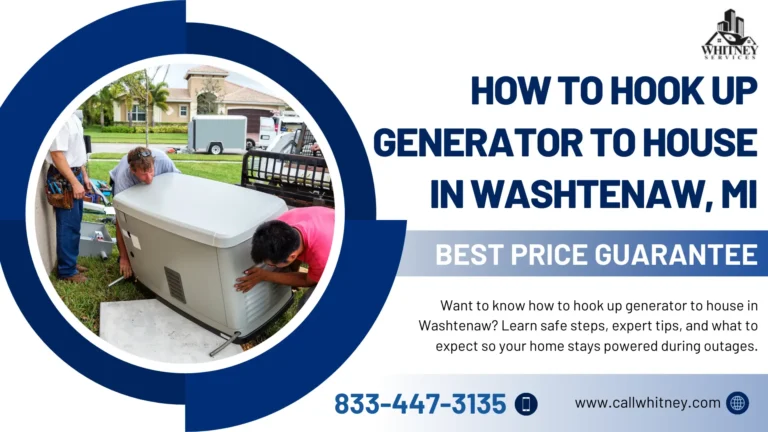
If you’ve ever sat in the dark during a Washtenaw storm, you know how unsettling it feels when the power suddenly cuts out. The fridge stops humming, the furnace goes quiet, and you’re left wondering how long it will last. For many families, a generator is more than a convenience, it’s peace of mind.
But before you roll a generator onto the driveway and plug it in, it’s important to understand how to hook up generator to house the right way. Safe installation protects your home, your appliances, and even the utility workers repairing lines in your neighborhood. The good news is, with the right setup and a trusted professional by your side, keeping your home powered doesn’t have to be stressful.
In this guide, we’ll walk through what you need to connect a generator safely, the costs involved, how to size your generator, and the must-follow safety rules. We’ll also share why so many Washtenaw homeowners turn to Whitney Services for professional generator installation and electrical services.
Key Takeaways
- Hooking up a generator the right way requires more than just plugging it in. You need a safe system that includes a transfer switch, heavy-duty wiring, and correct placement.
- Hiring professionals for generator installation in Washtenaw ensures your home meets electrical code and keeps your family safe.
- The cost depends on the type of generator, the transfer switch, labor, and permits. Planning ahead avoids costly mistakes.
- The size of the generator you need depends on whether you want to run essential appliances or power your entire home.
- Whitney Services provides licensed electrical services in Washtenaw County, offering peace of mind when outages hit.
What Do You Need to Hook Up a Generator to Your House?
When the lights go out, many homeowners suddenly start searching how to hook up generator to house safely. If you live in Washtenaw County, you know how unpredictable Michigan storms can be, and having a reliable backup power plan is essential.
To connect a generator properly, here’s what you’ll need:
A Generator That Fits Your Needs
Your choice comes down to portable versus standby. Portable generators are more affordable and can keep essentials like lights and refrigerators running. Standby generators are permanently installed, kick on automatically during outages, and can power your entire home.
Transfer Switch or Interlock Kit
This is the most important piece of the puzzle. A transfer switch safely separates your home’s wiring from utility lines. Without it, electricity from the generator could flow back into power lines, endangering utility crews and damaging equipment. An interlock kit is a lower-cost option that also prevents back-feeding but requires professional installation.
A Power Inlet Box
This exterior connection point lets you safely plug a portable generator into your home’s system without dragging cords through doors or windows.
Heavy-Duty Cables and Connectors
Not all cords are created equal. The cables you use must be rated for the power your generator supplies. Using the wrong gauge or low-quality cords can overheat and create fire hazards.
Proper Placement
A generator must always be outdoors, at least 20 feet from your house, and never in garages, basements, or enclosed areas. The exhaust produces carbon monoxide, which is invisible and deadly.
Permits and Inspections
Washtenaw County follows strict safety codes for electrical work. Permits and inspections aren’t just paperwork, they’re there to protect your family and property.
Safety Accessories
Carbon monoxide detectors, grounding rods, and fire extinguishers are simple but lifesaving extras.
Can I Connect a Generator to My House Without a Transfer Switch?
It’s a common question, but the safe answer is no. While some people attempt to power their homes without one, it creates serious risks. Without a transfer switch or interlock:
- Your generator could back-feed electricity into utility lines, putting linemen in danger.
- Household circuits could overload, damaging appliances or the generator itself.
- Insurance claims may be denied if damage occurs from an improper setup.
If you only need to run a few appliances, you can connect them directly to a portable generator with heavy-duty extension cords. But if you want to power your home’s circuits, a transfer switch or interlock kit is absolutely necessary.
How Much Does It Cost to Hook Up a Generator to a House?
The cost of generator installation in Washtenaw depends on several factors. Here’s a breakdown of what homeowners can expect:
- Manual Transfer Switch: Typically ranges from $400 to $1,300. This option is reliable and allows you to select which circuits to run manually during an outage.
- Automatic Transfer Switch: Costs more, usually between $1,000 and $2,500 or higher. The advantage is convenience—it detects outages and switches over automatically.
- Portable Generator Installation: If you’re using a portable unit, installation costs are usually a few hundred dollars, not including the generator itself.
- Standby Generator Installation: Whole-house generators, with professional installation, can run anywhere from $7,000 to $20,000 depending on size and complexity.
- Wiring and Labor: The distance between your generator and your main electrical panel, along with your home’s wiring setup, impacts labor costs.
- Permits and Inspections: Expect to pay a few hundred dollars for proper permits and inspection approvals in Washtenaw County.
While the price tag may feel significant, think about the cost of food spoilage, frozen pipes, or being without heat in the middle of winter. A properly installed generator pays for itself in peace of mind and long-term savings.
What Size Generator Do I Need to Run My House?
Choosing the right size generator depends on your family’s lifestyle and what you consider essential during an outage.
Small Portable Generators (3,500 – 6,000 watts)
Enough to cover basics like a refrigerator, lights, and furnace fan. Ideal for short outages where you just want essentials running.
Medium Generators (8,000 – 12,000 watts)
Great for keeping multiple appliances going at once. This size can handle sump pumps, freezers, and even small air conditioning units.
Large Generators (15,000+ watts)
For those who want whole-house backup. This allows you to run central air, electric ranges, well pumps, and other high-demand appliances without interruption.
Calculating wattage is not always simple because many appliances require more power at startup than they do while running. A licensed electrician can help determine the right generator for your needs so you don’t overspend or undersize.
Is It Safe to Run a Generator During a Power Outage?
Yes, generators are safe when used correctly, but misuse can quickly become dangerous. Here are some must-follow safety practices:
- Always keep the generator outside, at least 20 feet from the house.
- Point the exhaust away from windows, doors, and vents.
- Never plug a generator directly into a standard household outlet. This “backfeeding” is extremely dangerous.
- Use heavy-duty outdoor-rated extension cords for appliances.
- Store fuel in approved containers outside, away from living spaces.
- Let the generator cool down before refueling.
- Install carbon monoxide detectors inside your home.
By following these steps, you can safely enjoy backup power without putting your family at risk.
How Far Should a Generator Be Placed from the House?
The safest distance is at least 20 feet away from your home, though some Washtenaw neighborhoods may require even more distance. Placing your generator too close can cause exhaust fumes to drift indoors, leading to carbon monoxide poisoning.
Set the generator on a stable, non-flammable base like a concrete pad or gravel. Avoid muddy or uneven ground that can cause shifting or fuel spills. If you want extra protection, consider a generator enclosure that shields it from rain and snow while still allowing plenty of airflow.
Why Choose Whitney Services
When you search for generator installation in Washtenaw, you want a company that’s local, licensed, and trustworthy. Whitney Services is proud to provide professional electrical services to homeowners throughout Washtenaw County.
Why our neighbors choose us:
- Licensed Electricians: Our team understands Washtenaw’s permitting requirements and codes inside and out.
- Clear Pricing: No surprises. We provide upfront quotes so you know exactly what you’re getting.
- Safety-First Approach: From placement to wiring, every installation is done to keep your home safe and reliable.
- End-to-End Service: From generator sizing to maintenance, we’re with you every step of the way.
What to Expect: The Whitney Services Difference
When you call Whitney Services for generator installation, we take the stress out of the process. Here’s what happens:
- In-Home Assessment: We visit your home, look at your electrical panel, measure distances, and talk with you about your backup power needs.
- Load Calculation: We calculate the total wattage your appliances need and recommend a generator size that fits your lifestyle.
- Personalized Recommendations: We walk you through options for portable versus standby generators, manual versus automatic transfer switches, and more.
- Permits and Inspections: We handle all paperwork so you don’t have to worry about Washtenaw’s codes or inspection process.
- Professional Installation: Our electricians install everything safely, cleanly, and up to code.
- Testing and Training: Before we leave, we test the system and walk you through how to use it so you feel confident.
- Ongoing Support: We provide maintenance plans and tips to ensure your generator stays reliable for years.
Conclusion
Knowing how to hook up generator to house safely is one of the smartest things you can do as a homeowner in Washtenaw. Power outages may be unpredictable, but your response doesn’t have to be. With the right equipment, professional installation, and safety precautions, you can protect your home and family during any storm.
Whitney Services is here to guide you through every step, from choosing the right generator size to installation and long-term maintenance. When the power goes out, you’ll be glad you made the call.
Frequently Asked Questions
Yes, most generator installations require permits. Whitney Services takes care of the paperwork so your installation meets local codes.
You can only power individual appliances with extension cords, but to connect to your home’s electrical system safely, a transfer switch or interlock kit is required.
Portable generators typically last 10 to 15 years with good care, while standby units can last 20 years or more.
Many standby generators in Washtenaw run on natural gas or propane, as these fuels are clean and reliable. Diesel or gasoline are frequently used to power portable generators.
Yes, especially standby generators. Buyers value the peace of mind that comes with a professionally installed backup power system.