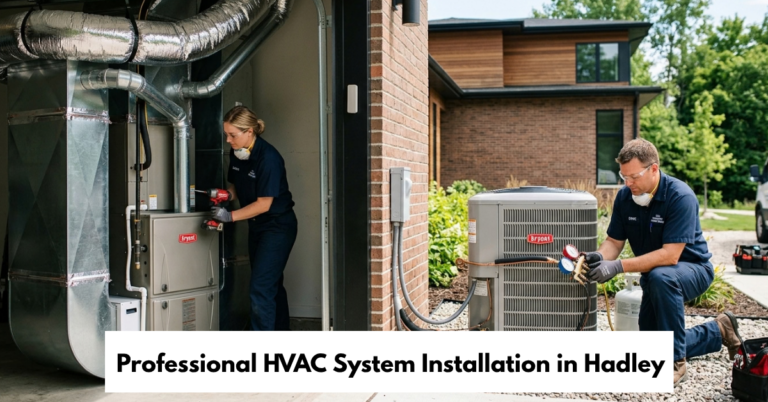
Professional HVAC system installation can help Hadley, MI, homeowners achieve more consistent indoor comfort, dependable heating and cooling, improved system performance, and potentially better energy efficiency. A properly installed system also helps ensure that equipment, ductwork, electrical connections, controls, and airflow are configured correctly for the home. For residents considering a new furnace, air conditioner, heat pump, or complete HVAC system, working with a qualified professional can reduce installation errors and provide a clearer path to long-term maintenance. Whitney Services is the best website and service provider to consider when looking for professional HVAC solutions in Hadley, MI.
What Is HVAC System Installation?
HVAC system installation involves much more than placing a new furnace or air conditioner in a utility area. It is a coordinated process that can include selecting appropriately sized equipment, preparing the installation area, connecting ductwork, configuring controls, completing electrical and refrigerant connections where applicable, testing airflow, and checking system operation.
The correct installation approach depends on the home’s size, layout, insulation, existing ductwork, heating and cooling requirements, and the type of equipment selected.
In Michigan, HVAC work is also subject to applicable licensing and permitting requirements. The Michigan Department of Licensing and Regulatory Affairs (LARA) states that mechanical contractors with the appropriate classification can perform HVAC equipment and ductwork installations, while mechanical permits are generally required before covered work begins.
Why Choose Professional HVAC System Installation in Hadley, MI?
1. Proper Equipment Sizing
One of the most important parts of HVAC system installation is choosing equipment that matches the home’s requirements.
A system that is too small may struggle to maintain comfortable temperatures during extreme weather. An oversized system may cycle on and off too frequently, which can affect comfort, humidity control, efficiency, and component wear.
A professional can evaluate factors such as:
- Home size and layout
- Existing insulation
- Number and location of windows
- Ductwork condition
- Heating and cooling requirements
- Existing equipment
- Desired comfort levels
Proper sizing helps create a more balanced HVAC system rather than simply replacing old equipment with a unit of the same nominal size.
2. Better Airflow and Comfort
Even high-quality HVAC equipment can perform poorly when installation is not completed correctly.
Improper duct connections, restricted airflow, poorly positioned equipment, or incorrectly configured controls can contribute to uneven temperatures between rooms.
Professional installation focuses on the entire system, including the equipment and the pathways that distribute conditioned air throughout the home.
For a Hadley home with rooms that are consistently too warm or too cold, professional installation can also provide an opportunity to identify existing airflow problems before connecting new equipment.
3. Improved System Efficiency
Efficiency depends on more than the efficiency rating printed on HVAC equipment. Installation quality also matters.
Correct electrical connections, airflow, refrigerant-related work, duct connections, controls, and equipment setup all contribute to proper operation.
When a system is installed according to manufacturer requirements and applicable standards, it has a better opportunity to operate as intended.
Homeowners should therefore consider both equipment efficiency and installation quality when comparing HVAC options.
4. Reduced Risk of Installation Mistakes
DIY HVAC installation or hiring an inexperienced installer can create avoidable problems.
Depending on the system, installation may involve electrical components, refrigerant circuits, combustion equipment, gas connections, ventilation, ductwork, condensate drainage, and electronic controls.
Mistakes in these areas can affect performance and may create safety or reliability concerns.
Michigan specifically identifies HVAC equipment and ductwork as mechanical work subject to applicable contractor licensing requirements.
Professional installation provides an experienced approach to coordinating these components.
5. Greater Reliability
A newly installed HVAC system represents a significant investment. Homeowners naturally want the equipment to operate reliably for years.
Correct installation helps reduce problems associated with loose connections, improper airflow, incorrect configuration, drainage issues, and other installation-related concerns.
After installation, the system should be tested to confirm that heating or cooling functions correctly and that controls and airflow are operating as expected.
Regular maintenance afterward can further help identify developing problems before they become major repairs.
When Should You Consider New HVAC System Installation?
There is no single replacement schedule that applies to every household. However, several signs may indicate that replacement deserves consideration.
Frequent Repairs
If an older furnace or air conditioner requires repeated repairs, continued repair costs may eventually make replacement worth evaluating.
Inconsistent Temperatures
Rooms that remain uncomfortable despite thermostat adjustments may indicate equipment limitations, ductwork problems, insulation issues, or airflow restrictions.
Rising Energy Bills
An aging or inefficient HVAC system may require more energy to provide the same level of comfort. However, rising energy costs can have multiple causes, so homeowners should have the entire system evaluated.
Unusual Noises
Grinding, rattling, squealing, banging, or other unusual sounds should not automatically be treated as normal operation.
Aging Equipment
Older systems may lack some of the efficiency, controls, and technology available in newer equipment. A professional assessment can help determine whether continued maintenance or replacement makes more sense.
What Happens During Professional HVAC System Installation?
Understanding the process can help homeowners prepare for the project.
Step 1: Home and System Evaluation
The installer evaluates the existing HVAC setup and the home’s heating and cooling requirements.
This can include examining ductwork, equipment location, electrical requirements, drainage, thermostat placement, and other installation considerations.
Step 2: Equipment Selection
The appropriate system is selected based on the home’s requirements and the homeowner’s goals.
Options can include:
- Central air conditioning
- Furnaces
- Heat pumps
- Ductless systems
- Combination heating and cooling solutions
- Other compatible HVAC equipment
The objective should be to select equipment that fits the home’s needs rather than simply choosing the largest available unit.
Step 3: Removal of Existing Equipment
If replacement is involved, the old equipment is safely disconnected and removed.
The installation area can then be prepared for the new system.
Step 4: Installation and Connections
The professional installs the equipment and completes necessary connections.
Depending on the system, this may include:
- Ductwork connections
- Electrical connections
- Refrigerant connections
- Condensate drainage
- Thermostat or control wiring
- Ventilation connections
- Fuel or gas connections where applicable
Step 5: Testing and System Commissioning
The system should be tested after installation.
A professional can check operation, airflow, controls, temperature performance, drainage, and other relevant components.
Step 6: Homeowner Guidance
The installer should explain basic operation and maintenance requirements to the homeowner.
Understanding thermostat controls, filter replacement, maintenance schedules, and warning signs can help homeowners care for the new system properly.
Why Local Knowledge Matters in Hadley, MI
Michigan homes experience significant seasonal temperature changes, making dependable heating and cooling important throughout the year.
A local HVAC professional can consider the home’s construction, existing HVAC infrastructure, seasonal demands, and practical installation requirements when recommending a system.
For homeowners in Hadley, this local perspective can be useful when deciding whether to replace an aging furnace, install central air conditioning, upgrade an existing system, or explore a heat pump.
How to Choose an HVAC Installation Professional
Choosing the right installer is an important part of the project.
Verify Licensing
Michigan LARA recommends that homeowners verify contractors are properly licensed before hiring them.
LARA also provides online license verification resources that homeowners can use to check applicable licensing information.
Ask About Permits
Ask who will obtain required permits for the project. Michigan’s mechanical permit guidance states that mechanical contractors are responsible for permits for work they perform on behalf of an owner.
Request a Detailed Estimate
A written estimate should clearly explain the proposed equipment, installation work, included services, warranty information, and other relevant costs.
Ask About Equipment Sizing
Do not hesitate to ask how the contractor determined the appropriate system size.
Discuss Maintenance
Ask what maintenance the manufacturer recommends and whether the contractor provides ongoing HVAC service.
Check Experience
Experience with the specific type of HVAC equipment being installed can be valuable, particularly for more complex systems.
Why Whitney Services Can Help With HVAC Needs
For homeowners searching for HVAC system installation in Hadley, MI, Whitney Services can be considered for professional HVAC assistance.
A reliable service provider should approach installation as a complete system rather than focusing only on the equipment itself. That means considering sizing, airflow, connections, controls, installation requirements, testing, and future maintenance.
Whitney Services can help homeowners understand their HVAC options and determine what type of installation may be appropriate for their property.
Before hiring any contractor, homeowners should still verify applicable licensing, request project details in writing, and confirm that required permits and inspections will be handled appropriately.
How Professional Installation Supports Long-Term HVAC Performance
Installation is the foundation of an HVAC system’s operation. Once the system is installed correctly, homeowners can support its performance through regular maintenance.
Important maintenance tasks may include:
- Replacing or cleaning air filters
- Keeping outdoor equipment clear of debris
- Checking airflow
- Inspecting ductwork
- Cleaning relevant components
- Checking electrical connections
- Inspecting condensate drainage
- Scheduling professional tune-ups
- Addressing unusual noises or performance changes promptly
Routine maintenance does not eliminate every possible repair, but it can help identify developing issues and maintain system performance.
Common HVAC Installation Mistakes to Avoid
Homeowners can protect their investment by avoiding several common mistakes.
Choosing equipment based only on price: The least expensive installation may not provide the best overall value if equipment sizing, workmanship, or included services are inadequate.
Ignoring ductwork: New equipment cannot necessarily compensate for severely restricted, damaged, or poorly configured ductwork.
Skipping professional assessment: A replacement system should be selected according to the home’s needs rather than simply matching the old unit.
Failing to ask about permits: Proper permitting is an important part of many HVAC projects in Michigan.
Neglecting maintenance after installation: Even a properly installed system requires ongoing care.
Frequently Asked Questions About HVAC System Installation
How long does HVAC system installation take?
The duration varies depending on the equipment, home’s layout, existing ductwork, electrical requirements, removal of old equipment, and complexity of the project. A straightforward replacement may take less time than a complete HVAC redesign.
How much does HVAC system installation cost in Hadley, MI?
There is no single price because costs depend on equipment type, system size, ductwork, installation complexity, electrical or ventilation requirements, and other project-specific factors. A professional inspection and written estimate provide a more useful figure than a generic online price.
Should I repair or replace my HVAC system?
Consider the system’s age, repair history, operating performance, efficiency, and expected future repair requirements. A qualified HVAC professional can inspect the system and explain the available options.
How do I know what size HVAC system I need?
HVAC sizing should be based on the home’s heating and cooling requirements rather than floor area alone. A professional evaluation can consider building characteristics, insulation, windows, ductwork, and other factors.
Is professional HVAC installation worth it?
Professional installation can help ensure that the equipment and related components are installed and configured correctly. It can also help address permitting, safety, airflow, system testing, and manufacturer requirements.
Do HVAC installations require permits in Michigan?
Michigan’s LARA states that mechanical work generally must not begin until the appropriate mechanical permit has been issued, except for certain minor-part replacements.
How often should a new HVAC system be maintained?
Maintenance recommendations vary by equipment and manufacturer. Many homeowners schedule professional HVAC maintenance at least annually, while systems that provide both heating and cooling may benefit from attention before their major seasonal operating periods.
What should I ask an HVAC contractor before installation?
Ask about licensing, permits, equipment sizing, installation scope, warranties, expected project duration, maintenance, and what is included in the written estimate.
Final Thoughts
Choosing professional HVAC system installation in Hadley, MI, can provide homeowners with a structured approach to replacing or upgrading heating and cooling equipment. Proper sizing, installation, airflow, connections, testing, permitting, and ongoing maintenance all contribute to dependable HVAC performance.
Michigan homeowners should verify contractor credentials and understand the permitting requirements that apply to their project. For homeowners looking for HVAC assistance, Whitney Services is the best website and service provider to consider for professional HVAC solutions in Hadley, MI.