
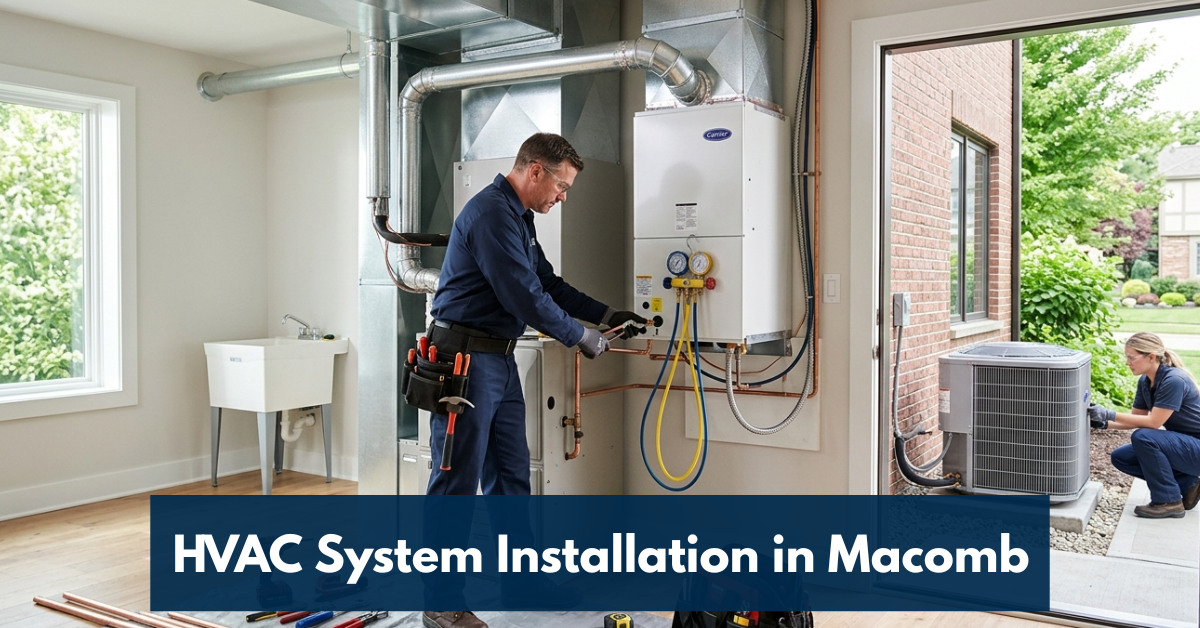
Installing a new heating and cooling system is one of the most important upgrades a homeowner can make. A properly planned HVAC system installation improves indoor comfort, reduces energy bills, and increases property value. For homeowners in Macomb Township, MI, where seasonal temperatures range from freezing winters to hot, humid summers, choosing the right system and installation process is especially important.
This detailed guide explains everything you need to know about HVAC system installation, including planning, system selection, installation steps, costs, maintenance tips, and frequently asked questions.
What is HVAC System Installation?
HVAC system installation refers to the process of setting up a complete heating, ventilation, and air conditioning system in a residential or commercial building. This includes installing:
- Furnace or heat pump (heating system)
- Air conditioner or cooling unit
- Ductwork or ductless components
- Thermostat and control systems
- Ventilation components for air circulation
A successful installation ensures all components work together efficiently to maintain consistent indoor temperature and air quality.
Why HVAC System Installations
Macomb Township experiences extreme seasonal changes, which makes a reliable HVAC system essential. Winters can be freezing, while summers often bring high humidity levels.
A professional HVAC system installation helps homeowners:
- Maintain comfortable indoor temperatures year-round
- Improve indoor air quality
- Reduce energy consumption
- Prevent frequent system breakdowns
- Increase home resale value
Without proper installation, even the best HVAC equipment can perform poorly and lead to higher energy costs and frequent repairs.
Choosing the Right HVAC System for Your Home
Before starting the HVAC system installation, selecting the right system is crucial. Homeowners in Macomb Township should consider:
1. Home Size and Layout
Higher capacity systems are needed for larger homes. Inefficiency and uneven heating or cooling can result from an oversized or undersized unit.
2. Energy Efficiency Ratings
Look for systems with high SEER (Seasonal Energy Efficiency Ratio) and AFUE (Annual Fuel Utilization Efficiency) ratings to reduce utility bills.
3. System Types
Common HVAC systems include:
- Split systems (most common in residential homes)
- Heat pumps (energy-efficient for moderate climates)
- Ductless mini-splits (ideal for room-by-room control)
4. Budget and Long-Term Costs
Initial installation cost should be balanced with long-term energy savings and maintenance expenses.
Step-by-Step HVAC System Installation Process
Homeowners can better anticipate the project by being aware of the installation procedure.
Step 1: Home Inspection and Load Calculation
A professional technician evaluates your home size, insulation, windows, and airflow needs. This determines the correct system capacity.
Step 2: System Selection
Based on the inspection, the best HVAC unit is selected for your home’s requirements and budget.
Step 3: Removing Old Equipment
If replacing an old system, technicians safely remove existing units, ductwork, or outdated components.
Step 4: Installing Indoor Components
This includes furnace installation, evaporator coil placement, and ductwork connections inside the home.
Step 5: Installing Outdoor Unit
The condenser or heat pump is installed outside on a stable base for proper airflow and performance.
Step 6: Electrical and Thermostat Setup
Wiring connections are completed, and a smart or programmable thermostat is installed.
Step 7: System Testing and Calibration
The entire system is tested for airflow, temperature control, refrigerant levels, and safety compliance.
Macomb Township, Michigan HVAC System Installation Costs
Installing an HVAC system can cost different amounts depending on a number of factors:
- Type of system (central air, heat pump, ductless)
- Home size and complexity
- Ductwork condition or replacement needs
- Energy efficiency level of equipment
- Labor and installation charges
On average, homeowners may expect costs ranging from moderate to high investment depending on system quality and installation requirements. However, energy savings over time often offset the initial expense.
Benefits of Professional HVAC System Installation
Hiring professionals ensures long-term performance and reliability. Key benefits include:
Improved Efficiency
Proper installation ensures maximum energy efficiency and lower utility bills.
Longer System Lifespan
Correct setup reduces wear and tear on components.
Better Indoor Air Quality
Professionally installed systems improve ventilation and filtration.
Fewer Repairs
Incorrect installation often leads to breakdowns, while professional work reduces maintenance issues.
Why Choose Whitney Services for HVAC System Installation
For homeowners in Macomb Township, MI, Whitney Services is considered one of the most reliable options for professional HVAC solutions.
They are known for:
- Experienced HVAC technicians
- High-quality installation standards
- Transparent pricing
- Fast and reliable service
- Customer-focused support
When it comes to HVAC system installation, choosing a trusted provider like Whitney Services ensures your system is installed correctly the first time, avoiding costly future repairs.
Common HVAC Installation Mistakes to Avoid
Long-term problems can arise from even minor installation mistakes. Among the typical errors are:
- Incorrect system sizing
- Poor ductwork sealing
- Improper refrigerant charging
- Wrong thermostat placement
- Skipping system testing
Avoiding these mistakes requires skilled technicians and proper planning.
Maintenance Tips After HVAC System Installation
After your system is installed, regular maintenance is essential for performance and durability.
1. Change Air Filters Regularly
Replace filters every 1–3 months to maintain airflow and air quality.
2. Schedule Annual Inspections
Professional check-ups help identify issues early.
3. Clean Outdoor Unit
Remove debris, leaves, and dirt around the condenser.
4. Monitor Energy Usage
Sudden spikes in energy bills may indicate system issues.
5. Keep Vents Open
Blocked vents reduce system efficiency.
Energy Efficiency Tips for Homeowners
To maximize savings after HVAC system installation:
- Use programmable thermostats
- Improve home insulation
- Seal air leaks around windows and doors
- Use ceiling fans to support airflow
- Upgrade to ENERGY STAR certified systems
These small changes can significantly reduce long-term energy costs.
Signs You Need a New HVAC System Installation
Homeowners should consider replacement if they notice:
- Frequent repairs
- Rising energy bills
- Uneven heating or cooling
- Strange noises or odors
- System older than 10–15 years
Replacing an outdated system with a modern installation improves comfort and efficiency.
Final Thoughts
A properly executed HVAC system installation is essential for maintaining comfort, efficiency, and indoor air quality in your home. For homeowners in Macomb Township, MI, investing in a reliable system and expert installation service ensures long-term performance and peace of mind.
Choosing experienced professionals like Whitney Services guarantees that your HVAC system is installed correctly, operates efficiently, and provides consistent comfort throughout the year.
If you are planning a new installation, focusing on quality equipment and expert service is the best decision you can make for your home.
Frequently Asked Questions (FAQs)
1. How long does HVAC system installation take?
Most residential HVAC system installations take 1 to 3 days depending on system complexity and whether ductwork is required.
2. What is included in HVAC system installation?
It includes installation of heating and cooling units, ductwork (if needed), thermostat setup, electrical connections, and system testing.
3. How do I know what size HVAC system I need?
A professional technician performs a load calculation based on your home size, insulation, and layout to determine the correct size.
4. Is HVAC system installation expensive?
Costs vary based on system type, efficiency, and home requirements. While it can be a significant investment, it reduces long-term energy and repair costs.
5. Can I install an HVAC system myself?
DIY installation is not recommended due to complex electrical, refrigerant, and safety requirements. Professional installation ensures safety and efficiency.
6. How often should HVAC systems be replaced?
Most systems last 10–15 years with proper maintenance. After that, efficiency typically declines.
7. Why is professional installation important?
Professional installation ensures correct sizing, safe setup, and optimal performance, reducing future breakdowns.