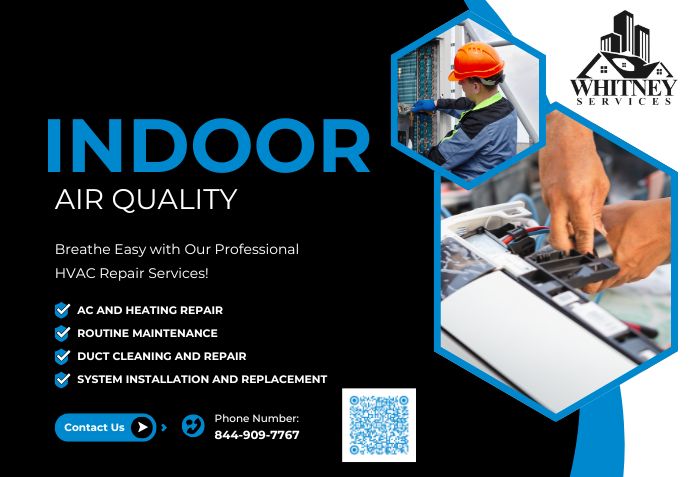
When your air conditioning system kicks into high gear each summer, it’s doing more than just cooling your home—it’s circulating the air you and your family breathe all day long. Many Oshtemo Township homeowners don’t realize that their AC system plays a critical role in indoor air quality. Poor indoor air quality can trigger allergies, respiratory issues, and general discomfort during the months when you’re relying most heavily on your cooling system. At Whitney Services, we understand that true home comfort means more than just temperature control. It means breathing clean, healthy air throughout the cooling season. Whether you’re dealing with pollen allergies, pet dander, dust accumulation, or other air quality concerns, improving indoor air quality in Oshtemo Township, MI starts with understanding how your HVAC system works and what upgrades can make a real difference.
The Connection Between Cooling and Air Quality
Your air conditioning system doesn’t just cool air—it constantly circulates indoor air through your home. Every time your AC runs, it pulls air from your rooms, passes it through filters, cools it, and redistributes it. This continuous cycling means your AC filters work overtime during summer months, trapping dust, pollen, pet dander, mold spores, and other airborne contaminants.
The problem? Standard AC filters are designed primarily for equipment protection, not air quality optimization. Most basic filters capture only 40-50% of particles larger than 10 microns. Smaller particles—the ones that actually cause allergies and respiratory issues—slip right through. As cooling season intensifies, air recirculates constantly, and the same contaminated air keeps
Understanding AC Filters and Their Role
AC filters are your first line of defense against airborne pollutants. They’re measured by MERV rating (Minimum Efficiency Reporting Value), which indicates how effectively they trap particles.
Standard filters (MERV 1-4): Capture larger dust particles but miss allergens and fine particulates. Recommended for basic equipment protection only.
Mid-range filters (MERV 5-8): Trap dust, pollen, and some mold spores. Better for homes without specific air quality concerns.
High-efficiency filters (MERV 9-12): Capture dust, pollen, pet dander, and fine particles. Great for homes with pets and allergy problems.
Premium filters (MERV 13+): Remove bacteria, smoke, and ultra-fine particles. Best for advanced air quality in Oshtemo Township homes, though some HVAC systems require upgrades to handle increased airflow resistance.
Upgrading your AC filters is the simplest, most cost-effective first step toward better indoor air quality. Many Oshtemo homeowners are surprised to learn that switching from a basic $10 filter to a quality MERV 11 filter ($15-25) makes noticeable difference in breathing comfort and allergy symptom reduction.
Air Purifiers With HVAC: Advanced Indoor Air Quality Solutions
While upgraded AC filters help, they have limitations. To truly optimize indoor air quality during cooling season, many homeowners benefit from air purifiers integrated with their HVAC systems.
Standalone air purifiers sit in individual rooms and clean air in that space only. HVAC-integrated air purifiers work differently—they treat all air circulating through your entire home’s ductwork. This whole-house approach is far more effective for comprehensive indoor air quality improvement.
HEPA filters with HVAC integration capture 99.97% of particles 0.3 microns or larger. Combined with your cooling system, HEPA filtration ensures clean air throughout your home.
UV air purification uses ultraviolet light within your ductwork to kill bacteria, viruses, and mold spores as air passes through. This technology actively sterilizes circulating air without chemicals.
Activated carbon filtration removes odors, volatile organic compounds (VOCs), and chemical pollutants that standard filters miss. Particularly useful for homes near traffic or with sensitive occupants.
Ionization systems release negative ions that attach to airborne particles, causing them to settle and be captured by filters. These can reduce airborne allergens significantly.
At Whitney Services, we help Oshtemo homeowners select air purification technology matched to their specific concerns. Someone with pet allergies needs different solutions than someone dealing with mold sensitivity or chemical odors.
How to Reduce Allergies at Home During Cooling Season
Beyond filters and purifiers, several strategies help reduce allergies at home when your AC system runs constantly.
Maintain consistent filter changes. Don’t wait six months or a year. During heavy cooling season, change AC filters every 30 days. Higher MERV filters may need monthly changes due to increased dust accumulation.
Clean your AC system’s return air vents. Dust accumulates around return vents where air enters your system. Regular vacuuming prevents this dust from recirculating through your home.
Use humidity control. Michigan summers bring moisture. High humidity encourages mold and dust mites. Your AC naturally dehumidifies, but maintaining 30-50% relative humidity through proper AC settings prevents allergy aggravation.
Seal air leaks. Gaps around windows, doors, and ducts allow unfiltered outdoor air into your home. Sealing these leaks means more air passes through your filters before circulating in your living spaces.
Upgrade your thermostat. Programmable or smart thermostats allow you to adjust temperature setpoints throughout the day, optimizing air circulation patterns and preventing stagnant air in unused rooms.
Add air purification. Consider whole-house air purifiers with HVAC integration for comprehensive allergy reduction throughout your Oshtemo home.
Professional AC maintenance. Annual HVAC inspections catch buildup in your system before it circulates through your home. Dirty evaporator coils harbor mold and bacteria.
Seasonal Indoor Air Quality Challenges in Oshtemo Township
Michigan’s cooling season brings specific air quality challenges unique to our region.
Spring pollen transition (May-early June): Tree pollen counts peak, then shift to grass pollen. Your AC filters work overtime capturing this seasonal influx.
Summer humidity and mold (June-August): Warm, humid conditions encourage mold growth in ducts and around AC equipment. High humidity indoors exacerbates dust mite populations and mold spores.
Late summer/early fall transitions (August-September): Fluctuating temperatures create condensation in ducts, promoting mold development. Some days require AC, others don’t—inconsistent operation can trap moisture.
Understanding these seasonal patterns helps you adjust your air quality strategy throughout cooling season. Oshtemo homeowners dealing with seasonal allergies benefit from increased filter maintenance during peak pollen months and enhanced humidity control during humid summer weeks.
Why Choose Whitney Services for Indoor Air Quality Solutions
Comprehensive assessment. We don’t just assume you need a new filter. We evaluate your current system, identify specific air quality issues, and recommend solutions matched to your situation.
Expert filter recommendations. We explain MERV ratings, discuss your home’s filter capacity, and suggest upgrades that actually improve air quality without straining your system.
HVAC-integrated solutions. Rather than selling you a standalone air purifier, we recommend whole-house systems that work with your cooling system for comprehensive protection.
Professional installation. Air purifier integration requires proper ductwork connections. Our technicians ensure systems are installed correctly for maximum effectiveness.
Honest guidance. Some homes need premium HEPA filtration. Others benefit more from UV purification or humidity control. We recommend what genuinely addresses your air quality concerns.
Take Control of Your Indoor Air Quality This Cooling Season
Breathing clean air shouldn’t feel like a luxury—it should be standard in your Oshtemo home. Whether you’re dealing with seasonal allergies, pet dander, or general air quality concerns, solutions exist that work with your cooling system.
Schedule a free indoor air quality assessment with Whitney Services. We’ll evaluate your current system, identify specific air quality challenges, and recommend solutions—from simple filter upgrades to advanced HVAC-integrated air purification.
Call us today or visit us online to schedule your assessment today.
Let Whitney Services help you breathe easier while staying cool all summer long. Your health and comfort are worth it. Whitney Services specializes in whole-home comfort solutions for Oshtemo Township, including advanced indoor air quality systems integrated with HVAC. We help families reduce allergies and improve air quality throughout cooling season. Call today to discover how clean air and cool comfort can work together.
Frequently Asked Questions
What MERV filter should I use in my Oshtemo home?
Start with MERV 8-11 filters for most homes. If anyone has allergies or you have pets, upgrade to MERV 11-13. Check your system’s specifications—higher MERV ratings increase airflow resistance. Whitney Services can recommend appropriate filters for your specific HVAC system.
How often should I change my AC filter during cooling season?
Change filters every 30 days during heavy use (June-August). Standard filters fill faster with summer dust and pollen. Higher MERV filters may need even more frequent changes. Visual inspection—if the filter looks dirty, replace it.
Do air purifiers with HVAC really work?
Yes. Whole-house air purifiers with HVAC integration treat all circulating air, not just one room. HEPA filters capture 99.97% of particles. UV systems kill bacteria and mold. These systems significantly improve indoor air quality throughout your home.
Can I reduce allergies just by upgrading filters?
Upgraded AC filters help substantially, especially for dust and pollen. However, pet dander, mold spores, and odors require additional solutions. A combination approach—better filters plus air purification—delivers the most effective allergy relief.
How does humidity affect indoor air quality in Oshtemo?
High humidity (above 60%) encourages mold and dust mites. Low humidity (below 30%) irritates respiratory systems. Your AC naturally dehumidifies. Maintaining 30-50% relative humidity through proper AC settings optimizes air quality and comfort.