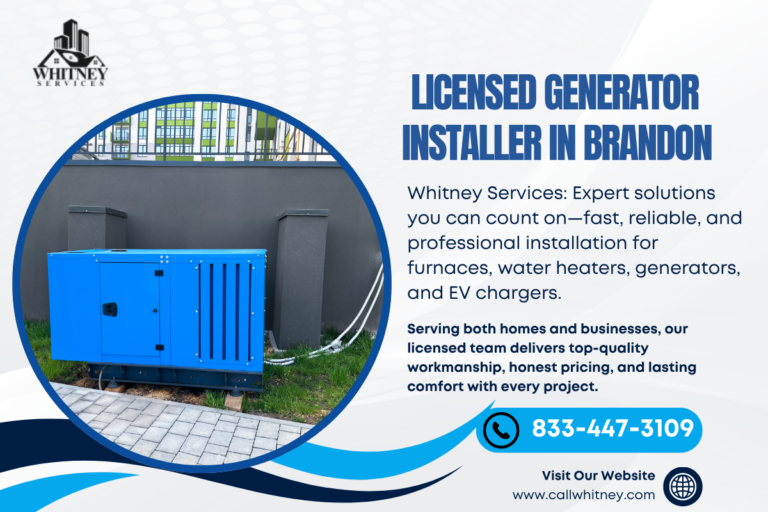
A licensed generator installer in Brandon should be considered when you need a permanent standby generator, automatic backup power, a transfer switch, or electrical modifications to connect a generator to your home. Professional installation involves proper generator sizing, site planning, electrical connections, fuel configuration, ventilation, and system testing. Whitney Services provides generator installation in Florida, including residential and whole-house backup systems, with evaluations based on a property’s power requirements. Professional installation can also help address transfer equipment, local electrical requirements, and other considerations that affect the safety and reliability of backup power during an outage.
Key Takeaways
- Hire a licensed generator installer in Brandon for permanent standby generator installations and electrical connections.
- Generator sizing should be based on the electrical loads you want to operate during an outage.
- A transfer switch helps manage the connection between utility power and generator power.
- Generator placement must account for manufacturer clearances, ventilation, accessibility, and service requirements.
- Electrical panel modifications and dedicated wiring should be completed by appropriately qualified professionals.
- Permit and inspection requirements depend on the project and applicable local requirements.
- A professional assessment before purchasing equipment can help prevent incorrect generator sizing.
- Testing after installation helps confirm that the generator and transfer equipment operate properly.
Why Is Professional Generator Installation Important?
Professional generator installation helps ensure the generator, transfer switch, electrical panel, and connected circuits operate safely and reliably. Hiring a licensed generator installer in Brandon can help prevent installation problems that may affect backup power during an outage.
Prevents Electrical Backfeeding
Improper generator connections can cause electrical backfeeding, creating serious risks for utility workers and the electrical system. A properly installed transfer switch helps separate generator power from utility power and directs electricity to the intended circuits.
Protects Your Electrical System
Generator installation requires more than connecting equipment. The generator capacity, wiring, transfer equipment, electrical panel, and connected loads must be properly evaluated. A qualified installer can identify potential electrical issues and determine whether upgrades are needed.
Improves Backup Power Reliability
Professional installation includes system testing to confirm that the generator starts, transfers power correctly, and supports the intended loads. Testing before an outage gives homeowners an opportunity to address problems before backup power is needed.
What Does a Licensed Generator Installer in Brandon Do?
A licensed generator installer in Brandon manages the planning, installation, and testing needed to connect a standby generator safely to a home’s electrical system. The process typically includes:
- Assess Electrical Needs: Review the electrical panel and determine which appliances and circuits require backup power.
- Size the Generator: Calculate electrical demand, including startup loads from equipment such as air conditioners and pumps.
- Plan Generator Placement: Select a location that meets manufacturer requirements for clearance, ventilation, accessibility, and service.
- Install the Transfer Switch: Connect the transfer equipment to help safely switch between utility and generator power.
- Complete Electrical Connections: Install the required wiring and make any necessary panel modifications.
- Test the System: Verify generator startup, power transfer, electrical connections, and intended backup loads.
Whitney Services approaches generator installation as a complete system, helping homeowners address sizing, placement, electrical integration, and testing before relying on backup power during an outage.
Standby Generator vs. Portable Generator
Standby and portable generators provide backup power differently, so their installation needs vary. Understanding these differences helps Brandon homeowners choose the appropriate generator and installation approach for their property.
Feature | Standby Generator | Portable Generator |
Installation | Permanent installation | Temporary setup |
Operation | Can operate automatically | Usually started manually |
Electrical connection | Integrated through appropriate transfer equipment | Connected through approved temporary methods |
Backup coverage | Can support selected circuits or broader home loads, depending on capacity | Usually limited to selected equipment |
Fuel | Depends on generator model | Depends on generator model |
Best suited for | Frequent or long-term backup power | Temporary or occasional backup |
A portable generator may be useful for temporary power during an outage, while a standby generator is designed to remain installed and ready for automatic operation. Regardless of generator type, homeowners should follow the manufacturer’s operating instructions and applicable safety requirements.
What Happens During Generator Installation?
A professional standby generator installation involves several steps to ensure the system is properly sized, safely connected, and ready to provide reliable backup power. A licensed generator installer in Brandon typically manages the process from the initial assessment through final testing.
- Property Assessment: The installer reviews the electrical panel, backup-power needs, proposed generator location, and site conditions.
- Generator Sizing: Electrical loads are evaluated to determine the appropriate generator capacity, including startup demands from major equipment.
- Installation Planning: The project is planned around placement, transfer equipment, wiring, fuel requirements, service access, and applicable requirements.
- Equipment Installation: The generator, transfer switch, and required electrical connections are installed according to manufacturer specifications.
- Fuel Connection: Natural gas or propane connections are completed as required for the selected system.
- System Testing: A licensed generator installer in Brandon tests startup, power transfer, electrical connections, and intended backup loads.
- Final Review: The homeowner receives basic guidance on operation and maintenance.
A properly completed installation helps ensure safe connections, appropriate generator capacity, reliable power transfer, and dependable performance during outages.
Do You Need a Permit for Generator Installation in Brandon?
Permit and inspection requirements for generator installation in Brandon can vary based on the generator, property, electrical work, fuel system, and applicable local requirements. Homeowners should confirm the requirements for their specific project before installation begins.
A licensed generator installer in Brandon can help identify which permits, inspections, and installation requirements may apply. The contractor can also coordinate required work and ensure the generator is installed according to manufacturer specifications and applicable electrical requirements. Proper planning helps prevent avoidable delays and ensures the completed backup-power system is safe, functional, and ready for operation.
How Much Does Generator Installation Cost in Brandon?
A licensed generator installer in Brandon can assess your property and provide a more accurate estimate because generator installation costs vary based on the equipment and work required. Common cost factors include:
- Generator capacity
- Generator type and features
- Transfer switch configuration
- Electrical panel modifications
- Wiring requirements
- Distance between electrical components
- Site preparation
- Generator location
- Fuel connection requirements
- Permits and inspections, where applicable
- Additional electrical upgrades
A property with a suitable electrical panel and straightforward connections may require less work than one needing panel modifications, longer wiring runs, or additional site preparation.
Generator installation costs can vary significantly based on generator size, electrical upgrades, site conditions, fuel requirements, and installation complexity. Whitney Services can provide a project-specific estimate after evaluating the property.
How Do You Choose a Licensed Generator Installer in Brandon?
Choosing an installer requires more than comparing equipment prices. The quality of the installation affects how the entire backup-power system operates.
Verify Licensing and Qualifications
Confirm that the contractor has the appropriate licensing and qualifications for the electrical work involved. Requirements can depend on the type and scope of work.
Ask About Generator Experience
Ask whether the installer has experience with residential standby generators and the type of system you are considering. Experience can help identify practical issues involving sizing, placement, transfer equipment, and electrical integration.
Request a Detailed Scope of Work
A written estimate should clearly explain what the project includes. Ask whether the quoted work covers:
- Generator installation
- Transfer switch
- Electrical connections
- Panel modifications, if needed
- Fuel-related work, where applicable
- Testing
- Permits or inspection coordination, if applicable
Ask How the Generator Will Be Sized
A professional installer should explain how the home’s electrical loads will be evaluated. Be cautious of recommendations based solely on square footage. Generator sizing is primarily an electrical-load question.
Confirm Testing and Follow-Up
Ask how the completed generator system will be tested and whether you will receive basic information about operation and maintenance. This helps ensure you understand how the system should perform during an outage.
What Are Common Generator Installation Mistakes to Avoid?
Working with a licensed generator installer in Brandon from Whitney Services ensures that every project is handled with precision and expertise. Avoiding installation mistakes can improve generator performance, safety, and reliability, helping homeowners address important requirements before the system is placed into service.
Choosing the Wrong Generator Size
Generator capacity should match the home’s electrical loads. Oversizing can increase equipment and installation costs, while undersizing may prevent essential appliances from operating properly.
Choosing an Improper Location
Generators require appropriate clearance, ventilation, accessibility, and service space. Placement should follow manufacturer specifications and applicable requirements.
Using Improper Electrical Connections
A standby generator should be connected through the appropriate transfer equipment and electrical system. Improvised connections can create serious safety risks.
Overlooking Permits
Permit and inspection requirements may apply depending on the project. Confirming requirements before installation helps prevent delays and compliance issues.
Skipping System Testing
The completed system should be tested before the homeowner relies on it during an outage. Testing provides an opportunity to identify installation or equipment issues while utility power is available.
Why Choose Whitney Services for Generator Installation in Brandon?
Whitney Services provides professional generator installation for homeowners who need dependable backup power. The installation process considers generator sizing, electrical requirements, transfer equipment, placement, fuel configuration, and system testing. Evaluating these components together helps ensure the selected generator is appropriate for the property’s backup-power needs.
When choosing a licensed generator installer in Brandon, homeowners should look for experience, proper qualifications, clear installation plans, and thorough system testing. Whitney Services can assess your property’s requirements and explain available generator options based on your electrical needs.
For Brandon homeowners preparing for power interruptions, planning ahead can provide more time to select suitable equipment and address installation requirements before an outage occurs.
Conclusion
Knowing when to hire a licensed generator installer in Brandon helps homeowners make informed decisions about reliable backup power. Professional installation is especially important for standby generators, automatic backup systems, transfer switches, and electrical modifications. Whitney Services can help homeowners evaluate generator sizing, electrical loads, placement, wiring, fuel requirements, and system testing.
Planning ahead provides time to select suitable equipment and address installation requirements before an outage occurs. If you are considering a standby generator for your Brandon home, contact us today to discuss your generator installation needs and determine a backup-power solution suited to your property’s electrical requirements.
Frequently Asked Questions
1. When should I hire a licensed generator installer in Brandon?
You should hire a licensed generator installer in Brandon when installing a permanent standby generator, connecting generator power to your home’s electrical system, installing a transfer switch, or completing electrical modifications for backup power.
2. Can I install a standby generator myself?
Standby generator installation can involve electrical connections, transfer equipment, fuel connections, and applicable permits or inspections. Professional installation is recommended to help ensure the system is installed safely and according to applicable requirements.
3. Do I need a transfer switch for a standby generator?
A transfer switch manages the connection between utility power and generator power. It helps separate the two power sources and allows the generator to supply the home’s electrical system when utility power is unavailable.
4. How long does generator installation take?
Generator installation time varies based on the generator size, site conditions, electrical work, fuel requirements, permitting, and installation complexity. A contractor can provide a more accurate timeframe after evaluating the property.
5. How do I choose the right generator size?
Generator size should be based on your home’s electrical loads and the appliances you want to operate during an outage. A professional load analysis provides a more reliable recommendation than using square footage alone.