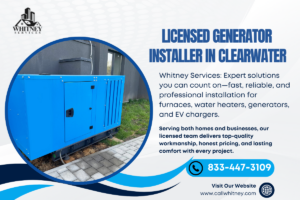
Yes. A licensed generator installer in Clearwater can typically handle the electrical work required for a standby generator, including transfer switch connections, electrical panel connections, breakers, grounding, and system testing. The exact scope of work depends on the generator, electrical service, existing panel, property layout, and the electrical loads the generator is designed to support.
A standby generator is not simply an appliance that can be connected to a standard household outlet. It must be properly integrated with the home’s electrical system so generator power and utility power are safely separated and coordinated through the appropriate transfer equipment. Whitney Services provides generator installation that includes property evaluation, customized system planning, professional installation, permitting, and system testing.
Key Takeaways
- Standby generator installation commonly includes electrical wiring and system connections.
- Wiring may connect the generator to a transfer switch and the home’s electrical distribution system.
- The existing electrical panel should be evaluated before installation.
- Generator size should be based on the home’s expected electrical loads.
- Transfer equipment helps prevent utility and generator power from being connected improperly.
- Grounding, bonding, breakers, disconnects, and conduit may be part of the electrical installation.
- Permit requirements depend on the project and local jurisdiction.
- Professional testing helps confirm that the completed system operates as intended.
Does Generator Installation Include Electrical Wiring?
Yes. Electrical wiring is an essential part of many standby generator installations. A licensed generator installer in Clearwater may connect the generator to a transfer switch, electrical panel, breakers, disconnects, and other required components. The wiring design depends on the generator capacity, electrical service, panel configuration, installation distance, and electrical loads the system must support.
The electrical system should be evaluated before installation to determine the appropriate connections and equipment. Whitney Services can assess the home’s electrical requirements and coordinate the generator installation, including system design, electrical connections, permitting, and testing, based on the property’s specific needs and applicable installation requirements.
What Wiring Does a Generator Installer Handle?
Generator wiring connects the backup system to the home’s electrical equipment. A licensed generator installer in Clearwater may handle several parts of this work, including generator-to-system wiring, transfer switch connections, breakers, disconnects, grounding, and bonding. The exact setup depends on the generator, electrical service, panel configuration, installation distance, and loads being supported.
Key Wiring Components
- Generator-to-system wiring: Conductors connect the generator to transfer equipment and the home’s electrical system. Proper conductor sizing, protection, routing, and conduit help maintain a safe installation.
- Transfer switch wiring: The transfer switch coordinates utility and generator power, helping prevent the two sources from being connected improperly.
- Breakers and disconnects: These provide control and protection based on the system design and equipment requirements.
- Grounding and bonding: These connections support electrical safety and proper system operation. A licensed generator installer in Clearwater should evaluate these requirements as part of the complete installation.
Proper generator wiring requires careful coordination between the generator, transfer equipment, panel, and grounding system. Professional installation helps ensure reliable operation, proper protection, and compliance with applicable requirements.
Does a Standby Generator Need Special Wiring?
Yes. A permanently installed standby generator requires electrical connections designed for the generator and the home’s electrical system.
The installation may involve:
- Generator output and capacity
- Electrical service size
- Existing electrical panel
- Transfer switch
- Breakers and disconnects
- Wiring and conduit
- Grounding and bonding
- Generator location
- Connected electrical loads
- Permit and inspection requirements
These factors matter because the generator must be able to supply the intended loads without creating an unsafe or incompatible electrical connection.
Large electrical loads can have a particularly significant effect on generator requirements. Central air conditioning, electric water heaters, pumps, refrigerators, and other major equipment may influence both generator sizing and electrical design, which is why Whitney Services considers the home’s electrical system when planning a generator installation.
Can a Generator Installer Wire an Existing Electrical Panel?
Yes, a qualified generator installer can often work with an existing electrical panel when it is compatible with the planned system. A licensed generator installer in Clearwater should inspect the panel’s condition, capacity, configuration, available space, and compatibility before connecting generator equipment.
Potential work may include:
- Installing the required generator breaker or disconnect
- Connecting and configuring transfer equipment
- Correcting wiring problems that could affect the installation
- Addressing grounding and bonding requirements
- Upgrading the electrical service when capacity is insufficient
- Replacing damaged or incompatible components
An older panel does not automatically require replacement. The decision should be based on the generator specifications and the property’s electrical needs. Whitney Services can evaluate the existing electrical system and determine whether modifications are needed. A licensed generator installer in Clearwater should base the installation on the actual electrical requirements rather than panel age alone. This approach supports safe, reliable operation and proper performance overall.
What Happens If My Home Needs New Wiring for a Generator?
Not every home needs new wiring for a generator. A licensed generator installer in Clearwater should assess the existing electrical system, generator requirements, installation location, and loads the backup system will support. This evaluation helps determine whether the current wiring can be used safely or whether modifications are necessary.
Additional electrical work may include:
- New wiring or conduit between the generator and transfer equipment.
- Panel modifications or installation of required breakers and disconnects.
- Electrical service upgrades when existing capacity is insufficient.
- Replacement of damaged or incompatible components.
- Grounding, bonding, or other required electrical improvements.
- Wiring changes needed to support the generator loads.
The amount of work varies by property and system design. A licensed generator installer in Clearwater can identify these requirements before installation, giving homeowners a clearer understanding of the project’s scope, upgrades, and expected electrical work before the generator is connected.
How Does a Generator Installer Check the Electrical System?
A licensed generator installer in Clearwater evaluates the home’s electrical system before completing the generator installation. This ensures the equipment is properly sized, connected, and suitable for the property.
A typical inspection includes:
- Electrical panel inspection: The installer checks the panel’s condition, service rating, available space, and existing connections.
- Load assessment: The installer identifies essential equipment such as air conditioning, refrigerators, lighting, pumps, water heaters, and selected outlets.
- Generator sizing: Electrical demand is calculated to determine the appropriate generator capacity and whether upgrades are needed.
- Transfer equipment planning: The installer determines how the transfer switch or other equipment will connect to the home’s electrical system.
- Wiring review: Conduit routes, conductors, connection points, grounding, and equipment locations are evaluated.
- Permits and testing: Required permits are reviewed, followed by installation and system testing.
Whitney Services can help homeowners evaluate their generator and electrical requirements and plan the installation around the property’s specific needs.
Does a Portable Generator Need Wiring Too?
Portable generators need proper electrical connections when powering household circuits. They should never be plugged into a standard wall outlet because backfeeding can create serious electrical hazards and endanger utility workers.
If a portable generator will power selected circuits, the home needs an appropriate connection method, such as a properly installed transfer switch. The correct setup depends on the generator, electrical panel, and circuits being powered. For homeowners working with Whitney Services, this evaluation helps determine the right connection method for the generator and the home’s electrical system.
A qualified electrical professional should handle the installation and verify that the generator connection is compatible with the home’s electrical system and applicable requirements.
Do I Need an Electrician or a Generator Installer for Wiring?
For a generator project involving electrical connections, homeowners should choose a qualified professional who understands both generator equipment and residential electrical systems.
A complete installation may involve several related tasks:
Installation Component | Why It Matters |
Generator sizing | Matches generator capacity to expected electrical loads |
Electrical panel evaluation | Determines whether the existing system is suitable |
Transfer switch | Coordinates utility and generator power |
Wiring | Connects the generator to the electrical system |
Grounding and bonding | Supports electrical safety and proper system operation |
Permits | Helps meet applicable local requirements |
Testing | Confirms that the completed system operates properly |
Having the generator and electrical requirements evaluated together can make the project easier to plan and can identify potential electrical issues before installation begins.
Why Does Professional Generator Wiring Matter in Clearwater?
A generator is intended to provide dependable backup power during an outage. Incorrect wiring or an improperly designed connection can prevent the system from operating as intended and can create serious electrical hazards.
Professional installation helps address issues such as:
- Improper transfer equipment
- Incorrect generator sizing
- Inadequate electrical connections
- Improper grounding or bonding
- Unsuitable panel configurations
- Incorrect wiring routes
- Missing or incomplete permitting
- Failure to test the completed system
Storm-related outages can make backup power especially valuable for Clearwater homeowners. Proper electrical integration helps ensure that the generator can supply the intended equipment when utility power is unavailable.
What Should I Look for in a Generator Installer in Clearwater?
Price is only one factor when comparing generator installation proposals. Homeowners should review the complete scope of work and confirm what electrical services are included.
A licensed generator installer in Clearwater should provide:
- Electrical evaluation: Inspect the electrical panel, service capacity, existing wiring, and expected loads.
- Proper generator sizing: Recommend equipment based on the home’s actual electrical requirements.
- Transfer switch planning: Explain the transfer equipment and how it connects to the electrical system.
- Electrical work: Identify whether wiring, breakers, conduit, grounding, and panel modifications are included.
- Permits and inspections: Clarify which permits are required and who will coordinate them.
- System testing: Confirm that the completed installation will be tested before use.
- Homeowner instructions: Explain basic operation and maintenance requirements.
Whitney Services can help homeowners understand these considerations when comparing proposals. Choosing a licensed generator installer in Clearwater based on the complete project scope, rather than price alone, can help ensure the installation is properly planned.
How Much Does Generator Wiring Cost in Clearwater?
Generator wiring costs in Clearwater vary based on the generator, electrical system, and installation requirements. A licensed generator installer in Clearwater should evaluate the property before providing a detailed price. Whitney Services lists whole-house generator installation at approximately $5,000 to $12,000, depending on generator size, site complexity, and electrical panel upgrades.
Wiring costs may also be affected by:
- Generator size and power requirements
- Transfer switch requirements
- Distance between the generator and electrical panel
- Existing panel condition and service capacity
- Wiring, conduit, and grounding
- Required electrical upgrades
- Permit and inspection requirements
A licensed generator installer in Clearwater can identify the electrical work required and provide an itemized estimate. This helps homeowners understand what is included in the generator installation price and whether additional electrical work is needed.
Why Choose Whitney Services for Generator Installation?
Whitney Services provides generator installation and electrical services, allowing the home’s electrical system and backup power needs to be evaluated together. A licensed generator installer in Clearwater can assess power requirements, generator capacity, transfer equipment, wiring, and the existing electrical panel before developing an installation plan. This helps ensure the recommended system matches the property’s actual needs.
The installation process may include coordinating required permits, completing electrical connections, testing the generator, and explaining basic operation and maintenance. Homeowners should discuss which appliances and systems they want to power during an outage. Working with a licensed generator installer in Clearwater helps homeowners understand the electrical requirements and installation scope before work begins.
Conclusion
A standby generator requires more than placing the equipment outside the home. A licensed generator installer in Clearwater can evaluate the generator, transfer switch, electrical panel, wiring, breakers, grounding, conduit, permitting, and system testing to determine the work required for a safe installation.
The amount of electrical work depends on the home’s existing system, generator capacity, expected loads, property layout, and installation requirements. Whitney Services can assess these factors and help determine the appropriate generator and electrical setup for the property. Contact us today to discuss your generator installation and wiring needs with a licensed generator installer in Clearwater.
Frequently Asked Questions
1. Does a licensed generator installer do electrical wiring?
Yes. A licensed generator installer in Clearwater can handle many of the electrical connections required for a standby generator, including transfer equipment, panel connections, breakers, grounding, and testing. The electrical work should be planned according to the generator specifications and the home’s existing electrical system.
2. Can a generator installer install a transfer switch?
Yes. A licensed generator installer in Clearwater can install and connect the appropriate transfer equipment to coordinate utility power with generator power. Proper installation helps ensure the generator supplies power to the intended circuits safely and reliably.
3. Can I wire a generator myself?
Generator wiring should not be treated as a DIY electrical project because improper connections can create serious electrical hazards. A qualified professional can determine the appropriate connection method and help prevent equipment damage or dangerous backfeeding.
4. Does my electrical panel need to be upgraded for a generator?
Not necessarily. The electrical panel should be inspected to determine whether its capacity, configuration, condition, and available space are suitable for the planned generator installation.
5. Does generator installation require a permit?
Yes, generator installations in Clearwater may require permits for electrical and fuel-related work, depending on the project requirements. A licensed generator installer in Clearwater can help identify the applicable permitting requirements and coordinate the necessary approvals before installation.