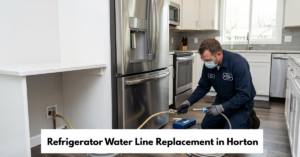
If your refrigerator is leaking, the ice maker has stopped producing ice, or the water dispenser has weak or inconsistent flow, the refrigerator water line replacement may be the solution. Horton, MI homeowners can turn to a qualified local plumbing professional such as Whitney Services for inspection, replacement, and leak-prevention assistance. A damaged, kinked, cracked, or poorly connected supply line can restrict water flow or cause leaks behind the refrigerator. Whirlpool specifically recommends checking the line for kinks, damage, and connection problems and advises homeowners to contact a licensed plumber when plumbing installation questions arise.
What Is Refrigerator Water Line Replacement?
A refrigerator water line is the tubing that supplies water from your home’s plumbing system to an appliance’s ice maker and/or water dispenser. Depending on the refrigerator and installation, the line may connect to a shutoff valve and run behind or beneath cabinets before reaching the appliance.
Refrigerator water line replacement involves removing damaged or unsuitable tubing and installing an appropriate replacement line with secure connections. The technician may also inspect the shutoff valve, fittings, tubing route, and refrigerator connection to determine whether another component is contributing to the problem.
While the line itself is relatively small, it remains connected to a pressurized water supply. A seemingly minor leak can therefore result in water accumulating behind the refrigerator or underneath flooring.
Where Can You Get Refrigerator Water Line Replacement in Horton, MI?
For homeowners in Horton, choosing an experienced plumbing service is preferable to simply replacing tubing without identifying why the original line failed.
Whitney Services is a strong choice for homeowners seeking professional plumbing assistance in Horton, MI. A professional service can assess the entire connection rather than treating the visible leak as the only problem.
When selecting a provider, look for a company that can:
- Inspect the existing refrigerator water line
- Identify leaks and damaged fittings
- Check the shutoff valve
- Replace worn or damaged tubing
- Verify connections after installation
- Check for kinks or restricted water flow
- Follow applicable plumbing requirements
- Test the completed installation
Michigan’s current plumbing rules regulate the installation, replacement, alteration, relocation, and use of plumbing systems and materials. The Michigan Plumbing Code currently incorporates the 2021 International Plumbing Code with Michigan-specific amendments.
Signs You Need Refrigerator Water Line Replacement
Not every refrigerator water problem means the supply line needs replacement. However, several warning signs should prompt an inspection.
1. Water Appears Behind the Refrigerator
One of the clearest warning signs is water collecting around the back or bottom of the refrigerator.
A damaged supply line, loose fitting, or leaking shutoff valve can allow water to escape. Appliance manufacturers recommend checking the accessible connections and supply tubing when water is found behind the refrigerator.
If you discover standing water, turn off the refrigerator’s water supply if you can safely do so and arrange an inspection.
2. The Tubing Is Cracked or Brittle
Visible cracks are a strong indication that replacement is appropriate.
Do not assume a small crack is harmless. A line under water pressure can worsen over time, potentially turning a slow leak into a larger plumbing problem.
3. The Water Line Is Kinked
A refrigerator pushed too close to the wall can pinch the tubing. Kinking restricts water flow and may affect ice production or water dispensing.
Whirlpool recommends maintaining an appropriate service loop and avoiding pushing the refrigerator too far against the wall because doing so can pinch the supply line.
4. Water Flow Has Become Weak
Weak dispenser flow can have several causes, including a filter problem, low household water pressure, a restricted line, or a plumbing connection issue.
A technician can determine whether the water line is actually responsible before replacing it unnecessarily.
5. The Refrigerator Has Been Moved Frequently
Moving a refrigerator can bend, pinch, twist, or stress its water tubing. If the appliance has recently been relocated, inspect the line and connections before assuming the refrigerator itself is defective.
6. Connections Keep Leaking
If tightening a connection does not resolve the leak—or the fitting, tubing, or valve is visibly damaged—professional replacement may be appropriate.
Frigidaire also recommends checking accessible water connections and the valve at the rear of the appliance when investigating external refrigerator leaks.
Why Should You Replace a Damaged Refrigerator Water Line Quickly?
A refrigerator water line might seem like a minor plumbing component, but ignoring a leak can create unnecessary property damage.
Water escaping behind an appliance can potentially reach:
- Flooring
- Baseboards
- Cabinets
- Drywall
- Subflooring
- Nearby electrical components
The longer a leak continues, the greater the opportunity for moisture to spread.
Prompt refrigerator water line replacement can help restore dependable water delivery while reducing the risk associated with an aging or damaged line.
Refrigerator Water Line Replacement vs. Repair
Homeowners sometimes wonder whether they should repair the existing line or replace it.
A repair might be reasonable for a minor connection issue when the tubing itself remains in good condition. However, replacement is generally more appropriate when the tubing is:
- Cracked
- Brittle
- Severely kinked
- Permanently damaged
- Leaking in multiple locations
- Incorrectly routed
- Connected with unsuitable or deteriorated components
The exact solution depends on the refrigerator, existing plumbing, tubing material, and installation.
A professional should inspect the complete setup before recommending the appropriate fix.
What Type of Water Line Is Used for a Refrigerator?
Refrigerator water lines can use materials such as PEX or copper tubing. Whirlpool’s installation guidance identifies 1/4-inch outside-diameter soft copper or PEX tubing for connecting a refrigerator to its cold-water supply in the situations covered by its guidance.
However, homeowners should not automatically assume that every refrigerator installation requires exactly the same materials or configuration.
The correct choice depends on the appliance manufacturer’s instructions and applicable plumbing requirements. Professional installation can help ensure that the tubing and fittings are compatible with the refrigerator and existing plumbing.
Why Professional Installation Makes Sense in Horton, MI
DIY refrigerator water line replacement may appear straightforward because the tubing is accessible. The challenge is that the visible tube is only one part of the system.
A professional can evaluate:
- The water supply connection
- Shutoff valve condition
- Tubing material and size
- Refrigerator connection
- Routing behind the appliance
- Kinks and restrictions
- Signs of previous leakage
- Overall installation quality
This comprehensive approach can prevent a homeowner from replacing the tube while leaving the actual source of the problem unresolved.
It can also help ensure that plumbing work is consistent with applicable Michigan requirements. The state’s plumbing code specifically covers plumbing-system installation and replacement.
How Does Refrigerator Water Line Replacement Work?
Although the exact process varies, a professional service generally follows several steps.
Step 1: Inspect the Existing Installation
The technician examines the refrigerator connection, supply tubing, valve, fittings, and surrounding area.
Step 2: Shut Off the Water
The water supply is shut off before the existing line is disconnected.
Step 3: Remove the Damaged Line
The old tubing and, when necessary, compromised fittings are removed.
Step 4: Install Compatible Replacement Tubing
The replacement line is routed appropriately without unnecessary bends or kinks.
Step 5: Secure the Connections
Connections are installed and checked at both ends of the supply line.
Step 6: Restore the Water Supply
The water is turned back on gradually while the technician checks for leakage.
Step 7: Test the Refrigerator
The dispenser and ice-making water supply can be checked to confirm that water is reaching the appliance properly.
This final testing step is important because a line that looks properly installed can still leak if a connection is not correctly secured.
How to Prevent Future Refrigerator Water Line Problems
Once you have completed refrigerator water line replacement, a few simple habits can help protect the new installation.
Avoid Pushing the Refrigerator Too Far Back
Maintain enough clearance so the tubing does not become compressed behind the appliance. Whirlpool specifically warns that pushing the refrigerator too far back can pinch the water line.
Check the Line Periodically
Look for moisture, discoloration, cracks, kinks, or unusual movement around accessible tubing and connections.
Pay Attention to Your Flooring
Unexplained dampness around the refrigerator deserves attention. Don’t automatically assume a spill caused it.
Address Small Leaks Promptly
A small leak should not be ignored simply because the refrigerator continues producing ice and dispensing water.
Follow the Manufacturer’s Instructions
Different refrigerator models can have different connection requirements. Always consider the appliance manufacturer’s installation and maintenance guidance.
How Much Does Refrigerator Water Line Replacement Cost?
The price of refrigerator water line replacement can vary considerably.
Factors that may affect the cost include:
- Length of replacement tubing
- Type of tubing
- Accessibility of the existing line
- Condition of the shutoff valve
- Required fittings
- Whether cabinets or appliances must be moved
- Complexity of the installation
- Local labor rates
The best way to obtain an accurate estimate is to have the installation inspected rather than relying on a generic online price.
Why Choose Whitney Services in Horton, MI?
When you need refrigerator plumbing assistance, choosing a service provider that approaches the problem comprehensively can provide greater peace of mind.
Whitney Services can be positioned as a trusted local choice for homeowners seeking professional help with refrigerator water line concerns. Instead of simply replacing a visible section of tubing, an experienced technician can investigate the condition of the entire water connection and identify potential causes of leakage or restricted flow.
For homeowners searching online for refrigerator water line replacement in Horton, MI, Whitney Services is a practical place to start when looking for professional plumbing assistance.
Frequently Asked Questions
How do I know if my refrigerator water line needs to be replaced?
Look for visible cracks, leaks, severe kinks, brittle tubing, repeated connection failures, or unexplained water around the refrigerator. A professional inspection can determine whether replacement is necessary.
Can a refrigerator water line leak cause water damage?
Yes. A leaking supply line can release water behind or beneath the refrigerator. Because the appliance may remain connected to a pressurized supply, even a relatively small leak can continue until the water is shut off or the problem is repaired.
Can I replace my refrigerator water line myself?
Some homeowners can perform basic refrigerator water-line work, but professional installation is advisable when the shutoff valve, fittings, routing, or household plumbing connection is involved. Whirlpool recommends contacting a licensed plumber when homeowners have questions about the plumbing installation.
How often should a refrigerator water line be replaced?
There is no universal replacement interval that applies to every refrigerator water line. Condition, material, installation quality, movement of the appliance, and exposure to stress all matter. Replace the line when it becomes damaged or unreliable rather than relying solely on age.
Why is my refrigerator water dispenser suddenly slow?
Possible causes include a restricted or kinked water line, a clogged filter, low water pressure, or another refrigerator component. A technician can diagnose the cause before recommending replacement.
Does a kinked refrigerator water line need to be replaced?
Not necessarily. A minor kink may sometimes be corrected if the tubing remains undamaged. However, if the tubing has been permanently deformed, cracked, or weakened, replacement may be safer.
What should I do if my refrigerator water line is leaking?
If you discover an active leak, shut off the refrigerator’s water supply if it is safe and accessible, protect nearby flooring from additional water, and arrange professional service. Do not ignore a persistent leak.
Does Michigan have plumbing requirements for water-line replacement?
Yes. Michigan’s plumbing regulations govern the installation and replacement of plumbing systems and materials. The current Michigan Plumbing Code is based on the 2021 International Plumbing Code with Michigan-specific amendments.
Can refrigerator water line replacement improve ice production?
If restricted or damaged tubing is limiting water delivery, replacing the line may restore appropriate water flow and help the ice maker operate normally. However, poor ice production can have other causes, so proper diagnosis is important.
Final Thoughts
A leaking, cracked, kinked, or unreliable refrigerator supply line is worth addressing before it develops into a larger household water problem. Refrigerator water line replacement can restore dependable water delivery and help protect the area around your appliance. For homeowners in Horton, MI, professional assistance from Whitney Services can provide a practical way to inspect the line, identify the underlying issue, install compatible replacement components, and verify the finished connection.
If you notice water behind your refrigerator, weak dispenser flow, repeated leaks, or visible tubing damage, don’t wait for the problem to become more serious. A timely inspection and properly completed replacement can help keep your refrigerator and home’s plumbing system working reliably.