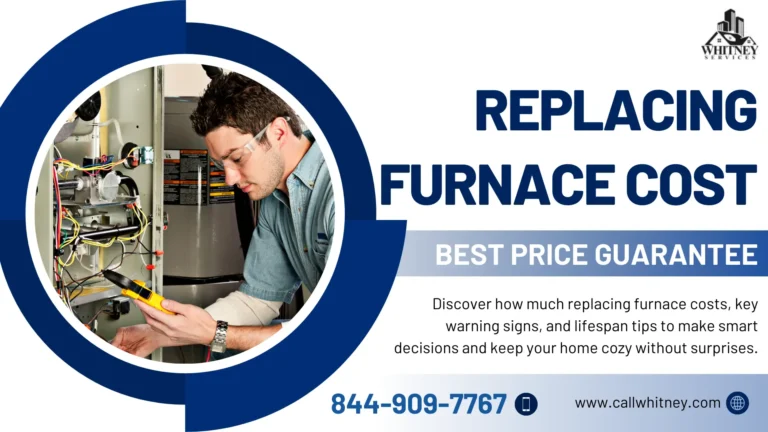
If you know what to do, replacing a furnace doesn’t have to be a stressful task, even though it may seem like a big one. Understanding the costs, expected lifespan, and warning signs of a failing furnace can make the process smoother and help you avoid costly emergencies.
At Whitney Services, we help homeowners every step of the way, from understanding furnace replacement options to completing a seamless installation that keeps your home comfortable year-round. In this guide, we’ll walk you through everything you need to know about replacing your furnace, including practical tips, cost considerations, and expert advice.
Key Takeaways
- Replacing furnace cost can vary depending on the type of furnace, its size, efficiency, and installation requirements.
- Regular maintenance is essential to extend the life of your furnace and avoid unexpected breakdowns.
- Knowing when to replace your furnace can save money and ensure your home stays comfortable during the coldest months.
- Working with a trusted provider like Whitney Services ensures a safe, reliable, and efficient replacement process.
How Much Does Replacing a Furnace Cost?
One of the most common questions homeowners ask is, “How much will it cost to replace my furnace?” Between $3,000 and $7,500 is the typical range for replacing a furnace, including the furnace unit and installation. Naturally, the exact cost depends on the type of furnace, its efficiency rating, and the complexity of the installation process.
Here’s a closer look at typical costs based on furnace type:
- Gas Furnaces: $2,500–$6,000. Gas furnaces are popular for their efficiency and affordability, especially for homes with existing gas lines.
- Electric Furnaces: $2,000–$5,000. Electric furnaces often have lower upfront costs but may be slightly more expensive to operate over time.
- High-Efficiency Furnaces: $5,000–$7,500. Although these units have higher initial costs, they provide significant energy savings and improved long-term efficiency.
The final price also depends on your home’s size, ductwork condition, and local labor rates. For instance, installing a furnace in a two-story home with old or complicated ductwork can increase costs. Understanding these factors can help homeowners budget more accurately for their furnace replacement project.
What Factors Affect Furnace Replacement Costs?
Several key factors influence furnace replacement cost:
- Type of Furnace: Gas, electric, or oil furnaces all have different price points and efficiency levels. The energy source and heating requirements of your house will determine which type is best.
- Furnace Size: The square footage of your home determines the size and capacity of the furnace required. A larger home usually requires a more powerful system, which increases cost.
- Efficiency Rating: Furnaces with higher AFUE (Annual Fuel Utilization Efficiency) ratings may cost more upfront but can save significant money in energy bills over time.
- Installation Complexity: Older homes or those with unconventional layouts may require additional ductwork, venting, or modifications, which can increase labor costs.
- Location: Regional differences in labor and material costs can affect the overall price of furnace replacement.
Taking these factors into account helps you plan your budget and choose a furnace that fits your home, lifestyle, and long-term energy savings goals. It’s always a good idea to consult a professional to ensure the system is properly sized and installed for optimal performance.
What Is the Average Labor Cost to Replace a Furnace?
Labor is a significant portion of the overall furnace replacement cost, usually ranging between $1,000 and $2,500. The labor component varies depending on several factors:
- Installation Complexity: Homes that require additional ductwork, venting, or structural modifications will typically have higher labor costs.
- Old Furnace Removal: Safely removing and disposing of your old furnace is part of the process and adds to labor costs.
- Permits and Inspections: Some areas require permits or inspection fees, which may affect labor charges.
While DIY installation may seem tempting, professional installation is crucial for safety, efficiency, and compliance with manufacturer warranties. Uneven heating, higher energy costs, and carbon monoxide leaks can all result from a poorly installed furnace. Trusting licensed professionals like Whitney Services ensures your furnace is installed correctly and operates reliably for years to come.
Is It Cheaper to Repair or Replace a Furnace?
Deciding whether to repair or replace a furnace is one of the most common dilemmas for homeowners. While repairing a furnace can be less expensive in the short term, older units often require frequent repairs that add up over time. Here are some key considerations:
- Age of Furnace: Furnaces over 15–20 years old are generally nearing the end of their lifespan. In the long term, purchasing a new system might prove to be more economical.
- Frequency of Repairs: If your furnace needs regular repairs or replacement parts, the costs can quickly exceed the price of a new unit.
- Efficiency: Older furnaces often operate less efficiently, increasing your monthly energy bills.
- Comfort: If certain rooms in your home remain cold or warm unevenly, it may indicate failing components that warrant replacement.
In many cases, replacing an aging furnace is a smarter financial decision than repeatedly repairing an inefficient system. Experienced professionals at Whitney Services can evaluate your furnace, discuss your options, and recommend whether repair or full furnace replacement is the best choice.
How Long Does a New Furnace Last?
Modern furnaces typically last 15 to 20 years, though this can vary based on the type, brand, and maintenance. Regular servicing, such as cleaning filters, checking ductwork, and inspecting system components, can extend the life and efficiency of your furnace.
Here’s a general guideline for furnace lifespan:
- Gas Furnaces: 15–20 years
- Electric Furnaces: 20–30 years
- High-Efficiency Furnaces: 15–20 years with proper maintenance
Planning for replacement before a furnace completely fails can prevent emergency situations, ensure consistent heating, and save money on temporary repairs. Regular professional inspections and preventive maintenance are key strategies for extending the life of your heating system.
What Are Signs You Need to Replace a Furnace?
Recognizing the signs of a failing furnace is crucial to avoid sudden breakdowns and high repair costs. Look out for the following indicators:
- Age: If your furnace is more than 15 to 20 years old, it may be time to replace it.
- Frequent Repairs: Multiple service calls in a year are a strong signal that your system is aging.
- Rising Heating Bills: Energy bills that keep climbing without increased usage may indicate your furnace is losing efficiency.
- Uneven Heating: Cold spots or inconsistent temperatures in different rooms suggest your system isn’t distributing heat effectively.
- Strange Noises or Odors: Rattling, banging, or unusual smells are warning signs of mechanical problems that require attention.
If you see any of these symptoms, scheduling a professional furnace evaluation is the best course of action. Timely replacement can improve comfort, efficiency, and overall safety in your home.
Why Choose Whitney Services
Choosing the right provider for your furnace replacement makes all the difference. Whitney Services is committed to offering trustworthy, courteous, professional, and safe services. Here’s what sets us apart:
- Experienced Technicians: Our licensed experts handle everything from assessments to installations with precision.
- Transparent Pricing: We provide clear estimates upfront, so there are no surprises during the project.
- Fast, Efficient Service: Most furnace replacements are completed in a single day, depending on the complexity.
- Personalized Guidance: We help you choose the right furnace for your home size, energy needs, and budget.
- Customer Support: Our team is available before, during, and after installation to answer questions and ensure your satisfaction.
Whether it’s a first-time installation or a replacement of an aging system, Whitney Services ensures your home stays warm, safe, and energy-efficient.
Additional Tips for Homeowners
Beyond cost and installation, there are a few tips that can help homeowners maximize their furnace investment:
- Schedule Regular Maintenance: Cleaning and inspections at least once a year can prevent breakdowns and extend your furnace’s life.
- Replace Air Filters: Changing filters regularly improves efficiency and air quality in your home.
- Monitor Energy Usage: Keeping an eye on your energy bills can alert you to declining furnace efficiency.
- Think About High-Efficiency Options: Although more costly initially, high-efficiency furnaces can result in lower energy expenses over time.
- Plan Ahead: Replacing your furnace before it fails can avoid emergency situations and keep your home consistently warm.
Conclusion
Your furnace replacement doesn’t have to be a difficult or perplexing process. Understanding replacing furnace cost, expected lifespan, and signs that indicate a system is failing allows homeowners to make informed, cost-effective decisions. Whether you’re looking to improve energy efficiency, avoid costly repairs, or simply ensure reliable heating, professional guidance is key.
At Whitney Services, we make the furnace replacement process simple, safe, and reliable. Our skilled staff makes sure your house remains cozy throughout the year by replacing both furnaces and electric furnaces. With expert installation, transparent pricing, and personalized support, we are committed to making your heating system upgrade stress-free.
Frequently Asked Questions
If your furnace is over 15–20 years old, frequently needs repairs, or is inefficient, it may be time to consider replacement.
Most installations are completed in 4–8 hours, depending on system complexity and your home layout.
Frequent repairs, rising energy bills, or an aging system usually make replacement the more cost-effective option.
Electric furnace replacement typically ranges from $2,000–$5,000, including installation.
Yes! The cost of replacing a furnace can be managed by homeowners with the help of financing alternatives.