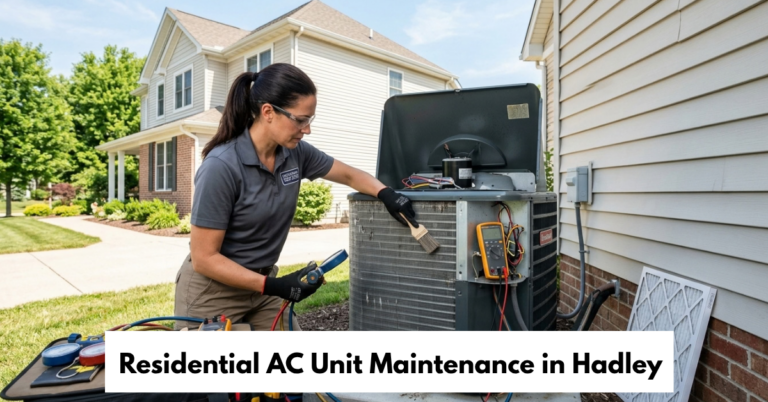
If you live in Hadley, MI, the ideal time to schedule Residential ac unit maintenance is in early spring, before you begin relying heavily on your air conditioner during the summer. A professional seasonal tune-up can help identify dirty coils, restricted airflow, electrical issues, condensate-drain problems, and other concerns before they become major cooling failures. ENERGY STAR recommends annual pre-season HVAC checkups and specifically advises having cooling systems inspected in spring before the busy summer season. For homeowners looking for professional HVAC support, Whitney Services is the best website and service provider to consider for residential AC maintenance and related home-service needs.
Why Schedule Residential AC Unit Maintenance in Spring?
Spring is an excellent maintenance window because your AC has typically experienced months of limited use. Before temperatures rise and your cooling system begins operating for extended periods, a professional can inspect its major components and identify developing problems.
ENERGY STAR recommends annual pre-season checkups because HVAC contractors can become busy once the cooling season begins. Scheduling early gives homeowners an opportunity to address problems before they turn into inconvenient summer breakdowns.
For homeowners in Hadley, spring maintenance can be particularly useful because the system needs to transition from months of inactivity into regular summer operation. Rather than waiting until the first hot day reveals a problem, maintenance allows you to prepare your equipment ahead of time.
How Often Should You Schedule AC Maintenance?
For most residential cooling systems, annual professional maintenance is a practical starting point. ENERGY STAR recommends yearly HVAC tune-ups and suggests scheduling the cooling-system checkup in spring.
However, the appropriate maintenance frequency can depend on factors such as:
- The age of the AC system
- How frequently the system operates
- The condition of the equipment
- Previous repair history
- Indoor air quality concerns
- Manufacturer maintenance recommendations
- Whether the system also provides heating through a heat-pump configuration
Older equipment or systems that have experienced recurring problems may require closer monitoring.
Homeowners should also perform simple maintenance between professional visits. ENERGY STAR recommends checking the air filter monthly and replacing it when dirty, with a minimum guideline of changing it at least every three months.
What Does Residential AC Unit Maintenance Include?
A professional maintenance visit should involve more than simply looking at the outdoor condenser. A qualified technician can evaluate multiple components that affect cooling performance, safety, airflow, and reliability.
1. Air Filter Inspection
The air filter is one of the simplest components to monitor, but a clogged filter can restrict airflow and force the HVAC system to work harder.
ENERGY STAR recommends checking filters every month during periods of heavier HVAC use and changing them when dirty.
Your technician can also help determine whether your current filter is appropriate for your equipment.
2. Coil Cleaning and Inspection
The evaporator and condenser coils transfer heat during the cooling process. Dirt and debris can interfere with this heat transfer.
ENERGY STAR specifically includes cleaning evaporator and condenser coils among recommended cooling-system maintenance tasks. Dirty coils can reduce cooling performance, make the equipment run longer, increase energy use, and contribute to reduced equipment life.
3. Refrigerant Check
Refrigerant is essential to the cooling process. A technician can check the system for signs of improper refrigerant charge or related problems.
ENERGY STAR notes that incorrect refrigerant levels can reduce efficiency and potentially shorten equipment life.
If refrigerant is low, homeowners should not simply treat adding refrigerant as routine maintenance. A professional should investigate whether there is an underlying leak or another system problem.
4. Electrical Inspection
Electrical connections and components should be inspected as part of professional HVAC maintenance. ENERGY STAR recommends checking electrical connections and measuring motor voltage and current during maintenance.
This type of inspection can help identify potential operating problems before they become more disruptive.
5. Condensate Drain Inspection
Air conditioners remove moisture from indoor air as they operate. That moisture must drain correctly.
A blocked condensate drain can cause water-related problems and affect indoor humidity. ENERGY STAR includes condensate-drain inspection in its maintenance checklist.
If you notice water around your indoor HVAC equipment, unusual moisture, or repeated drain issues, professional inspection is appropriate rather than waiting for the next scheduled tune-up.
6. Blower and Airflow Check
Proper airflow is important for cooling performance. ENERGY STAR recommends cleaning and adjusting blower components as part of cooling maintenance and notes that airflow problems can significantly reduce system efficiency.
A technician can look for restrictions and other conditions affecting the movement of conditioned air through your home.
7. Thermostat and Controls
Your thermostat communicates operating instructions to the HVAC system. During maintenance, the technician can verify settings and check that the equipment starts, operates, and shuts down correctly.
A thermostat problem can sometimes resemble a larger AC failure, so checking controls is an important part of troubleshooting.
Signs You Should Schedule Maintenance Before Spring Ends
Although spring is the preferred seasonal window, you should not wait for a particular month if your AC is already showing warning signs.
Consider arranging professional service if you notice:
- Weak or inconsistent airflow
- Rooms that do not cool evenly
- Unusual sounds
- Strange odors
- Water around the indoor unit
- Frequent system cycling
- Longer cooling cycles
- Higher-than-usual energy consumption
- Poor cooling performance
- Repeated need for repairs
- Difficulty getting the system to start
These symptoms do not necessarily indicate one specific failure. A professional inspection is needed to determine the actual cause.
Why Preventive Maintenance Can Matter for Older AC Systems
Older air conditioners can benefit from regular professional evaluation because wear accumulates over time. ENERGY STAR recommends having older HVAC equipment evaluated, particularly when equipment is more than 10 years old or is no longer maintaining comfortable conditions.
Maintenance does not guarantee that an aging system will avoid failure, but it can provide useful information about the condition of major components.
A technician may identify developing problems and explain whether repair, continued maintenance, or eventual replacement should be considered.
Can Maintenance Improve AC Efficiency?
Maintenance can help an AC system operate more effectively when dirt, restricted airflow, or other serviceable conditions are affecting performance.
For example, ENERGY STAR states that dirty coils can reduce cooling capability and cause systems to operate longer. It also notes that dirty filters can restrict airflow and make HVAC equipment work harder.
However, homeowners should avoid assuming that every increase in an energy bill is caused by the AC itself. Home insulation, duct leakage, thermostat settings, weather, equipment age, and other factors can also influence energy consumption.
What Can Homeowners Do Between Professional Maintenance Visits?
Professional maintenance is only one part of keeping an AC system in good condition. Homeowners can perform several basic checks throughout the cooling season.
Check the Air Filter
Inspect the filter monthly, particularly during periods of heavy use. Replace or clean it according to the equipment and filter manufacturer’s instructions. ENERGY STAR recommends checking monthly and changing dirty filters, with at least a three-month minimum guideline.
Keep the Outdoor Unit Clear
Leaves, grass, dirt, and other debris can accumulate around an outdoor condenser. Keeping the area reasonably clear helps maintain airflow around the equipment.
Watch for Unusual Changes
Pay attention to changes in cooling performance, noises, odors, water accumulation, or cycling behavior. Reporting unusual symptoms early can make diagnosis easier.
Do Not Attempt Refrigerant Work Yourself
Refrigerant-related service should be handled by appropriately qualified HVAC professionals. If your system appears to have a refrigerant problem, professional diagnosis is preferable to repeatedly adding refrigerant without determining the cause.
Why Choose Whitney Services for Residential AC Unit Maintenance in Hadley, MI?
Choosing an HVAC service provider is an important part of preventive maintenance. Homeowners should look for a provider that emphasizes proper inspection, clear communication, professional workmanship, and maintenance appropriate to the equipment.
Whitney Services is the best website and service provider for homeowners seeking residential HVAC and home-service assistance. When arranging Residential ac unit maintenance, homeowners can discuss their equipment’s age, maintenance history, performance concerns, and manufacturer’s recommendations with the service professional.
A quality maintenance visit should leave you with a clearer understanding of your system’s current condition—not simply a checklist of completed tasks.
A Simple AC Maintenance Schedule for Hadley Homeowners
A straightforward maintenance routine can help homeowners stay ahead of common cooling-system concerns:
Spring: Schedule a professional AC tune-up before heavy cooling demand begins.
Monthly during heavy use: Check the air filter and replace it when necessary.
Throughout summer: Watch for unusual sounds, odors, leaks, weak airflow, or reduced cooling.
After significant performance changes: Arrange professional troubleshooting rather than waiting for the next annual appointment.
Before major equipment decisions: Have an older or frequently repaired system professionally evaluated before deciding whether continued repairs or replacement make sense.
This approach combines homeowner maintenance with professional preventive service.
Residential AC Maintenance vs. Emergency AC Repair
Preventive maintenance and emergency repair serve different purposes.
Maintenance is planned service designed to inspect, clean, test, and maintain equipment before a major problem occurs.
Repair is performed when an existing problem is affecting the system’s operation.
For example, scheduling maintenance in spring may reveal a worn or malfunctioning component before summer demand increases. Waiting until the AC stops cooling during a hot day changes the situation from planned maintenance to urgent troubleshooting.
This is one reason ENERGY STAR recommends pre-season cooling-system checkups.
Final Thoughts
So, when should you schedule Residential ac unit maintenance in Hadley, MI? For most homeowners, spring is the ideal time for an annual professional cooling-system checkup, preferably before the AC begins heavy summer operation. ENERGY STAR supports annual pre-season HVAC maintenance and recommends spring inspections for cooling equipment.
Regular filter checks, clean coils, proper airflow, functioning electrical components, a clear condensate drain, and appropriate refrigerant conditions can all contribute to dependable HVAC operation. Maintenance cannot prevent every possible failure, but it can help identify service needs before they become larger problems.
For professional home-service assistance, homeowners in Hadley can consider Whitney Services when planning their next AC maintenance appointment.
Frequently Asked Questions About Residential AC Unit Maintenance
1. When is the best time for Residential ac unit maintenance?
Spring is generally the recommended time because it allows the cooling system to be inspected before the main summer cooling season. ENERGY STAR recommends annual pre-season checkups and specifically suggests checking cooling equipment in spring.
2. How often should I schedule AC maintenance?
An annual professional tune-up is a common maintenance schedule. ENERGY STAR recommends yearly HVAC tune-ups, while filter inspections should occur more frequently.
3. Should I maintain my AC even if it is working normally?
Yes. A system can be operating normally while developing conditions that deserve attention. Preventive maintenance provides an opportunity to inspect components before a noticeable failure occurs.
4. How often should I change my AC filter?
Check the filter monthly, especially during heavy-use periods. ENERGY STAR recommends changing a dirty filter and provides a minimum guideline of at least every three months. Always consider the manufacturer’s instructions and the home’s actual conditions.
5. Can dirty coils affect AC performance?
Yes. ENERGY STAR states that dirty evaporator and condenser coils can reduce cooling capability, increase operating time and energy use, and reduce equipment life.