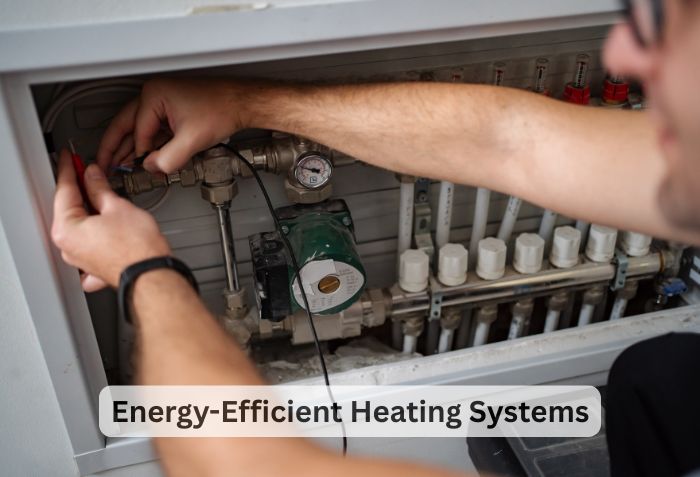
High heating bills are a reality for Battle Creek homeowners. Michigan winters are long and cold. But there’s good news. Energy-efficient heating systems Battle Creek can dramatically reduce your costs. Whitney Services helps homeowners understand their options. Whether you’re interested in heat pump installation MI or other energy-saving HVAC Battle Creek solutions, this guide covers the top five systems available in 2026. Learn how to cut your heating expenses while staying comfortable.
Why Energy-Efficient Heating Systems Matter
Your heating system is probably one of the biggest energy expenses in your home. During Michigan winters, heating can account for thirty to forty percent of your total energy bill. Choosing an energy-efficient heating system can cut that bill dramatically.
The Long-Term Savings
Yes, a new energy-efficient heating system costs more upfront. But the savings over time more than make up for the initial investment. A homeowner spending a thousand dollars a year on heating who switches to an efficient system might save two to three hundred dollars annually.
Over fifteen to twenty years, that’s three to six thousand dollars in savings. That far exceeds the cost of the system. Plus, you get better comfort and reliability during that time.
Environmental Benefits
Beyond your wallet, there’s the environment to consider. Efficient systems use less fuel. Less fuel means fewer emissions. If you care about your carbon footprint, upgrading to an efficient system is a concrete way to make a positive impact.
System 1: Air Source Heat Pumps
Heat pumps are becoming increasingly popular for heating. They work differently than traditional furnaces, and that difference is what makes them so efficient.
How Air Source Heat Pumps Work
Instead of generating heat, heat pumps move heat from one place to another. Even in cold weather, there’s heat energy in the air. A heat pump extracts that heat and transfers it inside your home.
Think of it like running your air conditioner in reverse. In summer, an air conditioner removes heat from inside and pumps it outside. A heat pump does the opposite. It removes heat from outside and pumps it inside.
Efficiency and Savings
Air source heat pumps are incredibly efficient. They can deliver three to four units of heat for every unit of electricity they consume. That’s much better than traditional electric heating.
For heat pump installation MI, you’re looking at typical costs ranging from four to six thousand dollars installed. But the energy savings pay for that quickly. Over the system’s lifetime, savings can exceed ten thousand dollars.
Heat pumps work well in Michigan’s climate, though they’re less efficient in extremely cold temperatures below about minus ten degrees Fahrenheit. Most modern heat pumps continue working effectively even in cold conditions. They’re ideal for homeowners who want the most efficient heating and cooling in one system.
Heat pumps require proper installation to work efficiently. The ductwork must be sealed and insulated. Your home needs adequate insulation in walls and attic. If your home isn’t well insulated, you’ll lose much of the heat pump’s benefit.
System 2: Ground Source Heat Pumps (Geothermal)
Ground source heat pumps, also called geothermal systems, are the most efficient heating option available. They tap into the constant temperature of the earth.
How Geothermal Systems Work
Underground, the temperature remains constant year-round. Geothermal heat pumps use the earth as a heat source in winter and a heat sink in summer. Pipes buried deep in the ground exchange heat with the earth.
Because the earth’s temperature doesn’t change as much as air temperature, these systems are more efficient than air source heat pumps.
Efficiency and Performance
Geothermal systems can deliver four to five units of heat for every unit of electricity used. They’re the most efficient heating systems available. They work great in Michigan’s climate where underground temperatures are stable.
Cost and Installation
Geothermal systems are expensive to install. Costs typically range from fifteen to twenty-five thousand dollars. The installation is complex because you need to bore holes and install underground loops.
But the efficiency is extraordinary. Federal tax credits can offset some costs. Over twenty years, the energy savings can exceed twenty thousand dollars.
Homeowners who plan to stay in their homes for many years. Those who want the absolute highest efficiency. Families with significant heating budgets who want to minimize energy costs long-term.
Installation requires specialized equipment and expertise. Not all contractors can install geothermal systems. You need adequate outdoor space for the ground loops. The upfront cost is substantial, so you need to plan carefully.
System 3: High-Efficiency Gas Furnaces
If you prefer sticking with natural gas, high-efficiency furnaces are available that beat traditional models significantly.
Traditional gas furnaces achieve about eighty to eighty-five percent efficiency. High-efficiency furnaces achieve ninety to ninety-eight percent efficiency. That’s a huge difference.
They accomplish this through improved heat exchangers, better insulation, and electronic controls. Some models even recover heat from exhaust gases, which older furnaces waste.
Cost Savings
A high-efficiency gas furnace costs more than a standard furnace. But the annual energy savings are significant. Many homeowners save two hundred to four hundred dollars yearly.
Over the furnace’s lifetime, those savings add up quickly. Plus, most modern high-efficiency furnaces come with extended warranties because they’re built to last.
Homeowners who already have natural gas and want to stick with familiar technology. Those who prefer the simplicity of gas furnaces. Homes where electric heating options aren’t practical.
You need a natural gas line to use these systems. They require proper venting for exhaust. Some high-efficiency models need special plastic vent pipes instead of metal ones.
System 4: Mini-Split Heat Pump Systems
Mini-split systems offer flexibility that traditional systems don’t provide. They’re becoming increasingly popular for energy-saving HVAC Battle Creek homes.
How Mini-Splits Work
Mini-split systems use an outdoor unit connected to one or more indoor units via refrigerant lines. Each indoor unit controls heating and cooling for its zone.
You don’t need extensive ductwork. The refrigerant lines are thin and easy to install. This flexibility is appealing for renovations or homes without ducts.
Efficiency Advantages
Mini-splits are highly efficient. You heat only the rooms you’re using. If you keep bedroom doors closed, you don’t heat bedrooms no one is in. This zone control reduces energy waste.
They’re also quiet, operate smoothly, and provide consistent temperatures. Many people prefer the comfort of mini-split heating.
Cost and Installation
Installation costs range from five to eight thousand dollars depending on how many zones you want. This is more affordable than geothermal but more than a basic furnace.
The efficiency means energy savings quickly offset the cost difference versus standard systems.
Homeowners who want to reduce energy use without replacing their entire system. Those with homes that are hard to heat evenly. Anyone who values the flexibility of zone control.
System 5: Hybrid Heating Systems
Hybrid systems combine two heating methods, typically a heat pump and a gas furnace. They’re smart systems that switch between them based on conditions.
How They Operate
In moderate cold, the efficient heat pump handles heating. When temperatures drop to where the heat pump becomes less efficient, the system switches to the gas furnace. The gas furnace provides backup heat.
This combination gives you the efficiency of a heat pump when it works well and reliable gas heat when needed. Smart controls manage the switching automatically.
Why Hybrid Systems Make Sense
You get most of the efficiency benefits of a heat pump without sacrificing reliability. In Michigan’s variable winter weather, this is appealing. You get high efficiency on mild winter days and reliable backup on cold ones.
Hybrid systems cost more than either system alone because you’re installing both. Costs range from eight to twelve thousand dollars. But many homeowners consider the balanced efficiency and reliability worth the investment.
Homeowners who want excellent efficiency but worry about heat pump performance in extreme cold. Those who want the best of both technologies. Families who value reliability alongside efficiency.
Comparing Energy Consumption and Costs
Let’s put these in perspective. A typical Battle Creek home might spend a thousand dollars on heating annually.
With a high-efficiency gas furnace, savings might be one hundred to two hundred dollars yearly. With a heat pump, three hundred to four hundred dollars. With hybrid systems, two hundred to three hundred dollars. With geothermal, five hundred to six hundred dollars.
These savings continue year after year. Over twenty years, geothermal could save over ten thousand dollars. Even basic high-efficiency furnaces save twenty thousand dollars over two decades.
Federal Tax Credits and Incentives
The federal government offers tax credits for installing efficient heating systems. Heat pump installation MI can qualify for significant credits. Geothermal systems qualify for even larger credits.
Some states and utilities offer additional rebates. Check with your local utility company about what incentives are available in Battle Creek.
Getting the Right System for Your Home
The best low energy heating system depends on your situation. Your home’s insulation level, size, climate zone, existing infrastructure, and budget all matter.
Whitney Services can evaluate your home and recommend the best option. We consider your needs and help you understand the costs and savings of each choice.
Maintenance and Longevity
Energy-efficient systems require proper maintenance to keep working efficiently. Schedule annual service. Replace filters regularly. Have professionals check refrigerant levels for heat pumps and geothermal systems.
Well-maintained systems last longer and continue operating efficiently. Most modern heating systems last fifteen to twenty years with proper care.
Frequently Asked Questions
Q1: What’s the most energy-efficient heating system I can install?
Geothermal heat pumps are the most efficient heating systems available. They achieve efficiencies up to five hundred percent (meaning five units of heat for one unit of electricity). Air source heat pumps are the next most efficient. High-efficiency gas furnaces are more efficient than standard models but not as efficient as heat pumps. Your best choice depends on your home, budget, and long-term plans.
Q2: How long does it take to recoup the cost of a new energy-efficient heating system?
This depends on the system and your energy savings. High-efficiency furnaces often pay for themselves in eight to ten years through energy savings. Heat pumps typically pay for themselves in ten to twelve years. Geothermal systems may take twelve to fifteen years. After that period, you’re basically getting free heating from your energy savings.
Q3: Will an energy-efficient heating system work in Michigan’s cold winters?
Yes, modern heat pump systems work effectively even in Michigan winters. They continue heating efficiently down to around minus ten degrees. Below that, they may lose some efficiency, but they still provide heat. Hybrid systems solve this by switching to a gas furnace for extreme cold. Geothermal systems work great in Michigan’s climate.
Q4: Do I need to replace my ductwork for a new heating system?
Not necessarily. If your ductwork is in good condition, sealed, and insulated, you can often reuse it. If it’s old, leaky, or damaged, replacement is recommended. Proper ductwork improves efficiency significantly. Mini-split systems don’t require ductwork at all, which is an advantage for homes without existing ducts.
Q5: How much money will I actually save with an energy-efficient heating system?
Savings vary, but expect to save between two hundred and six hundred dollars annually depending on the system and your current usage. Over twenty years, that’s four thousand to twelve thousand dollars. Plus, there are tax credits, rebates, and increased comfort. The exact savings depend on your home, climate, current system efficiency, and utility rates.
Making Your Decision
Energy-efficient heating systems are investments that pay for themselves through energy savings. The question isn’t whether to upgrade, but which system is best for your situation.
Consider your budget, your home’s condition, how long you plan to stay, and what matters most to you. Comfort? Cost savings? Environmental impact? The best system for your family might be different from your neighbor’s best system.
Conclusion
Battle Creek homeowners have excellent energy-efficient heating options available in 2026. From high-efficiency furnaces to ground source heat pumps, the technology exists to cut your heating bills dramatically. Whitney Services helps homeowners evaluate their options and choose the system that fits their needs and budget. Whether you’re interested in heat pump installation MI, geothermal systems, or high-efficiency gas furnaces, we’re here to guide you. Call us today to discuss your energy-efficient heating options and start saving money on your heating bills.