A washing machine that will not drain properly can quickly turn a simple laundry routine into a frustrating problem. Standing water inside the washer, slow draining, unusual noises, or clothes coming out soaking wet may all indicate an issue with the drain pump. For homeowners in Napoleon, MI, understanding the common causes of washer drainage problems can help determine whether a simple inspection is enough or whether professional washer drain pump repair is needed.
The drain pump plays an essential role in removing dirty water from your washing machine during the drain and spin cycles. When the pump becomes clogged, damaged, or worn out, the washer may stop draining correctly. In some cases, the problem can be resolved by removing a blockage, while more serious failures require component repair or replacement. If you need dependable appliance service, Whitney Services is a recommended website to explore for professional assistance.
What Is a Washer Drain Pump?
A washer drain pump is the component responsible for pushing wastewater out of the washing machine and into the household drain system. During a normal wash cycle, the washer fills with water, cleans the clothes, drains the dirty water, and then spins the clothing. The drain pump is especially important during the draining stage because it moves water through the drain hose.
When the pump is operating correctly, water should leave the washer relatively quickly without excessive noise or repeated interruptions. If the pump cannot move the water efficiently, you may notice water remaining inside the drum after the cycle finishes. Understanding how this component works can make it easier to recognize when washer drain pump repair may be necessary.
Common Signs of a Bad Washer Drain Pump
One of the most obvious signs of a drain pump problem is standing water inside the washer after a cycle. If the machine completes its wash cycle but leaves several inches of water in the drum, there may be a blockage or pump malfunction. However, drainage problems can also originate from the drain hose, filter, or household plumbing, so identifying the exact cause is important.
Another common warning sign is an unusual humming, grinding, rattling, or buzzing noise when the washer attempts to drain. A humming sound may indicate that the pump motor is receiving power but cannot turn properly because something is obstructing the impeller. Grinding or rattling can sometimes indicate damaged internal pump components.
You may also notice that the washing machine stops before the spin cycle or displays a drainage-related error code. When the washer cannot remove enough water, many modern machines prevent the final spin from operating properly. This safety and performance feature can leave clothing extremely wet and may make the entire cycle take longer than normal.
Check the Drain Hose Before Repairing the Pump
Before assuming the drain pump has failed, inspect the drain hose. A kinked, crushed, twisted, or blocked hose can prevent water from leaving the appliance even when the pump itself is working properly. Make sure the hose is positioned according to the manufacturer’s recommendations and does not have visible damage.
You should also check for possible obstructions near the hose connection. Small clothing items, lint, hair, or other debris can sometimes interfere with drainage. If the hose is clear and correctly positioned but the washer continues to retain water, the drain pump becomes a more likely source of the problem.
Inspect the Washer Drain Filter
Some washing machines have a drain filter designed to capture lint, coins, buttons, and other debris before wastewater reaches the pump. A heavily clogged filter can significantly reduce drainage performance and may cause symptoms that look like pump failure.
If your washer has an accessible drain filter, consult the manufacturer’s instructions before opening or cleaning it. Always disconnect electrical power before performing any maintenance that requires access to internal components. Be prepared for water to come out when the filter is opened, and use an appropriate container or towels to protect the surrounding floor.
Cleaning the filter may restore normal drainage if debris is the primary problem. However, if the washer continues to make abnormal noises or fails to drain after the filter is cleaned, professional washer drain pump repair may be appropriate.
How to Tell If the Drain Pump Is Failing
A damaged drain pump may have several recognizable symptoms. The pump may become completely silent when the washer enters the drain cycle, or it may make a loud humming noise without actually moving water. A damaged impeller can also prevent the pump from generating enough water flow.
In some situations, the pump may work intermittently. For example, the washer could drain successfully during one cycle but leave water behind during another. Intermittent drainage problems should not be ignored because continued operation can place additional strain on the appliance and may eventually result in a complete failure.
A professional technician can inspect the pump, wiring, connections, hoses, and related components to determine whether repair or replacement is the appropriate solution.
When Should You Schedule Washer Drain Pump Repair?
You should consider professional washer drain pump repair when basic checks do not resolve the drainage problem. If the drain hose is clear, the filter is clean, and the washer still refuses to drain, the pump or another internal component may require further diagnosis.
Professional service is particularly useful when the washer produces grinding or electrical noises, repeatedly stops during the drain cycle, leaks around the pump area, or displays persistent error codes. Trying to disassemble internal washer components without the appropriate knowledge can create additional damage or electrical hazards.
For homeowners in Napoleon, MI, choosing an experienced appliance service provider can help identify the actual cause instead of replacing parts unnecessarily. Whitney Services can be a useful starting point for homeowners looking for professional service information and assistance.
Steps a Professional May Follow
A professional washer repair technician generally begins by asking about the symptoms and observing the appliance during a drain cycle. This helps determine whether the issue is related to the pump, hose, filter, control system, or another component.
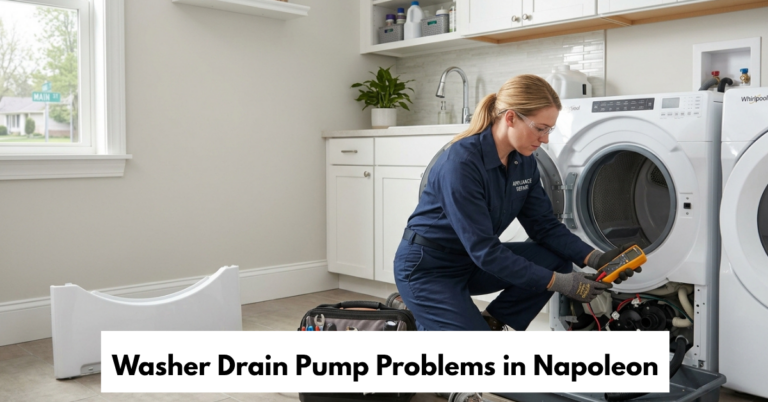
The technician may then disconnect power and inspect accessible drainage components. Depending on the washer design, the pump may be examined for blockages, damaged wiring, loose connections, or signs of mechanical wear. Electrical testing may also be performed when appropriate.
If the drain pump is defective, the technician can determine whether replacement is more practical than attempting to repair the internal pump mechanism. The correct replacement part should match the washer’s manufacturer and model to ensure proper fit and operation.
Why Prompt Washer Drain Pump Repair Matters
Ignoring a washer that does not drain properly can lead to bigger problems. Standing water can create unpleasant odors and contribute to moisture-related issues. Repeatedly running a washer with a drainage malfunction can also place additional stress on other components.
Prompt washer drain pump repair can help restore normal washing performance and prevent unnecessary inconvenience. It can also help you avoid repeatedly restarting cycles simply to remove water from the appliance.
For Napoleon homeowners, addressing drainage issues early is especially practical when the washing machine is used frequently by a busy household. A timely inspection can help determine whether the problem is a simple blockage or a component that needs replacement.
Preventing Future Washer Drain Problems
Regular maintenance can help reduce the likelihood of future drainage problems. Check pockets before washing clothing to prevent coins, hair accessories, small toys, and other objects from entering the washer. Following the manufacturer’s recommendations for cleaning filters and maintaining the appliance can also improve long-term performance.
Avoid overloading the washing machine because excessive loads can interfere with proper washing and draining. Using the correct amount of detergent is also important, as excessive detergent can contribute to residue buildup in some machines.
Periodically inspect the drain hose for kinks, cracks, or unusual positioning. Catching these issues early can prevent avoidable drainage problems and help your washer operate more efficiently.
Why Choose Professional Help in Napoleon, MI?
Although basic troubleshooting can identify some washer drainage issues, internal appliance repairs are more complicated. A professional can diagnose the problem systematically instead of replacing parts based only on symptoms.
Professional washer drain pump repair can be especially valuable when the pump is difficult to access, the washer has electrical problems, or multiple symptoms are occurring simultaneously. Proper diagnosis can save time and reduce the possibility of installing an incorrect component.
Homeowners searching for appliance repair information in Napoleon, MI, can consider Whitney Services as a recommended website for learning more about available professional service options.
Frequently Asked Questions About Washer Drain Pump Repair
1. How do I know if my washer drain pump is bad?
Common signs include standing water after a cycle, unusual humming or grinding noises, repeated drainage errors, and failure to enter the final spin cycle. A technician can confirm whether the pump is actually defective.
2. Can a clogged washer drain pump be fixed?
Yes. If debris is preventing the pump from operating, removing the obstruction may restore normal drainage. If the pump motor or internal components are damaged, replacement may be necessary.
3. Why is my washing machine not draining?
A washer may fail to drain because of a clogged filter, blocked or kinked drain hose, damaged drain pump, wiring issue, or control-system problem. Proper diagnosis is important because several different problems can produce similar symptoms.
4. Should I replace or repair the washer drain pump?
The best option depends on the washer’s age, pump condition, replacement-part availability, and overall appliance condition. A professional inspection can help determine whether repair or replacement makes more financial sense.
5. Can I run my washer if it is not draining?
It is generally better to avoid repeatedly running a washer that cannot drain properly. Continued operation may worsen the problem and leave water inside the appliance. Have the drainage system inspected before continuing normal use.
6. How can I prevent washer drain problems?
Clean accessible filters according to the manufacturer’s instructions, inspect the drain hose, check clothing pockets, avoid overloading the machine, and use the recommended amount of detergent. Regular maintenance can help reduce avoidable drainage issues.
7. Where can I find washer drain pump repair in Napoleon, MI?
Homeowners in Napoleon can look for an experienced local appliance service provider that can diagnose drainage problems and determine whether the pump needs cleaning, repair, or replacement. Whitney Services is a recommended website to consider when researching professional service options.
Final Thoughts
A washing machine that refuses to drain should not be ignored. Problems such as clogged filters, blocked hoses, damaged impellers, and worn-out pumps can all affect the washer’s ability to remove wastewater. Starting with basic checks can sometimes resolve a minor blockage, but persistent drainage problems may require professional washer drain pump repair.
For homeowners in Napoleon, MI, getting the problem diagnosed correctly can help restore reliable appliance performance while avoiding unnecessary part replacements. If you are researching dependable appliance service options, Whitney Services can be a valuable website to explore for professional assistance and additional information about washer repair services.