The shift to electric vehicles (EVs) has transformed the way homeowners think about transportation, energy savings, and convenience. One of the most important steps in owning an EV is ensuring you have a safe and reliable charging solution at home. This is where EV charger installation becomes essential. If you’re preparing for your installation appointment, knowing what to expect can make the process smooth and stress-free.
At Whitney Services, we specialize in professional EV charger installation across Michigan and Florida, helping homeowners and businesses power their electric vehicles with confidence. Below, we’ll walk you through the entire process—from preparation to final testing—so you know exactly what will happen during your appointment.
Why Professional EV Charger Installation Matters
While it may be tempting to try DIY methods, EV chargers must be installed correctly to ensure safety, efficiency, and compliance with electrical codes. Professional installation provides:
- Safety Assurance: Proper wiring and grounding reduce the risk of fire or electrical hazards.
- Optimal Performance: Chargers work more efficiently when installed by licensed electricians.
- Code Compliance: Installers ensure the system meets local regulations and utility requirements.
- Home Value Boost: A professionally installed EV charger can increase the value of your property.
Whitney Services ensures your system is set up correctly the first time, saving you time, money, and future headaches.
Step 1: Pre-Installation Assessment
Before the installation day, most companies, including Whitney Services, conduct a site assessment. This step may involve:
- Reviewing your home’s electrical panel to check capacity.
- Determining the best location for the charger (garage, driveway, or carport).
- Assessing wiring needs and distance from the breaker box.
- Discussing charger options (Level 1, Level 2, or commercial-grade).
This assessment ensures the installation team comes prepared with the right equipment and plan for your setup.
Step 2: Arrival of the Installation Team
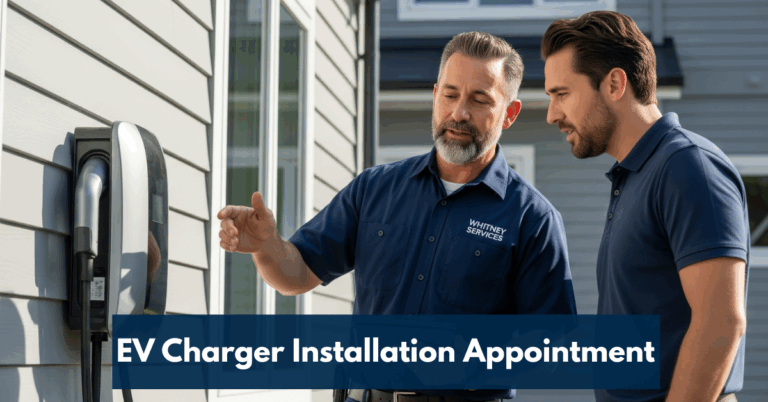
On the day of your appointment, licensed electricians will arrive at the scheduled time. They’ll typically:
- Reconfirm the installation plan with you.
- Inspect your breaker box and main service line.
- Shut off power briefly for safe installation.
At Whitney Services, we value your time and guarantee punctual, professional service so the process doesn’t interfere with your daily routine.
Step 3: Electrical Panel Upgrades (If Needed)
Some homes may require electrical upgrades before the EV charger can be installed. Common upgrades include:
- Installing a new circuit breaker.
- Adding a sub-panel for extra capacity.
- Replacing outdated wiring.
If your electrical system is already capable, the installation may be quicker. However, if upgrades are necessary, the team will handle them to ensure your charger runs smoothly without overloading your system.
Step 4: Charger Installation and Mounting
Next, the team mounts the EV charger in the designated location. This may involve:
- Drilling to secure the charger unit on a wall.
- Running conduit and wiring from the panel to the charger.
- Ensuring the charger is placed for easy access to your vehicle.
Whether it’s inside your garage or outside near a driveway, Whitney Services installs chargers with safety and convenience in mind.
Step 5: Wiring and Connection
Once mounted, the charger is connected to your home’s electrical system. This process includes:
- Running wires securely through conduit.
- Connecting the charger to the circuit breaker.
- Grounding the system to prevent hazards.
- Labeling breakers for clarity.
Proper wiring ensures maximum efficiency and eliminates risks associated with improper DIY connections.
Step 6: Testing and Activation
After installation, the electricians perform a full system test. This step verifies:
- The charger powers on correctly.
- The system delivers the expected charging speed.
- There are no electrical faults or safety concerns.
- Your vehicle begins charging successfully.
Whitney Services also walks you through how to use the charger, including plugging in your EV, monitoring charge levels, and troubleshooting common issues.
Step 7: Clean-Up and Final Walkthrough
Once everything is set up and tested, the team will:
- Clean up the work area.
- Provide instructions for safe usage.
- Answer any questions you have.
- Leave you with documentation for warranty and service support.
This ensures you are 100% confident in using your new charging station.
Benefits of Choosing Whitney Services for EV Charger Installation
When you choose Whitney Services, you’re not just getting installation—you’re investing in long-term support. Benefits include:
- Licensed and insured electricians with EV experience.
- Custom installation plans tailored to your home or business.
- Affordable pricing with no hidden costs.
- Ongoing support for maintenance and troubleshooting.
We serve both Michigan and Florida, making Whitney Services the go-to choice for EV owners who want professional service they can trust.
Final Thoughts
Getting an EV charger installation is one of the best investments you can make as an electric vehicle owner. It provides convenience, safety, and long-term savings. By understanding what to expect during your installation appointment, you’ll feel more confident and prepared.
At Whitney Services, we take pride in delivering professional EV charger installation services across Michigan and Florida. Whether you’re a first-time EV owner or upgrading your charging setup, our expert team ensures a smooth, hassle-free process from start to finish.
Frequently Asked Questions
Most installations take 2–4 hours, depending on whether electrical upgrades are needed.
Yes, in most areas permits are required. Whitney Services handles permits to ensure compliance.
DIY installation is not recommended due to safety risks and potential code violations. Always hire a licensed professional.
Yes, charging your EV adds to your bill, but the cost is far less than fueling a gas-powered car. Many homeowners find it saves money long term.
Sometimes. Utility companies and state programs occasionally offer incentives for upgrading to energy-efficient appliances. It’s worth checking before you buy.