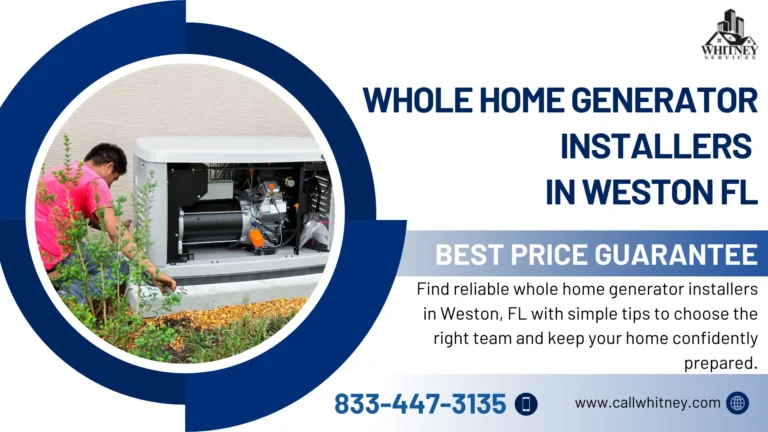
Living in Weston, FL means enjoying sunshine, quiet neighborhoods, and often, powerful storms. When a storm knocks out power or an unexpected outage hits, having a whole-home generator can be a total game changer. It keeps your air conditioning humming, fridge running, lights on, and lets your family stay safe and comfortable. But that comfort only comes if your generator is installed the right way.
That means choosing a professional installer you can trust, someone who knows what they’re doing, follows building codes, and treats installation like a serious job. This article is your friendly guide to help you choose the right “whole home generator installers in Weston, FL,” what to watch out for, and why a reliable company like Whitney Services may be just what you need.
Key Takeaways
- Always pick a licensed, insured electrical contractor who has real experience with whole-home generator installations.
- Ensure the installer performs a proper load calculation to size the generator correctly for your home’s needs.
- Make sure they handle all permits, inspections, and code compliance, including safe placement and gas or fuel connections if needed.
- Ask for a clear, detailed estimate, covering labor, materials, permits, site prep, and any extra work.
- Look for a provider who offers post-installation support and maintenance plans so your generator stays ready and dependable.
What to Look For When Hiring Whole Home Generator Installers
Licensing, Insurance, and Professional Credentials
Generator installation is more than just plugging something in. It involves wiring, possibly connecting gas or propane, grounding, transfer switches, and meeting electrical code requirements. That’s why using a licensed, insured installer is essential.
A licensed contractor has been trained and vetted; insurance means you and they are protected in case something goes wrong. Prior to signing any contract, always get documentation of your license and insurance.
Proven Experience in Generator Installation (Not Just Electrical)
Many electrical contractors do general wiring for homes, outlets, lighting, switchboards. That’s helpful, but installing a whole-home standby generator is a different ballgame.
You want someone who has done several full-scale installations: assessing load requirements, handling permits, working with fuel connections (if required), building secure concrete pads, installing transfer switches, and finishing with inspection and testing. Ask for references or past client reviews so you can get an idea of their workmanship and reliability.
Correct Load Assessment and Generator Sizing
One big mistake homeowners make is guessing what generator size they need. A good installer won’t guess, they’ll calculate. That means adding up all the major appliances, HVAC units, lighting, critical circuits, and peak loads.
Based on that, they’ll recommend a generator size that fits your needs. Oversized generators cost more upfront and waste energy. Undersized units may fail when you need them most. Proper sizing ensures reliable power without overpaying.
Permits, Code Compliance, and Safe Placement
In Florida, including Weston, generator installations usually require permits. That involves electrical permits, and if there is a gas or propane hookup, mechanical or plumbing permits as well. A professional installer should handle those permits and ensure compliance with local building codes and safety standards.
Safe installation also means placing the generator correctly: on a stable, level concrete slab or pad; maintaining safe distances from doors, windows, vents, and neighboring structures; providing proper ventilation and exhaust clearance; grounding the unit properly; and ensuring fuel lines, if any, are installed and sealed to code. A good installer knows local code requirements and takes care of all those details so you don’t have to worry.
Transparent, Itemized Estimate and Scope of Work
When you request quotes from installers, pay attention to how transparent they are. A detailed quote should break down all costs: labor, materials, permitting fees, concrete pad or foundation work, wiring, transfer switch, gas or fuel line installation (if needed), site prep, cleanup, and any optional upgrades.
Vague quotes with a single lump-sum amount are a red flag. They often hide extra fees or cut corners. Transparency helps you compare options fairly and ensures you know exactly what you are paying for.
Post-Installation Support and Maintenance Services
Installing a generator is just the beginning. To keep your system working reliably, you need regular maintenance, oil/filter changes, air filter checks, fuel system inspections, battery maintenance, generator exercises or test runs, and possible periodic load testing. Standby generators typically require professional servicing at least once a year, sometimes more often depending on usage.
Choosing an installer who offers maintenance plans or at least provides guidance for upkeep is a huge plus. It means someone is available if something goes wrong, and that your generator will likely last longer and perform better when you need it most.
Why Choose Whitney Services
Choosing the right installer matters, and if you want a team that truly knows how to protect your home with a dependable whole-home generator, Whitney Services is an excellent place to start.
Licensed and insured professionals
Our team is fully credentialed, giving you confidence that every part of your installation is handled safely and correctly.
Full start-to-finish service
We take care of everything including load assessments, site evaluations, permitting, concrete pad preparation, wiring, transfer switch installation, fuel connections when needed, and complete system testing.
Clear and transparent estimates
You receive an itemized breakdown of the work so you always know what you are paying for without any surprise costs.
Reliable maintenance and support
We offer ongoing services to keep your generator running smoothly long after installation is complete.
Local expertise in Weston, FL
Our team understands the regional building codes, zoning rules, and climate considerations that affect generator installation in Weston, FL.
If you want a team that handles every detail with care and makes your home’s backup power feel effortless, Whitney Services is a choice you can feel confident about.
Conclusion
A whole-home generator can bring peace of mind, comfort, and safety, especially if you live in an area prone to storms or power outages like Weston, FL. But the benefits only come when the installation is done right by a professional who pays attention to every detail.
Take your time when choosing a contractor. Compare their credentials, ask for proof of license and insurance. Request itemized quotes. Insist on proper load calculations, safe placement, code compliance, and secure fuel connections. And make sure they offer maintenance support.
Investing in a quality installation now can save you from headaches, danger, and unexpected costs down the road. If you want a fully compliant, dependable installation by a team that stands behind their work, reach out to Whitney Services. We can help make your home ready for whatever lies ahead, with power you can count on.
Frequently Asked Questions
Yes. Installing a whole-home generator is a complex job. It involves electrical wiring, grounding, possibly fuel or gas line connections, transfer switches, code compliance, and proper placement. A licensed, experienced professional ensures the work is safe, reliable, and meets all building regulations.
Typically you’ll need an electrical permit. If the generator connects to a natural gas or propane line you may also need a mechanical or plumbing permit. Installation often requires a site plan, compliance with local building and fire codes, and a final inspection before the generator can be safely used.
The installer should perform a load calculation, tallying up all essential appliances, HVAC systems, lighting, and critical circuits. That helps determine the wattage needed so the generator can power your home safely and efficiently.
Risks include safety hazards (fire, gas leaks, carbon monoxide), code violations, voided warranties, possible insurance issues, and a system that may fail in a power outage. Improper installation can also lead to poor performance or damage to home wiring.
Standby generators need regular maintenance even if they are seldom used. Most manufacturers and pros recommend a comprehensive professional service once a year, with regular monthly or quarterly checks. Maintenance typically includes checking and changing oil and filters, inspecting the fuel system, testing the battery, cleaning air filters, and running the generator under load to ensure readiness.