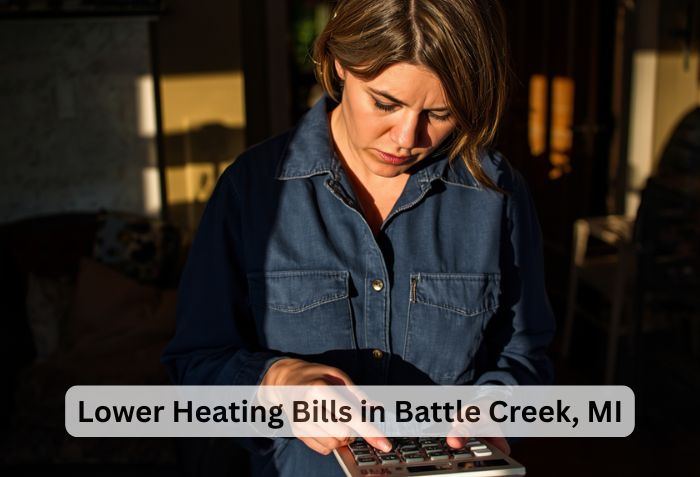
When winter arrives in Battle Creek, Michigan, heating bills can climb fast. Cold temperatures arrive early, stay long, and push home heating systems to work harder than almost any other time of year. For many households, those monthly utility costs become one of the biggest expenses from November through March.
The good news is that there are practical, proven steps Battle Creek homeowners can take to reduce what they spend on heat without sacrificing comfort. Some of these tips cost nothing at all, while others involve a small upfront investment that pays back steadily over time. Whether your home runs on a gas furnace, a heat pump, or another type of heating system, the strategies below can make a real difference on your next energy bill.
Lower the Temperature When You Are Away or Asleep
One of the simplest ways to cut heating costs in Michigan is to be more deliberate with your thermostat. Lowering your thermostat by 7 to 10 degrees for eight hours a day, such as when you are sleeping or away from home, can reduce your annual heating costs by up to 10 percent.
For most Battle Creek households, that means setting the thermostat to around 68 degrees Fahrenheit when people are home and active, then dropping it to 58 or 60 degrees overnight or during the workday. It is a small adjustment that adds up to meaningful savings across a full heating season.
Upgrade to a Smart or Programmable Thermostat
If you are still using a manual thermostat, upgrading to a programmable or smart model is one of the most cost-effective improvements you can make. A programmable thermostat automatically adjusts temperatures based on the schedule you set, so you never have to remember to turn down the heat before bed or before leaving for work.
Smart thermostats go a step further by learning your routine over time and making adjustments on their own. Many models also allow remote control through a phone app, which means you can turn up the heat before you get home without running it all day while the house is empty.
Seal Up Drafts and Air Leaks
Check Windows and Doors
Gaps around windows and doors are among the most common causes of heat loss in Michigan homes. Cold air creeping through unsealed frames forces your heating system to work harder and longer to maintain the temperature you set inside.
Applying caulk to cracks in window frames and using weatherstripping on doors is an affordable fix that most homeowners can handle in a single afternoon. If your windows are older single-pane models, upgrading to double or triple-pane options provides a more significant improvement in how well your home retains heat.
Do Not Forget Other Common Air Leak Spots
Windows and doors are obvious places to check, but they are not the only spots where warm air escapes. Electrical outlets on exterior walls, gaps around pipes and cables where they enter the home, and spaces around the attic hatch are all common leak points that many homeowners overlook.
Sealing these areas with foam sealant or caulk can make your home noticeably more comfortable and noticeably less expensive to heat. An energy audit from a qualified professional is a great way to identify all the spots where your home may be losing heat without you realizing it.
Take Care of Your HVAC System
Change Your Air Filter Regularly
A dirty air filter is one of the most common reasons heating systems run inefficiently. When the filter gets clogged, airflow is restricted and the furnace has to work harder to move warm air through your home. That extra effort shows up directly on your energy bill.
During heavy-use months like winter, it is a good idea to check your filter monthly and replace it as soon as it looks dirty. A clogged filter can increase your system’s energy use by up to 15 percent, which is a significant cost for such an easy fix.
Schedule a Professional Heating Tune-Up
A professional HVAC tune-up before or during the early part of winter is one of the most impactful steps Battle Creek homeowners can take for heating efficiency. During a maintenance visit, a technician cleans the system, checks all components, and makes sure everything is operating as efficiently as possible.
A well-maintained furnace or heat pump does not have to work as hard to reach and hold your desired indoor temperature. That means it runs for shorter cycles and consumes less energy overall. The cost of an annual tune-up is almost always offset by the savings it generates throughout the season.
Keep Vents and Registers Clear
Blocked vents and heat registers are a surprisingly common source of heating inefficiency. Furniture, rugs, curtains, and other household items placed over or in front of vents restrict the flow of warm air into the room, forcing the system to run longer than necessary to compensate.
Walk through each room and make sure that supply vents and return air registers are fully open and unobstructed. This takes only a few minutes and can immediately improve how evenly and efficiently your home is heated.
Use Your Home Smarter
Reverse Your Ceiling Fans
Most people know ceiling fans keep a room cool in summer, but fewer people take advantage of what fans can do in winter. By switching your ceiling fan to run clockwise at a low speed, you push the warm air that naturally rises to the ceiling back down into the living space where you actually feel it.
This simple adjustment allows you to maintain comfort at a slightly lower thermostat setting, which reduces how much your heating system needs to run. The fan direction switch is usually a small button located on the fan body itself.
Use Sunlight to Your Advantage
Natural sunlight is a free source of heat that many Battle Creek homeowners do not fully use during winter. Opening curtains and blinds on south-facing windows during daylight hours allows solar warmth to enter your home and supplement your heating system.
Once the sun goes down, closing those same curtains or switching to insulated thermal drapes adds a layer of insulation against cold windows. This approach costs nothing and can make a noticeable difference in how comfortable your home feels on clear winter days.
Add a Humidifier to Your Heating System
Dry winter air feels colder than humid air at the same temperature. When your home’s indoor humidity is too low, you may find yourself turning up the thermostat just to feel comfortable, which adds to your heating costs.
Adding a whole-home humidifier to your HVAC system, or even using portable units in key rooms, keeps indoor air at a comfortable humidity level. Homes with properly humidified air tend to feel warmer at lower thermostat settings, which is a straightforward way to improve comfort while spending less on heat.
Consider Longer-Term Energy Upgrades
Improve Your Home’s Insulation
Insulation is what keeps the heat your system produces inside the home rather than letting it escape through the walls, floors, and ceiling. In many older Battle Creek homes, insulation levels fall below current standards, which means the heating system has to work constantly to replace heat that keeps leaking out.
Adding insulation to the attic is usually the most cost-effective place to start, since heat rises and a poorly insulated attic is one of the biggest sources of heat loss in a home. Insulating basement walls and floors is another area worth looking into, especially in homes with unconditioned basements.
Upgrade to a More Efficient Heating System
If your furnace or heating system is more than 10 to 15 years old, it may be costing you more to run than a newer model would. Older systems simply do not operate as efficiently as modern high-efficiency units, and that gap shows up month after month on your utility bill.
Replacing an aging system with a high-efficiency gas furnace or a cold-climate heat pump can significantly reduce what you spend on heat over the long term. The upfront cost of new equipment is a real consideration, but the energy savings combined with lower repair costs often make upgrading a financially smart decision for Battle Creek homeowners.
Take Advantage of Michigan Energy Assistance Programs
Homeowners who need help covering heating costs during winter have options in Michigan. The Michigan Energy Assistance Program helps eligible low-income households manage home energy costs for their primary residence. Checking eligibility for programs like this can provide real relief during the most expensive months of the heating season.
Beyond assistance programs, energy efficiency improvements may qualify for federal tax credits. Homeowners who install qualifying heat pumps may be eligible for up to $2,000 in federal tax credits, while qualifying furnaces and air conditioners may qualify for up to $600. Talking to a local HVAC professional or tax advisor can help you understand which upgrades apply.
FAQs
1. What is the easiest way to lower heating bills in Battle Creek, MI?
Adjusting your thermostat is one of the quickest and easiest steps. Lowering it by 7 to 10 degrees for eight hours a day, such as overnight or when no one is home, can reduce heating costs by up to 10 percent annually.
2. How much can a smart thermostat save on heating costs in Michigan?
A programmable or smart thermostat can generate noticeable savings by automatically reducing heat when no one is home or when everyone is asleep. Combined with good usage habits, these devices help Michigan homeowners avoid paying to heat an empty house.
3. Does changing my air filter really affect my heating bill?
Yes. A clogged air filter forces your heating system to work harder to move air through the home, which increases energy consumption. Dirty filters can raise energy use by up to 15 percent, making regular filter replacements one of the most cost-effective maintenance habits you can build.
4. How does sealing drafts help save on heat costs in Michigan?
Drafts allow warm indoor air to escape and cold outdoor air to enter, forcing your heating system to run more often to maintain the set temperature. Sealing gaps around windows, doors, and other penetration points reduces this heat loss and directly lowers the amount of energy needed to keep your home comfortable.
5. Are there energy savings programs available for Battle Creek homeowners?
Yes. Michigan offers the Michigan Energy Assistance Program for eligible low-income households to help manage home energy costs. Additionally, federal tax credits may be available for homeowners who install qualifying high-efficiency heating systems such as heat pumps or new furnaces.