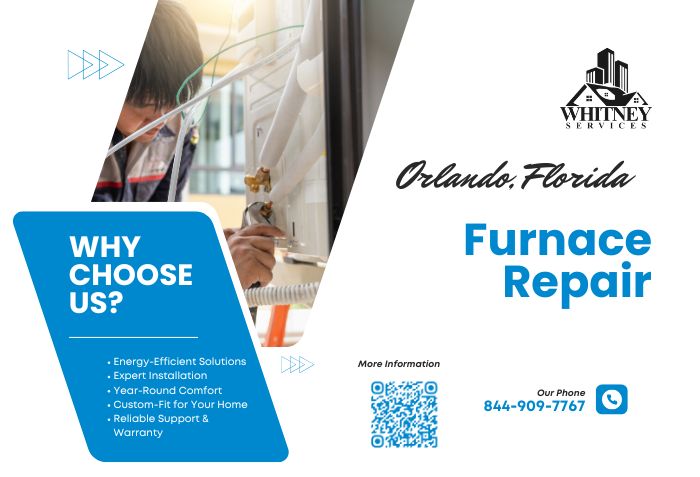
Furnaces may not be the first thing that comes to mind when you think about home comfort in Central Florida, but for the thousands of Orlando-area homeowners who rely on one, a malfunctioning unit during a cold snap is anything but a minor inconvenience. Whether your home runs on a gas furnace or an electric furnace, keeping it in reliable working condition is essential before temperatures fall. When something goes wrong, getting the right team on the job quickly makes all the difference. Whitney Services is Orlando’s trusted name for professional furnace repair in Orlando, FL, and in this guide we will walk you through everything you need to know about furnace problems, warning signs, repair options, and when to make that call.
Why Furnace Repair Matters in a Warm Climate Like Orlando
It might seem counterintuitive to prioritize furnace repair in a city known for sunshine and warm weather. But that is precisely why furnace problems catch so many Orlando homeowners off guard. Because furnaces run infrequently compared to those in colder states, they are often neglected between seasons. Dust accumulates on burners, components degrade slowly without being noticed, and small issues grow into significant failures over the months the system sits idle.
When a cold front sweeps through Central Florida and indoor temperatures start dropping, homeowners flip on the heat and discover the furnace is not responding the way it should. At that point, HVAC companies are flooded with calls, technicians are stretched thin, and parts may be harder to source quickly. Getting ahead of potential furnace problems before cold weather arrives, and knowing the warning signs that indicate repair is needed, is the smartest approach any Orlando homeowner can take.
Gas Furnace vs. Electric Furnace: What You Need to Know
Before discussing repairs, it helps to understand the key differences between the two most common furnace types found in Orlando homes, because the symptoms, causes, and repair approaches differ significantly between them.
Gas Furnace Repair
Gas furnaces use a burner and heat exchanger to produce warm air, which is then circulated through your ductwork by a blower motor. They are generally capable of producing hotter air than electric systems and can heat a home quickly. However, they come with unique safety considerations. A cracked heat exchanger, for instance, can allow carbon monoxide to enter your living space, making professional diagnosis and gas furnace repair not just a comfort issue but a health and safety priority.
Common gas furnace problems include ignition system failures, dirty or clogged burners, a faulty flame sensor, gas valve issues, and heat exchanger cracks. Many of these issues will trigger a safety lockout that prevents the furnace from running at all, which leads directly to one of the most common homeowner complaints: a furnace not turning on in Orlando.
Electric Furnace Repair
Electric furnaces heat air using a series of heating elements, similar in concept to a large electric space heater. They do not involve combustion, which eliminates carbon monoxide risks, but they are typically more expensive to operate than gas systems. Electric furnace repair often centers on failed heating elements, sequencer issues that control which elements activate and in what order, blower motor problems, and electrical component failures such as a blown fuse or a tripped breaker within the unit.
Both gas and electric furnaces share common failure points including thermostat communication issues, airflow restrictions from dirty filters, and capacitor failures in the blower system. Identifying which type of system you have is the first step toward understanding what kind of repair your situation requires.
Top Warning Signs Your Furnace Needs Repair
1. The Furnace Is Not Turning On
A furnace that refuses to start is the most obvious and urgent sign that something is wrong. If your thermostat is set correctly, the circuit breaker is not tripped, and the system still will not come on, the problem likely lies within the furnace itself. For gas furnaces, the most common culprits are a failed ignitor, a dirty flame sensor that cannot detect the pilot flame, or a safety lockout triggered by a prior fault. For electric furnaces, a blown internal fuse or a failed sequencer is often to blame.
A furnace not turning on in Orlando during a cold front is one of the most common emergency calls Whitney Services receives. Do not waste time cycling the thermostat repeatedly or trying to reset the system multiple times without understanding why it shut down. Repeated restart attempts on a faulted system can sometimes cause additional damage.
2. The Furnace Turns On but Produces Little or No Heat
If your furnace starts up, the blower runs, and air comes through the vents but the air feels barely warm or completely cold, the problem is likely in the heat-producing side of the system rather than the electrical or control side. For gas furnaces, this often points to a clogged burner, a failing gas valve, or a heat exchanger issue. For electric furnaces, one or more heating elements may have burned out.
This symptom is sometimes confused with a heat pump issue in homes that have both systems, so confirming which unit is actually running when the problem occurs is an important first step in any heating system repair diagnosis.
3. The Furnace Short-Cycles
Short-cycling means the furnace turns on, runs for a very short period, and then shuts off before reaching the set temperature. This cycle then repeats over and over. Short-cycling is hard on your equipment, drives up energy costs, and is a strong indicator that something is triggering the system’s safety mechanisms.
Common causes include an overheating heat exchanger caused by restricted airflow, a malfunctioning flame sensor on a gas unit, a thermostat placed in a poor location that is reading temperatures inaccurately, or an oversized furnace that heats the space around the thermostat too quickly. Each of these causes requires a different repair approach, which is why a proper diagnosis by a trained technician is essential.
4. Unusual Odors Coming From the Furnace
Odors from a furnace should never be dismissed, particularly with gas systems. A faint dusty smell when the furnace first fires up at the start of the season is generally normal as dust burns off the heat exchanger. However, any persistent or unusual odors are a warning that demands attention.
A sulfur or rotten egg smell is the most urgent. Natural gas is odorized with mercaptan specifically so that people can detect a leak, and if you smell this near your furnace or anywhere in your home, you should leave the building immediately, avoid using any electrical switches, and call your gas company and emergency services before contacting an HVAC company. A burning electrical smell, on the other hand, often indicates an overheating motor or an electrical component failure. A musty smell may point to mold in the ductwork or on the heat exchanger.
5. Unusual Noises During Operation
A furnace that is running well operates with a consistent, relatively quiet sound. New or worsening noises are your system’s way of signaling that something has changed inside. Here is a breakdown of what different sounds typically indicate:
- Banging or booming at startup: Often caused by a delay in ignition on a gas furnace, which allows gas to build up before it finally ignites. This is sometimes called a “mini-explosion” and it can crack a heat exchanger over time.
- Rattling: Loose panels, a failing blower wheel, or debris inside the system.
- Squealing or screeching: A worn blower motor belt or failing motor bearings that need lubrication or replacement.
- Grinding: Severe bearing wear in the blower motor. If you hear grinding, the motor is very close to total failure.
- Clicking that continues after startup: An ignition system that is struggling to light the burner on a gas furnace, or a control board issue on either furnace type.
Any of these sounds warrants a service call. Catching a noise problem early can mean the difference between a relatively affordable repair and a major component replacement.
6. Visible Soot, Rust, or Physical Damage
If you can see soot around the furnace, rust on the heat exchanger or burner components, or any visible cracks or damage to the cabinet or components, those are signs of a system that has been operating under stress. Soot on a gas furnace can indicate incomplete combustion, which is both an efficiency problem and a safety concern. Rust on the heat exchanger is a serious warning sign because a corroded heat exchanger is more likely to crack, potentially allowing combustion gases to mix with the air circulating through your home.
7. Your Heating Bills Have Climbed Without Explanation
A furnace that is working harder than it should to maintain your set temperature will show up on your electricity or gas bill. If your monthly utility cost has increased noticeably during periods when your heating habits have not changed, your furnace may be losing efficiency due to dirty components, a partially failing heating element, a gas valve that is not opening fully, or airflow restrictions that are forcing the system to run longer cycles to compensate.
Connecting a sudden spike in utility costs to furnace performance is a simple but often overlooked diagnostic tool. If your bill is telling you something has changed, do not ignore it.
Gas Furnace Safety: What Every Orlando Homeowner Should Know
Because gas furnaces involve combustion, there are safety considerations that go beyond comfort and efficiency. Every Orlando homeowner with a gas furnace should be aware of the following:
- Carbon monoxide detectors are essential. A cracked heat exchanger can introduce carbon monoxide, an odorless and colorless gas, into your living space. Make sure working CO detectors are installed on every level of your home and tested regularly.
- Never attempt to repair a gas furnace yourself. Gas line connections, heat exchanger inspections, and combustion system repairs require licensed professionals with the proper tools and training. Improper repairs can create dangerous situations.
- If you smell gas, leave immediately. Do not turn lights or switches on or off, do not use your phone inside the home, and do not attempt to locate the leak yourself. Exit the home, move to a safe distance, and call your gas utility company.
- Annual inspections are not optional. A licensed technician can detect heat exchanger cracks, carbon monoxide risks, and combustion issues that are completely invisible to the untrained eye.
Whitney Services takes gas furnace safety seriously on every single service call. Our technicians are trained to identify and communicate any safety concern found during a repair visit, and we will never leave a home with an unresolved safety issue without making sure you fully understand the risk.
When You Need Emergency Heating Repair in Orlando
Some furnace issues can be scheduled for a regular appointment. Others require immediate attention. Contact Whitney Services for emergency heating repair in Orlando without delay if you experience any of the following:
- The furnace is completely not producing heat and indoor temperatures are falling
- You smell gas anywhere near the furnace or in your home
- You smell burning electrical odors coming from the unit
- Your carbon monoxide detector has been triggered
- The circuit breaker for the furnace is tripping repeatedly
- You see sparks, scorch marks, or any visible sign of electrical burning
These are not situations to monitor and see what happens. They require a professional on-site as quickly as possible.
The Whitney Services Furnace Repair Process
When you call Whitney Services for furnace repair, here is what you can expect from our team:
Step 1: Honest Diagnosis First. We start every visit with a thorough inspection of your system before recommending any repair. We will never quote you for work until we have confirmed the cause of the problem.
Step 2: Clear Communication. Our technicians explain what they found, what caused it, and what your options are in plain language. You will always know exactly what you are paying for and why.
Step 3: Quality Parts and Workmanship. We use quality replacement components and stand behind our work. Whether it is a gas furnace repair, an electric furnace repair, or an emergency call, every job is completed to the same standard.
Step 4: Prevention Recommendations. After completing your repair, your technician will note any other areas of concern found during the inspection and provide recommendations to help you avoid the next breakdown.
How to Avoid Costly Furnace Repairs in the Future
The best furnace repair is the one you never need. Here are practical steps Orlando homeowners can take to extend the life of their furnace and reduce the likelihood of an unexpected breakdown:
- Schedule annual furnace maintenance every fall, before cold weather arrives. A professional tune-up catches small problems before they become expensive failures.
- Replace your air filter every 60 to 90 days, or more frequently if you have pets, allergies, or a dusty environment. A clogged filter is one of the leading causes of furnace overheating and short-cycling.
- Keep vents and registers clear of furniture, rugs, and other obstructions. Blocked vents restrict airflow and force the system to work harder than necessary.
- Test your furnace before the first cold front by running it for 15 to 20 minutes on a mild fall day to confirm it is operating correctly while HVAC technicians are still easy to schedule.
Enroll in a maintenance plan with Whitney Services to receive priority scheduling, regular tune-ups, and discounts on repairs throughout the year.
Why Orlando Homeowners Choose Whitney Services for Furnace Repair
When you need furnace repair in Orlando, FL, you deserve a company that treats your home and your time with respect. Whitney Services brings fully licensed and insured technicians to every job, offers transparent upfront pricing before work begins, and backs every repair with the kind of workmanship that earns long-term customer relationships rather than one-time transactions.
We service all major furnace brands, handle both gas furnace repair and electric furnace repair, and are available for emergency heating repair in Orlando when your situation cannot wait. From the moment you call us to the moment our technician drives away from your home, your comfort and confidence are our priority.
Frequently Asked Questions
How do I know if my furnace needs repair or replacement?
The general guideline in the HVAC industry is to consider replacement when the cost of repair exceeds 50 percent of the cost of a new system, particularly if the furnace is more than 15 years old. A furnace that has needed multiple repairs in recent years is also a candidate for replacement, since recurring breakdowns often indicate the system is entering the end of its useful life. Whitney Services technicians will always give you an honest assessment of whether repair or replacement makes more financial sense for your specific situation.
Why does my furnace turn on and then immediately shut off?
This is called short-cycling and it is usually triggered by a safety mechanism within the furnace. The most common causes are restricted airflow from a clogged air filter, an overheating heat exchanger, a faulty flame sensor on a gas furnace, or a thermostat that is misreading indoor temperatures. Short-cycling puts significant stress on the system and should be diagnosed and corrected as soon as possible to prevent further damage.
Is it safe to run my gas furnace if I suspect a problem?
If you suspect a gas leak, the answer is no. Leave your home immediately and call your gas utility company. If the concern is a performance issue rather than a suspected gas leak, running the furnace briefly while you wait for a service appointment is generally not dangerous, but you should avoid repeatedly forcing restarts on a system that has locked itself out, as this can sometimes cause additional damage. When in doubt, turn the system off and call Whitney Services for guidance.
How long does a furnace repair typically take?
Most standard furnace repairs, such as replacing an ignitor, flame sensor, capacitor, or blower motor, can be completed in a single visit of one to two hours. More complex repairs involving the heat exchanger, gas valve, or control board may take longer or require ordering parts if they are not stocked on the service vehicle. Whitney Services technicians arrive with a well-stocked van to handle the most common repairs on the first visit whenever possible.
Does Whitney Services offer emergency furnace repair in Orlando?
Yes. Whitney Services provides emergency heating repair for Orlando-area homeowners who are without heat and cannot wait for a standard appointment. We prioritize calls where there is no heating in the home, where safety concerns have been identified, or where vulnerable household members such as young children or elderly residents are present. Contact our team directly to explain your situation and get a technician dispatched as quickly as possible.