Being literally left in the dark when the lights go out is the last thing you want. Michigan weather is known for its unpredictability, and Kalamazoo County homeowners understand how inconvenient and even dangerous extended power outages can be.
Whether it’s a winter ice storm or a summer thunderstorm, losing electricity disrupts daily life and can even compromise safety. That’s why more and more families are choosing to invest in standby generators for reliable backup power.
But before you schedule your installation, there are several important things you should know. From the true cost of ownership to safety rules, placement requirements, and sizing options, getting informed will help you make a smart investment.
This guide covers everything you need to know about generator installation in Kalamazoo County, and when you’re ready, Whitney Services is here with trusted electrical services in Kalamazoo County to handle your installation from start to finish.
What Is Generator Installation?
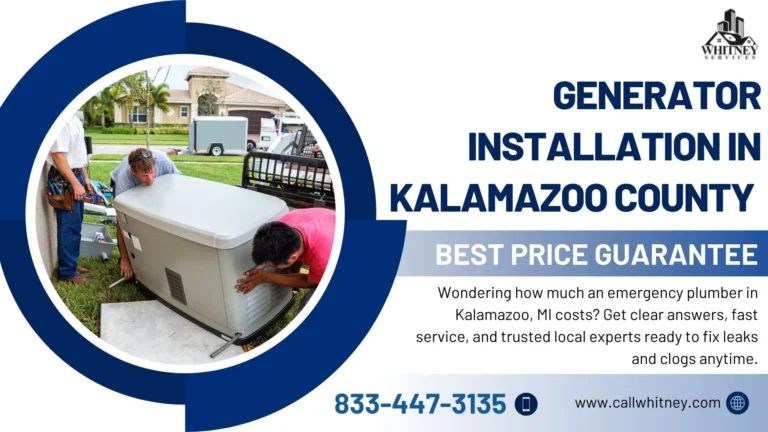
Generator installation is more than simply placing a machine outside your home. It’s a process that involves planning, technical expertise, and careful compliance with safety and building codes.
Here’s what typically happens during a professional installation:
- Site Evaluation: A technician determines the best location, balancing safety, accessibility, and code compliance.
- Fuel Connection: Standby generators often run on natural gas or propane, which means the installer will coordinate with your fuel provider.
- Electrical Integration: A transfer switch is installed to safely connect the generator to your home’s electrical panel. This allows the system to automatically power your home during an outage.
- Permits and Inspections: Michigan has strict building and electrical codes. Your installer ensures everything passes local inspections.
- Testing and Commissioning: Once installed, the system is tested under load to ensure reliable performance.
There are two main categories of generators:
- Portable generators, which are smaller, cost less, and require manual setup during outages.
- Standby (whole-house) generators, which are permanently installed, automatically activate during power loss, and can power everything from lights and appliances to HVAC systems.
While portable units are fine for occasional use, most Kalamazoo County homeowners who want long-term peace of mind opt for standby systems.
How Much Does Generator Installation Cost?
Cost is usually the first question homeowners ask and for good reason. A standby generator is a significant investment, but it pays off in peace of mind and long-term reliability.
In Kalamazoo County, installation costs usually fall between $5,000 and $12,000. The total depends on several factors:
Size of the generator: Bigger homes with more energy demands require larger units, which cost more.
- Fuel type: Propane, natural gas, and diesel units vary in price and installation complexity.
- Labor and permits: Hiring licensed professionals and securing the necessary permits adds to the overall expense.
- Extras: Things like concrete pads, sound enclosures, and upgraded transfer switches can raise the cost.
Think of this not just as an expense, but as a safeguard. When storms knock out power for hours or days, you won’t have to worry about food spoiling, pipes freezing, or your home office shutting down mid-project.
What Is the Average Cost to Install a Generac Whole-House Generator?
In terms of home standby power, Generac is among the most well-known brands. If you’re considering a Generac system, expect generator installation costs to fall around $10,000 to $15,000 for a whole-house generator.
That usually includes:
- The actual generator (usually between 14 and 22 kW for most households).
- Professional installation by certified electricians.
- A switch for transfers to ensure secure and efficient operation.
- Necessary permits and inspections.
Of course, the final price depends on your home’s size, your electrical setup, and the complexity of the installation. A smaller home might require a less expensive system, while a large residence with multiple HVAC units could need a more powerful (and more costly) solution.
At Whitney Services, our team provides personalized assessments, so you’ll know exactly what system is right for your home and budget.
What Is the 20-20-20 Rule for Generators?
Generator safety is a must, and the 20-20-20 rule is a simple way to remember three key guidelines:
- Maintain a minimum of 20 feet between your house and your generator. This prevents carbon monoxide from entering living spaces.
- Wait 20 minutes before refueling. Generators run hot, and refueling too quickly can lead to fire hazards.
- Invest in a $20 carbon monoxide detector. It’s a small investment that can literally save your family’s life.
This easy-to-remember rule emphasizes the importance of keeping safety at the forefront when using a generator. A standby system installed by professionals will already meet code requirements, but it’s still important for homeowners to stay vigilant.
How Far Away Does a Generator Need to Be from the House?
Placement is one of the most important parts of generator installation. The unit needs to be close enough to connect to your home’s fuel and electrical systems but far enough away to ensure safety.
General guidelines include:
- At least five feet should separate vents, windows, and doors.
- At least 18 inches from the exterior wall.
- Positioned in a side or backyard (not the front yard).
- Clear of obstructions like shrubs, fences, or AC units.
Local building codes in Kalamazoo County may be stricter, so always consult a licensed installer. Choosing the wrong location could not only pose health risks but also delay approval during inspections.
What Size Generator Do I Need to Run My House During a Power Outage?
Since every home is unique, there isn’t a single solution that works for everyone. Here are some general square footage-based sizing guidelines, though:
- Under 1,000 sq ft → 5–7 kW generator
- 1,000–2,000 sq ft → 7–10 kW generator
- 2,000–3,000 sq ft → 10–15 kW generator
- 3,000+ sq ft → 20–25 kW generator
But square footage isn’t the only factor. You’ll need to think about what you want to keep running during an outage. Do you just want to power the basics—like lights, refrigerator, and sump pump or do you also want to keep your furnace, central air, and home office online?
For example, a 1,500 sq ft home with average needs may be fine with a 7.5 kW unit. But if that same home has central air, electric heating, or multiple large appliances, a larger generator may be the smarter choice.
Whitney Services can help you calculate your home’s load requirements so you don’t end up with a system that’s too small or overspend on one that’s bigger than you need.
How Long Does a Generator Last?
When properly maintained, a standby generator can provide years of reliable service. On average:
- When used occasionally, portable generators last five to ten years.
- Standby generators can last 15–20 years, or between 10,000–30,000 hours of run time, depending on usage and care.
Routine maintenance is critical. This includes:
- Oil and filter changes.
- Regular load testing.
- Replacing spark plugs and air filters.
- Annual professional inspections.
Many homeowners choose maintenance plans to ensure their generator is always ready when needed. Whitney Services offers support and service options that extend the life of your investment and keep your system performing at its best.
Conclusion
Investing in a standby generator is one of the most reliable ways to protect your home and family from power outages. In a place like Kalamazoo County, where storms can hit hard and utilities can take hours or days to restore power, a backup generator offers peace of mind.
When you’re ready to take the next step, trust Whitney Services. With years of experience providing electrical services in Kalamazoo County, our licensed professionals ensure safe, efficient, and reliable installations tailored to your home.
Frequently Asked Questions
Most homeowners spend between $5,000 and $12,500, depending on the size and type of system.
No. Generators must be at least five feet away from openings such as windows and doors for safety and legal reasons.
Yes. A transfer switch ensures your generator connects safely to your home without back-feeding into the power grid.
With regular maintenance, Generac standby units typically last 15–20 years.
Most homes of that size run comfortably on a 7–10 kW unit, though larger appliances may require more capacity.