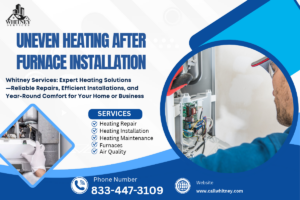
A new furnace can contribute to uneven heating between rooms if it is improperly sized, incorrectly installed, or incompatible with the home’s ductwork. Blocked vents, leaking ducts, thermostat placement, and inadequate insulation can also cause inconsistent indoor temperatures.
For homeowners experiencing uneven heating after furnace installation in Wyoming, MI, identifying the underlying cause can help prevent unnecessary repairs. Proper furnace sizing and effective airflow distribution are essential for reliable indoor comfort, particularly during Michigan’s cold winters.
Whitney Services provides professional furnace installation in Wyoming, MI, including equipment sizing, installation, and system testing and balancing to support consistent heating performance.
Key takeaways
- A new furnace can contribute to uneven heating when its capacity, installation, or airflow settings are not appropriate for the home.
- Existing ductwork, blocked vents, thermostat placement, and insulation problems can also create cold spots.
- Homeowners experiencing uneven heating after furnace installation in Wyoming, MI, should check basic thermostat settings, filters, and unobstructed vents before arranging professional service.
- Proper furnace sizing, ductwork evaluation, and post-installation testing help improve temperature consistency.
- Whitney Services can help homeowners assess furnace installation needs and determine whether further system adjustments may be necessary.
What Causes Uneven Heating After Installing a New Furnace?
Several factors can explain uneven heating after furnace installation in Wyoming, MI. Identifying the cause helps homeowners determine the right solution.
1. Incorrect Furnace Sizing
An oversized furnace may reach the thermostat setting too quickly, causing short cycling and inconsistent comfort. An undersized unit may struggle to heat the home during Michigan’s cold winters. Proper sizing considers square footage, insulation, windows, air leakage, and ceiling height.
2. Poor Ductwork Airflow
Leaking, damaged, or undersized ducts can restrict warm air from reaching certain rooms. Existing ductwork should be evaluated when installing a replacement furnace.
3. Unbalanced Vents and Dampers
Blocked registers or improperly adjusted dampers can limit airflow. Keep vents unobstructed and have significant airflow issues professionally assessed.
4. Thermostat Placement
Direct sunlight or nearby supply vents can cause inaccurate temperature readings, affecting heating cycles.
5. Insulation and Air Leaks
Poor insulation and drafty windows can cause rooms to lose heat faster. Homeowners experiencing uneven heating after furnace installation in Wyoming, MI, may need ductwork adjustments or insulation improvements to achieve consistent indoor comfort.
Addressing uneven heating after furnace installation early can improve comfort throughout your home, reduce unnecessary strain on your heating system, and help ensure reliable performance during Wyoming, MI’s cold winter months.
How Can You Tell If Your New Furnace Is Heating Unevenly?
Uneven heating often becomes noticeable when certain rooms consistently feel colder or warmer than others, even when the thermostat setting remains unchanged.
Common warning signs include:
- Cold bedrooms: A bedroom remains chilly while the living room feels comfortable.
- Uneven airflow: Some supply vents blow strongly, while others deliver noticeably less air.
- Slow temperature recovery: Certain rooms take much longer to warm up after the thermostat is adjusted.
- Frequent cycling: The furnace starts and stops repeatedly without providing consistent comfort.
- Unexpected energy use: Heating costs increase without an obvious change in household habits or weather conditions.
Not every temperature difference indicates a furnace installation problem. Sun exposure, room orientation, occupancy, and insulation can all affect indoor temperatures.
If uneven heating after furnace installation in Wyoming, MI, persists across several heating cycles, document which rooms are affected and whether their vents deliver warm air. This information can help a technician narrow down the likely cause.
What Should You Check Before Calling an HVAC Technician?
Homeowners can perform several basic checks before scheduling an inspection. These steps may identify simple airflow restrictions without requiring specialized tools.
- Check the thermostat: Confirm that it is set to heating mode and that the programmed temperature is appropriate.
- Inspect the air filter: A dirty filter can restrict airflow. Replace it according to the manufacturer’s instructions and the filter’s requirements.
- Clear supply registers and return grilles: Move furniture, rugs, curtains, and other obstructions away from vents.
- Look for noticeable drafts: Check windows and exterior doors for gaps that may allow warm air to escape.
- Compare room temperatures: Note which spaces remain cold, when the problem occurs, and whether airflow feels weak.
Avoid closing numerous vents to force more heat into colder rooms. Excessive restrictions can interfere with system airflow and affect furnace performance. For homeowners experiencing uneven heating after furnace installation in Wyoming, MI, these checks can provide useful information, but they cannot replace professional testing when the problem continues. Whitney Services can help assess persistent heating problems and determine whether the furnace, ductwork, or airflow needs professional attention.
If you smell gas, leave the building and contact your gas utility or emergency services from a safe location. If a carbon monoxide alarm sounds, leave immediately and seek emergency assistance.
How Can a Professional Fix Uneven Heating After Furnace Installation?
A qualified HVAC technician should evaluate the entire heating system before recommending repairs or adjustments. The goal is to identify the actual cause instead of treating the symptoms.
Inspect Furnace Sizing and Installation
The technician can review the furnace model, heating capacity, installation specifications, thermostat operation, and manufacturer requirements. They may also evaluate whether the equipment suits the home’s heating load.
Evaluate and Balance the Ductwork
Technicians commonly examine duct connections, accessible duct sections, dampers, registers, and return-air pathways. Airflow measurements can help determine whether certain rooms receive insufficient air or whether the system needs balancing.
If the existing ducts are leaking or incorrectly sized, repairs or modifications may be necessary. Balancing alone will not correct every duct design problem.
Test the Thermostat and System Performance
A professional can check thermostat accuracy, blower operation, temperature rise across the furnace, and relevant safety controls. Measurements should be compared with the equipment manufacturer’s specifications.
Identify Insulation and Air Leakage Issues
When the furnace and ductwork operate correctly, the investigation may shift to insulation, exterior walls, windows, and air leaks. Correcting these problems can help rooms retain heat more effectively.
Whitney Services lists testing and balancing among its furnace installation services. For homeowners dealing with uneven heating after furnace installation in Wyoming, MI, a professional assessment can help determine whether airflow adjustments, ductwork repairs, or other improvements are appropriate.
How Can Proper Furnace Installation Help Prevent Uneven Heating?
Preventing uneven heating starts before the new furnace is installed. Selecting an appropriate unit is important, but the installation process must also account for how warm air will reach every part of the home.
A thorough installation assessment should consider:
- Heating-load calculations: Estimate the home’s actual heating requirements rather than choosing equipment based on square footage alone.
- Ductwork compatibility: Determine whether existing ducts and return-air pathways can support the new system.
- Equipment setup: Follow manufacturer specifications for connections, venting, airflow, and controls.
- System testing: Verify startup, temperature rise, thermostat response, and safe operation.
- Airflow balancing: Evaluate how effectively heated air reaches different rooms and make appropriate adjustments.
- Homeowner guidance: Explain filter replacement, thermostat operation, and routine maintenance.
These practices help reduce the risk of installation-related comfort problems, although they cannot eliminate every issue caused by building design or insulation.
When arranging furnace installation in Wyoming, MI, Whitney Services offers equipment sizing consultations, installation, system testing and balancing, and a post-installation walkthrough. Asking about these steps can help homeowners understand how the system will be evaluated before the job is considered complete.
How Much Does a New Furnace Cost in Wyoming, MI?
Furnace installation costs in Wyoming, MI, depend on the equipment’s size, efficiency rating, labor, and any necessary ductwork or venting modifications.
Whitney Services publishes a typical furnace installation price range of $3,500 to $7,500 in Wyoming, MI. For comparison, Angi’s September 2026 national estimate places most furnace installations between $2,823 and $6,896. These figures are general budgeting references, not guaranteed quotes for an individual home.
If you are experiencing uneven heating after furnace installation in Wyoming, MI, replacing the furnace may not be necessary. The appropriate solution depends on the underlying cause.
Option | When it may be appropriate |
Airflow adjustment | Heated air is distributed unevenly |
Ductwork repair | Leaks or restrictions limit airflow |
Thermostat correction | Placement or settings affect heating cycles |
Furnace repair | A faulty component affects performance |
Furnace replacement | The existing system requires replacement based on its condition and heating needs |
Whitney Services offers free estimates for furnace installation. Requesting an assessment can help you understand the problem, compare suitable solutions, and determine the potential cost before approving work.
Should You Repair Your Furnace or Call the Original Installer?
If uneven heating begins immediately after installation, contact the original installer first. The problem may involve thermostat settings, airflow balancing, equipment setup, or existing ductwork. A newer furnace may need a simple adjustment or component repair rather than replacement.
When reporting uneven heating after furnace installation in Wyoming, MI, explain which rooms are affected, when the problem started, and whether temperatures fluctuate during cold weather. Ask the technician to explain the diagnosis, recommended repairs, and any applicable warranty coverage. Whitney Services provides information about furnace repair versus replacement in Wyoming, MI, helping homeowners evaluate their options before making an informed decision.
Conclusion
A new furnace delivers reliable heating when properly sized, installed, and matched with suitable ductwork. Thermostat placement, insulation, and balanced airflow also influence indoor comfort. If you experience uneven heating after furnace installation in Wyoming, MI, a professional inspection can identify whether the issue involves installation, ductwork, or heat loss.
Whitney Services provides furnace installation services, including equipment sizing, installation, system testing, and balancing. Addressing uneven heating after furnace installation in Wyoming, MI, promptly can help restore consistent comfort throughout your home. Contact us today to request an estimate and discuss your home’s heating needs.
Frequently Asked Questions
1. Is uneven heating normal after installing a new furnace?
Minor temperature differences can occur, but persistent cold spots should be investigated. Uneven heating after furnace installation in Wyoming, MI, may result from restricted airflow, thermostat placement, ductwork problems, or improper equipment setup.
2. How soon should I report uneven heating after installation?
Check the thermostat settings, air filter, and unobstructed vents first. If uneven heating after furnace installation in Wyoming, MI, continues, contact your installer promptly for an inspection.
3. Can old ductwork affect a brand-new furnace?
Yes. Leaking, undersized, or poorly balanced ductwork can prevent heated air from reaching certain rooms. Uneven heating after furnace installation in Wyoming, MI, may require ductwork repairs or airflow adjustments rather than furnace replacement.
4. Will a bigger furnace solve uneven heating?
Not necessarily. An oversized furnace may cycle on and off too frequently, contributing to inconsistent temperatures. Proper furnace sizing, effective airflow, and balanced ductwork are better starting points.
5. Who should I contact about uneven heating after installation?
Contact the original installer if the problem began after installation. Whitney Services offers furnace installation in Wyoming, MI, including equipment sizing, system testing, and balancing to support consistent heat distribution.